Kimono Photoshoot Day Timeline in Japan: Hour-by-Hour Plan
A realistic hour-by-hour timeline for a full-day kimono photoshoot in Japan — from the night-before hair prep to the 6pm wrap, with planner notes on meals, bathroom logistics, and the timing mistakes couples make.

Illustrative image · Unsplash. Not a photo of the specific people, places or services discussed.
Check current prices, availability and venue rules with the relevant studio or venue before booking.
Couples who like to plan precisely tend to arrive at their kimono photoshoot day with one big question: what is the actual minute-by-minute flow? A typical full-day shiromuku and iro-uchikake pre-wedding session in Japan runs from about 6:00am (you waking up) until 4:00–6:00pm (you returning to the hotel), and the timing is much tighter than couples expect. This guide walks through a realistic kimono photoshoot day timeline, hour by hour, based on how Tokyo and Kyoto studios actually run a two-outfit outdoor shoot. Use it to build your own photoshoot day plan in Japan, set realistic meal stops, and avoid the three most common timing mistakes — late arrival, low blood sugar, and the dreaded mid-shoot bathroom emergency.
The Night Before — Hair Prep, Hydration, Sleep
The shoot day actually begins the night before. Bridal hair for shiromuku and iro-uchikake — whether you wear a kazura (wig) or your own hair styled into a traditional bunkin-takashimada — requires your scalp and hair to be in a specific condition. Wash your hair the night before, not the morning of. Freshly washed, slippery hair will not hold pins or grips well, and the stylist will spend the first 20 minutes of your appointment apologising in their head while re-pinning. A clean, dry, slightly settled scalp gives the best grip.
Wedding Planner's Notes: Skip conditioner on the roots and avoid heavy leave-in oils. A small amount of dry shampoo at the roots the next morning is fine if your hair tends to look flat; the kazura covers most of the crown anyway. Read our hair and makeup guide for shiromuku for the full pre-shoot hair regimen.
Eat a normal dinner — not heavy, not skipped. Avoid alcohol if you can; even one glass of wine the night before tends to read as puffiness in the under-eyes by 9:00am. Hydrate steadily through the evening but stop drinking water two hours before bed. The shoot day will have limited bathroom access once the kimono is on, and the more your body is in a normal rhythm the night before, the easier the morning is.
Aim to be in bed by 10:30pm at the latest. Tokyo and Kyoto studios open their bridal rooms between 7:00 and 8:30am, which means a 6:00 or 6:30am alarm. Set two alarms. Have your bag packed and clothes laid out before you sleep — a bathrobe-style top that buttons or zips at the front (not pulled over the head) so you do not disturb your hair when you change at the studio.
Studio Arrival (Typically 8:00–9:00am)
Most full-day kimono shoots begin with the bride arriving at the studio between 8:00 and 9:00am. The exact time depends on the package length, season, and outdoor location:
- Spring sakura shoots — early arrival, often 7:30 or 8:00am, to be at the outdoor location before peak tourist crowds.
- Standard year-round outdoor shoots — 8:30 or 9:00am arrival is typical.
- Autumn foliage shoots — slightly later (9:00–9:30am) because the golden-hour light at well-known momiji spots peaks in late afternoon.
- Snow shoots in Hokkaido or Tohoku — later still (9:30–10:00am) because outdoor light arrives later in winter and indoor warming time is built into the day.
Arrive on time, not early. Studios run on overlapping appointments, and most do not have a comfortable waiting area for couples who turn up 30 minutes ahead of schedule. If your taxi runs early, ask the driver to drop you at the nearest convenience store first; sip a sports drink, use the bathroom one last time, and walk in at the appointed minute.
Bring: ID (passport or residence card if you have one), the booking confirmation, contact lenses or glasses, a small power bank, and any wedding rings or accessories you want photographed. Leave large suitcases at your hotel; most studios have only limited locker space.
Hair and Makeup for the Bride (90–120 Minutes)
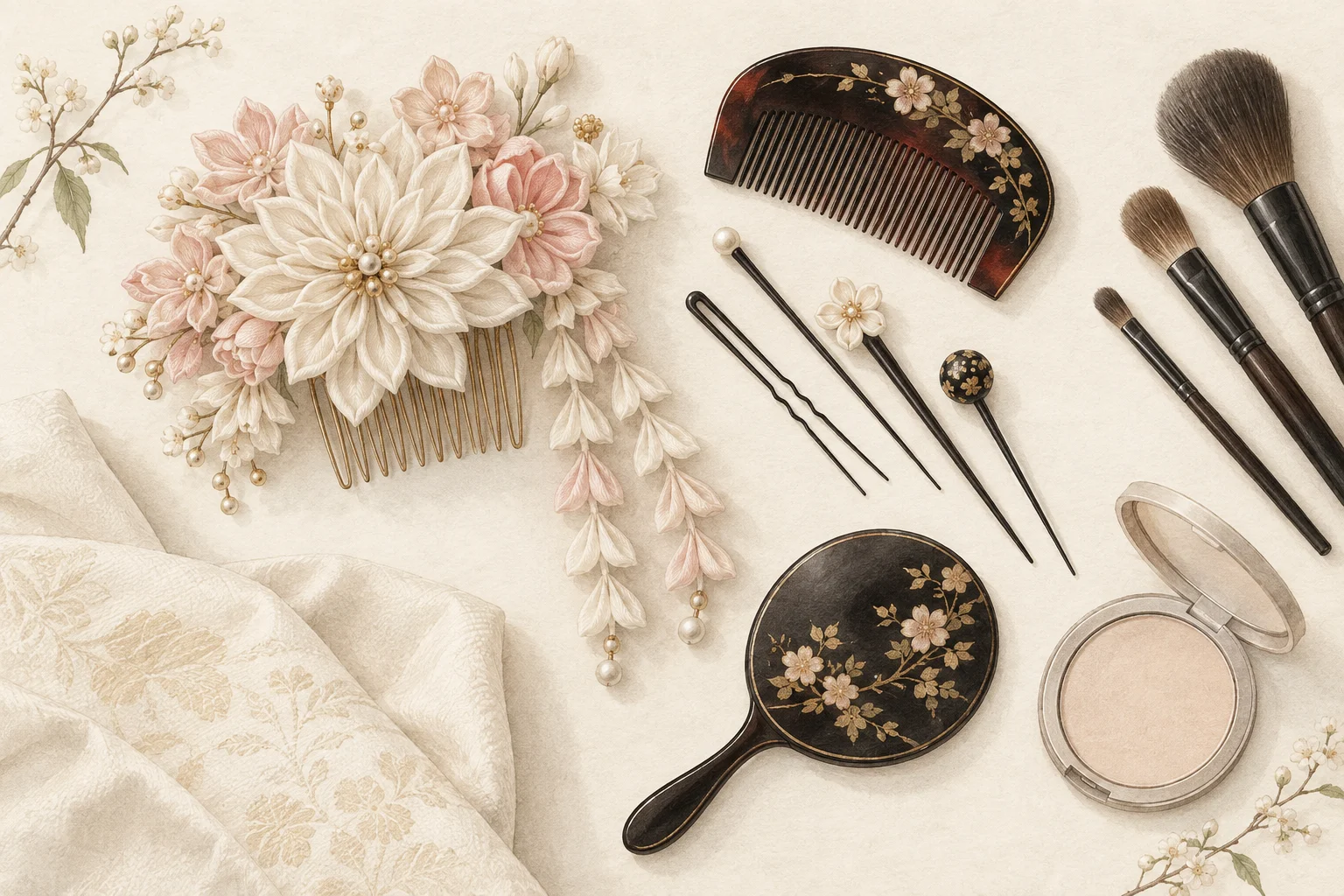
The bride's hair and makeup runs 90 to 120 minutes. This is the longest single block in the day and the part most couples underestimate. For shiromuku with a kazura (wig), expect:
- 15 minutes — skin prep, primer, base.
- 25 minutes — eyes, brows, contouring, blush.
- 15 minutes — lips and final base set.
- 30–45 minutes — natural hair flattened and pinned under a wig cap, kazura fitted, kanzashi placed, fine adjustments at the hairline.
If you have very curly, very fine, or very short hair, raise this at the time of booking (not on the morning of). Most studios handle the full range using a kazura over a wig cap, but very short or buzz-cut hair sometimes needs a base padding treatment before the wig sits cleanly. Our hair styling guide for foreign brides covers this in detail.
This is also the right window to discuss kanzashi placement. Bring a phone photo of any reference styles. The stylist will balance your face shape, the kimono colour, and what is physically possible with the kazura you have been assigned. Our kanzashi guide explains which combinations photograph well.
Bride's Kitsuke (Kimono Dressing) — 30–45 Minutes
Kitsuke is the dressing process, performed by a specialist (a kitsuke-shi). For shiromuku, allow 30–45 minutes. The order is roughly: hadajuban (under-layer) → susoyoke (under-skirt) → nagajuban (long under-kimono) → kakeshita (the long under-kimono with the trailing hem) → multiple layers of obi padding and the obi itself → the shiromuku uchikake (outer robe) laid over the top.
You will be standing for most of this. Wear lightweight socks (your tabi will go on at the very end), use the bathroom immediately before kitsuke begins, and let the dresser tighten things to their judgement — a shiromuku that feels "comfortable" the moment you put it on will start drooping within an hour. It should feel snug, not painful.
Wedding Planner's Notes: A frequent bride mistake at this stage is asking the kitsuke-shi to loosen the obi for breathing room. Resist. The kimono silhouette in your final photos depends on the obi sitting at a specific angle, and a loose obi reads on camera as a slumped posture, not as "relaxed".
Groom's Arrival and Kitsuke (Parallel; 30 Minutes)
While the bride is in hair and makeup, the groom typically arrives between 9:30 and 10:30am. Men's kitsuke is faster — about 30 minutes for a montsuki haori hakama (formal black five-crest set), which is the standard for groom's pre-wedding kimono. The order is shitagi (under-layer) → nagajuban → kimono → hakama (pleated lower garment) → haori (over-jacket) → himo (haori cords). Men do not get the elaborate hair treatment; the groom's hair is usually styled in about 10 minutes with light product. See our men's kimono guide for the full attire breakdown.
Eat something before you arrive. Studios will offer the groom water and sometimes tea, but a snack at the studio is awkward in haori. A rice ball or banana before you leave the hotel is the right move.
Studio Portraits (60–90 Minutes)
Once both partners are dressed, the studio portrait block begins. This is usually 60 to 90 minutes. In a traditional Japanese studio (washitsu set with tatami, shoji screens, byobu folding screens), the photographer will work through a fixed sequence:
- Bride solo formal portraits (front, three-quarter, profile).
- Groom solo formal portraits.
- Couple formal portraits — standing, then seated on tatami.
- Detail shots — hands, obi, kanzashi, sleeves.
- Optional family or parent portraits if you have brought parents to Japan; see our bringing parents guide.
This is the calm part of the day. The studio is climate-controlled, you have not been outside yet, and the photographer can take time to coach you. If you are nervous about being on camera, this is the block to settle in. A 2-hour shoot at this point would already be over; a 4-hour package goes on to outdoor, and a full-day package adds a second outfit. Our shoot duration guide compares the deliverables for each package length.
Transport to Outdoor Location
Around 11:00am to 12:30pm, the team moves to the outdoor location. Transport is normally a chartered taxi or small van — included in most full-day packages. Travel time depends on the city:
- Kyoto — 15–30 minutes from central studios to Higashiyama, Arashiyama, or the Imperial Palace area. See top Kyoto studios.
- Tokyo — 20–40 minutes from Shibuya/Aoyama studios to Meiji Jingu, Hama-rikyu, or Asakusa. See Asakusa shoot guide and Meiji Jingu permit notes.
- Kamakura — local transfer, usually 10–15 minutes. See our Kamakura guide.
You will travel in full kimono. Sit on the edge of the seat with a thin towel under the obi knot so the bow does not get crushed against the seatback. Do not eat or drink in the car. The dresser usually rides along to make adjustments on arrival.
Outdoor Shoot (60–180 Minutes)
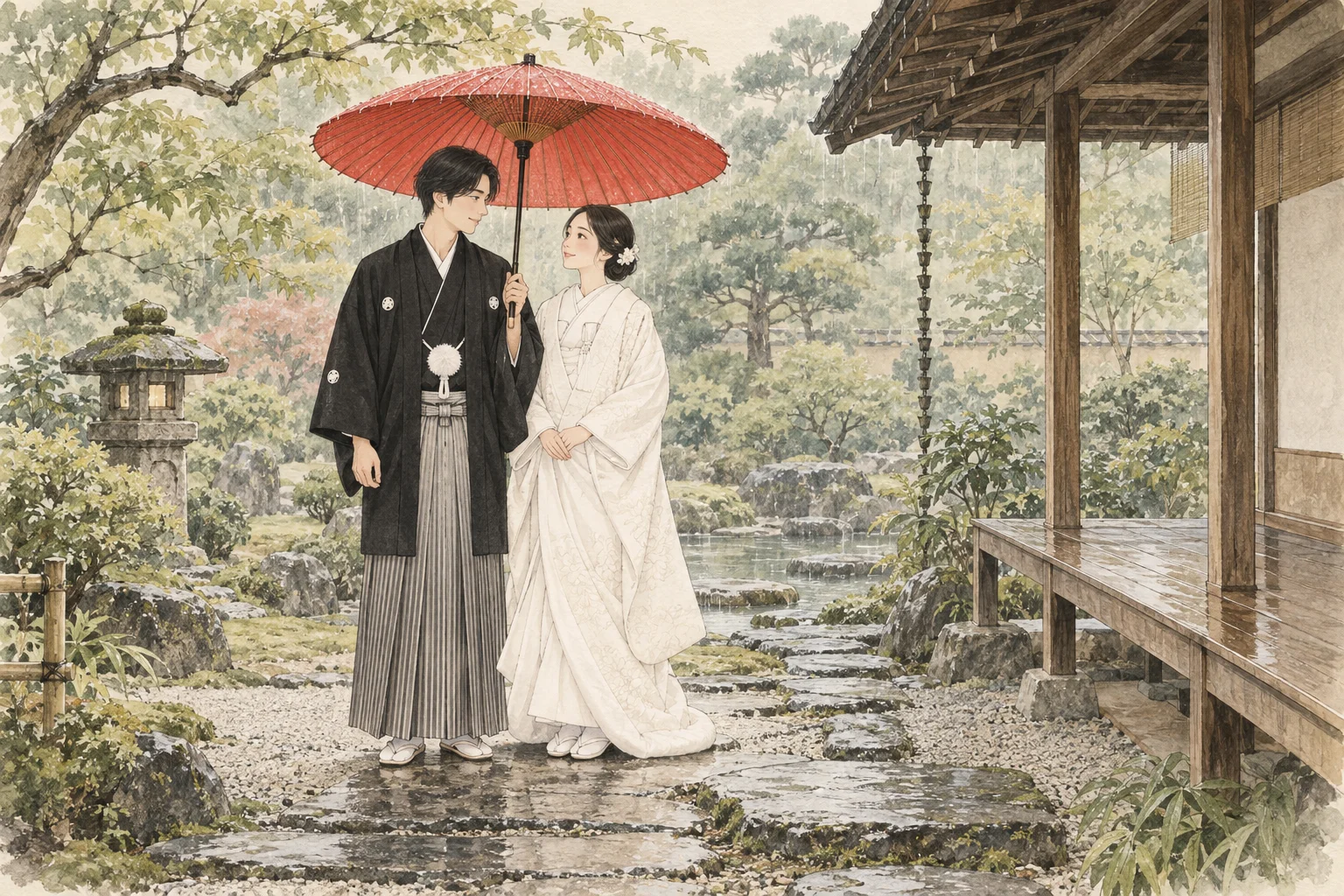
This is the heart of the day. Outdoor shooting time runs from 60 minutes (short 2-hour packages) to 180 minutes (full-day packages with two outfits). In peak seasons — sakura, momiji, snow — the photographer prioritises golden-hour windows and works the location in a planned sequence rather than wandering. For sakura specifically, see our cherry blossom photoshoot guide; for autumn, see autumn foliage.
Expect the photographer to direct you closely. Couples often imagine "candid" walking shots; in reality every "candid" frame is staged and re-shot 4–6 times to nail the light. Plan to be patient. Drink small sips of water through a straw between setups — the assistant or dresser will hold a paper cup for you so your sleeves do not catch.
If you have booked a shrine location, you will also be navigating shrine etiquette mid-shoot — bowing at the torii, no photos in restricted inner areas, and being respectful of worshippers. Read our shrine etiquette guide in advance and bring it up briefly with your photographer at the planning call.
Outfit Change (Shiromuku → Iro-Uchikake)
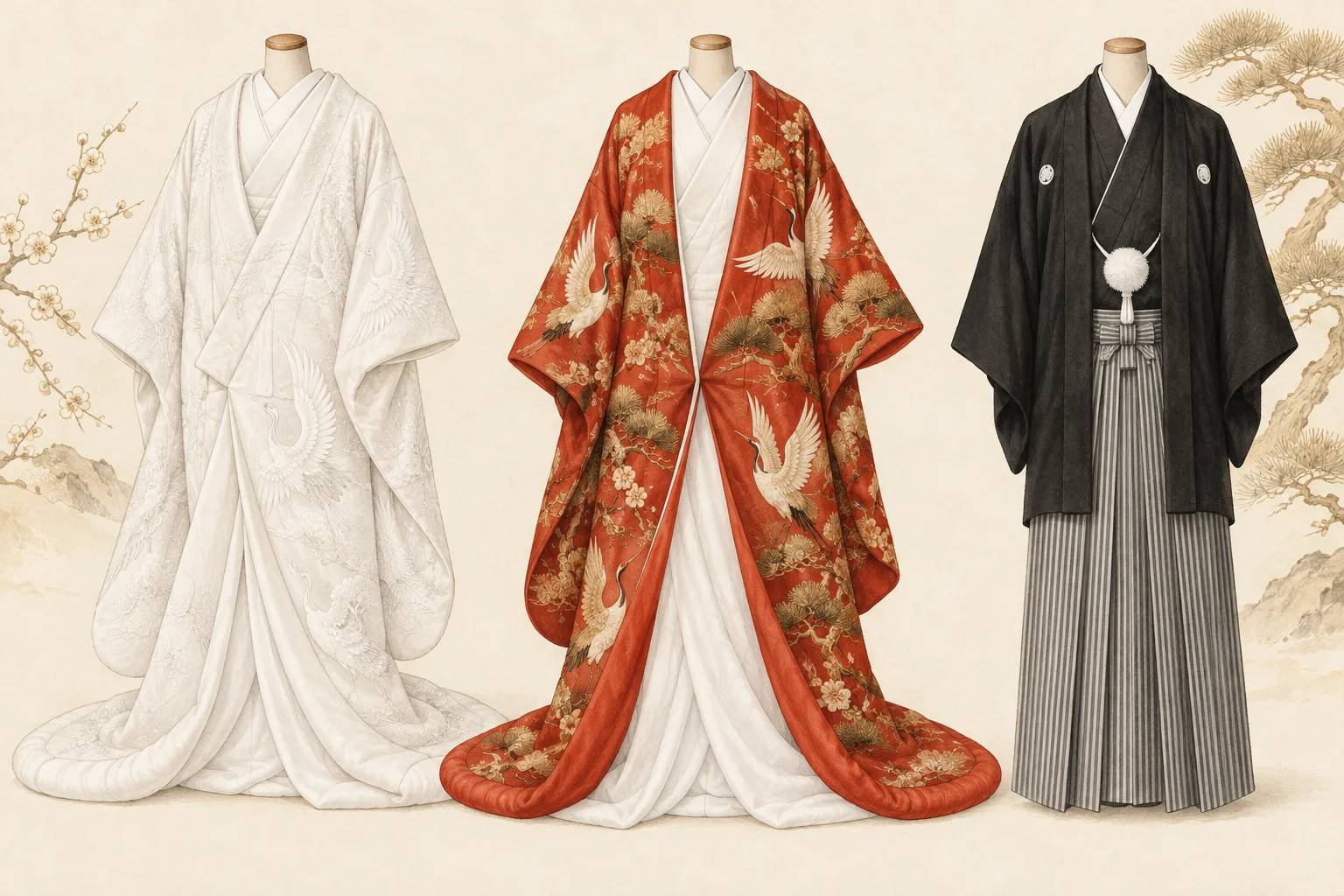
Mid-day, usually between 1:00 and 2:30pm, the bride changes from shiromuku into iro-uchikake — a colourful patterned outer robe that signals the symbolic transition from the bride's family into the groom's family. The change takes 30–45 minutes and is done either back at the studio or, for larger Kyoto operations, at a partner kimono dressing room near the outdoor location to save travel time. See our shiromuku vs iro-uchikake comparison for the symbolism behind each garment.
The kazura typically stays on for both outfits; only the kanzashi (hair ornaments) may be swapped to match the iro-uchikake's colour palette. Makeup is touched up — usually lipstick refresh and powder. This is your only proper break of the day. Use the bathroom (the dresser will help you lift the layers), eat a small rice ball or piece of fruit, and drink water through a straw.
Second Outfit Shoot
The second outfit shoot block runs another 60–90 minutes. By this point — typically 2:30 to 4:00pm — the bride has been on her feet in full kimono for five or six hours. The photographer knows this and tends to shorten the sequence, focusing on the strongest setups rather than exhausting every angle. Iro-uchikake shoots well in environments with strong contrasting colour: red against green momiji, gold against grey stone walls of a temple, vermillion against the white gravel of a shrine forecourt.
If your package includes a Western-style change (white dress for the bride, tuxedo for the groom), that swap usually happens after the iro-uchikake block and adds another 60–90 minutes. Our Western dress vs kimono comparison covers the format tradeoff.
Wrap-Up and Return to Studio
The shoot wraps between 3:30 and 5:00pm depending on package and season. The team transports you back to the studio (or to the changing room, if you changed off-site). De-kitsuke — taking the kimono off — runs about 20 minutes for the bride and 10 minutes for the groom. Your own clothes are returned. Hair pins come out, the makeup can come off at the studio's vanity if you like, and you settle the balance if any is due.
At the wrap, the photographer or studio coordinator will confirm the delivery timeline. Standard delivery is 4–8 weeks for retouched digital files and 8–12 weeks for printed albums. You will leave with a written confirmation and usually a small box of selected preview frames within 2–3 days. By 5:30 or 6:00pm, you are back at the hotel, in normal clothes, and tired in the way only a full kimono day produces.
What to Eat (or Not) and Bathroom Logistics
Food and bathroom logistics are the unglamorous half of a successful shoot day. Two rules govern the whole day:
- Eat before you arrive. A rice ball, banana, or small breakfast plate at the hotel by 7:00am will carry you to lunchtime. Skipping breakfast is a frequent cause of the mid-morning crash, when the bride starts to feel faint during kitsuke.
- Bathroom before kimono. The bride should use the bathroom immediately before kitsuke and again during the iro-uchikake change. Between those windows, plan for no bathroom access at all.
During the day, the dresser or assistant carries water and snacks — usually small onigiri (rice balls), a few pieces of cut fruit, and bottled green tea. They will offer these at the change and during transport. Avoid: coffee (jitters and tooth stain), anything with a strong smell (the kimono will hold the scent), and chocolate or anything that melts in your fingers. Sip water through a straw, do not gulp.
If you are doing a destination shoot in Okinawa, Hokkaido, or Hiroshima, the climate adds a layer: humid heat in summer Okinawa, cold dry air in winter Hokkaido. Build buffer time into your transport and bring a small fan or hand-warmer accordingly. Our Okinawa, Hokkaido, and Hiroshima/Miyajima location guides cover season-specific timing.
For couples staying in Japan for the full honeymoon, plan a quiet day after the shoot. The bride in particular tends to sleep poorly the night before from nerves and is genuinely exhausted by evening. Our honeymoon and kimono photoshoot guide covers the post-shoot rest day and how to slot the shoot into a wider trip.
Frequently Asked Questions
What time does a typical kimono photoshoot day start?
Most full-day shoots have the bride arriving at the studio between 8:00 and 9:00am, which means a 6:00 to 6:30am wake-up. Sakura and snow shoots can start 30–60 minutes earlier to catch the right light or beat tourist crowds.
How long does a full kimono photoshoot day actually take?
From bride arrival to return-to-hotel, a full two-outfit (shiromuku and iro-uchikake) outdoor shoot runs 8–10 hours. A 2-hour studio-only package is more like 4 hours door-to-door once hair, makeup, and kitsuke are included. See our shoot duration guide for package-by-package detail.
Can I eat lunch during the shoot?
Not a proper sit-down lunch. You can eat small bites (rice balls, fruit) during the outfit change window. Heavy meals are avoided because the obi makes large meals physically uncomfortable and because food smells linger in silk kimono. Eat a real breakfast before you arrive and a proper dinner after the wrap.
What happens if I need the bathroom during the shoot?
The dresser will help you. There is a specific technique for lifting the layers of a shiromuku without disturbing the obi, and the dresser is trained for it. Plan your bathroom breaks at the outfit change and immediately before kitsuke. Between those points, assume no access.
What if the weather is bad on the day?
Most full-day packages include a contingency — either a covered shrine hall, a studio-only fallback, or a reschedule within a set window. Confirm the weather policy in writing before you book. Light rain is usually shootable; heavy rain, snowstorms, or typhoons trigger the contingency.
How should I dress when I arrive at the studio?
Loose, comfortable clothes that open in the front — a button-up shirt or a zip-front hoodie over a t-shirt, plus easy-off pants. Avoid anything you pull over the head once your makeup is done. Wear regular socks; tabi will be provided.
When does the photographer actually shoot — only outdoors?
Roughly 60–90 minutes of studio portraits, then 60–180 minutes outdoor, then 60–90 minutes for the iro-uchikake block. Studio portraits matter as much as the outdoor frames; in many albums, the cleanest formal shots are the indoor ones.
Can the groom show up later than the bride?
Yes — and most studios prefer it. The groom typically arrives 1–1.5 hours after the bride, since men's hair and kitsuke combined run about 40 minutes total. The groom can sleep in slightly, eat a real breakfast, and arrive when the bride is finishing makeup.
Plan Your Kimono Photoshoot Day in Japan
A well-paced kimono photoshoot day is the difference between a bride who looks composed in every frame and one who looks visibly exhausted by 2:00pm. Choose a studio that runs its day on a written timeline, eats the small logistics (snacks, water, bathroom timing) seriously, and protects 30 minutes of real rest between outfits. Browse our directory of vetted kimono photographers across Japan, or read on:
Related guides
 General guide
How Long Does a Kimono Photoshoot Take in Japan: Full Day Timeline
Illustrative image · Unsplash. Not a photo of the specific people, places or services discussed.
How long a kimono shoot in Japan really takes: full timeline by format, dressing duration, breakfast planning, and energy management tips.
Read the guide General guide
Bringing Parents to Your Japan Kimono Photoshoot: What to Plan
Illustrative image · Unsplash. Not a photo of the specific people, places or services discussed.
Should you bring your parents to your Japan kimono pre-wedding shoot? Logistics, cultural fit, language support, family portrait options, and what foreign couples typically choose.
Read the guide General guide
Kimono Wedding Photos for Foreigners: How It Works in Japan
Illustrative image · Unsplash. Not a photo of the specific people, places or services discussed.
Yes, foreign couples can have kimono wedding photos taken in Japan — no residency, ceremony or Japanese required. How booking, fittings, pricing and permits actually work.
Read the guide