Shiromuku vs Iro-Uchikake: Which Kimono Suits Your Photos?
A deep comparison of shiromuku and iro-uchikake, Japan's two iconic bridal kimono, and how to choose the right one for your photoshoot vision.

Illustrative image · Unsplash. Not a photo of the specific people, places or services discussed.
Check current prices, availability and venue rules with the relevant studio or venue before booking.
On this page
For couples planning a Japanese wedding photoshoot, the first major styling decision is almost always the same: shiromuku or iro-uchikake. These two bridal kimonos are the most iconic in Japanese tradition, and although they share a silhouette, they tell completely different visual and emotional stories. The pure-white shiromuku evokes solemnity, purity, and the sacred threshold of marriage, while the brightly embroidered iro-uchikake bursts with color, celebration, and the prosperity wished upon the new household. Choosing between them is not just a matter of taste; it shapes how your photographs feel, which locations work best, and even how your guests will perceive the day if you share the images. In this guide, we explore the history, symbolism, and practical photo considerations of each kimono so that you can make an informed choice, or, as many couples now decide, wear both.
The Origins and Meaning of Shiromuku
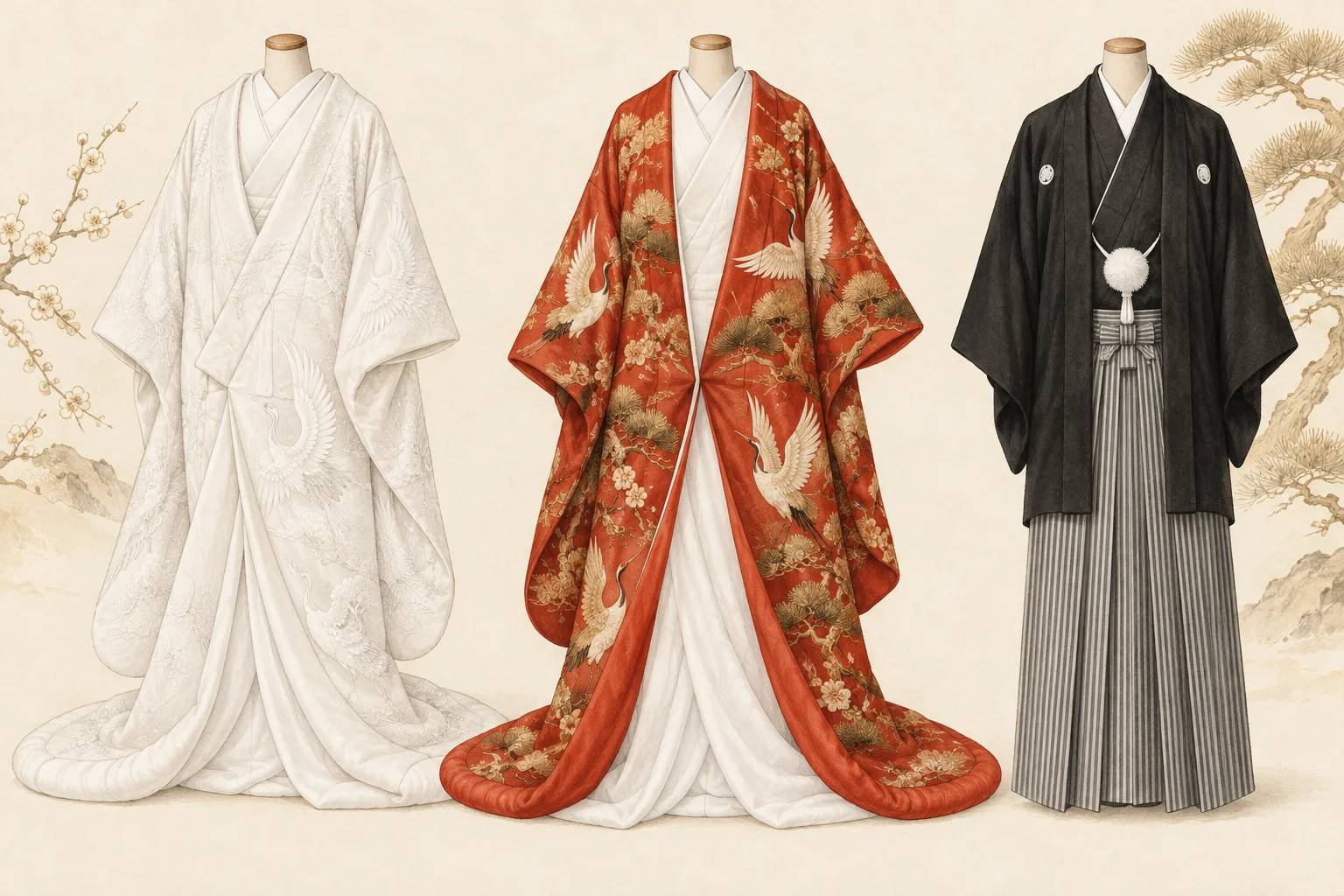
The shiromuku is the oldest formal bridal kimono in Japan, with roots reaching back to the Muromachi period in the 14th century. Originally worn only by women of the samurai class, the all-white ensemble symbolized purity, a blank canvas onto which the bride would be reshaped by her new family. White also represented the color of the sun in ancient Shinto cosmology, lending the garment a sacred quality that survives in modern weddings. A complete shiromuku ensemble layers an inner kimono, an outer uchikake also in white, a tsunokakushi or wataboshi headdress, and accessories such as the hakoseko ornament and the symbolic kaiken dagger.
The Symbolism Behind Every Layer
Each element carries meaning. The wataboshi, a soft white hood, was historically said to hide the bride's face from anyone other than her groom until the ceremony was complete. The tsunokakushi, literally translating as horn-hider, symbolized the bride's vow to suppress jealousy and ego in her new household. Even in 2026, these symbolic details remain core to the shiromuku's quiet power.
The Vibrancy and History of Iro-Uchikake
The iro-uchikake emerged later, during the Edo period, when wealthy merchant families and the noble class began commissioning elaborately embroidered overcoats for their daughters' weddings. Unlike the shiromuku's restrained palette, the iro-uchikake explodes with color: deep vermilion red, imperial gold, and rich black grounds embroidered with cranes, peonies, pine, bamboo, plum, and phoenix imagery. Each motif carries a wish: cranes for a thousand-year marriage, pine for endurance, peonies for prosperity. Traditionally the iro-uchikake was worn after the formal ceremony, during the reception, as the bride symbolically reentered the world in her new role.
Color Symbolism You Should Know
Red, the most popular iro-uchikake color, represents life, energy, and protection from evil. Gold signals wealth and divine blessing. Black, less common but increasingly fashionable, conveys dignity and timeless elegance. Many studios now also offer pastel iro-uchikake in soft pink, mint, or lavender, designed specifically for the photography market and the preferences of younger international couples.
Which Kimono Suits Which Photo Style
The two kimonos photograph very differently, and the choice often depends on location and mood. Shiromuku, with its monochromatic white tones, photographs beautifully in green garden settings, snowy winter landscapes, and minimalist Zen temple interiors where the contrast makes the bride glow. It also pairs exquisitely with traditional shrine architecture, lending an ethereal, ceremonial atmosphere that translates strongly in black-and-white photography.
When Iro-Uchikake Shines
Iro-uchikake is the showstopper for cherry blossom shoots, autumn foliage scenes, and any location where you want the bride to be the focal point against a busy backdrop. A red iro-uchikake under sakura petals or against a vermilion torii gate at Fushimi Inari produces some of the most internationally recognized images in Japanese wedding photography. For couples planning to print large wall art or release save-the-dates, iro-uchikake almost always reads stronger at a distance.
Practical Differences That Affect Your Shoot
Shiromuku and iro-uchikake have nearly identical weights, between seven and ten kilograms once fully layered, and both require professional assistance to wear. However, shiromuku is notoriously unforgiving in dusty or muddy outdoor conditions, so studios often restrict it to garden paths or limit outdoor time in rainy seasons. Iro-uchikake, with its darker grounds, hides minor smudges and is generally easier to photograph in active street or shrine settings.
Hair and Makeup Considerations
Shiromuku is traditionally paired with the formal nihongami hairstyle and a katsura wig, or with the wataboshi covering the head entirely. Iro-uchikake is more flexible: modern brides often pair it with softer updo styles, real-hair shimada arrangements, or even Western chignons accented with kanzashi hair ornaments. If you have personal hair styling preferences, iro-uchikake offers more creative freedom.
Wearing Both: The Iro-Naoshi Tradition
Many couples sidestep the decision entirely by booking a package that includes both kimonos. This tradition, called iro-naoshi, literally means changing colors and reflects the historical practice of brides transitioning from shiromuku during the ceremony to iro-uchikake at the reception. For photography, this approach produces a varied gallery, allowing couples to capture both the sacred quiet of shiromuku and the joyful drama of iro-uchikake. Expect to add ¥30,000 to ¥60,000 to your package for the second kimono and additional dressing time of roughly 45 minutes.
Conclusion
Choosing between shiromuku and iro-uchikake is ultimately a question of which story you want your photographs to tell. Shiromuku honors the sacred and timeless, while iro-uchikake celebrates color, abundance, and joy. Neither is more authentic than the other, and modern Japanese brides regularly wear both. If your budget allows only one, choose based on your location, season, and the emotional tone you want to remember. If you can wear both, you will leave Japan with two completely different visual memories of the same day.
Ready to see each look in real portfolios? Browse photographers who specialise in shiromuku or iro-uchikake specialists, see how the white kimono pairs with traditional Japanese wedding makeup and hair, and — if you are planning from overseas — read how kimono wedding photos work for foreign couples.
For the deeper background on the white option — meaning, history and every piece of the ensemble — read the complete shiromuku guide.
Frequently Asked Questions
Which kimono is more traditional, shiromuku or iro-uchikake?
Shiromuku is older, dating to the 14th-century samurai class, while iro-uchikake became widespread in the Edo period. Both are considered fully traditional today, and Japanese weddings typically include both.
Can I wear iro-uchikake at a Shinto shrine ceremony?
Historically shiromuku was reserved for the ceremony itself, but modern shrines accept either. Some couples wear shiromuku for the formal ritual and change into iro-uchikake for photography afterward.
Are pastel-colored iro-uchikake authentic?
Pastel iro-uchikake are a modern adaptation developed primarily for photography and international clients. They are stylistically inspired by classical pieces but are not traditional in the strictest historical sense.
How long does it take to put on each kimono?
Both require about 45 minutes to an hour of professional dressing, including hair styling and accessories. Changing between the two during a shoot typically takes another 30 to 45 minutes.
Is shiromuku harder to photograph in bright sunlight?
Yes, it requires careful exposure control because the white silk can easily blow out highlights. Experienced kimono photographers schedule shiromuku shoots in soft morning or overcast light for best results.
Related guides
 Style guide
Hikifurisode Bridal Kimono: Style and Booking Guide
Illustrative image · Unsplash. Not a photo of the specific people, places or services discussed.
Compare hikifurisode hems, obi, colors, accessories, and headdresses. Use the pre-booking checklist to discuss outfit numbers, dressing, attendants, and outdoor photos.
Read the guide Style guide
Wedding Kimono Patterns: 9 Motifs and Their Meanings
Illustrative image · Unsplash. Not a photo of the specific people, places or services discussed.
Learn the shapes and cultural meanings of nine wedding kimono motifs. Use a motif table and photo checklist to discuss the actual outfit before your shoot.
Read the guide Style guide
Traditional Japanese Wedding Dress & Attire: Bridal Kimono Guide
Illustrative image · Unsplash. Not a photo of the specific people, places or services discussed.
A complete guide to traditional Japanese wedding attire: the shiromuku, iro-uchikake, and hikifurisode, plus headpieces, accessories, the groom's montsuki, rental costs, and how to choose.
Read the guide