Meiji Jingu Wedding Photography: Permit Rules Guide
Meiji Jingu wedding photography permit guide. Permit fees, available plans, what foreign couples can shoot, and how to book the inner sanctuary.

Illustrative image · Unsplash. Not a photo of the specific people, places or services discussed.
Check current prices, availability and venue rules with the relevant studio or venue before booking.
Meiji Jingu, the vast Shinto shrine in central Tokyo dedicated to Emperor Meiji, is one of the most desirable kimono pre-wedding photography locations in Japan — and one of the most regulated. Unlike public parks or smaller shrines, Meiji Jingu has strict, formalized rules about where, when, and how kimono photography is permitted. This guide explains exactly what foreign couples can and cannot do at Meiji Jingu, the official wedding photo plans available, fees, lead times, and how your photographer handles the permit process on your behalf.
Meiji Jingu in Context
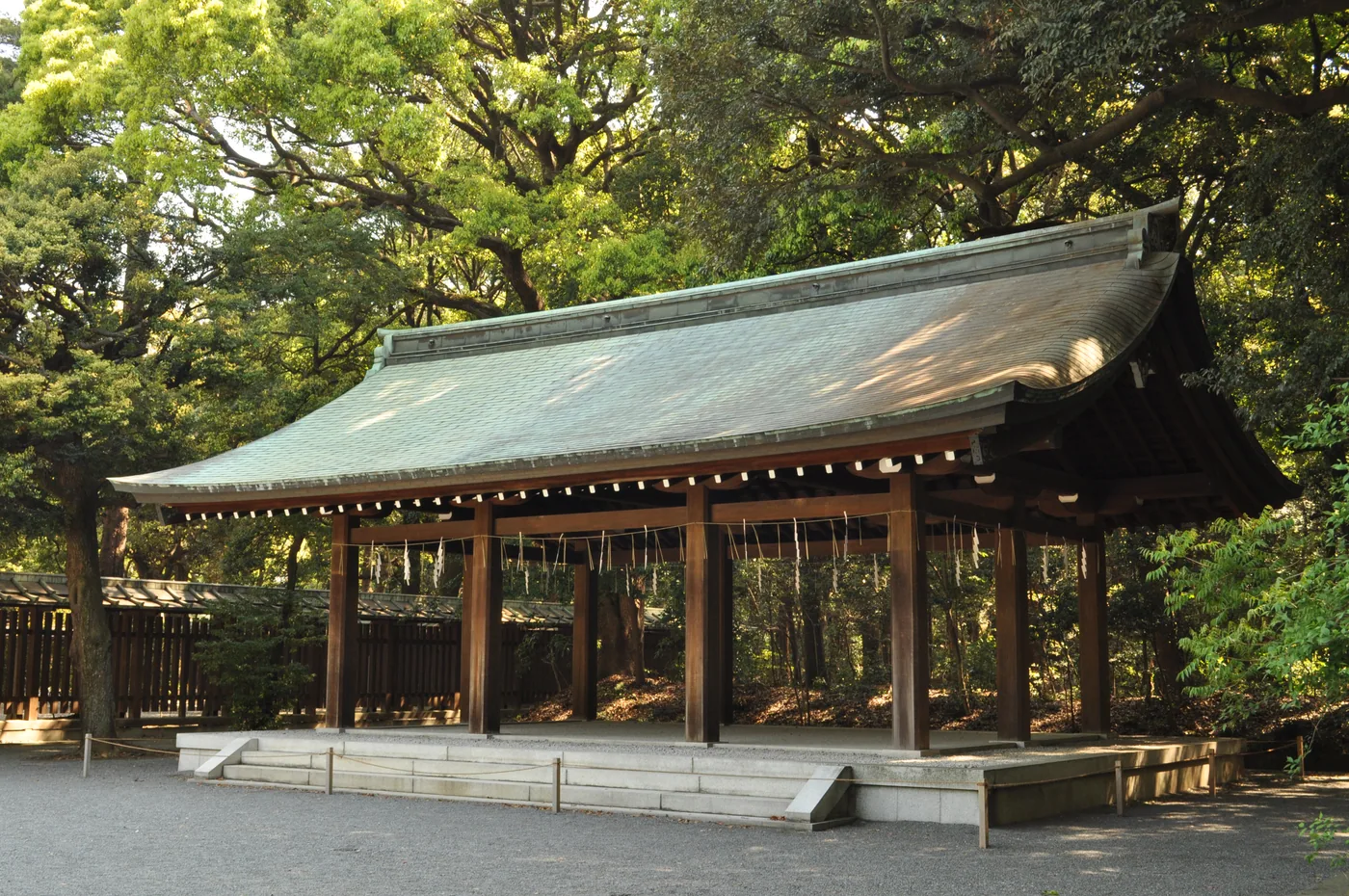

Built in 1920 and surrounded by a 70-hectare forest of 100,000 trees, Meiji Jingu is Tokyo's largest and most-visited shrine. It hosts more Shinto weddings per year than any other shrine in Japan — about 1,000 annually. The administrative office manages all wedding-related photography access through structured plans rather than informal permits.
Where Public Kimono Photography Is Allowed
Without any special permit, you and a small crew (photographer plus at most one assistant) can photograph in kimono at:
- The outer torii gate and approach (sando) before the inner shrine grounds
- The forested path leading to the main complex
- The plaza outside the main sanctuary (Honden)
- The Inner Garden (Gyoen) with its iris pond, paying the standard ¥500 entry fee
This level of access is sufficient for many couples and is the cheapest option. The trade-off: you photograph alongside general visitors and cannot access the inner sanctuary or the most photogenic kagura-den area.
Where You Cannot Photograph Without an Official Plan
- Inside the main sanctuary (Honden)
- The Kaguraden (sacred dance hall) and surrounding areas
- The bridge over the inner pond near the main hall
- Any area beyond the public visitor walkways
- During Shinto rituals or wedding ceremonies for other couples
Couples who want photos in these areas must book an official Meiji Jingu wedding photo plan.
Official Meiji Jingu Wedding Photo Plans
Meiji Jingu offers two distinct photo plans for foreign couples in 2026:
Standard Wedding Photo Plan
Approximately ¥150,000-¥200,000 (varies by season and time slot). Includes a designated 60-90 minute time window in the kagura-den and main hall corridor area, with one Meiji Jingu-approved photographer (most kimono studios that serve Meiji Jingu have approval). Does not include the kimono, hair, makeup, or your own photographer's fee — those are separate.
Premium Inner-Sanctuary Plan
Approximately ¥300,000-¥500,000. Includes access to the inner ceremonial areas, the bridge crossing, and a Shinto priest's blessing as part of the photo session. This is closer to a full wedding ceremony with photographs than a pure shoot.
Both plans must be booked through a Meiji Jingu-approved studio coordinator. Direct couple-to-shrine booking is not possible; you book the studio, and the studio handles all shrine coordination.
Lead Times
Meiji Jingu accepts permit applications 6 months in advance. Premium photographers serving Meiji Jingu typically book their slots 12-18 months ahead. The 6-month official lead time exists because the shrine balances multiple ongoing wedding ceremonies, public visitor flow, and seasonal events.
If you're planning more than 12 months out, you're early enough. If you're within 3 months of your target date, you may need to choose an alternative shrine.
How Your Photographer Handles the Permit
Reputable Meiji Jingu-approved kimono studios manage the permit process entirely on your behalf:
- You confirm your shoot date and request the official plan tier (standard or premium).
- The studio submits permit application to Meiji Jingu's office 4-6 months before the date.
- The shrine confirms your specific time slot 1-2 weeks before the shoot.
- On shoot day, you arrive at the studio for dressing, then the photographer leads you through shrine grounds and the approved photo areas during your scheduled window.
You typically do not interact with shrine staff yourself except to bow respectfully when entering and leaving the inner areas.
Studios with Established Meiji Jingu Relationships
Not all Tokyo kimono studios can secure Meiji Jingu permits. Studios with standing approval and substantial Meiji Jingu portfolios include:
- Meiji Kinenkan Photo Studio: On-site at the Meiji Jingu Gaien (outer garden) wedding hall. Direct relationship with the shrine.
- Tokyo Wasou Wedding Photo: Meiji Jingu specialist with regular shrine bookings.
- Photo Wedding Style: Outer-Tokyo studio with established Meiji Jingu permit relationships.
- Wakon Style Tokyo: Shrine-ceremony specialist that includes Meiji Jingu as one of several supported shrines.
Browse all Tokyo Meiji Jingu area photographers for direct comparisons.
What the Results Look Like
Public-area Meiji Jingu photos: the iconic massive wooden torii gate, the forested approach with shafts of morning sunlight, and the plaza outside the Honden. Strong traditional aesthetic and entirely achievable without a permit.
Permitted inner-area photos: the kagura-den's elegant exterior, the bridge over the inner pond, and (for premium plans) inside the corridor of the main shrine itself. These backdrops are simply not accessible through any other means and are what separate a Meiji Jingu shoot from a regular Tokyo park shoot.
Cost-Benefit Analysis
Total cost of a Meiji Jingu shoot:
- Public-area only: ¥150,000-¥220,000 (photographer + kimono package only)
- Standard official plan: ¥300,000-¥420,000 (photographer + kimono + shrine permit)
- Premium inner-sanctuary plan: ¥500,000-¥700,000 (full ceremony + photography)
The premium plan is roughly the cost of a destination wedding in Italy or Bali, but includes a real Shinto priest's blessing and access that no other foreign couple's photos will show.
Frequently Asked Questions
Can we just show up at Meiji Jingu in kimono and take selfies?
Yes for casual self-photos with a phone. Anything that looks like a "professional shoot" with a dedicated photographer, posing, and reflectors usually requires the official plan if it's in restricted areas.
Is the inner sanctuary really worth the cost?
For couples who want the most distinctive Tokyo kimono photos, yes. For couples on a budget, the public areas of Meiji Jingu already produce excellent images.
How long does the shoot itself take?
The official plan window is 60-90 minutes. Couples typically combine this with 1-2 hours of additional photography in the public areas before or after.
What if it rains?
Meiji Jingu does not refund permit fees for weather. Reputable studios offer rescheduling within the same week at their discretion. Confirm with your studio before paying the deposit.
Can the priest's blessing be in English?
The blessing itself is in Japanese (traditional norito). The studio coordinator translates the meaning in real-time or in advance. The blessing is not exchanged with the couple verbally; you receive it through posture and ritual movement.
Is Meiji Jingu more impressive than Heian Shrine in Kyoto?
Both are excellent. Meiji Jingu's selling point is the forest and the scale; Heian Shrine's is the vermilion architecture and weeping cherries. If you're already in Tokyo, Meiji Jingu makes sense. If you're already in Kyoto, Heian Shrine offers comparable photographic impact at a lower permit cost.
Plan Your Meiji Jingu Shoot
Meiji Jingu remains the gold standard for Tokyo kimono pre-wedding photography. Choose an approved studio, book 6-12 months ahead, and let your photographer handle the permit process. Browse photographers with Meiji Jingu experience to start your shortlist.
Photographers in this guide

Illustrative image · Unsplash. Not a photo of this studio or its work.
Photo Wedding Style
1-min walk from Gaienmae Station. Over 1,200 couples a year. Gardens, residences, shrine locations and kimono studios.
From $245–$1,290
Free to enquire
Illustrative image · Unsplash. Not a photo of this studio or its work.
Tokyo Wasou Wedding Photo
Specialists in kimono pre-wedding and wedding photography at shrines. Tokyo shrines including Meiji Jingu and Akasaka Hikawa.
From $645–$1,806
Free to enquire
Illustrative image · Unsplash. Not a photo of this studio or its work.
Meiji Kinenkan Photo Studio
Attached to a wedding hall by the Meiji Jingu Gaien. Shoots in a 3,300 sqm garden.
From —
Free to enquireLocations in this guide
Related guides
 General guide
Tattoos at Japanese Shrines: Honest 2026 Photoshoot Guide
Illustrative image · Unsplash. Not a photo of the specific people, places or services discussed.
A planner's honest 2026 guide to tattoos at Japanese shrine photoshoots — which precincts are relaxed, four cover-up methods that work under a kimono, and when to stop hiding.
Read the guideGeneral guideShrine Etiquette in Japan: A Step-by-Step Kimono Guide
Illustrative image · Unsplash. Not a photo of the specific people, places or services discussed.
The purification steps as Japan's shrine authority describes them, what to do when there is no ladle, and the photo rules for a paid kimono shoot.
Read the guide General guide
Shrine Permit Application Process: Japan Wedding Photo Guide
Illustrative image · Unsplash. Not a photo of the specific people, places or services discussed.
Shrine permit application process for Japan wedding photography: studio-handled timelines, Meiji Jingu and Kyoto fees, equipment restrictions, and lead times.
Read the guide