How Long Does a Kimono Photoshoot Take in Japan: Full Day Timeline
How long a kimono shoot in Japan really takes: full timeline by format, dressing duration, breakfast planning, and energy management tips.

Illustrative image · Unsplash. Not a photo of the specific people, places or services discussed.
Check current prices, availability and venue rules with the relevant studio or venue before booking.
One of the most underestimated planning factors for a kimono pre-wedding photoshoot in Japan is the time the shoot actually takes. Couples who imagine a quick two-hour session are usually surprised to learn that even the shortest professional shoot runs four hours, and a typical hybrid studio-plus-outdoor day can stretch to eight or nine hours from morning call to final frame. This guide breaks down the realistic timeline for each shoot format, explains what fills the hours, and helps couples plan their travel day appropriately.
Quick Summary
Format | Typical Duration | Best Call Time |
|---|---|---|
Studio only (single look) | 3.5 to 4.5 hours | 9:00 AM |
Studio only (two looks) | 5 to 6 hours | 8:00 AM |
Outdoor only (one location) | 3 to 4 hours | 5:30 AM (sunrise) or 3:00 PM (sunset) |
Outdoor only (two to three locations) | 5 to 7 hours | 5:30 AM |
Hybrid (kimono studio + outdoor) | 6 to 8 hours | 5:30 AM (outdoor first) or 7:30 AM (studio first) |
Two-outfit hybrid (kimono + Western dress) | 8 to 9 hours | 6:30 AM |
Why Dressing Takes So Long
The most surprising single time component for couples new to formal kimono is the dressing process. A bride in shiromuku or iro-uchikake requires forty-five to seventy-five minutes for full dressing, including the underlayers (hadagi, nagajuban), the kimono itself, the obi sash (which alone can take twenty minutes for an elaborate musubi knot), and the head and hand accessories. A second outfit change between shoots adds another thirty to fifty minutes. A groom in montsuki hakama takes twenty to thirty minutes. These times are unavoidable — they reflect the genuine complexity of authentic kimono wearing — and reputable studios will not rush this portion.
Hair and Makeup Duration
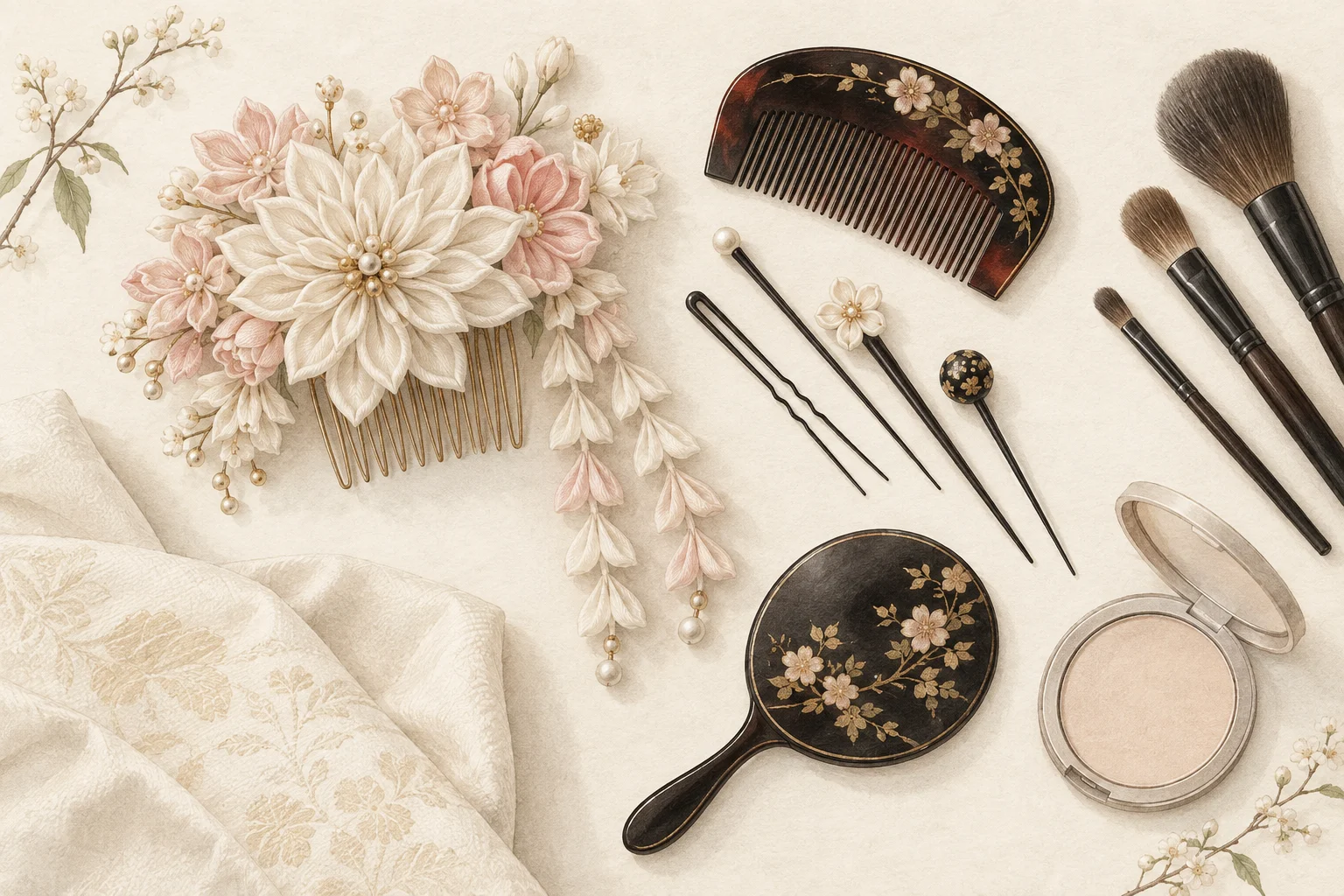
Bridal hair and makeup for a formal kimono shoot typically takes sixty to ninety minutes when done professionally. Traditional Japanese bridal hairstyles (Bunkin Takashimada for shiromuku, hair-down with kanzashi ornaments for iro-uchikake) require specialised technique. Couples who plan to wear two formats (kimono morning, Western dress afternoon) need to budget thirty to forty-five additional minutes for the restyling between formats, since the hair and makeup that work for shiromuku are typically different from what works for a contemporary white dress.
Actual Shooting Time
The actual time the photographer spends taking pictures is a smaller share of the day than couples expect. A single-look studio shoot typically captures one hundred to one hundred and fifty frames in forty-five to seventy-five minutes of active shooting. An outdoor shoot at a single location takes ninety minutes to two hours of active shooting, plus transit time. The rest of the shoot day is dressing, makeup, breaks, location transits, and the natural waiting periods when other visitors block compositions at popular locations.
Transits Between Locations
For outdoor shoots covering two or three locations within a city, transit time adds materially to the day. In Tokyo, Asakusa to Meiji Jingu by taxi takes thirty to forty-five minutes depending on traffic. In Kyoto, Higashiyama to Arashiyama is forty to sixty minutes. Multi-location days require either careful itinerary planning to minimise back-tracking, or acceptance that two locations in different parts of the city will spend roughly two hours total in transit. Reputable photographers structure itineraries around adjacent locations specifically to compress transit time.
Breakfast and Meal Planning
The most common timing problem for foreign couples is underestimating breakfast logistics. A 5:30 AM sunrise shoot call typically means leaving the hotel by 5:00 AM, which is before most hotel breakfast service starts (typically 6:30 AM). Premium studios serve light refreshments during dressing, but couples should plan to eat breakfast in the room before departure — many hotels accommodate this with pre-ordered cold breakfasts delivered the night before. A heavy meal immediately before dressing is uncomfortable; aim for a light breakfast around 4:30 AM with a substantial mid-shoot snack between segments.
Energy Management
The combined eight to nine hours of dressing, posing, smiling on cue, walking in formal silk, and concentrated emotional intensity is genuinely tiring even for couples in good physical condition. Brides in shiromuku carry an additional five to eight kilograms of silk and the bunkin takashimada hairpiece is heavy. Couples should plan for low-key evening activities after a full shoot day rather than scheduling a long dinner or another sightseeing block. Many couples report that the day after the shoot is best treated as a recovery day with light tourism rather than another intensive activity.
When Shorter Options Make Sense
For couples whose travel itinerary genuinely cannot accommodate a full-day shoot, several Tokyo and Kyoto studios offer abbreviated formats. A "quick portrait" two-hour session in studio with single look and a small album of twenty to thirty edited images runs ¥70,000 to ¥110,000 and provides a meaningful kimono experience without the day commitment. Sunset-only outdoor sessions of two and a half hours at a single location run ¥120,000 to ¥160,000. These are not the format we recommend for couples who travelled long-haul specifically for the kimono experience, but they are valid options for tight itineraries.
Frequently Asked Questions
Can we do a sunrise outdoor shoot and still sightsee in the afternoon?
Yes if the shoot is genuinely sunrise-only (5:30 to 9:00 AM). You will finish around 9:00 AM, return to the hotel for a shower and rest, and be ready for light sightseeing by midday. A full-day shoot does not permit additional activities; plan a rest evening.
How long does a wedding day ceremony shoot take compared to a pre-wedding photoshoot?
An actual wedding ceremony at a major shrine plus photography typically runs four to six hours for the ceremony itself, plus additional time for portrait photography. Total day commitment is similar to a hybrid pre-wedding shoot. For the distinction between formats, see our pre-wedding vs ceremony guide.
Will jet lag affect our shoot performance?
Yes, materially. Couples flying from Europe or the Americas should plan the shoot for day three or four of the trip rather than day one or two. The first two days of jet lag often produce visible fatigue in portrait photography. Day three or four gives sleep cycles time to align with Tokyo time.
Can the groom skip dressing time?
To some degree. The groom's montsuki hakama dressing takes twenty to thirty minutes — significantly less than the bride's seventy-five minutes. Many studios structure the morning so the groom arrives sixty minutes after the bride to avoid an idle wait.
What if we are running late?
Reputable studios build in a fifteen to thirty minute buffer at the start of the day. Beyond that buffer, the shoot timing compresses on the shooting portion rather than the dressing portion — meaning fewer frames or fewer location stops rather than less professional dressing. Aim to arrive ten minutes early.
Should we tip the dressing staff or photographer?
No. Tipping is not customary in Japan and is generally declined or returned by service staff. A sincere verbal thank-you and a positive review after the shoot are the appropriate gestures. Some couples leave a small wrapped gift from their home country as a thoughtful gesture, which is welcomed.
Find a Studio for Your Shoot Length
Browse our directory of English-speaking kimono photographers across Japan filtered by package length, city, and budget. For the broader booking framework, see our ultimate guide to Japan pre-wedding photoshoots.
Related Decisions to Make
Related guides
BudgetKimono Rental in Japan: What It Costs and Which Kind You Need
Illustrative image · Unsplash. Not a photo of the specific people, places or services discussed.
Kimono rental in Japan means two very different things: a ¥3,000 afternoon in Kyoto, or a bridal shoot from ¥88,000. What each costs, includes and takes.
Read the guide Style guide
Traditional Japanese Wedding Costumes: Who Wears What
Illustrative image · Unsplash. Not a photo of the specific people, places or services discussed.
Traditional Japanese wedding costumes for the bride, groom, family and guests: how formality ranks, what to avoid, and which garments you can actually rent.
Read the guide Location deep dive
Kawaguchiko Kimono Photoshoot: Mt Fuji's Iconic Vista
Illustrative image · Unsplash. Not a photo of the specific people, places or services discussed.
Plan a kimono photoshoot at Lake Kawaguchi with honest clear-Fuji probability guidance, Chureito Pagoda and Oishi Park location logistics, seasonal trade-offs, and access from Tokyo via the Fujikyu Express.
Read the guide