Cherry Blossom Wedding Photoshoot in Japan: Booking Timeline & Tips
How to book a cherry blossom kimono photoshoot in Japan. Best timing, top locations, permits, and how far in advance to reserve your photographer.

Illustrative image · Unsplash. Not a photo of the specific people, places or services discussed.
Check current prices, availability and venue rules with the relevant studio or venue before booking.
A cherry blossom wedding photoshoot in Japan is one of the most romantic experiences a couple can plan, but the entire window only lasts about ten days, and Japan's most photogenic sakura locations book out twelve months in advance. The difference between a relaxed, picturesque morning under blooming Yoshino cherries and a stressful scramble at a crowded park usually comes down to one thing: how early you started planning. This guide walks foreign couples through every decision that shapes a successful sakura kimono shoot in Japan, from forecasting the bloom and choosing between Tokyo, Kyoto and Mt. Fuji, to securing permits, picking the right photographer, and protecting your day against rain. Whether you are flying in from the United States, Europe or Australia, the next 2,000 words will help you book confidently and avoid the mistakes that cost couples their first-choice slot.
When Is the Best Time to Book a Cherry Blossom Photoshoot
Japan's cherry blossom season is famously precise. Most years, peak bloom in Tokyo and Kyoto falls between late March and the first week of April, with the trees in full flower for only seven to ten days. The Japan Meteorological Corporation issues sakura forecasts starting in late January, and updates them weekly through the season. For couples flying in, the rule of thumb is to target your trip for the last week of March through the second week of April, and to keep at least four flexible days in your itinerary so you can move the shoot to the day the cherries actually peak rather than the day you originally hoped.
Regional Bloom Calendar at a Glance
The earliest cherries open in Kyushu in mid-March, sweep through Tokyo and Kyoto in late March, and arrive at Mt. Fuji and the Five Lakes in early to mid-April. Late bloomers in Tohoku and Hokkaido extend the season into early May. Couples who want a guaranteed shoot regardless of timing sometimes book Hokkaido or Tohoku as a backup region in case the southern bloom front arrives unexpectedly early.
Region | Typical Peak Bloom | Best For |
|---|---|---|
Tokyo (Meiji Jingu, Asakusa) | March 25 – April 4 | Iconic shrines plus skyline contrast |
Kyoto (Philosopher's Path, Maruyama) | March 28 – April 7 | Most traditional kimono backdrops |
Mt. Fuji (Lake Kawaguchi, Chureito) | April 10 – April 22 | Mt. Fuji + sakura postcard shot |
Tohoku (Hirosaki Castle) | April 22 – May 5 | Late bloomers, sakura tunnels |
Top Locations for a Sakura Kimono Photoshoot
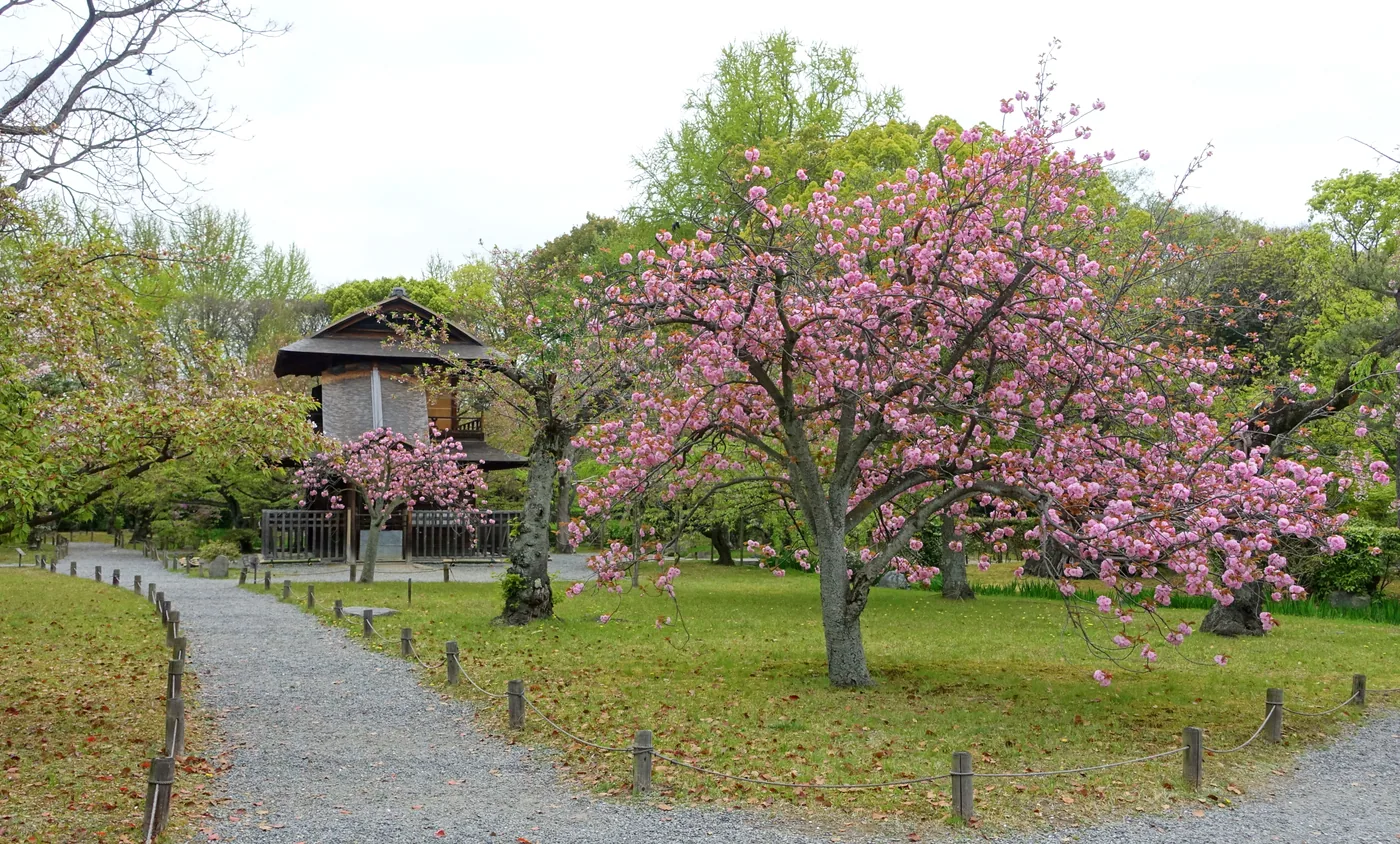
Choosing the right location shapes everything else: the photographer you can hire, the permits you need, and the kimono style that will photograph best. Four destinations consistently rank as the most requested for foreign couples planning a sakura kimono shoot in Japan.
Meiji Jingu and Yoyogi Park, Tokyo
The forested approach to Meiji Jingu in Shibuya turns into a quiet sakura corridor in early April, with weeping cherry trees framing the torii gates. Public photography is allowed in the outer paths and Yoyogi Park, but commercial kimono shoots inside the inner shrine grounds require advance permission from the shrine office and a coordinator approved by the shrine. Most photographers who specialize in Meiji Jingu have standing relationships with the shrine and can include the permit process in their package.
The Philosopher's Path and Maruyama Park, Kyoto
Tetsugaku-no-michi, the Philosopher's Path, is a two-kilometer canal-side walk lined with hundreds of Somei Yoshino cherries. It is unpaved, mostly free of crowds at sunrise, and atmospheric for a shiromuku or iro-uchikake. The path is public, so no permit is required for couples and a small two-to-three person crew. Maruyama Park, fifteen minutes away, is home to Kyoto's most famous weeping cherry tree (the shidare-zakura) and is a classic backdrop, though it grows crowded after 8 a.m. Combining both in one morning is the gold-standard Kyoto sakura itinerary.
Asakusa, Senso-ji and the Sumida River
For couples who want vermilion architecture and traditional townscapes alongside cherry blossoms, Asakusa offers Senso-ji Temple, the Nakamise approach, and the Sumida River corridor lined with cherry trees and old-Tokyo charm. The Sumida riverbank is fully public and photographs well at golden hour, while Senso-ji's grounds are open to private photography before the temple opens to the public at 6 a.m.
Lake Kawaguchi and the Chureito Pagoda, Mt. Fuji
Lake Kawaguchi's north shore offers what may be the most internationally recognizable image in Japan: a five-storied pagoda, cherry blossoms in full bloom, and Mt. Fuji rising in the background. Because the Mt. Fuji area blooms one to two weeks later than Tokyo, this is the safest hedge for couples whose travel dates fall after the southern peak. The shoot requires a 400-step climb to the Chureito viewpoint, so plan footwear and stamina accordingly.
How Far in Advance to Book Your Sakura Shoot
Booking timelines for sakura shoots are aggressive. The best photographers and the most coveted weekend slots disappear twelve months ahead. Here is the realistic timeline international couples should follow.
Twelve to Nine Months Out
Begin researching photographers and studios. This is the window in which Kyoto's top kimono houses and English-speaking Tokyo studios fill their March-April calendars. Send inquiries to three to five providers, request itemized quotes, and place a deposit on your first choice. If you are flying from overseas, this is also when you should book international flights to lock in fares.
Nine to Six Months Out
Confirm kimono selection. Most studios let brides choose from in-house collections; premium silk uchikake and heirloom pieces are reserved on a first-come basis. If you want a specific design featured on the studio's website, lock it in now.
Six to Three Months Out
Finalize the shooting itinerary with your photographer: which locations, in which order, at what times. This is also when you book hotels in walking or short-taxi distance of your shoot locations. Hotels near Meiji Jingu and Gion can be fully booked during sakura week.
Three Months to One Week Out
Watch the sakura forecast. Around eight to ten days before the predicted peak, your photographer will confirm the optimal shoot day within your flexibility window. Build in at least three flexible days so the shoot can be rescheduled if the bloom arrives early or rain forces a postponement.
Permits, Fees, and What You Cannot Photograph
Permit rules vary widely by location, and getting this wrong can result in being asked to leave mid-shoot. Public parks like Yoyogi Park, the Philosopher's Path, and the Sumida riverbank do not require permits for couples and small crews using lightweight gear. Most major shrines, however, do require advance permission for commercial-style photography, especially when a kimono is involved.
Typical Permit Costs
Meiji Jingu requires a coordinated permit costing approximately ¥30,000 for shrine grounds access and a designated time window. Heian Shrine in Kyoto offers a dedicated photo plan starting around ¥50,000 that includes the iconic vermilion torii and weeping cherry courtyard. Smaller neighborhood shrines often allow private use for ¥10,000 to ¥20,000, while UNESCO-listed temples like Kiyomizu-dera have strict rules and limited availability.
What Is Generally Prohibited
Drones are banned in nearly all urban parks, near shrines, and within the Imperial Palace's exclusion zones. Lighting equipment beyond a single reflector requires permission almost everywhere. Inside temple buildings, photography is usually limited to handheld shots, and tripods are frequently prohibited. Reputable photographers handle these restrictions silently, so you should not need to think about them on shoot day.
How to Choose the Right Sakura Photographer
The photographer you hire will determine whether your sakura shoot feels rushed and transactional or genuinely once-in-a-lifetime. Foreign couples should evaluate candidates against four criteria.
Sakura-Specific Portfolio
Look for a portfolio that includes recent cherry blossom work, not stock images. A photographer who has shot the same locations across multiple seasons knows exactly where the morning light hits the petals and which corners avoid crowds. Browse our directory of vetted kimono photographers across Japan filtered by region and style.
Language and Communication
You will be making aesthetic decisions in real time on shoot day. A photographer who speaks fluent English or works with a coordinator who does is essential unless you speak conversational Japanese. Confirm communication channel in advance, whether that is email, LINE, WhatsApp, or WeChat.
Transparent Pricing
Reputable studios provide itemized written quotes covering kimono, hair and makeup, dressing assistance, location fees, hours of coverage, and number of edited photos delivered. Beware of headline prices significantly below ¥80,000, which usually exclude essentials that get added later.
Sakura Reschedule Policy
The single most important contract clause for a sakura shoot is the rebooking policy if the cherries do not bloom on your scheduled date. Top operators offer one free reschedule within the season at no extra charge, and refund the deposit if the bloom is so far off your travel dates that no rescheduling is possible.
Weather Contingency and Rain Plan
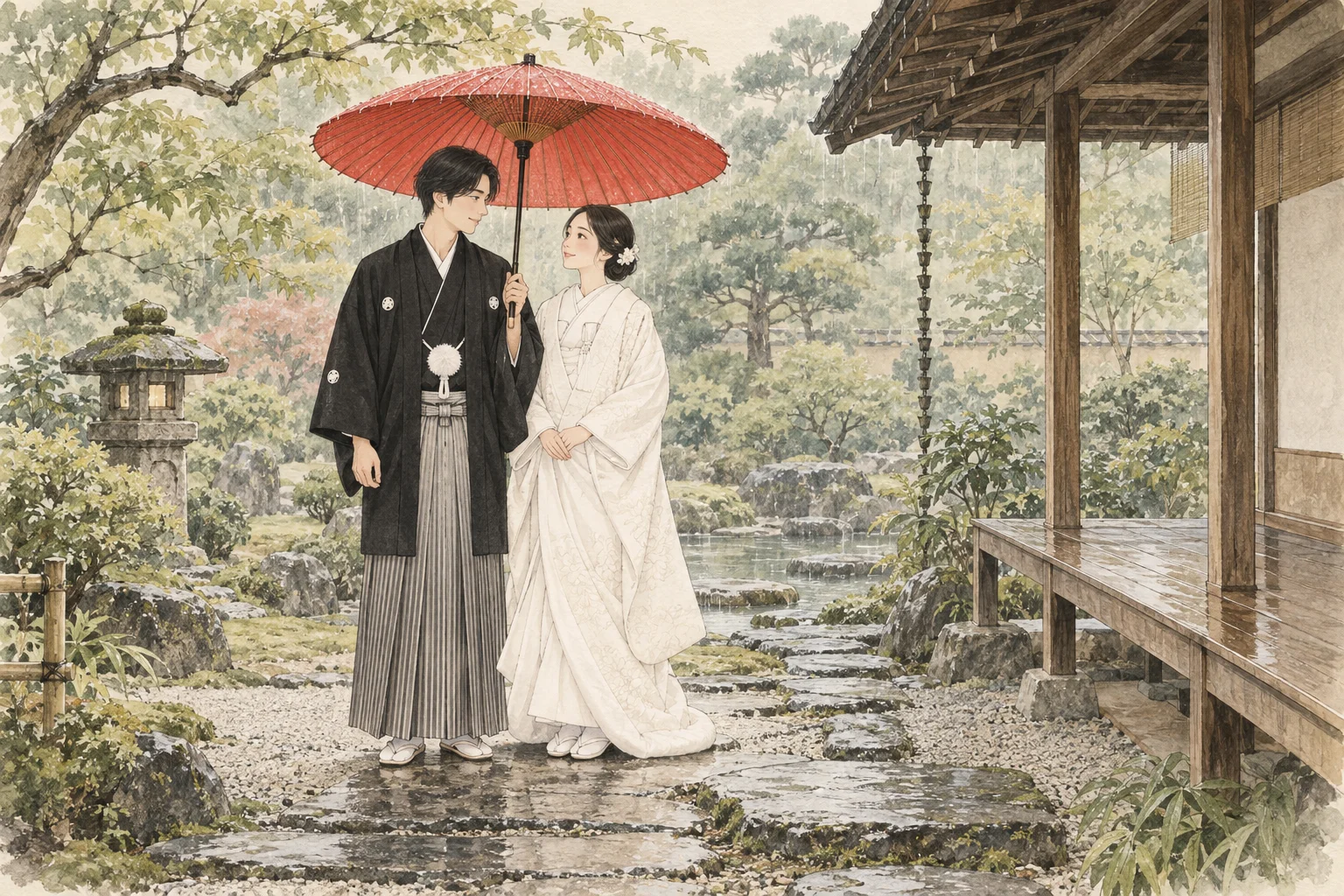
Japanese spring is rainy. Even with careful planning, there is a real chance of a downpour on your shoot day. The best photographers prepare for this by offering an indoor studio backup, a kimono-friendly umbrella that becomes a styling element, or a one-time reschedule to the next sunny morning. Discuss the rain plan during booking, not on the rainy morning itself. If your travel itinerary cannot accommodate a reschedule, ask your photographer whether they have a covered location such as a temple veranda or a historic machiya that can serve as a sheltered backup.
What to Wear: Kimono Choices for Sakura Season
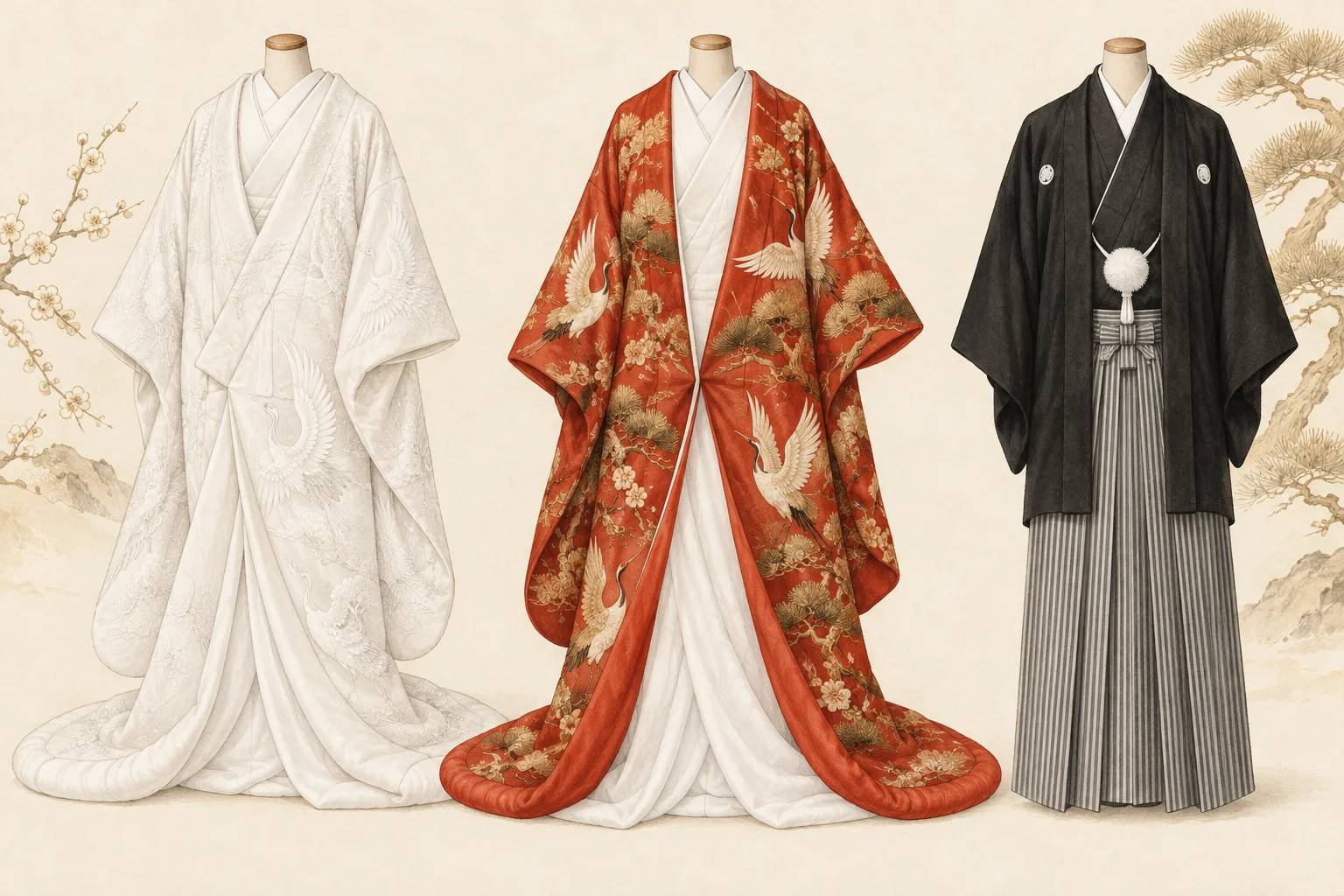
Shiromuku, the pure-white bridal kimono, photographs strikingly against pink cherry blossoms and is the most classical choice. The visual contrast is unmatched, and the color balance is forgiving in overcast light. Iro-uchikake, the colorful brocade overcoat, is a stronger choice on partly cloudy days or against more muted backdrops like the Philosopher's Path canal. Many couples opt for two-piece shoots: shiromuku for the morning shrine session, then changing into a red iro-uchikake for the park or street portion. Grooms wear the formal montsuki hakama in black or grey, with white tabi socks and zori sandals. The full ensemble is provided by the studio, so couples bring only their personal accessories.
Frequently Asked Questions
Below are the questions we hear most often from couples planning a sakura kimono shoot in Japan. For more answers, see our complete article library or contact a matched photographer directly.
When should I book a cherry blossom photoshoot in Japan?
Book twelve months in advance for the best photographers and weekend slots. Six months is the latest realistic window for a quality shoot during peak sakura. Within three months of the bloom, most premium studios are fully booked and you may only get weekday slots.
How accurate are Japan's cherry blossom forecasts?
Forecasts published by the Japan Meteorological Corporation from late January are accurate within three to five days of actual peak bloom by mid-March. Couples should plan for at least a four-day flexible window around the predicted peak.
Do I need a permit for a sakura photoshoot at a shrine?
Public parks like the Philosopher's Path and Yoyogi Park do not require permits for couples with small crews. Major shrines like Meiji Jingu and Heian Shrine require advance permits costing roughly ¥30,000 to ¥50,000. Your photographer handles this on your behalf.
What happens if it rains on my scheduled shoot day?
Reputable studios offer one free reschedule within the same season. Many also provide a covered backup location such as a temple veranda or historic machiya. Always confirm the rain policy in writing before paying the deposit.
Can the cherries miss my travel dates entirely?
It is rare but possible. The bloom can shift by up to a week earlier or later than forecast. Couples flying long-haul should consider Mt. Fuji or Tohoku as a backup region, since those areas bloom one to three weeks after Tokyo and Kyoto.
Is the Mt. Fuji and Chureito Pagoda location good for couples with mobility limits?
The classic Chureito viewpoint requires climbing roughly 400 stone steps. Couples who prefer flat access should ask their photographer about Lake Kawaguchi north shore alternatives, which offer Mt. Fuji and cherry blossom shots without the climb.
Compare Other Seasons
- Autumn Foliage Kimono Photoshoot in Japan
- Snow Wedding Photoshoot in Japan
- Plum Blossom Kimono Photoshoot in Japan
- Wisteria Kimono Photoshoot in Japan
Ready to Book Your Sakura Shoot
A cherry blossom kimono photoshoot in Japan rewards couples who plan early and stay flexible. Lock in your photographer twelve months ahead, build at least four flexible days into your travel itinerary, and choose a region whose bloom forecast aligns with your dates. Then trust your photographer to handle the permits, the timing, and the choreography on the day. We have curated a directory of 176 vetted kimono photographers across Japan, all reviewed for sakura experience, English communication, and transparent pricing. Find a photographer matched to your sakura plans and start the conversation today.
Locations in this guide


Related guides
 Season
Plum Blossom Kimono Photoshoot: February–March Timing in Japan
Illustrative image · Unsplash. Not a photo of the specific people, places or services discussed.
Plan a plum blossom kimono shoot in Japan: peak windows in Kyoto, Tokyo, Mito and Dazaifu, plus why it costs 15-25% less than cherry season.
Read the guide Season
Wisteria Kimono Photoshoot in Japan: Late Spring's Hidden Season
Illustrative image · Unsplash. Not a photo of the specific people, places or services discussed.
Plan a wisteria kimono shoot in Japan: peak windows at Ashikaga, Kasuga, Kameido and Kawachi Fuji-en, plus how to avoid Golden Week crowds.
Read the guideSeasonSummer Yukata & Kimono Photoshoot in Japan: Beating the Heat
Illustrative image · Unsplash. Not a photo of the specific people, places or services discussed.
Plan a summer kimono or yukata shoot in Japan: sunrise scheduling, altitude and northern locations, and what to wear in 30°C+ humidity.
Read the guide