Autumn Foliage Kimono Photoshoot in Japan: Best Spots & Timing
Plan an autumn foliage kimono shoot in Japan: peak colour windows for Kyoto, Nikko and Kamakura, permit fees, and how far ahead to book.

Illustrative image · Unsplash. Not a photo of the specific people, places or services discussed.
Check current prices, availability and venue rules with the relevant studio or venue before booking.
Autumn foliage in Japan peaks two to three weeks later than the cherry blossom season, which is the single fact that makes the 2026 koyo (autumn leaves) window strategically valuable for foreign couples. While sakura forces a high-stakes ten-day booking window in late March, autumn delivers a more forgiving four-week peak across the country: mid-October in Nikko, late November in Kyoto and Kanazawa, and the first week of December in Kamakura. The colour palette is also dramatically warmer — crimson maples, golden ginkgo, and the soft directional light of late afternoon — which photographs particularly well against iro-uchikake in deep red, persimmon, and gold tones. This guide walks foreign couples through every decision that shapes a successful autumn kimono shoot in Japan: forecast timing, picking between Kyoto and Nikko, the strict November permit rules at Eikan-do and Tofuku-ji, and how the 10-20% premium over spring sakura pricing actually breaks down.
When Is the Best Time to Book an Autumn Foliage Photoshoot
Japan's autumn colour season runs almost two months from north to south, but peak colour at any single location lasts only ten to fourteen days. The Japan Meteorological Corporation and Weathernews publish koyo forecasts from early September, updated weekly. For couples booking from overseas, the rule of thumb is to target your travel window for the last two weeks of November (Kyoto and central Honshu) and keep at least four flexible days in your itinerary so the shoot can move to the day the maples actually peak rather than the day you originally hoped.
Regional Foliage Calendar at a Glance
Colour begins in Hokkaido in late September, sweeps through Tohoku and Nikko in mid to late October, reaches Tokyo, Kanazawa and Kamakura in mid to late November, and finishes in Kyoto and Kyushu by the first week of December. Couples who want a guaranteed peak regardless of weather sometimes book Nikko as a Plan A and Kyoto as a Plan B two weeks later, or vice versa, depending on which region the season is leaning early.
Region | Typical Peak Colour | Best For |
|---|---|---|
Nikko (Toshogu, Irohazaka) | October 20 – November 5 | Mountain landscape plus historic shrine |
Tokyo (Rikugien, Showa Kinen) | November 18 – December 5 | City-based shoots with garden backdrops |
Kanazawa (Kenrokuen) | November 15 – November 30 | Edo-period garden with maple-and-pine balance |
Kyoto (Tofuku-ji, Eikan-do) | November 22 – December 8 | Temple architecture plus maple corridors |
Kamakura (Engaku-ji, Hokoku-ji) | November 25 – December 10 | Zen temples, bamboo plus maple combinations |
Top Locations for an Autumn Kimono Photoshoot
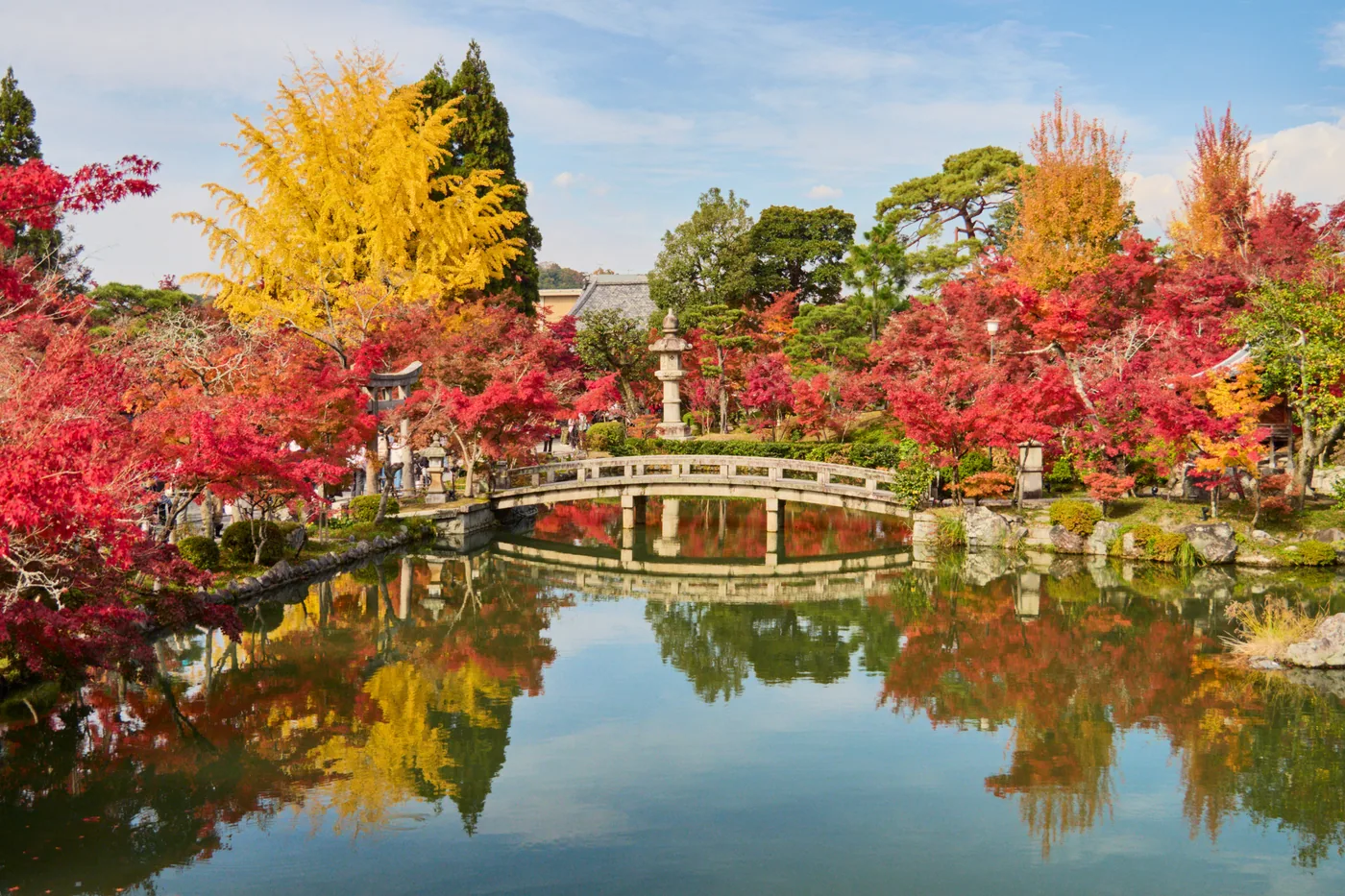

The location you choose shapes the photographer you can hire, the permit cost, and the kimono colourway that will photograph best against the leaves. Four destinations consistently rank as the most requested for foreign couples planning an autumn kimono shoot in Japan.
Tofuku-ji and Eikan-do, Kyoto
Tofuku-ji's Tsutenkyo bridge looks out over a valley of around two thousand maple trees and is, on its peak weekend, the most photographed autumn scene in Japan. The temple does not permit commercial photography on the bridge itself during peak season, but the surrounding sub-temples and the approach paths produce equally strong images with fewer crowd-control restrictions. Eikan-do, twenty minutes north, is famous for its illuminated evening maples and offers a dedicated commercial photography permit during the autumn weeks. Reputable Kyoto studios pair Tofuku-ji exterior shots with Eikan-do or a smaller maple-rich sub-temple for a half-day itinerary.
Toshogu Shrine and Irohazaka, Nikko
Nikko offers something Kyoto cannot: mountain-scale autumn colour against UNESCO-listed shrine architecture. The Irohazaka switchback road and Kegon Falls deliver wide landscape backdrops, while Toshogu's vermilion-and-gold gates provide the formal portrait location. Because Nikko peaks two to three weeks before Kyoto, it is the natural Plan A for couples whose travel dates fall in the second half of October. Photography on Toshogu's grounds requires a coordinated permit; the surrounding mountain roads are public.
Kenrokuen Garden, Kanazawa
Kenrokuen is one of Japan's three great Edo-period gardens and balances maples, pines, stone lanterns and bridges in a way that frames a kimono couple from almost any angle. The garden charges a modest commercial photography fee (approximately ¥10,000) and permits couple shoots outside of major event days. Kanazawa pairs well with a shoot at Higashi Chaya district's teahouse streets for a two-location autumn day. Browse our Kenrokuen location guide for full details.
Hokokuji Bamboo Temple, Kamakura
Kamakura's autumn season runs late — into the first week of December — making it the natural choice for couples whose flights arrive after Kyoto has already finished. Hokokuji combines maples with its famous bamboo grove, producing images with both red and green textures in a single frame. Engaku-ji and Meigetsu-in (the "Ajisai temple") offer additional Zen-temple compositions. Kamakura is ninety minutes by train from central Tokyo and works well as a one-day excursion paired with the city itself.
How Far in Advance to Book Your Autumn Shoot
Booking timelines for autumn shoots are nearly as aggressive as sakura. The best Kyoto photographers and the most coveted November weekends disappear ten months ahead. Here is the realistic timeline international couples should follow.
Ten to Eight Months Out
Begin researching photographers and studios. This is the window in which Kyoto's top kimono houses and Nikko-specialised studios fill their November and late-October calendars. Send inquiries to three to five providers, request itemised quotes, and place a deposit on your first choice. If you are flying from overseas, this is also when you should book international flights to lock in fares.
Eight to Five Months Out
Confirm kimono selection. Autumn favours warm-toned iro-uchikake — deep crimson, gold, and aubergine designs that complement rather than compete with the maples. Most studios let brides choose from in-house collections; the most popular autumn-themed silk uchikake reserves on a first-come basis. If you want a specific design featured on the studio's website, lock it in now.
Five to Three Months Out
Finalise the shooting itinerary with your photographer: which temples or gardens, in which order, at what times. This is also when you book hotels within walking or short-taxi distance of your shoot locations. Hotels near Higashiyama in Kyoto and Toshogu in Nikko fill quickly during peak koyo week.
Three Months to One Week Out
Watch the koyo forecast. Around ten to fourteen days before the predicted peak, your photographer will confirm the optimal shoot day within your flexibility window. Build in at least four flexible days so the shoot can be rescheduled if the colour arrives early or rain delays the peak.
Permits, Fees, and What You Cannot Photograph
Permit rules in autumn are stricter than in any other season because foliage temples experience their highest annual visitor numbers. Public parks and gardens generally allow couple shoots with small crews, but the most photogenic temples implement crowd-control restrictions during the November peak weeks that override their normal rules.
Typical Permit Costs and Restrictions
Eikan-do offers a dedicated autumn photography plan starting around ¥80,000 that includes after-hours access to the illuminated maples. Kenrokuen charges approximately ¥10,000 for commercial photography on non-event days. Tofuku-ji prohibits commercial photography on the Tsutenkyo bridge during peak weeks but allows shoots in the surrounding sub-temples for a coordination fee. Nikko Toshogu requires a coordinated permit costing approximately ¥30,000 for shrine grounds access. Smaller neighbourhood shrines and public gardens often allow private use for ¥10,000 to ¥20,000 or no fee at all. For background on shrine and temple etiquette during the shoot itself, see our shrine manners guide.
What Is Generally Prohibited
Drones are banned in all UNESCO-listed temple grounds, near shrines, and in nearly every urban park. Lighting equipment beyond a single reflector requires permission almost everywhere. Tripods are frequently restricted on busy temple paths during peak foliage week to prevent visitor congestion. Reputable photographers handle these restrictions silently, so you should not need to think about them on shoot day.
How to Choose the Right Autumn Photographer
The photographer you hire will determine whether your autumn shoot feels rushed against November crowds or genuinely once-in-a-lifetime. Foreign couples should evaluate candidates against four criteria.
Autumn-Specific Portfolio
Look for a portfolio with recent autumn work shot at the exact temples you want to visit, not generic maple stock. A photographer who has shot Eikan-do across multiple seasons knows precisely which sub-temple courtyard avoids the 11 a.m. tour-bus arrival, and which afternoon hour catches the western light through the maple canopy. Browse our directory of vetted kimono photographers across Japan filtered by region and style.
Language and Communication
You will be making aesthetic decisions in real time on shoot day, often against time pressure as the light shifts. A photographer who speaks fluent English or works with a coordinator who does is essential unless you speak conversational Japanese. Confirm communication channel in advance, whether that is email, LINE, WhatsApp, or WeChat.
Transparent Pricing
Reputable studios provide itemised written quotes covering kimono, hair and makeup, dressing assistance, location and permit fees, hours of coverage, and number of edited photos delivered. Autumn pricing typically runs 10–20% above the spring sakura rate because of the shorter window and higher demand. Beware of headline prices significantly below ¥90,000 in November, which usually exclude essentials that get added later.
Autumn Reschedule Policy
The most important contract clause for an autumn shoot is the rebooking policy if the foliage peaks earlier or later than scheduled. Top operators offer one free reschedule within the season at no extra charge, and refund the deposit if the colour shift is so far off your travel dates that no rescheduling is possible.
Weather Risk and Contingency Planning
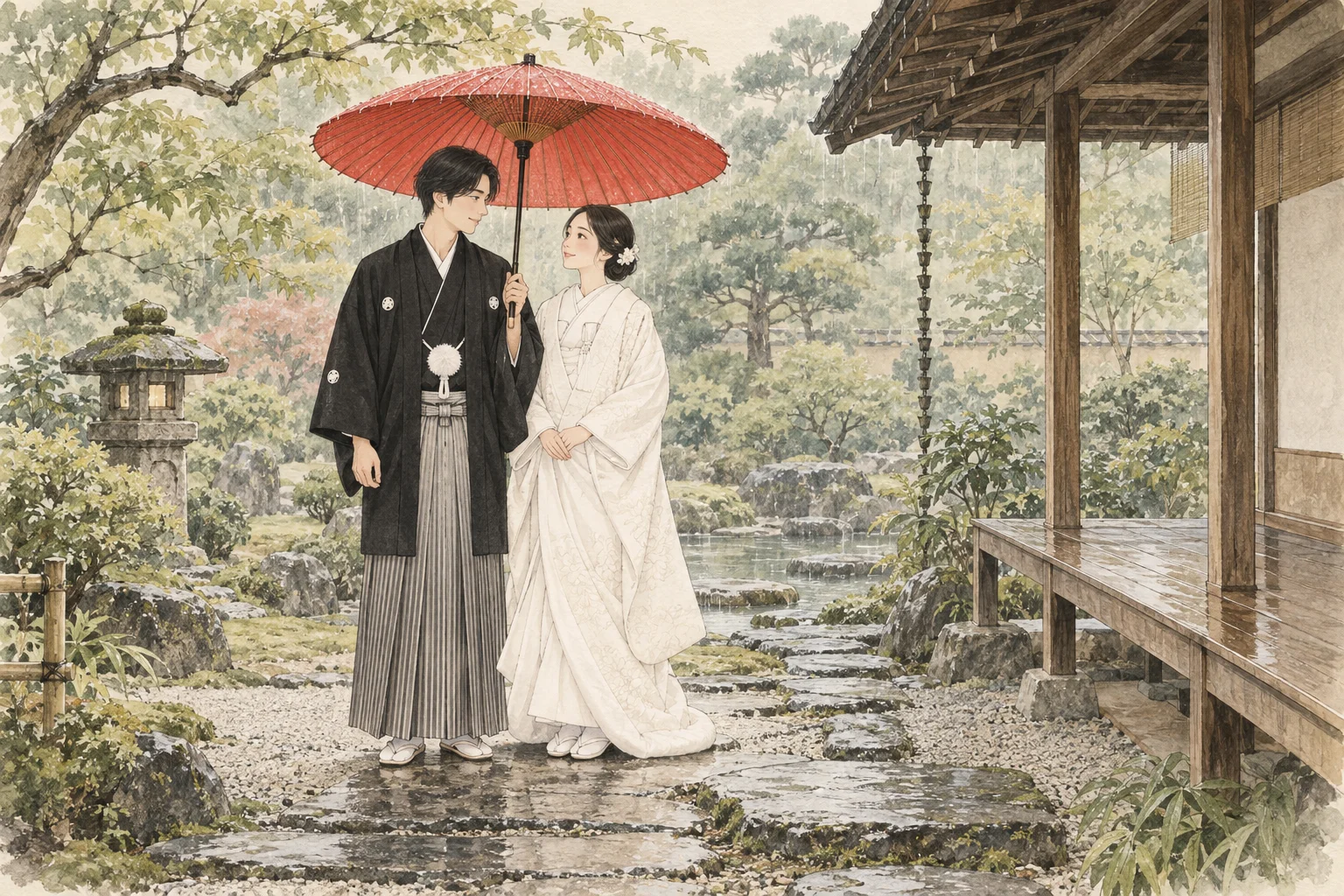
Japanese autumn is statistically the country's most stable photography weather — but the season is not without risks. Typhoons can still reach Honshu through mid-October and strip leaves from trees overnight in Nikko and Kamakura. An unusually warm September and October can delay Kyoto's peak into the first week of December, after many couples have already flown home. The best photographers prepare for both scenarios by offering one free reschedule within the season, by maintaining a Plan B location two to three weeks behind on the colour timeline, and by having indoor temple-interior or studio backups for rain days. Discuss these contingencies during booking, not on the morning of a delayed peak. If your travel itinerary cannot accommodate a reschedule, ask your photographer whether they have a covered location such as a temple veranda or a historic machiya that can serve as a sheltered backup.
What to Wear: Kimono Choices for Autumn Foliage
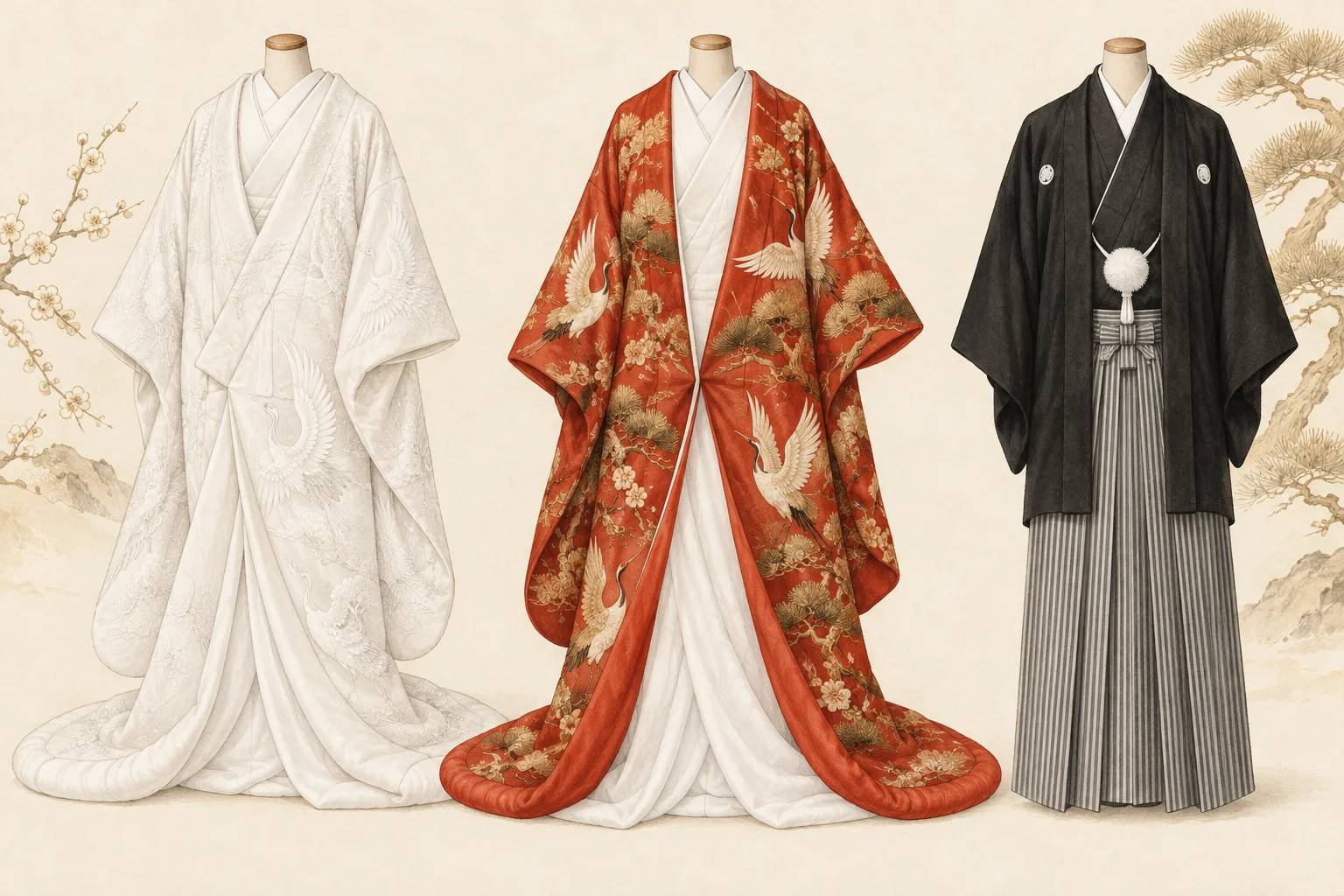
Iro-uchikake in autumn tones — deep crimson, persimmon, aubergine, gold — is the classical choice and photographs strikingly against the maples. The warm-on-warm palette produces an immersive, painterly effect that is difficult to achieve in any other season. Shiromuku, the pure white bridal kimono, provides the inverse approach: a stark white silhouette against the burning background, often chosen for the formal portrait session at a shrine. Many couples opt for two-piece shoots: iro-uchikake for the maple temple session, then changing into shiromuku for the formal shrine portrait. Grooms wear the formal montsuki hakama in black, grey, or a subtle deep-brown for autumn, with white tabi socks and zori sandals. For a deeper comparison, see our shiromuku vs iro-uchikake guide. The full ensemble is provided by the studio, so couples bring only their personal accessories.
Frequently Asked Questions
Below are the questions we hear most often from couples planning an autumn kimono shoot in Japan. For more answers, see our complete article library or contact a matched photographer directly.
When should I book an autumn foliage photoshoot in Japan?
Book ten months in advance for the best photographers and weekend slots. Six months is the latest realistic window for a quality shoot during peak Kyoto koyo week. Within three months of the peak, most premium studios are fully booked for weekends and you may only get weekday slots.
How accurate are Japan's autumn foliage forecasts?
Forecasts from the Japan Meteorological Corporation and Weathernews from early September are accurate within four to seven days of the actual peak by mid-October. Couples should plan for at least a four to five day flexible window around the predicted peak.
Do I need a permit for an autumn shoot at a Kyoto temple?
Yes for most major temples during the November peak weeks. Eikan-do offers a dedicated permit starting around ¥80,000, Tofuku-ji restricts commercial photography on the Tsutenkyo bridge, and Kenrokuen charges around ¥10,000. Your photographer handles permit applications on your behalf.
What happens if the maples peak before or after my travel dates?
Reputable studios offer one free reschedule within the season. The most experienced operators also maintain a Plan B location two to three weeks behind on the colour timeline (for example Kamakura if Kyoto has finished). Always confirm the reschedule policy in writing before paying the deposit.
Is autumn more expensive than spring for a kimono shoot in Japan?
Yes, typically 10–20% higher than the equivalent spring sakura week because the autumn peak is shorter and demand is concentrated into fewer weekend dates. Mid-tier autumn shoots in Kyoto run ¥180,000 to ¥260,000 against ¥150,000 to ¥220,000 in spring.
Should I choose Kyoto or Nikko for my autumn shoot?
Choose Nikko if your travel dates fall in the second half of October and you want mountain landscape with shrine architecture. Choose Kyoto if your dates fall in late November to early December and you want temple-and-garden compositions. Couples with a two-week trip sometimes book both, using Nikko as Plan A and Kyoto as the back-up two weeks later.
Compare Other Seasons
- Cherry Blossom Kimono Photoshoot in Japan
- Snow Wedding Photoshoot in Japan
- Plum Blossom Kimono Photoshoot in Japan
- Wisteria Kimono Photoshoot in Japan
Ready to Book Your Autumn Shoot
An autumn foliage kimono photoshoot in Japan rewards couples who plan early and stay flexible. Lock in your photographer ten months ahead, build at least four flexible days into your travel itinerary, and choose a region whose colour forecast aligns with your dates. Then trust your photographer to handle the permits, the timing, and the choreography on the day. We have curated a directory of 176 vetted kimono photographers across Japan, all reviewed for autumn experience, English communication, and transparent pricing. Find a photographer matched to your autumn plans and start the conversation today. For the broader booking framework that applies across every season, see our ultimate guide to Japan pre-wedding photoshoots.
Locations in this guide
Related guides
 Budget
Kimono Rental in Japan: What It Costs and Which Kind You Need
Illustrative image · Unsplash. Not a photo of the specific people, places or services discussed.
Kimono rental in Japan means two very different things: a ¥3,000 afternoon in Kyoto, or a bridal shoot from ¥88,000. What each costs, includes and takes.
Read the guide Style guide
Traditional Japanese Wedding Costumes: Who Wears What
Illustrative image · Unsplash. Not a photo of the specific people, places or services discussed.
Traditional Japanese wedding costumes for the bride, groom, family and guests: how formality ranks, what to avoid, and which garments you can actually rent.
Read the guide Location deep dive
Kawaguchiko Kimono Photoshoot: Mt Fuji's Iconic Vista
Illustrative image · Unsplash. Not a photo of the specific people, places or services discussed.
Plan a kimono photoshoot at Lake Kawaguchi with honest clear-Fuji probability guidance, Chureito Pagoda and Oishi Park location logistics, seasonal trade-offs, and access from Tokyo via the Fujikyu Express.
Read the guide