Kanzashi Hair Ornaments: A Foreign Bride's Kimono Guide
Kanzashi are the elaborate hair ornaments worn with bridal kimono — types, materials, what fits which kimono style, and what foreign brides typically choose.

Illustrative image · Unsplash. Not a photo of the specific people, places or services discussed.
Check current prices, availability and venue rules with the relevant studio or venue before booking.
Kanzashi (簪) are the elaborate hair ornaments that complete a traditional Japanese bridal look. Worn at specific positions in the bunkin-takashimada bridal hairstyle, they convey both formal status and personal expression through their materials (lacquered wood, silver, gold, coral, tortoiseshell, silk flower), their seasonal motifs, and the way they catch and refract light during photography. For foreign brides this is often the most surprising element of a kimono shoot: you arrive expecting the kimono itself to be the focal point and discover that a single tama-kanzashi or hira-uchi pin in your hair is what makes the portrait read as "Japanese bride" rather than "person wearing kimono". This guide explains the main kanzashi types worn with bridal shiromuku and iro-uchikake, what choice the studio typically makes for foreign brides, and how to discuss preferences at booking.
What Kanzashi Actually Are
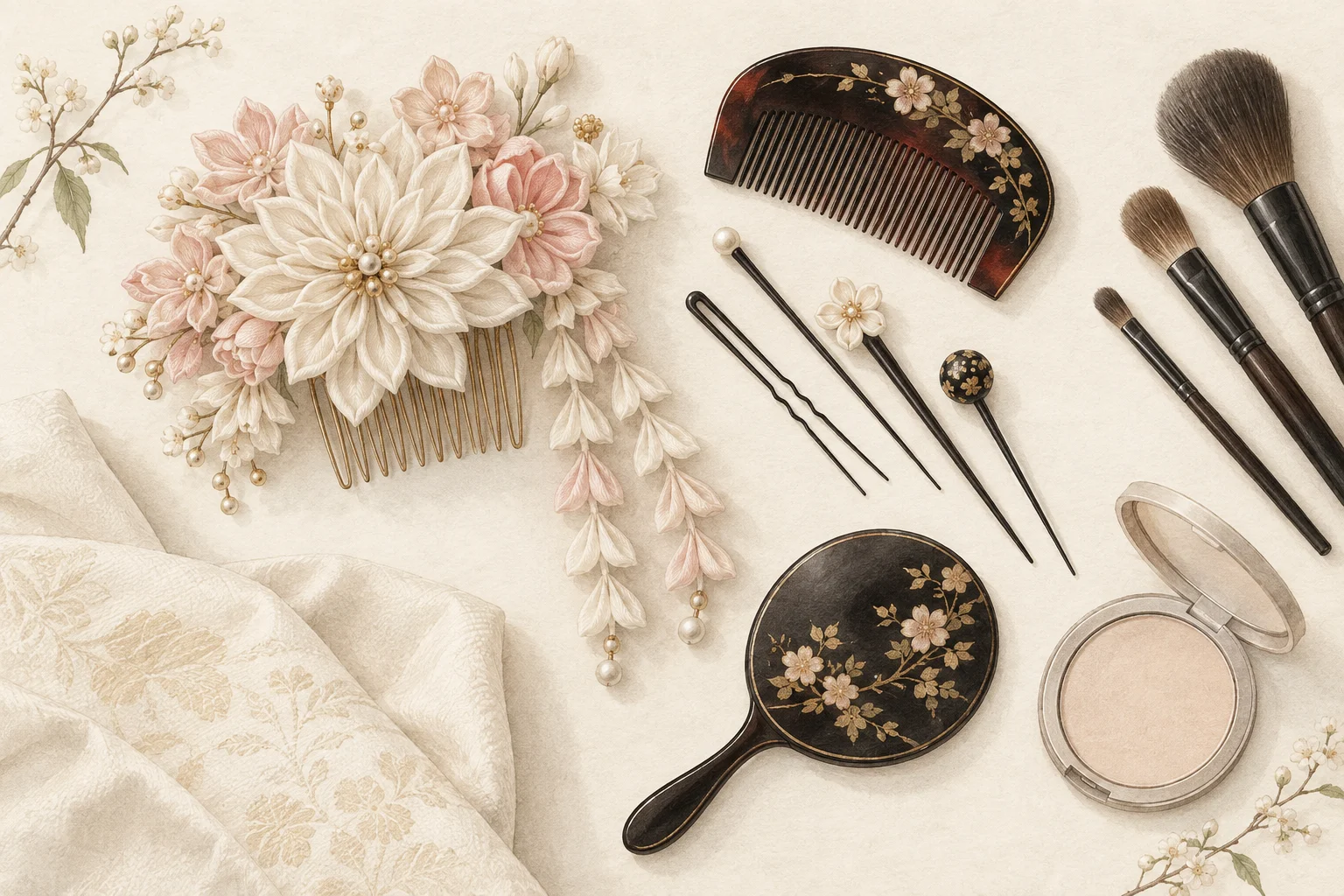
Kanzashi is the umbrella term for traditional Japanese hair ornaments. The oldest forms date to the Jomon period (14,000-300 BCE) when pointed sticks were used to ward off evil; the elaborate decorative forms we recognise today developed during the Edo period (1603-1868) alongside the specialised hairstyles of geisha and noble women. The category includes simple decorative combs (kushi), flat plates with gemstone insets (hirauchi), dangling silk flower compositions (hana-kanzashi), and large rounded bridal pieces (tama-kanzashi). For wedding photography, the studio selects a coordinated set of three to seven kanzashi based on the kimono and the bride's overall look.
Types Worn with Bridal Kimono
Bira-Bira Kanzashi (Dangling Style)
Bira-bira are the silver or gold dangling kanzashi that produce gentle motion and light reflection during photography. They consist of a flat shaped base (often a fan, flower, or auspicious symbol) with multiple slim metal chains hanging from it. The chains move with even small head turns, which photographers favour for portraits that suggest grace and lightness. Bira-bira are commonly worn at the side of the bunkin-takashimada and are visible in nearly every formal bridal portrait.
Tama-Kanzashi (Ball-Tip Pin)
Tama-kanzashi are the simple round-tipped pins worn at the back of the bridal hairstyle. The ball tip is typically coral, jade, or lacquered wood. They function as both structural pins holding the wig in place and as visual accents. A high-end shiromuku styling will use a matched pair of tama-kanzashi in the same material as the bira-bira accents.
Hana-Kanzashi (Silk Flower Composition)
Hana-kanzashi are the elaborate silk flower compositions worn at the front and side of the hairstyle. The flowers are made of silk tsumami-zaiku (folded silk petals) in seasonal motifs: cherry blossoms for spring shoots, chrysanthemums for autumn, plum for early spring, peony for general formal occasions. Premium hana-kanzashi can take a single craftsman a full day to produce and cost ¥50,000 to ¥200,000 to purchase; for shoots they are part of the rental package.
Kushi (Decorative Comb)
The decorative comb sits at the top-front of the bridal hairstyle and is typically lacquered with mother-of-pearl inlay or carved tortoiseshell. The comb anchors the hana-kanzashi composition and provides the dominant single visual point that the photographer often centres on for close-up portraits.
Kanzashi with Shiromuku (White Bridal Kimono)
The shiromuku is the pure white bridal kimono used for the formal shrine ceremony. Kanzashi worn with shiromuku follow strict colour conventions: white, silver, pearl, light coral, or natural shell tones only. Bright primary colours are avoided to preserve the "purity" symbolic register of shiromuku. The typical set is a silver bira-bira pair, white tama-kanzashi, white-and-pale-pink hana-kanzashi, and a mother-of-pearl kushi. When the bride wears tsunokakushi (the white silk headband), the kanzashi remain fully visible at the sides; when she wears wataboshi (the white hood), most kanzashi are hidden and the styling emphasis shifts to the silhouette of the hood itself. For more on the headpieces see our tsunokakushi vs wataboshi guide.
Kanzashi with Iro-Uchikake (Colourful Overcoat)
Iro-uchikake is the brightly coloured brocade overcoat worn for the reception portion of a wedding or for less formal portrait sessions. Kanzashi worn with iro-uchikake have far more colour latitude — they should coordinate with the dominant colour of the kimono. A red iro-uchikake pairs with coral, gold, and warm-tone kanzashi; a green iro-uchikake pairs with gold, jade, and white. The hana-kanzashi composition is typically larger and more elaborate than with shiromuku, since iro-uchikake itself reads as celebratory rather than ceremonial. For the broader comparison of bridal kimono types, see our shiromuku vs iro-uchikake guide.
How the Studio Decides Your Kanzashi Set
Reputable Japanese bridal photography studios make the kanzashi selection on shoot morning based on three factors: the chosen kimono (colour, pattern, season), the bride's overall styling direction (traditional vs slightly modern), and the bride's facial structure and hair colour. The selection is done by a specialised dresser (kitsuke-shi) who has worked with kanzashi for years and who knows exactly which combinations photograph well. Foreign brides should not need to make detailed kanzashi choices independently; the studio's curated set will almost always be correct. If you have strong preferences (e.g. you want pearl rather than coral), mention them at booking so the studio can prepare appropriate inventory.
Kanzashi Care During the Shoot
Three things to know during the shoot day. First, do not adjust kanzashi yourself — even a small touch can shift the position and unbalance the composition. If something feels off, ask the dresser, who will rebalance in fifteen seconds. Second, kanzashi can catch on the high collar of the kimono, especially during head-tilt poses; the photographer will coach you on which directions to turn so the ornaments stay clean. Third, hana-kanzashi silk petals can compress with humidity or wind; outdoor sunrise shoots in summer or after rain may require touch-up from the dresser between sets.
Taking Kanzashi Home
Studios provide kanzashi as part of the standard rental package; you do not own the pieces after the shoot. If you fall in love with a specific kanzashi style during your shoot, ask the studio whether they sell or can recommend a maker. Many studios partner with Kyoto-based kanzashi artisans who can produce a custom or stock piece for ¥30,000 to ¥150,000 depending on materials and complexity. Some brides commission a hana-kanzashi as a long-form keepsake. Shipping internationally is straightforward.
Frequently Asked Questions
Can I bring my own hair ornaments from home?
Generally no for the formal bridal portion. The bunkin-takashimada hairstyle is highly structured and requires kanzashi sized and weighted to fit specific positions. Bringing your own piece risks visual mismatch with the kimono and structural issues with the wig. For modern fusion shoots (Western dress portion) you can wear personal accessories without issue.
How much do high-end kanzashi cost to buy?
A complete formal bridal set in premium materials (coral tama-kanzashi pair, silk hana-kanzashi composition, mother-of-pearl kushi, silver bira-bira) runs ¥200,000 to ¥600,000 from a Kyoto specialist atelier. Individual pieces start at ¥20,000 for a basic bira-bira and rise based on materials and craftsman provenance.
Will kanzashi be visible if I wear wataboshi?
Mostly no. The wataboshi hood frames the face and conceals nearly all of the hairstyle including the kanzashi. This is one reason photographers often suggest tsunokakushi for close-up portraits — the kanzashi become visible accents. For broader headpiece guidance see the tsunokakushi vs wataboshi guide.
Can I request specific seasonal motifs in the hana-kanzashi?
Yes, and it is recommended for shoots tied to a specific season. Cherry blossom motifs for spring sakura shoots, maple leaves for autumn koyo shoots, and plum for late winter ume shoots all photograph beautifully when matched to the actual outdoor setting. Discuss at booking so the studio can prepare the appropriate inventory.
Are kanzashi heavy?
The complete formal set adds approximately 200-400 grams to the bunkin-takashimada wig, which most brides report feeling as a noticeable but manageable weight. The pressure points are at the temples and back of the head; brides with neck or scalp sensitivity should mention this at booking so the dresser can lighten the set.
Can foreign brides wear less-traditional kanzashi styles?
Yes for less-formal shoots. Modern fusion shoots increasingly use a single elegant kushi or a small hana-kanzashi rather than the full formal set, which reads as contemporary while still distinctly Japanese. For shrine-formal portraits, the full traditional set is the right choice.
More Style Guides
Find a Studio With Authentic Kanzashi Inventory
Premium studios in our directory provide curated kanzashi sets as part of their standard kimono package; ask about inventory quality at booking if you have strong material preferences. Browse English-speaking kimono photographers across Japan filtered by city, style, and budget. For the broader booking framework, see our ultimate guide to Japan pre-wedding photoshoots.
Related guides
 Budget
Kimono Rental in Japan: What It Costs and Which Kind You Need
Illustrative image · Unsplash. Not a photo of the specific people, places or services discussed.
Kimono rental in Japan means two very different things: a ¥3,000 afternoon in Kyoto, or a bridal shoot from ¥88,000. What each costs, includes and takes.
Read the guideStyle guideTraditional Japanese Wedding Costumes: Who Wears What
Illustrative image · Unsplash. Not a photo of the specific people, places or services discussed.
Traditional Japanese wedding costumes for the bride, groom, family and guests: how formality ranks, what to avoid, and which garments you can actually rent.
Read the guide Location deep dive
Kawaguchiko Kimono Photoshoot: Mt Fuji's Iconic Vista
Illustrative image · Unsplash. Not a photo of the specific people, places or services discussed.
Plan a kimono photoshoot at Lake Kawaguchi with honest clear-Fuji probability guidance, Chureito Pagoda and Oishi Park location logistics, seasonal trade-offs, and access from Tokyo via the Fujikyu Express.
Read the guide