Anniversary Kimono Photoshoot Japan: 5th, 10th & 25th Year
Planning an anniversary kimono photoshoot in Japan? Planner guide to 5th, 10th, 25th milestones — outfits, family inclusion, locations, cost, and timing.

Illustrative image · Unsplash. Not a photo of the specific people, places or services discussed.
Check current prices, availability and venue rules with the relevant studio or venue before booking.
Roughly one in five inquiries we now receive at Wasou Wedding Japan is for an anniversary kimono photoshoot rather than a pre-wedding session. The pattern is consistent: a couple who married abroad in 2021 wants to return for their 5th; a couple who did a Kyoto pre-wedding in 2016 is back with two children for their 10th; a Singaporean couple is bringing their adult daughter for the 25th. These shoots have their own rhythm — different outfits, different pacing, different conversations with the photographer — and the brief that worked for a pre-wedding does not transfer cleanly.
How Anniversary Shoots Differ from Pre-Wedding
The most useful frame: a pre-wedding kimono shoot is about becoming a married couple, an anniversary shoot is about continuing to be one. That shift changes nearly every operational choice. Pre-wedding shoots run 3-5 hours, emphasize portrait formality, and often involve a first-time kimono fitting that needs careful body-line coaching. Anniversary shoots tend to run shorter (2-4 hours), include children or extended family, and skew toward documentary-style coverage rather than posed portraiture.
Outfit logic differs too. Pre-wedding clients almost always select the shiromuku-then-iro-uchikake double change because they want both. Anniversary clients often go for a single, more wearable outfit — an iro-uchikake in a colour they would not have chosen the first time, a hikifurisode for a more relaxed silhouette, or a modern monochromatic bridal kimono in blush or sage. We cover those choices in detail in our modern colour bridal kimono guide.
Wedding Planner's Notes: Couples often arrive expecting the anniversary shoot to "feel like a wedding day." It rarely does, and that is fine. What it does feel like — when planned well — is a chapter marker. The photographs read differently from the wedding album because the people in them are different now. Plan for that emotional gear-shift rather than fighting it.
Common Milestones (Paper, Silver, Gold)
Western anniversary tradition assigns materials to each year — paper (1st), wood (5th), tin (10th), silver (25th), pearl (30th), gold (50th). Japan has a parallel tradition (kinkonshiki for gold, ginkonshiki for silver) but the milestones most often booked through our directory cluster around three windows.
Milestone | Typical Booking Pattern | Common Outfit Choice |
|---|---|---|
5th year | Couple-only, sometimes with one infant/toddler. Often the first return trip post-pandemic for couples married 2020-2021. | Iro-uchikake (a colour different from the wedding) or modern monochromatic kimono. |
10th year | Couple plus children (typically aged 4-9). Family-coordinated outfits are common. | Hikifurisode or iro-uchikake for the wife; black montsuki or grey kimono for the husband; child kimono rentals. |
25th year (silver) | Couple plus adult children, sometimes grandparents. Often combined with a multi-generation trip to Japan. | Hōmongi or iro-tomesode for the wife (age-appropriate), montsuki for the husband. |
The 25th silver milestone deserves a specific note. Couples in their late 40s and 50s often hesitate because they assume the bridal iro-uchikake "is for younger brides." That is partly cultural convention and partly studios not stocking elegant alternatives. Good studios now offer iro-tomesode (the formal married-woman's kimono with patterning only below the obi) and refined hōmongi options that read as celebratory without reading as bridal. Ask explicitly when you inquire.
Family Inclusion — Children at the Shoot
Bringing children — especially children under six — changes scheduling fundamentally. We always recommend a morning slot starting 8:30-9:30 AM for family shoots: light is softer, child energy is highest, and you can be done before the toddler nap window. Plan for 30% time loss compared with a couple-only schedule of the same hours.
Operational notes we share with every family-inclusion booking:
- Child kimono rental: most studios that handle adult bridal kimono also stock children's hakama (boys) and hifu/jinbei (girls). Confirm sizing in advance — children's kimono is sized by height in cm, not by age.
- Snacks and bottles: bring more than you think. Shrine grounds rarely have convenience stores within easy walking distance.
- Photographer comfort with children: not all wedding photographers are comfortable directing kids. Ask explicitly whether the photographer has shot family work, and ask to see family-inclusive samples. This connects to the broader skill of coordinating multi-person shoots in Japan.
- One-parent backup: if you have two children under five, plan for one parent to step out of frame during certain transitions. A solo nanny brought from your hotel is often worth the cost.
For couples without children, the family-inclusion conversation often turns to parents. We cover that scenario specifically in our bringing parents to Japan brief — different logistics, similar planning discipline.
Outfit Selection at Different Ages
Bridal industry convention loosely caps bridal kimono ("hanayome ishou") at brides in their 20s and 30s. That convention is increasingly out of step with how couples actually live. Our practical guidance by milestone:
5th anniversary (typically late 20s-early 30s). Full bridal kimono is appropriate. This is your chance to wear the iro-uchikake colour you did not choose the first time. Many couples who wore shiromuku at their wedding choose a deep red or peacock-blue iro-uchikake for the 5th. The shiromuku vs iro-uchikake comparison still applies but the calculus shifts — you have already had the pure-white moment.
10th anniversary (typically mid-30s to early 40s). Bridal kimono still works, but hikifurisode (a less voluminous bridal style) photographs more naturally if you are now a parent and feel less aligned with the very-young-bride silhouette. Modern monochromatic bridal kimono in muted tones — sage, dusty rose, oyster — read as elegant rather than bridal-young.
25th anniversary (typically late 40s-50s). The shift to married-woman's formal kimono — iro-tomesode (patterning below obi only) or refined hōmongi (visiting kimono) — is usually the right call. These read as celebratory and dignified, and they photograph beautifully at this life stage. Husband typically wears black montsuki (formal crested kimono) regardless of age.
Locations That Work for Anniversary (Less Sakura Crowds)
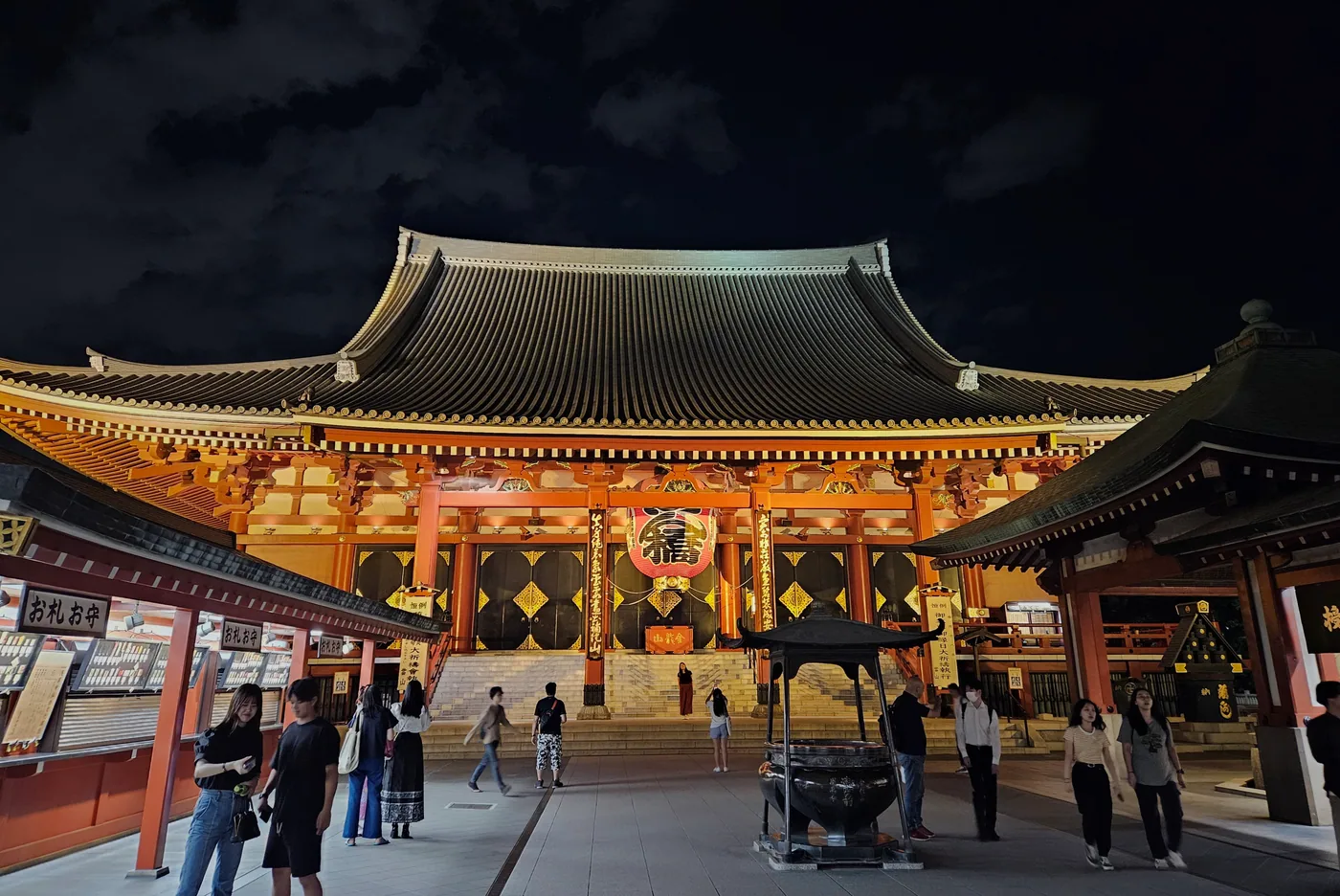

Anniversary shoots benefit from quieter locations. You are not chasing the iconic shrine gate for a Pinterest-style debut shot — you are creating a chapter marker that should feel personal. Our most-recommended anniversary location patterns:
- Kamakura over central Tokyo: Tsurugaoka Hachimangu and Hokoku-ji bamboo grove are quieter than Asakusa or Meiji Jingu, and the 50-minute train from Tokyo means parents and children can rest mid-trip. See our Kamakura kimono guide.
- Kanazawa for second-trip couples: Kenroku-en garden, Higashi Chaya district, and Oyama Shrine. Less tourist-saturated than Kyoto and rich in geisha-district atmosphere. Our Kanazawa briefing covers the planning detail.
- Hokkaido in winter for the 10th: snow shoots have a clear visual identity and are far less crowded. See snow wedding photography.
- Off-season Kyoto: if you must return to Kyoto, book early November (post-leaf-peak the second week of November) or mid-January. Avoid late March through April 5 and the last week of November.
Wedding Planner's Notes: Couples almost always ask whether they should return to the exact venue where they did the pre-wedding shoot. The honest answer is usually no. Returning to the same shrine often produces images that compete with the original rather than complement them. Pick a new location and let the two albums speak to two different chapters.
Cost Tier vs Pre-Wedding
Total cost for a well-coordinated anniversary shoot typically runs at 80-110% of an equivalent pre-wedding shoot. Where it goes up: more participants (each additional kimono rental adds ¥30,000-¥60,000), longer hair-and-makeup queue if mother is included, and child styling time. Where it can go down: one outfit change instead of two, shorter shoot window, simpler retouching brief.
Item | Pre-wedding (typical) | Anniversary (typical) |
|---|---|---|
Bride kimono rental + dressing | ¥80,000-¥150,000 (2 changes) | ¥50,000-¥100,000 (1 change) |
Groom kimono | ¥30,000-¥50,000 | ¥30,000-¥50,000 |
Child kimono (each) | — | ¥15,000-¥35,000 |
Hair + makeup (bride) | ¥30,000-¥60,000 | ¥30,000-¥60,000 |
Photographer + assistant | ¥150,000-¥350,000 | ¥120,000-¥280,000 |
Permit / shrine fees | ¥10,000-¥50,000 | ¥10,000-¥50,000 |
For deeper costing breakdown, see our 2026 kimono photo cost guide. For specific timing on shoot day, see shoot duration planning.
Translating Your Original Wedding Memory into the New Shoot
One of the highest-value briefing conversations happens before the shoot day. We ask anniversary clients three questions:
- What is the one image from your original wedding album you most wish you had? (Often this becomes the anchor for the anniversary brief.)
- What has changed about your relationship that you want documented? (Children, a move, a business built together, a loss survived.)
- What detail or object should appear in at least one frame? (Original wedding bands, a hand-written letter, a child's drawing, a grandparent's photograph.)
These questions move the shoot from generic to specific. A good photographer will incorporate the answers into the shot list without making the session feel staged. If your photographer does not ask these questions in their pre-shoot briefing, ask whether they would be open to a 30-minute video call before the shoot day to discuss.
Photographers Who Specialize in Anniversary
The wedding-photography industry largely treats anniversary work as a subset of family portraiture rather than a distinct genre. That is changing. Photographers who self-describe as "family documentary" or "lifestyle wedding" tend to handle anniversary kimono shoots more naturally than studios optimized for the pre-wedding album format.
Signals we look for when matching anniversary clients with photographers in our directory:
- Portfolio includes at least three family shoots with children under 10 (not just couple portraits with infants).
- Sample work includes both posed group shots and unposed candid moments.
- Photographer offers a pre-shoot video call rather than only an email questionnaire.
- Listed comfort with multiple kimono types (bridal and married-woman's formal).
- Real anniversary samples on the site, not just "anniversary-style" pre-wedding work.
For couples returning specifically for a solo session — bride only, no spouse — see our solo bride kimono photoshoot guide. The planning framework overlaps but the photographer skill set is closer to portrait specialist than family documentary.
Frequently Asked Questions
Can we book the same photographer who did our wedding photos abroad?
You can, but consider whether they have shot in Japan before. Japanese shrine and studio protocols differ from Western venues — permit handling, dressing-room politics, tipping etiquette. A photographer flying in from abroad will charge their full travel cost on top of the shoot fee, often making the total comparable to hiring a senior local. We generally recommend a Japan-based photographer for the in-country shoot and asking your original photographer to colour-grade the new images to match your wedding album.
What if we got married more than 25 years ago — is that too late?
No. We have coordinated 30th (pearl), 40th, and 50th (gold/kinkonshiki) anniversary shoots. Older couples often find hōmongi and tsukesage kimono more wearable than full bridal, and the resulting images are some of the most quietly moving work in our directory.
Do we need to bring our original wedding rings?
Only if you want them in frame. Some couples choose to wear them, some leave them at the hotel and frame the new shoot around the kimono rather than the rings. We do recommend bringing them in case a hand-detail shot emerges spontaneously. See our note on rings in Japanese wedding photography.
Can we redo our san-san-kudo ceremony as part of the anniversary shoot?
Yes — informally. A re-creation of the three-cup sake ritual reads beautifully on camera, but a formal shrine re-officiation is not standard practice for anniversaries. Most photographers will arrange the cups and sake at the studio or at a shrine garden for the photographic moment. Our san-san-kudo guide covers the ritual mechanics.
What is the best season for an anniversary shoot if we want to avoid cherry blossom crowds?
Late October through early December for autumn colour without the late-November peak, or late February for plum blossoms before the cherry rush. We discuss seasonal tradeoffs in our season guide.
How far in advance should we book the anniversary shoot?
Six months minimum for a senior photographer; nine to twelve months if you want a specific photographer paired with a specific shrine in autumn-foliage season. Family shoots with three or more participants compound the booking constraint because dressing-room slots are harder to align.
Can grandparents or in-laws join the kimono shoot?
Yes — and the results are often the strongest images of the day. Grandparents typically wear iro-tomesode (women) or montsuki (men). Plan for an additional hour of hair, makeup, and dressing per added participant, and confirm wheelchair or mobility access if relevant. See our multi-generation planning brief.
Book Your Anniversary Kimono Photoshoot
Returning to Japan for a 5th, 10th, or 25th anniversary kimono shoot is a different planning exercise from the pre-wedding session you may have done before — it benefits from a photographer who understands family documentary work, a location chosen for the chapter you are in now rather than the chapter you started, and a kimono brief that reflects who you have become. Browse our curated directory of kimono wedding photographers filtered by family experience, or read on for two related planning briefs: our solo bride kimono photoshoot guide for single-participant sessions, and our modern colour bridal kimono guide for outfit selection beyond traditional white and red.
Locations in this guide
Related guides
 General guide
Pregnant Bride Kimono Photoshoot in Japan: Planner Guide
Illustrative image · Unsplash. Not a photo of the specific people, places or services discussed.
Planning a pregnant bride kimono photoshoot in Japan? Planner guide to timing windows, kitsuke maternity fitting, comfort logistics, and pre-booking disclosure.
Read the guide General guide
Maku Curtain at Japanese Wedding Altar: Kohaku-Maku Guide
Illustrative image · Unsplash. Not a photo of the specific people, places or services discussed.
The maku curtain at a Japanese wedding altar uses a coded color system. Learn why kohaku-maku red-white signals celebration and kuromaku is funeral-only.
Read the guide General guide
Post-Shoot Revision Rounds & Edit Policy: Japan Studio Rules
Illustrative image · Unsplash. Not a photo of the specific people, places or services discussed.
One round of color and exposure tweaks is included; further rounds run ¥10,000-¥30,000 each with a 5-10 photo cap; full re-grades are priced as new edit jobs (¥50,000-¥150,000). Lock your color grade at contract time to avoid expensive post-delivery revisions.
Read the guide