Snow Wedding Photoshoot in Japan: Hokkaido, Nikko & Shirakawa-go
Plan a snow kimono shoot in Japan: most reliable snow windows in Hokkaido, Nikko, Shirakawa-go and Kanazawa, plus cold-weather logistics.

Illustrative image · Unsplash. Not a photo of the specific people, places or services discussed.
Check current prices, availability and venue rules with the relevant studio or venue before booking.
Hokkaido and the Japan Sea coast (Kanazawa, Shirakawa-go) deliver the only reliable heavy snow in Japan — a 95% probability of fresh accumulation in any given week from mid-January to mid-February — and this snow-guarantee factor is what makes a winter kimono shoot worth flying for in the first place. A red iro-uchikake against minus-five-degree snow at Hokkaido Shrine, or a shiromuku in front of Shirakawa-go's gassho-zukuri farmhouses on a lantern-festival night, produces imagery that is structurally impossible to capture anywhere south of the Japan Sea front. The trade-off is logistics: snowdays require 72-hour weather-forecast monitoring, heated indoor changing rooms close to outdoor locations, and Plan B options when a single-region trip catches an unseasonably mild week. This guide walks foreign couples through Sapporo, Otaru, Nikko, Shirakawa-go and Kanazawa: snow-window probability by week, permit fees in the ¥10,000-¥30,000 range, and the cold-weather kimono care that separates serious winter studios from generalists who happen to shoot in January.
When Is the Best Time to Book a Snow Photoshoot
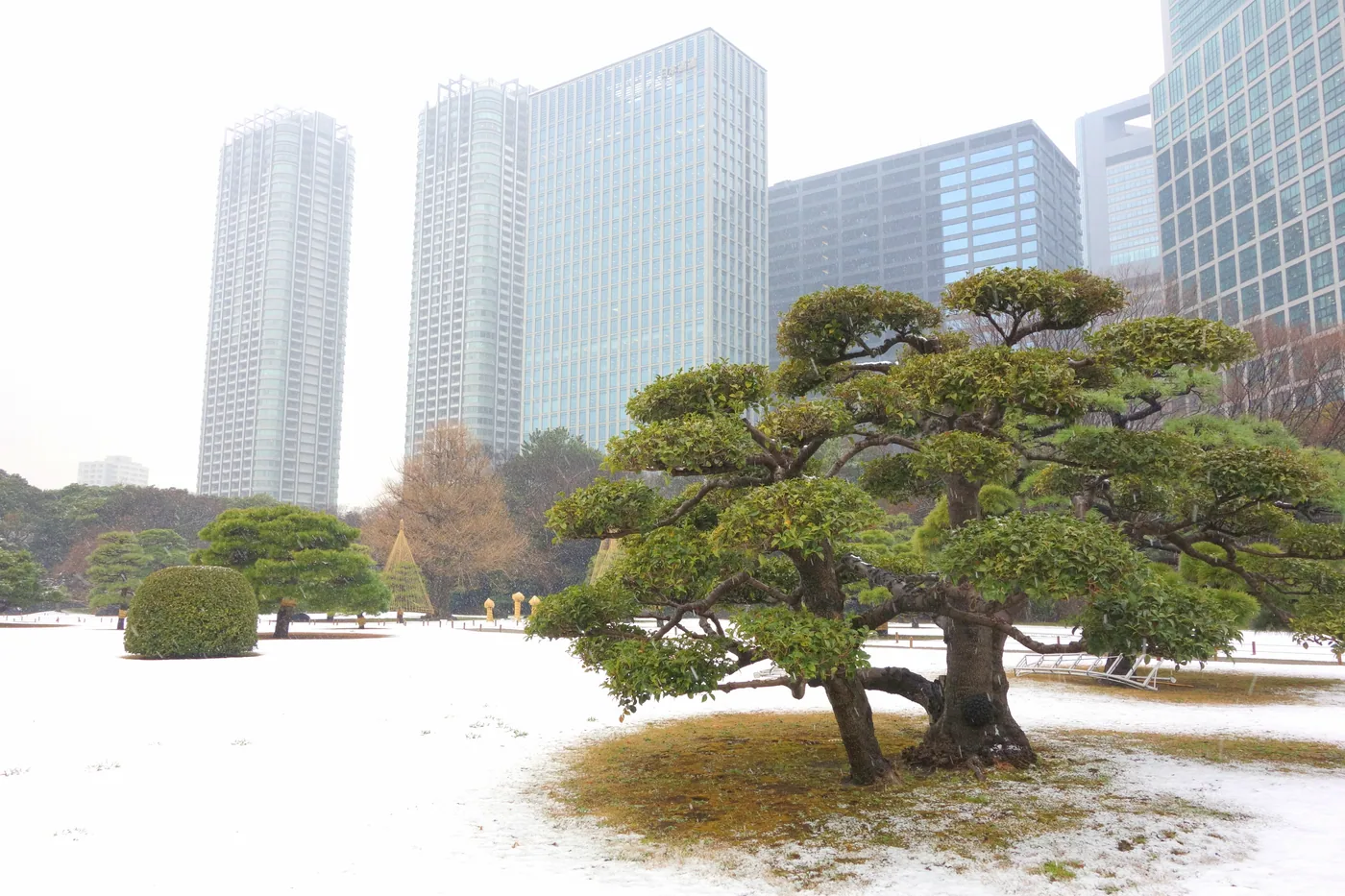

Japan's snow photography season runs from mid-December to early March, with the deepest reliable snow falling between mid-January and mid-February. Hokkaido and the Japan Sea side of Honshu (Kanazawa, Shirakawa-go) accumulate the most consistent snow, while Pacific-side cities like Nikko and Tokyo get less frequent but often more photogenic events. The Japan Meteorological Agency publishes snow depth maps daily through the season, and the best photographers monitor these to recommend specific shoot weeks. For couples booking from overseas, the rule of thumb is to target your trip for the last week of January through the third week of February, and keep at least three flexible days in your itinerary so the shoot can move to the day fresh snow falls rather than the day you originally hoped.
Regional Snow Calendar at a Glance
Hokkaido begins accumulating reliable snow in mid-December and holds it through late March, with Sapporo's annual Snow Festival in early February anchoring the peak photography window. Nikko's snowy weeks fall in late January to mid-February. Shirakawa-go in Gifu receives heavy Japan Sea snowfall through January and February and stages its famous evening illumination on selected dates each season. Kanazawa's Kenrokuen garden installs its iconic yukitsuri (snow ropes) on the pine trees from November onward, with the most photogenic snowfall typically in late January.
Region | Most Reliable Snow Window | Best For |
|---|---|---|
Sapporo and Otaru (Hokkaido) | January 15 – February 25 | Heavy guaranteed snow, urban-and-port scenes |
Nikko (Tochigi) | January 25 – February 15 | Snow on UNESCO shrine architecture |
Shirakawa-go (Gifu) | January 10 – February 28 | Thatched-roof village, evening illumination |
Kanazawa (Kenrokuen) | January 20 – February 15 | Edo garden with yukitsuri pine ropes |
Top Locations for a Snow Kimono Photoshoot
The location you choose shapes the photographer you can hire, the logistics of getting your kimono and dressing team to the site, and the type of imagery you walk away with. Four destinations consistently rank as the most requested for foreign couples planning a snow kimono shoot in Japan.
Sapporo, Otaru and Surrounding Hokkaido
Hokkaido offers the most reliable heavy snow in Japan and the deepest pool of winter-experienced photographers. Sapporo's Hokkaido Shrine, the historic warehouse canal in Otaru, and the snow-covered streets of Furano produce three distinct moods within a single trip. Hokkaido shoots typically run as half-day or full-day packages that include heated indoor changing rooms — essential when outdoor temperatures sit between minus five and minus fifteen Celsius. Browse our Sapporo photographer directory for studios with proven snow portfolios.
Toshogu Shrine and Surrounding Nikko
Nikko's UNESCO-listed shrines under snow are arguably Japan's most architecturally formal winter backdrop. Toshogu's vermilion-and-gold gates against fresh white snow create a colour contrast that is impossible elsewhere. Snow days in Nikko are less guaranteed than Hokkaido, so the smartest itineraries build in three flexible days within a five-day Nikko window. Photography on Toshogu's grounds requires a coordinated permit; the surrounding cedar-lined approach paths are public.
Shirakawa-go Thatched-Roof Village, Gifu
Shirakawa-go's UNESCO-listed gassho-zukuri farmhouses under heavy snow produce the single most fairytale image available in winter Japan. The village is small and the entry road can close for hours after heavy storms, so most foreign couples book a local photographer who lives within an hour's drive and can move quickly when conditions are right. Shirakawa-go also holds an evening lantern illumination on roughly six selected nights each winter; private commercial photography on those nights is restricted, but the daytime hours immediately before the event are unrestricted and photographically excellent.
Kenrokuen Garden, Kanazawa
Kenrokuen with snow on its yukitsuri-roped pines is one of Japan's three great winter garden scenes. The garden allows commercial couple shoots for a modest fee (approximately ¥10,000) outside major event days. Kanazawa pairs well with the Higashi Chaya teahouse district and the Nagamachi samurai neighbourhood for a multi-location winter day. The city is reachable in two and a half hours from Tokyo on the Hokuriku Shinkansen, making it the easiest serious-snow shoot for couples basing themselves in Tokyo.
How Far in Advance to Book Your Snow Shoot
Booking timelines for snow shoots are slightly less aggressive than spring or autumn because demand is lower, but the best winter-specialised photographers still sell out their January and February weekends six to eight months in advance. Here is the realistic timeline international couples should follow.
Eight to Six Months Out
Begin researching photographers and studios. This is the window in which Hokkaido and Shirakawa-go specialists fill their best snow weeks. Send inquiries to three to five providers, request itemised quotes, and place a deposit on your first choice. Confirm explicitly that the photographer has experience shooting in your target conditions: a Tokyo-based studio that does occasional Nikko day trips is not the same as a Sapporo-based studio with a hundred winter shoots in portfolio.
Six to Four Months Out
Confirm kimono selection. Winter favours deep saturated colours — crimson, emerald, royal blue iro-uchikake — that create maximum contrast against snow. Many studios stock winter-specific lined silk pieces that hold up better in cold and damp than their lighter spring inventory. Confirm whether your shoot will use a winter-lined kimono and what underlayers are provided.
Four to Two Months Out
Finalise the shooting itinerary, including transport logistics. Hokkaido shoots may require flights or rental cars; Shirakawa-go requires bus or car transfer from Kanazawa or Takayama. Book hotels within walking or short-taxi distance of your shoot locations. For Hokkaido, prioritise hotels with covered entrances and heated lobbies.
Two Months to One Week Out
Watch the snowfall reports. Your photographer will monitor the seven-day snow forecast and confirm the optimal shoot day within your flexibility window roughly seventy-two hours in advance. Build in at least three flexible days so the shoot can be moved to a heavy-snow day rather than locked to an arbitrary date that might be unseasonably mild.
Permits, Fees, and What You Cannot Photograph
Winter permit rules are generally more relaxed than spring or autumn because foliage and cherry blossom crowds do not exist. However, several major winter locations have specific event-day restrictions and weather-related access rules that override their normal policies.
Typical Permit Costs and Restrictions
Hokkaido Shrine and most Sapporo civic spaces allow couple shoots with small crews without permits or for a modest ¥10,000 coordination fee. Kenrokuen charges approximately ¥10,000 for commercial photography on non-event days. Nikko Toshogu requires a coordinated permit costing approximately ¥30,000 for shrine grounds access. Shirakawa-go's village streets are public and no permit is required for couple shoots, but the evening illumination dates have entry restrictions for non-residents and ticket-only spectators. Reputable photographers handle all coordination silently. For broader background on shrine etiquette during the shoot itself, see our shrine manners guide.
What Is Generally Prohibited
Drones are banned in nearly all temple grounds and around UNESCO heritage sites; in winter, additional restrictions apply at ski resorts and avalanche-prone areas. Lighting equipment beyond a single reflector requires permission almost everywhere. Photography in deep snow off-trail at protected sites is restricted to avoid damaging vegetation hidden below the surface.
How to Choose the Right Snow Photographer
The photographer you hire will determine whether your snow shoot becomes a comfortable, beautifully-executed morning or a cold and confused improvisation. Foreign couples should evaluate candidates against four criteria.
Genuine Cold-Weather Portfolio
Look for a portfolio with at least twenty distinct snow shoots in recent winters, ideally at the specific location you want to use. A photographer who has shot Shirakawa-go across multiple seasons knows which gassho-zukuri farmhouse angles work in deep snow, which streets close after a storm, and which two-hour windows the village is at its photographic best. Generic winter stock from a single trip is not enough.
Language and Communication
You will be making decisions in real time in cold conditions, sometimes with your hands numb. A photographer who speaks fluent English or works with a coordinator who does is essential unless you speak conversational Japanese. Confirm communication channel in advance, whether that is email, LINE, WhatsApp, or WeChat.
Cold-Weather Logistics and Kimono Care
Ask explicitly what cold-weather support the studio provides: heated indoor changing rooms close to outdoor shoot locations, hand warmers, dry-cloth maintenance for the kimono if snow lands on it, and warm transport between locations. The best winter studios treat these as standard inclusions, not extras.
Snow Reschedule Policy
The most important contract clause for a winter shoot is the rebooking policy if the snow conditions are wrong on your scheduled date — too thin, too rain-soaked, or completely absent. Top operators offer one free reschedule within the same season at no extra charge, and refund the deposit if the season is so mild that no rescheduling produces acceptable conditions.
Weather Risk and Contingency Planning
Japanese winter is statistically more variable than any other season. A given year might produce historically low snow in Hokkaido, or unusually heavy and disruptive accumulation in Shirakawa-go. The best photographers prepare for both extremes by offering one free reschedule within the season, by maintaining a Plan B location with different snow reliability (for example a Hokkaido studio that can pivot to an indoor heritage building if the streets are unusable), and by monitoring road closure reports for mountain locations. Discuss these contingencies during booking, not on the morning of a closed road. If your travel itinerary cannot accommodate a reschedule, ask your photographer whether they have a covered location such as a temple veranda, a historic warehouse, or a heated machiya interior that can serve as a sheltered backup.
What to Wear: Kimono Choices for a Snow Shoot
Iro-uchikake in deep saturated colours — crimson, emerald, royal blue, deep gold — is the classical winter choice and photographs strikingly against pure white snow. The colour contrast is unmatched and the heavier silk handles cold conditions better than the lighter pieces used in spring. Shiromuku, the pure white bridal kimono, is the inverse approach: the bride becomes a sculpted white silhouette against falling snow, often chosen for the formal shrine portrait. For a detailed comparison, see our shiromuku vs iro-uchikake guide. Grooms wear the formal montsuki hakama in black, with a haori overcoat that doubles as cold-weather protection. Winter studios typically provide thermal underlayers (heat-tech style) under the kimono, but couples should bring their own warmest socks and consider hand warmers tucked discreetly into the obi sash.
Frequently Asked Questions
Below are the questions we hear most often from couples planning a snow kimono shoot in Japan. For more answers, see our complete article library or contact a matched photographer directly.
When should I book a snow photoshoot in Japan?
Book eight months in advance for the best photographers in Hokkaido and Shirakawa-go. Four months is the latest realistic window for a quality shoot during peak January-February. Within two months of your travel dates, premium winter studios may only have weekday slots left.
Is snow guaranteed in late January and February?
Yes in Hokkaido and on the Japan Sea side of Honshu (Kanazawa, Shirakawa-go). Less guaranteed in Nikko and almost never guaranteed in central Tokyo. Couples wanting reliable heavy snow should prioritise Hokkaido or Shirakawa-go.
How cold is too cold for a kimono photoshoot?
Reputable winter studios shoot comfortably at minus ten Celsius with thermal underlayers, heated transport, and short outdoor sessions interspersed with heated indoor breaks. Below minus fifteen the shoot is typically restructured to favour shorter outdoor portions and longer indoor heritage building sessions.
Do I need a permit for a snow shoot in Hokkaido?
Hokkaido Shrine and most Sapporo civic spaces allow couple shoots with small crews for a modest coordination fee. Shirakawa-go's village streets are public on non-illumination days. Nikko Toshogu requires a coordinated permit costing approximately ¥30,000. Your photographer handles permit applications on your behalf.
What if there is no snow during my travel dates?
Reputable studios offer one free reschedule within the season. The most experienced winter operators also maintain a Plan B in a different region (for example Hokkaido as a back-up for a snow-free Shirakawa-go week). Always confirm the reschedule policy in writing before paying the deposit.
Can we combine a snow shoot with the Sapporo Snow Festival?
Yes, but expect higher photographer rates and limited slot availability that week. The festival runs in early February and draws roughly two million visitors to central Sapporo. Most premium studios pre-book their Snow Festival week clients ten months in advance.
Compare Other Seasons
- Cherry Blossom Kimono Photoshoot in Japan
- Autumn Foliage Kimono Photoshoot in Japan
- Plum Blossom Kimono Photoshoot in Japan
- Wisteria Kimono Photoshoot in Japan
Ready to Book Your Snow Shoot
A snow kimono photoshoot in Japan rewards couples who plan early, stay flexible, and choose a photographer with genuine cold-weather experience. Lock in your photographer eight months ahead, build at least three flexible days into your travel itinerary, and choose a region whose snow reliability matches your tolerance for risk. Then trust your photographer to handle the permits, the weather monitoring, and the logistics on the day. We have curated a directory of 176 vetted kimono photographers across Japan, all reviewed for winter experience, English communication, and transparent pricing. Find a photographer matched to your snow plans and start the conversation today. For the broader booking framework that applies across every season, see our ultimate guide to Japan pre-wedding photoshoots.
Locations in this guide
Related guides
 Budget
Kimono Rental in Japan: What It Costs and Which Kind You Need
Illustrative image · Unsplash. Not a photo of the specific people, places or services discussed.
Kimono rental in Japan means two very different things: a ¥3,000 afternoon in Kyoto, or a bridal shoot from ¥88,000. What each costs, includes and takes.
Read the guide Style guide
Traditional Japanese Wedding Costumes: Who Wears What
Illustrative image · Unsplash. Not a photo of the specific people, places or services discussed.
Traditional Japanese wedding costumes for the bride, groom, family and guests: how formality ranks, what to avoid, and which garments you can actually rent.
Read the guide Location deep dive
Kawaguchiko Kimono Photoshoot: Mt Fuji's Iconic Vista
Illustrative image · Unsplash. Not a photo of the specific people, places or services discussed.
Plan a kimono photoshoot at Lake Kawaguchi with honest clear-Fuji probability guidance, Chureito Pagoda and Oishi Park location logistics, seasonal trade-offs, and access from Tokyo via the Fujikyu Express.
Read the guide