Emirati Couple Kimono Photoshoot Japan: Premium Halal Guide
Emirati couple kimono photoshoot Japan planning guide. DXB/AUH 9-10hr direct, visa-free 30 days, halal compliance, prayer-time scheduling, premium tier.

Illustrative image · Unsplash. Not a photo of the specific people, places or services discussed.
Check current prices, availability and venue rules with the relevant studio or venue before booking.
Roughly 200 to 500 Emirati and broader UAE couples book kimono photoshoots in Japan each year, and they consistently spend more per couple than any other nationality in the directory. Direct flights from Dubai (DXB) or Abu Dhabi (AUH) to Tokyo Haneda run 9 to 10 hours on Emirates, Etihad, ANA, or JAL, visa-free 30 days covers UAE passport holders, and three operational variables — halal compliance, prayer-time scheduling, and modest dress overlay with kimono — shape the day more than any aesthetic choice.
Why UAE Couples Choose Japan
Three drivers come up repeatedly in planning calls with Emirati and Saudi-Emirati couples. The first is contrast: Gulf wedding photography is dominated by gold, white, and crystal interiors with controlled studio lighting, while Japan offers wood, moss, cedar bark, and natural light environments that read as completely different visual language on the same camera body. The second is privacy. Shrine ceremonies in Kyoto and Kamakura allow couples to step away from family-attended wedding spectacles in Dubai or Abu Dhabi and shoot intimately — typically just the two of them plus photographer, stylist, and translator. The third is multi-stop trip planning. Tokyo connects naturally with Maldives, Phuket, or Hong Kong as a 10-to-14-day honeymoon arc, and Japan is often the cultural anchor inside a wider Asia-Pacific loop.
UAE couples also arrive with strong reference imagery. Instagram and Snapchat circulation of shiromuku versus iro-uchikake bridal kimono among Gulf influencers since around 2022 has created a recognizable visual category, and most couples already know which silhouette they want before the first planning email.
Direct Flights (DXB/AUH to Tokyo Haneda 9-10hr)
Four carriers fly nonstop between the UAE and Tokyo. Emirates runs daily DXB to Haneda and DXB to Narita on A380 and 777-300ER equipment. Etihad operates AUH to Narita daily. JAL flies Haneda to DXB daily. ANA serves Haneda to DXB. Flight time is 9 hours 30 minutes to 10 hours 30 minutes depending on jet stream direction, with the eastbound (UAE to Japan) leg typically faster than the return.
For photoshoot planning, the practical recommendation is land in Haneda rather than Narita when possible. Haneda is 30 minutes from central Tokyo by Limousine Bus or 20 minutes by Tokyo Monorail plus Yamanote line, versus 60 to 90 minutes from Narita. Couples flying in for a 5-to-7-day Japan leg cannot afford to lose a half-day to airport transit, and Haneda also offers same-day onward connections to Itami (Osaka), Centrair (Nagoya), and Kansai if the itinerary requires it.
Wedding Planner's Notes: Emirates and Etihad first-class cabins arrive rested in a way economy passengers do not, and that affects shoot scheduling on day one. We recommend blocking the first full day in Tokyo as decompression — hotel check-in, light shopping in Ginza or Omotesando, dinner — and starting the actual shoot on day two. Couples who book day-one shoots from a 10-hour overnight flight regret it; the photographs read tired.
Visa-Free 30 Days (UAE Nationals Since 2017)
UAE passport holders entered Japan's visa-waiver program in 2017. Stays of up to 30 days require no advance application. Passport must be valid 6 months beyond intended departure; immigration will require a return or onward ticket and proof of accommodation (hotel reservation printout is sufficient).
This 30-day allowance is comfortable for the typical UAE couple itinerary — 7 to 14 days in Japan, optionally extended with a Maldives or Thailand stop on either end. Couples holding non-UAE residence (Saudi, Egyptian, Jordanian, Indian passports residing in the UAE) do not inherit the visa waiver and must apply through the Embassy of Japan in Abu Dhabi or the Consulate-General in Dubai. Standard tourist visa processing runs 5 to 7 business days.
Halal Compliance Reality
Japan's halal infrastructure is improving but remains uneven. Tokyo and Kyoto have the densest network of certified-halal restaurants and hotel catering options. Outside major cities, halal certification drops sharply, and couples planning shoots in Kamakura, Nikko, or rural Mt Fuji locations need to either commute back to Tokyo for meals or arrange catered halal bento boxes from approved Tokyo vendors.
For shoot-day meal logistics, three approaches work in our experience. The first is booking a halal-certified Tokyo hotel (Mitsui Garden, Hilton Tokyo, Sheraton Grande Tokyo Bay, and Hotel New Otani all carry varying halal certifications) and using their restaurant for breakfast and pre-shoot meals. The second is contracting a halal bento service for on-location lunch — Sakura Halal Kitchen and Halal Wagyu Yakiniku Panga both deliver to shrine locations. The third is dinner-only halal restaurant booking, leaving lunch as a light packed option.
Detailed dietary planning beyond halal certification — including alcohol-free san-san-kudo ritual modifications for Muslim couples and broader guest meal planning — is covered in our dietary restrictions at Japanese weddings guide.
Prayer-Time Scheduling
The five daily prayer windows (Fajr, Dhuhr, Asr, Maghrib, Isha) directly affect shoot scheduling. In Tokyo during peak shoot months (April cherry, November autumn), the windows fall approximately as follows. Fajr around 04:00 to 05:00 (before sunrise, prayed in the hotel). Dhuhr around 12:00 to 12:30 (mid-shoot). Asr around 15:30 to 16:00 (golden-hour window conflict). Maghrib around 17:00 to 18:30 (sunset shot window). Isha around 19:00 to 20:30 (post-shoot).
The two operational pinch points are Asr and Maghrib because both fall inside the photographer's prime light window. Three workarounds we use. First, build a 20-minute Asr break into the schedule with a prayer mat in a private hotel suite or shrine annex room. Second, ask the photographer to front-load coverage before Dhuhr and end shooting at Maghrib rather than pushing past. Third, for couples observing all five prayers strictly, book a two-day shoot to spread coverage and avoid prayer-time tension.
Tokyo Camii (the largest mosque in Japan, Yoyogi-Uehara area) and Asakusa Mosque are accessible for couples staying in central Tokyo. Kyoto Daigaku Masjid serves Kyoto-based shoots. Many photographers in our directory now travel with a printed prayer schedule for the shoot week and adjust call times accordingly.
Modest Dress Overlay with Kimono Styling
Bridal kimono is more modest than most foreign couples realize — the white shiromuku is full-length, long-sleeved, and high-collared. The two modesty considerations specific to Muslim brides are hair coverage and neckline.
For hair coverage, three approaches exist. The first is a traditional wataboshi (full white silk hood over the head) which provides complete hair coverage and is the most religiously straightforward option. The second is tsunokakushi (smaller silk band) layered over an underlying hijab in matching white or cream. The third is a custom hijab styling where the headscarf is integrated with bridal hair ornaments (kanzashi) — this requires a stylist familiar with both Japanese bridal hair and hijab draping. We work with three Tokyo stylists who handle this combination; ask the photographer for current introductions.
For neckline, the standard shiromuku and uchikake collar already meets modest standards. The naga-juban under-kimono provides additional neck-to-wrist coverage. Couples concerned about sleeve coverage during the obi-tying process can request a closed-room dressing arrangement with female stylist only.
The groom's montsuki hakama requires no modification for Muslim modesty standards. It is already full-length, long-sleeved, and concealing.
Halal-Certified Premium Hotel Partnerships
Three Tokyo hotels carry meaningful halal certifications and Muslim-friendly facilities (prayer rooms, qibla direction markers, halal in-room dining). Hotel New Otani Tokyo runs a dedicated halal kitchen and has hosted Gulf royal visits. Conrad Tokyo and Hilton Tokyo offer halal catering on request with 48-hour notice. Hyatt Regency Tokyo, Park Hyatt, and Ritz-Carlton Tokyo do not carry formal halal certification but will arrange external halal catering for room service and in-house events.
In Kyoto, halal hotel options are thinner. The Ritz-Carlton Kyoto and Four Seasons Kyoto both arrange external halal catering on request. Hotel Granvia Kyoto (Kyoto Station adjacent) is the most halal-experienced upper-tier option. For ryokan stays, Kyoto and Hakone traditional inns are difficult to make fully halal-compliant because the kaiseki dining model is built around the chef's seasonal menu rather than dietary customization; most observant couples we plan for stay in international hotels in Kyoto and skip the ryokan night, or book a luxury ryokan with full-board waiver and dine externally.
Top Locations Among UAE Couples
Tokyo Luxury Hotel Hub
Tokyo is the operational base for almost every UAE-couple shoot we plan. Hotel concentration in Marunouchi, Roppongi, and Ginza simplifies prayer-room access, halal catering, and Arabic-speaking concierge availability. Shoot locations within 30 minutes of these hotels include Meiji Shrine (15 min by car), Hama Rikyu Garden (20 min), and Asakusa with Senso-ji backdrop (25 min). Detailed Meiji Shrine planning including the permit reality is in our Meiji Jingu permit guide.
Kyoto Cultural Anchor
Kyoto is the two-night cultural anchor inside a typical 7-day UAE itinerary. Couples shoot at one of three primary shrines — Heian Shrine, Yasaka Shrine, or Shimogamo Shrine — typically on the morning of day four or five. Honest disclosure on the famous golden temples: Kinkaku-ji does not permit interior bridal shoots and Kiyomizu-dera has strict timing windows. Kyoto's Arashiyama bamboo grove and Fushimi Inari torii path are popular alternative locations.
Mt Fuji Backdrop
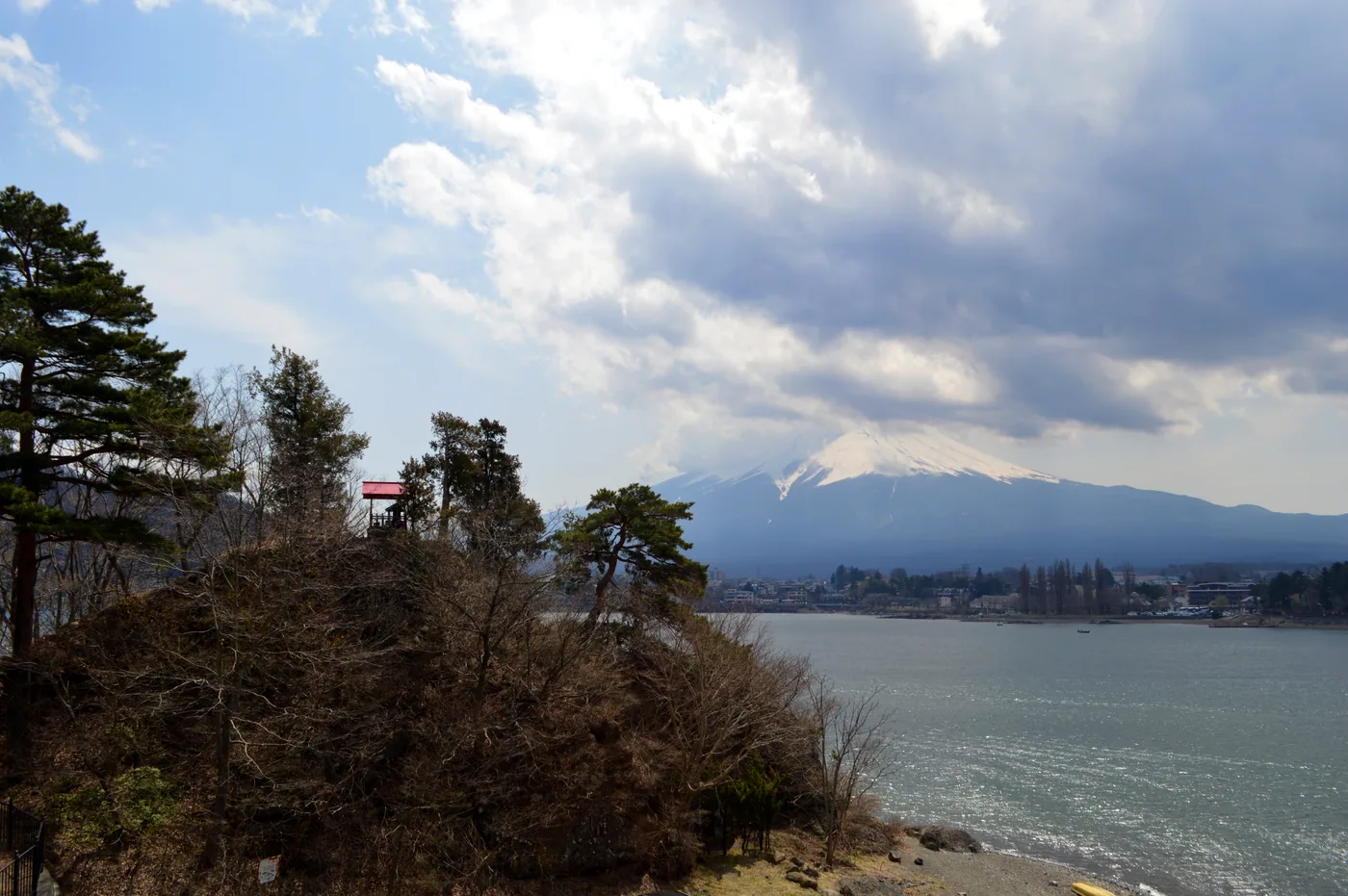
Mt Fuji is the third location on most UAE itineraries — typically a day trip from Tokyo rather than overnight stay. The Kawaguchiko shoreline (Lake Kawaguchi) and Chureito Pagoda are the two locations producing the iconic Fuji-and-pagoda frame. Detailed seasonal planning is in our Mt Fuji and Shizuoka kimono shoot guide. Halal lunch is a planning consideration — book a halal bento from Tokyo and bring it on the day-trip vehicle.
Premium Spend Tier (Highest Per-Couple Average)
UAE couples are the highest-spending nationality in the directory by a clear margin. Typical Emirati-couple package totals run ¥1,500,000 to ¥4,000,000 for a 5-to-7-day Tokyo-plus-Kyoto-plus-Fuji arc covering bridal kimono rental, hair and makeup, two-location shoots in Tokyo, a Kyoto shoot day, a Fuji day, photo editing, and album production. The drivers of the higher spend are premium kimono selection (top-tier antique uchikake at ¥800,000-plus rental), multi-day photographer engagement (3 to 5 full days versus the typical 1 to 2), private vehicle and driver service rather than train transit, and high-end hotel base (¥120,000-plus per night).
Behind-the-scenes video coverage and second-photographer add-ons are also more common among UAE couples than the directory average; couples want documentary-style coverage of the dressing process and family interaction in addition to the main bridal portraits.
Multi-Country Trip Pairings (Maldives, Thailand, HK)
Three multi-country combinations come up consistently. Tokyo plus Maldives is the most common — Japan as the cultural and photography destination, Maldives as the beach and resort honeymoon, total trip 12 to 14 days. Tokyo plus Bangkok plus Phuket is the second pattern, particularly for couples wanting Thai cuisine and beach combination. Tokyo plus Hong Kong is the shortest pairing — 5 days Japan plus 3 days Hong Kong on a single trip, often combined with Emirates connection through DXB.
Singapore Airlines connections through SIN are also viable for couples wanting Tokyo plus Singapore plus Bali combinations, though that adds significant transit time versus the direct Emirates or Etihad route.
Arabic-Speaking Studio Staff (Limited)
Arabic-speaking studio staff are rare in Japan. We are aware of three Tokyo-based stylists with conversational Arabic and one Kyoto photographer's assistant. Most planning conversations happen in English with an interpreter on call for cultural or religious nuance. For couples uncomfortable with English-only planning, we recommend booking through a UAE-based travel agency that handles the Japanese studio communication and serves as the Arabic-Japanese intermediary; this adds approximately 10 to 15 percent to total cost but smooths the planning experience.
Arabic interpretation on shoot day is rarely necessary because shoot-day communication is primarily directional ("look here," "step left," "hold this") and visually demonstrated by the photographer. Pre-shoot styling consultation and post-shoot album selection are where language matters most.
English as Default Working Language
English is the practical default. Emirati couples typically have strong English fluency from international schooling, and the studio network of English-speaking kimono photographers in Tokyo and Kyoto handles UAE-couple bookings without difficulty. Email and WhatsApp threads are the standard pre-shoot communication channel. WeChat is occasionally requested but less common among UAE couples than among Mainland Chinese clients.
For couples comparing nationality-specific planning patterns, our Mexican couple Japan kimono photoshoot guide covers Spanish-language transit patterns through Los Angeles, and our Israeli couple Japan kimono photoshoot guide covers the distinct Tel Aviv-Tokyo direct route plus kosher and Sabbath observance variables.
Frequently Asked Questions
Can the kimono ceremony be performed without alcohol for the sake ritual?
Yes. The san-san-kudo three-cup ritual is traditionally performed with sake, but many shrines and most studios will substitute non-alcoholic options — typically white grape juice or filtered water — when requested in advance. Request this at the booking stage, not on the day. Some shrines may not permit alcohol substitution for formal ceremonies, but for photographic re-creation (the more common shoot format) the substitution is universally accommodated.
Is photography permitted at shrines if the bride wears hijab?
Yes, with rare exceptions. Shinto shrines permit modest dress including hijab and full-coverage clothing. Some shrines require traditional Japanese bridal headwear (wataboshi or tsunokakushi) for formal portrait sessions — in those cases the hijab is worn underneath. There are no shrines in our directory network that exclude Muslim brides on religious-dress grounds.
How do we handle Friday Jummah prayer during the shoot week?
Tokyo Camii holds Friday Jummah prayer starting around 13:00. We block Friday afternoons for couples observing Jummah and schedule the shoot for Thursday or Saturday instead. Some couples shoot Friday morning and end before 12:00 to allow travel to Tokyo Camii for the prayer. Plan this at the itinerary stage, not the shoot-day stage.
What happens with the Ramadan period for shoots?
Most UAE couples avoid Ramadan for travel-heavy itineraries because fasting plus jet lag plus shoot exertion is operationally difficult. Couples who must shoot during Ramadan typically schedule short morning sessions (07:00 to 11:00) to minimize fasting strain, or shoot the iftar-to-suhoor evening window with artificial lighting. We do not recommend Ramadan as a peak shoot period.
Are male photographers acceptable for bridal portraits?
This varies by family and is the couple's decision. Approximately 60 percent of UAE couples we plan for engage male photographers without modification, particularly for outdoor and exterior shots. The other 40 percent request female photographers for hair-and-makeup and dressing-process coverage with male photographer joining only for the final portrait session. The directory includes both options.
Can we arrange a separate ladies-only changing room?
Yes. Studios with three or more changing rooms can dedicate one as ladies-only with female stylist only. Premium hotels (Hotel New Otani, Conrad Tokyo) can also provide a suite as a private dressing room for the couple plus female-only staff. Request this at the booking stage with at least two weeks notice.
What is the recommended budget range for a 5-day Tokyo-Kyoto-Fuji UAE-couple shoot?
The realistic range is ¥1,800,000 to ¥3,500,000 covering kimono rental (premium tier), 3-day photographer engagement, hair and makeup, private vehicle, halal hotel base, halal catering for shoot days, and edited album delivery. The lower bound assumes single-photographer coverage and standard premium kimono. The upper bound covers antique uchikake, two-photographer team with BTS video, and luxury hotel base.
Find a Halal-Certified Studio
UAE-couple planning rewards specialists. Photographers who have done five or more Emirati shoots know the prayer-time rhythm, the modest-dress overlay options, and the Tokyo halal catering supply chain without you having to brief them. Browse our curated directory of kimono wedding photographers and filter for English-speaking and halal-experienced studios. As next reading inside this Phase 13 batch, our Mexican couple Japan kimono photoshoot guide covers the Pacific-transit pattern from Mexico City, and our Israeli couple Japan kimono photoshoot guide covers the direct Tel Aviv route with kosher and Sabbath considerations that mirror many of the UAE planning patterns.
Locations in this guide


Related guides
 General guide
Kimono Wedding Photos for Foreigners: How It Works in Japan
Illustrative image · Unsplash. Not a photo of the specific people, places or services discussed.
Yes, foreign couples can have kimono wedding photos taken in Japan — no residency, ceremony or Japanese required. How booking, fittings, pricing and permits actually work.
Read the guide General guide
How to Book a Kimono Photographer in Japan from Abroad: Step-by-Step
Illustrative image · Unsplash. Not a photo of the specific people, places or services discussed.
A complete step-by-step guide for foreign couples booking a kimono pre-wedding photographer in Japan from overseas. Contracts, payments, communication.
Read the guideGeneral guideMultilingual Wedding Photography Japan: Beyond English
Illustrative image · Unsplash. Not a photo of the specific people, places or services discussed.
A planner's audit of which languages — Korean, Mandarin, Spanish, French, JSL — Japanese kimono studios actually support, plus interpreter costs and when to hire one.
Read the guide