Mexican Couple Kimono Photoshoot Japan: Catholic Pairing Guide
Mexican couples bring a Catholic-ceremony-back-home framing to the Japan kimono shoot — visa-free 90 days, no direct flights from Mexico City, and a wide spend range between domestic and US-Hispanic-baseline bookings. This guide covers transit routes through LAX/IAH/YVR, Spanish-capable studios, family logistics, and MXN-JPY budgeting.</excerpt> </invoke>

Illustrative image · Unsplash. Not a photo of the specific people, places or services discussed.
Check current prices, availability and venue rules with the relevant studio or venue before booking.
Mexican couples represent roughly 300 to 600 bookings per year in our directory, a figure that has grown steadily since 2019. The planning challenge is straightforward: there is no direct route from Mexico City to Tokyo, so every itinerary involves a US or Canadian transit and 17 to 19 hours of total travel time. The structural advantages are also clear — 90-day visa-free entry, strong overlap with the US Hispanic community channel that introduces most couples to Japan, and a high willingness to pair the kimono shoot with a Catholic ceremony back home. This guide covers what actually changes in the planning when the bride and groom fly from Mexico.
Why Mexican Couples Choose Japan
Mexican wedding culture is rooted in Catholic sacrament and large family gatherings. The kimono shoot is rarely the wedding itself. Instead, it functions as a cultural photo experience scheduled either before or after the religious ceremony in Mexico, and the couples who book it tend to share three traits: prior exposure to Japanese aesthetics through anime, design, or culinary travel; the financial bandwidth to absorb the long flight and Tokyo accommodation costs; and a desire for a wedding archive that distinguishes them from the standard Catholic ceremony album.
The kimono shoot is positioned as the "international" or "personal" half of a two-part wedding identity. The Catholic ceremony serves the family and the parish; the kimono shoot serves the couple's private narrative. This framing matters because it shapes the budget conversation — Mexican couples treat the Japan trip as a discretionary experience, not as a substitute for the home ceremony, which keeps spend tolerance high.
For comparative reading, see our Spanish couple guide and our Brazilian couple guide; both share the Catholic and Romance-language baseline but with different transit constraints.
Transit Routes: LA, Houston, Vancouver — No Direct
Mexico City Benito Juarez International (MEX) has no direct flight to Tokyo as of this writing. Every Mexican couple flying to Japan transits through one of three hubs:
Route | Carriers | Total time | Layover |
|---|---|---|---|
MEX - LAX - HND/NRT | Aeromexico + ANA / JAL / Singapore Airlines | 17-18 hr | 2-4 hr in LAX |
MEX - IAH - NRT | United Polaris (full segment) | 17-18 hr | 2-3 hr in Houston |
MEX - YVR - NRT | Aeromexico + Air Canada / ANA | 18-19 hr | 2-4 hr in Vancouver |
Most couples in our bookings choose the Houston route on United for the single-carrier convenience, or the LA route for the cheaper economy fares and the ability to break the trip with a 24 to 48 hour stop in Los Angeles. The Vancouver route is favored when an extended West Coast or Banff side trip is planned. Premium-cabin Mexican couples often fly United Polaris business class through Houston end-to-end, which our records suggest is a frequent configuration above the mid-tier spend bracket.
Wedding Planner's Notes: The shoot day cannot be the day after arrival. Mexico City sits at 2,240m elevation, Tokyo is at sea level, and the eastbound jet lag against a 15 to 16 hour time difference produces severe morning fatigue for at least 48 hours. We strongly recommend a minimum two-night buffer between landing and the shoot, three if the couple is flying economy. Hair and makeup calls in Tokyo typically start at 06:00 or 07:00, and a 06:00 call after a 19-hour journey is visible in the photographs.
Visa-Free 90 Days
Mexican passport holders have visa-free entry to Japan for stays of up to 90 days for tourism, business meetings, and visiting relatives. No advance application is required. On arrival at Haneda or Narita, immigration issues a Temporary Visitor stamp; the standard duration granted is 90 days at officer discretion.
The 90-day window is generous compared to the European Schengen-style 90/180 rule that applies to many other Latin American countries, and it removes one of the main planning frictions. Couples can comfortably plan a three to four week itinerary covering Tokyo, Kyoto, Osaka, and a hot-spring extension without visa pressure. For couples combining Japan with a Korea, Taiwan, or Thailand leg, the 90-day allowance is more than enough to handle multi-entry scenarios where they leave Japan mid-trip and re-enter.
The only document to prepare in advance is the digital arrival declaration through the Visit Japan Web service. This replaces the older paper landing card and customs declaration. Mexican passports are read cleanly by the automated gates at Haneda; we recommend pre-registering on Visit Japan Web 48 hours before departure to skip the manual lane.
Spanish-Capable Studios in Japan
Spanish-fluent kimono photographers in Japan are a small but real subset. Most are concentrated in Tokyo and Osaka, with one or two in Kyoto. The typical career path is a Latin America posting through a Japanese trading company, an MBA exchange in Madrid or Barcelona, or a partner relationship with a Spanish or Mexican expat. Roughly 8 to 12 studios in our directory advertise Spanish capability at a working level; of those, three to four are native-fluent.
For couples whose English fluency varies (English skills among Mexican professional-class travelers are typically conversational but not negotiation-grade), the Spanish-capable shortlist is the recommended starting point. The alternative — booking an English-only studio and bringing a bilingual friend or relative as informal interpreter — works for the shoot itself but creates friction during the contract review stage, where deposit terms, cancellation clauses, and image licensing details need precise reading.
For the methodology behind our directory's language vetting, see our English-speaking photographer guide; the same evaluation approach applies to Spanish capability.
US Hispanic Community Channel Discovery
A frequent discovery path among Mexican couples in our records is not a Mexican Instagram account or a Mexico-based wedding blog. It is the US Hispanic community channel — Mexican-American influencers based in Los Angeles, Houston, San Diego, and Phoenix who have either done a kimono shoot themselves or photographed friends who have. The cross-border family network (cousins, in-laws, college friends in the US) carries the recommendation back to Mexico.
This has two practical implications. First, the inbound brief often arrives with very specific aesthetic references — "the shoot like my cousin's friend in San Diego" — which means studios can quickly identify the prior shoot in their portfolio and confirm continuity. Second, the spend tier is anchored upward by the US Mexican-American baseline rather than the Mexican domestic baseline. Couples are budgeting in dollars and comparing against US wedding photography prices, which run two to three times higher than Mexican domestic equivalents.
Studios accustomed to this channel keep a separate portfolio reel curated for US-Hispanic-referred bookings. If you ask, they will share it.
Catholic Wedding Tradition Pairing
The Catholic sacrament is the load-bearing element of a Mexican wedding. The kimono shoot pairs with it; it does not replace it. Understanding the sequence helps the studio brief the shoot correctly.
Mexico Catholic Ceremony Back Home
The home ceremony typically includes the full sacramental Mass with the wedding lasso (lazo) draped over both partners' shoulders, the arras (13 coins blessed by the priest), and padrinos and madrinas (godparent sponsors) for each major element of the wedding. The Mass runs 60 to 90 minutes. The reception that follows hosts 200 to 400 guests in the upper-middle bracket and often more. The Catholic ceremony is the primary photographed event; the household albums center on it.
Japan Kimono Shoot as Cultural Anchor
The kimono shoot, by contrast, is positioned as the couple's private story. It happens before the Mass (a six- to twelve-month lead in) or after (often as the second leg of a Japan-and-Asia honeymoon). The audience for the resulting album is the couple themselves, a small handful of close friends, and the curated wedding website. It is not shown at the parish reception.
This separation matters for the studio brief. The kimono shoot does not need to "match" the Catholic ceremony aesthetically. Couples are explicitly seeking contrast. The shiromuku white silk overlay (see shiromuku vs iro-uchikake) is often chosen precisely because it complements rather than echoes the white Catholic gown — same color symbolism, different cultural register. Studios that have shot Mexican couples before will surface this point unprompted.
For ritual context, the san-san-kudo sake ritual is not a sacrament and is fully compatible with Catholic practice; couples comfortable photographing the gesture often build the shoot around it.
Top Locations Among Mexican Couples

Tokyo Modern + Asakusa Traditional
Tokyo is the default entry point because the long-haul flight lands at Haneda or Narita. Most Mexican couples spend three to five days in Tokyo before moving on to Kyoto. A frequently booked combination is a half-day shoot in Asakusa around Senso-ji for traditional context, followed by an evening or next-day session in a modern Tokyo neighborhood — Marunouchi, Roppongi Hills, or the Shibuya Crossing area — for visual contrast. The pairing answers the "Japan looks like the old prints and also looks like Blade Runner" reference set that most Mexican couples carry into the trip.
Kyoto Temple Settings
Kyoto is the second-most-booked location. Shinkansen access from Tokyo is 2 hours 20 minutes via the Nozomi service. The temple and shrine settings — Yasaka, Fushimi Inari (in early morning to avoid the crowd), the Higashiyama pilgrim path — photograph well in late October and early November. See our 2026 Kyoto studio shortlist for Kyoto-specific options. The decision point between Tokyo and Kyoto is usually time budget: couples with under ten days in Japan often stay Tokyo-only; couples with two weeks add Kyoto and frequently a third location.
Mt Fuji Backdrop
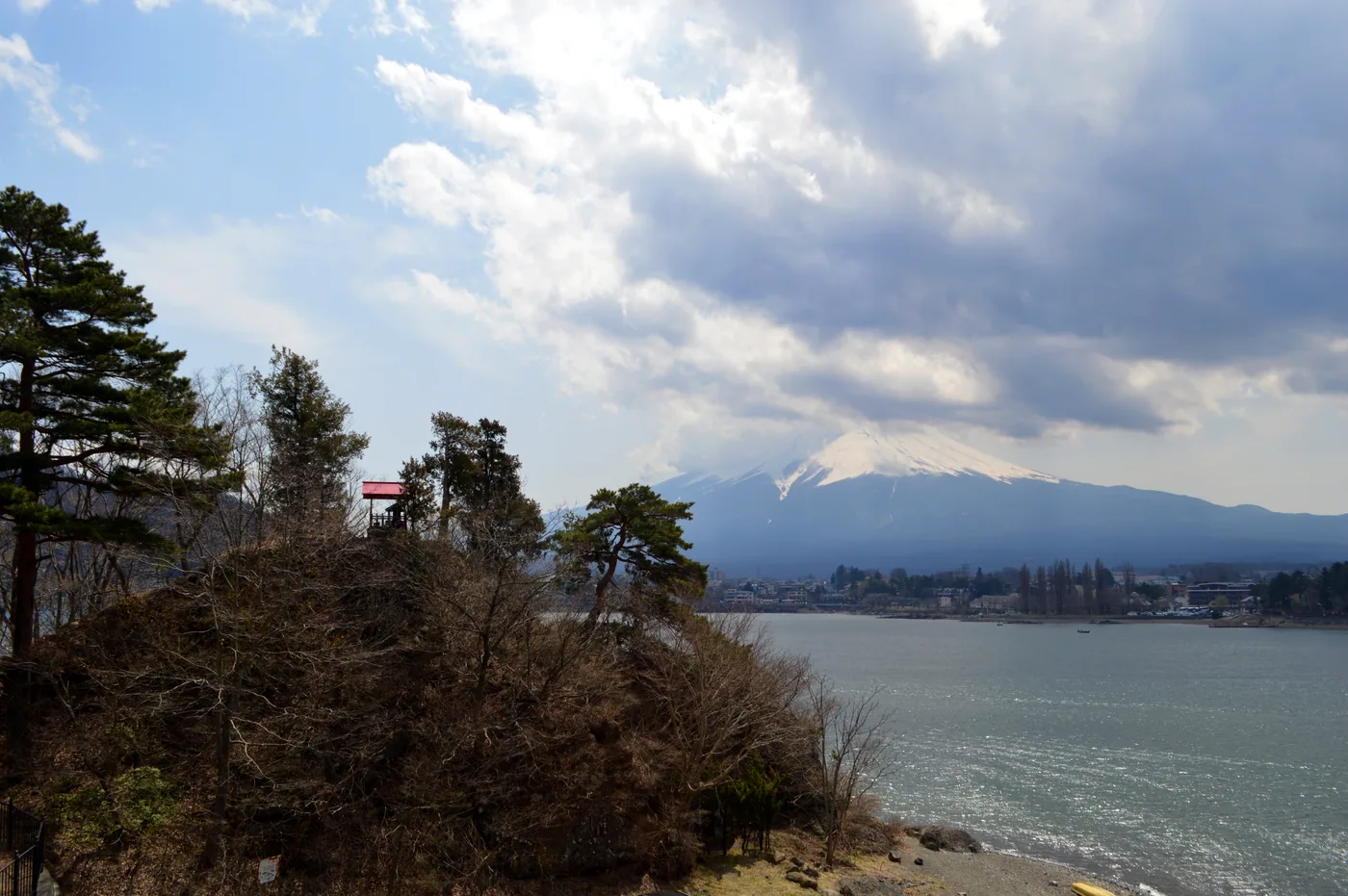
The Mt Fuji shoot is a strong third choice, almost always combined with a Tokyo base. The Mt Fuji Shizuoka shoot requires clear-weather flexibility — Fuji is visible roughly 100 days per year from the south side. Couples on tight Tokyo schedules sometimes book a Fuji shoot as a one-day private car charter from Tokyo (around 8 hours door-to-door) with a weather contingency clause that defers to a Hakone alternative if Fuji is clouded over.
MXN-JPY Exchange Considerations
The Mexican peso to Japanese yen exchange rate has historically been one of the more volatile pairings in our directory. Recent trading bands have placed the rate in a wide range that materially affects shoot budgeting. We recommend two operational practices.
First, deposit timing matters. Most Japanese studios accept payment in JPY only and the deposit (typically 30 to 50 percent of the package) is invoiced at booking, three to twelve months before the shoot. Locking the deposit JPY amount early protects against MXN weakening but leaves the remaining 50 to 70 percent exposed. Couples with the financial discipline to pre-purchase JPY through their Mexican bank's currency desk often do so at booking, holding the JPY in a foreign-currency account until the final invoice.
Second, card processing fees compound. International credit cards charging 3 to 4 percent FX margin on top of the spot rate add meaningfully to a high-five-figure package. The lower-friction path is bank wire in JPY, which most Japanese studios prefer regardless. Confirm the studio's wire routing details in the contract phase, not at final invoice.
Spend Tier: Wide Range with US Tier-1 Premium
Mexican-couple spend in our records shows a wider spread than most country segments. The domestic Mexican professional-class couple booking from Mexico City or Guadalajara typically lands in the mid-tier package range, comparable to Filipino, Indonesian, or Thai bookings. The US-resident Mexican-American couple booking from Los Angeles, Houston, or the Bay Area typically lands in the upper-tier package range, comparable to American or Australian bookings.
This bimodal pattern means studios need to identify the segment early in the inbound inquiry. The signals are clear: a Gmail address with a US area code phone number and a US billing address indicates the higher tier; a Mexican mobile number and a corporate domain or hotmail.com.mx address typically indicates the domestic tier. The shoot brief and the package recommendation should be calibrated accordingly. Treating every Mexican inquiry as upper-tier produces sticker-shock and lost bookings; treating every inquiry as mid-tier leaves real revenue on the table.
Family Involvement Across Languages
Mexican families travel together. It is not unusual for the bride's mother, the groom's mother, and one or two siblings to fly to Japan for the shoot day. The family group photo at the end of the session is often the most-printed image from the entire wedding cycle, framed and given as gifts at the home reception.
This has logistical consequences. The studio needs to accommodate group sizes of six to ten people on the shoot day, and the hair and makeup schedule needs to absorb the bride's mother (who may also want hair styling). Plan for an additional 60 to 90 minutes in the morning if the mother is being styled. Communication during the shoot is often in Spanish among the family, with the studio team interfacing in English or Spanish to the couple and the couple translating to the family. Spanish-capable studios resolve this friction, English-only studios manage it.
For positioning Mexican family groupings around the bride, our group and family photo positioning guide covers the standard kazoku-shashin configurations.
Catholic Sacraments — Where They Fit
Couples occasionally ask whether a Catholic priest can be present at a Japan shrine or temple shoot. The straightforward answer is no — the shoot is photographic, not sacramental, and the priest's role belongs in the home parish ceremony. The Japan shoot does not need clerical participation. Couples who want a religious dimension to the shoot can carry a blessed object (a rosary, a small medal, a wedding lasso) and incorporate it into one frame of the shoot as a private symbolic gesture without involving the shrine or temple staff.
Some couples schedule a brief Catholic blessing at one of Tokyo's or Yokohama's Catholic churches — the Shinjuku St Ignatius church, the Yokohama Sacred Heart cathedral — as a separate event, either before or after the kimono shoot day. This is logistically straightforward and the Japanese parish offices accommodate visiting couples; advance contact via the diocese is standard.
Multi-Country Asia Extensions
Because the flight cost from Mexico to Asia is the dominant trip expense, most Mexican couples extend the trip beyond Japan. A frequent pairing is Korea (Seoul or Busan, accessible by 2.5-hour flight from Tokyo Haneda), Thailand (Bangkok or Phuket, 6-hour flight from Tokyo for a beach honeymoon leg), and Hong Kong as a stopover. For couples with three weeks or more, a Japan-Korea-Taiwan or Japan-Thailand-Bali combination is feasible.
Other Phase 13 country guides may be useful for couples comparing extended itineraries. See our Emirati couple guide for the Dubai-stopover model and our Israeli couple guide for the comparable Latin-language-baseline planning patterns.
Frequently Asked Questions
Do we need a Spanish-speaking photographer, or can we manage with English?
You can manage with English for the shoot itself if both partners are comfortable in conversational English. The friction point is the contract and pre-shoot consultation, where specific terminology around licensing, deposit forfeiture, and revision rounds matters. If either partner is not negotiation-comfortable in English, choose a Spanish-capable studio from the start — the 8 to 12 in our directory cover the price range you need.
Can we ship our wedding lasso and arras to Japan for the shoot?
Yes. Most studios will incorporate small symbolic objects you bring into the shoot if briefed in advance. Pack the lasso flat in checked luggage with the rest of the formal wear; arras travel in carry-on. Note that the lasso will not be used in a religious sense at the shoot — it is being photographed as a personal heirloom, not blessed by a priest.
How early should we book if we want a November Kyoto autumn-foliage shoot?
For Kyoto in the second and third weeks of November, the prime maple-color window, twelve months in advance is the realistic minimum. Top studios fill by January for the following November. The transit-time disadvantage from Mexico City compounds this — by the time you finalize flights and hotels, the calendar pressure is real. If you are reading this less than nine months out, consider late October or early December as alternative windows.
What is the visa situation if a US-resident Mexican passport holder is flying from Los Angeles?
The 90-day visa-free entry applies based on passport nationality, not point of departure. A Mexican passport holder flying LAX to Tokyo enters Japan visa-free on the Mexican passport. The US green card or visa is required for the US transit, not for Japan entry.
Will the studio communicate in Spanish with our mothers during the shoot?
At the Spanish-capable studios in our directory, yes — the photographer or an assigned assistant will direct family positioning in Spanish. At English-only studios, the photographer typically communicates with you in English and you translate the directions to your family. Brief the studio on family languages at the booking stage so they can assign the right team.
Is the san-san-kudo sake ritual something we can include given Catholic practice?
It is a cultural gesture, not a religious sacrament, and is photographed routinely for couples of every faith. The ritual symbolizes the union of the couple and their families through three exchanges of sake — there is no theological content in conflict with Catholic practice. Couples who want to include it should brief the studio in advance so the sake set is prepared.
What is the deposit forfeiture risk if a family emergency cancels our trip?
Standard Japanese studio cancellation policies escalate as the shoot date approaches: typically 0 percent forfeiture if cancelled more than 90 days out, 30 to 50 percent at 60 days, 70 to 100 percent inside 30 days. Trip insurance with wedding-event coverage is the only meaningful protection. Mexican travel insurers offer Japan-coverage wedding-event riders; confirm the policy explicitly covers third-party vendor deposits.
Find a Spanish-Capable Studio
If your shortlist is taking shape and you are ready to compare specific studios, the next step is to browse our directory filtered for language capability and shoot location. The Spanish-capable subset is small enough that two to three consultations will surface the right match.
Start with our directory of vetted kimono wedding photographers and filter by language. For broader planning context, our 18-month Japan wedding planning timeline covers the full booking, transit, and shoot-day sequence. If you are still weighing the country comparison, the Emirati couple guide covers the next-closest spend tier for cross-reference.
Related guides
 General guide
Kimono Wedding Photos for Foreigners: How It Works in Japan
Illustrative image · Unsplash. Not a photo of the specific people, places or services discussed.
Yes, foreign couples can have kimono wedding photos taken in Japan — no residency, ceremony or Japanese required. How booking, fittings, pricing and permits actually work.
Read the guide General guide
How to Book a Kimono Photographer in Japan from Abroad: Step-by-Step
Illustrative image · Unsplash. Not a photo of the specific people, places or services discussed.
A complete step-by-step guide for foreign couples booking a kimono pre-wedding photographer in Japan from overseas. Contracts, payments, communication.
Read the guideGeneral guideMultilingual Wedding Photography Japan: Beyond English
Illustrative image · Unsplash. Not a photo of the specific people, places or services discussed.
A planner's audit of which languages — Korean, Mandarin, Spanish, French, JSL — Japanese kimono studios actually support, plus interpreter costs and when to hire one.
Read the guide