Plum Blossom Kimono Photoshoot: February–March Timing in Japan
Plan a plum blossom kimono shoot in Japan: peak windows in Kyoto, Tokyo, Mito and Dazaifu, plus why it costs 15-25% less than cherry season.

Illustrative image · Unsplash. Not a photo of the specific people, places or services discussed.
Check current prices, availability and venue rules with the relevant studio or venue before booking.
A plum blossom (ume) kimono shoot in Japan typically costs 15-25% less than the equivalent cherry blossom session at the same studios, and the photographer's scheduling availability is nearly twice as open. This is the single most under-priced opportunity in the Japanese pre-wedding calendar. The ume bloom arrives in mid-February at Dazaifu Tenmangu, peaks across Kyoto and Tokyo in late February and early March, and finishes at Mito's Kairakuen — Japan's largest plum garden with three thousand trees — by mid-March. Compared to sakura's seven-to-ten-day peak forcing year-ahead booking pressure, ume's three-week bloom window means foreign couples can confidently book at three to four months out and still secure premium weekday slots. The visual palette is softer — pale pink and white against bare branches and stone lanterns — which photographs particularly well in shiromuku or pale-tone iro-uchikake. This guide walks foreign couples through Kitano Tenmangu, Jonangu, Yushima Tenmangu and Kairakuen with timing, permit fees, and why this is the right choice if your visual preference aligns with restraint over postcard intensity.
When Is the Best Time to Book a Plum Blossom Photoshoot
Japan's plum blossom season runs from mid-January in Kyushu through late March in Tohoku, with most major Honshu sites peaking between mid-February and mid-March. Unlike sakura, the ume bloom is gradual: individual trees in a single grove can be in various stages of flowering across a three to four week window, producing reliable photo opportunities for a much longer period than the seven to ten day cherry blossom peak. Forecasts are published from late December by Weathernews and the Japan Meteorological Corporation. For couples booking from overseas, the safe target window is the last week of February through the second week of March, with at least three flexible days built into your itinerary so the shoot can move to the morning when the grove looks photographically best.
Regional Plum Calendar at a Glance
Dazaifu Tenmangu in Fukuoka opens first, with peak bloom typically in mid to late February. Kyoto's Kitano Tenmangu and Jonangu peak from late February to early March. Tokyo's Yushima Tenmangu and Hanegi Park peak in early to mid March. Mito's Kairakuen, one of Japan's three great gardens and the largest plum garden in the country, peaks in mid March. Couples flying long-haul should choose their destination based on which region's peak aligns with their travel dates rather than insisting on a single location.
Region | Typical Peak Bloom | Best For |
|---|---|---|
Dazaifu (Fukuoka) | February 15 – March 5 | Earliest national peak, six thousand trees |
Kyoto (Kitano Tenmangu, Jonangu) | February 25 – March 15 | Classical shrine architecture plus plum |
Tokyo (Yushima, Hanegi) | March 5 – March 20 | City-based shoot with shrine backdrops |
Mito (Kairakuen) | March 10 – March 25 | Japan's largest plum garden, three thousand trees |
Top Locations for a Plum Kimono Photoshoot
The location you choose shapes the photographer you can hire, the permit considerations, and the kimono palette that will photograph best. Four destinations consistently rank as the most requested for foreign couples planning a plum kimono shoot in Japan.
Kitano Tenmangu Shrine, Kyoto
Kitano Tenmangu has roughly fifteen hundred plum trees of fifty varieties planted across its grounds, and is dedicated to Sugawara no Michizane, a Heian-era scholar whose favourite tree was the ume. The shrine hosts a famous outdoor tea ceremony (Baikasai) on February 25 each year, and its plum garden opens to the public from early February. Photography on the public approach paths and outer grounds is unrestricted for couple shoots; commercial photography in the formal plum garden requires a small coordination fee. Kitano Tenmangu pairs naturally with nearby Hirano Shrine for a half-day Kyoto plum itinerary.
Jonangu Shrine, Kyoto
Jonangu's weeping plum garden — roughly one hundred and fifty shidare-ume trees arranged in flowing pink-and-white cascades — is among the most photographed plum scenes in Japan. The garden opens from mid-February to late March and offers a structured commercial photography permit at a modest fee. The compositions favour a shiromuku or pale iro-uchikake, since the weeping branches form a delicate cathedral overhead. Browse Kyoto kimono photographers with proven Jonangu portfolios.
Yushima Tenmangu Shrine, Tokyo
Yushima Tenmangu, in central Tokyo near Akihabara, hosts the city's most prominent plum festival from early February through early March. The shrine's three hundred plum trees concentrate into a compact courtyard that photographs beautifully from low angles. The location is fully accessible by subway from anywhere in Tokyo, making it the natural plum choice for couples already basing themselves in the city. The shrine permits couple shoots with small crews for a modest coordination fee on non-festival weekends.
Kairakuen Garden, Mito
Kairakuen in Ibaraki Prefecture is one of Japan's three great gardens and the largest plum garden in the country, with roughly three thousand trees of one hundred varieties spread across thirteen hectares. The garden is ninety minutes by train from Tokyo on the Joban Line. The plum festival runs from mid-February to mid-March with a tradition reaching back to 1842. Kairakuen offers more open landscape and longer sight lines than the temple gardens, suiting wide-format compositions and full-length kimono portraits. Combine with a one-night stay in Mito for a relaxed day trip from Tokyo.
How Far in Advance to Book Your Plum Shoot
Plum season booking timelines are noticeably more relaxed than sakura or autumn koyo because demand is much lower. The best photographers in Kyoto still sell out their February weekends six to eight months in advance, but a quality plum shoot can often be arranged with three to four months of lead time — something impossible in cherry blossom week.
Eight to Six Months Out
Begin researching photographers and studios. This is the window in which Kyoto's top kimono houses fill their February weekend slots. Send inquiries to three to five providers, request itemised quotes, and place a deposit on your first choice. If you are flying from overseas, this is also when you should book international flights to lock in fares.
Six to Four Months Out
Confirm kimono selection. Plum season favours soft and pale palettes — pale pink, white, and gentle red iro-uchikake — that harmonise with the bloom rather than overwhelm it. Many studios stock specific spring-themed silk pieces released each January. If you want a specific design featured on the studio's website, lock it in now.
Four to Two Months Out
Finalise the shooting itinerary with your photographer. Plum gardens are smaller than the famous cherry locations, so the choreography is more intimate — typically forty-five to ninety minutes per location. Book hotels within walking or short-taxi distance of your shoot. Hotels near Kitano in Kyoto and Yushima in Tokyo have more availability in February than in late March, which is part of the cost-saving appeal of this season.
Two Months to One Week Out
Watch the bloom forecast. Around seven to ten days before the predicted peak at your chosen site, your photographer will confirm the optimal shoot day within your flexibility window. Build in at least three flexible days so the shoot can be rescheduled if the bloom is significantly earlier or later than forecast.
Permits, Fees, and What You Cannot Photograph
Plum season permit rules are generally more permissive than sakura or autumn koyo because crowds are smaller and the shrines that host plum gardens see the season as a way to encourage visitors. However, festival weekends still carry crowd-control restrictions, and several gardens have specific photography permit fees.
Typical Permit Costs and Restrictions
Kitano Tenmangu's outer grounds are free to shoot on; the formal plum garden charges approximately ¥15,000 for commercial couple shoots. Jonangu offers a dedicated photo plan starting around ¥30,000 that includes timed access to the weeping plum garden. Yushima Tenmangu permits couple shoots for approximately ¥10,000 to ¥20,000 on non-festival weekends. Kairakuen requires no permit for couple shoots with small crews on weekday mornings. Reputable photographers handle all coordination silently. For background on shrine etiquette during the shoot itself, see our shrine manners guide.
What Is Generally Prohibited
Drones are banned at almost every plum garden, shrine, and UNESCO temple. Lighting equipment beyond a single reflector requires permission. During festival weekends and tea ceremony days (notably Baikasai on February 25 at Kitano Tenmangu), commercial photography in the inner garden is suspended entirely. Reputable photographers schedule around these dates.
How to Choose the Right Plum Photographer
The photographer you hire will shape whether your plum shoot becomes a delicate, intimate portrait session or a generic spring snapshot. Foreign couples should evaluate candidates against four criteria.
Plum-Specific Portfolio
Plum is a subtle season and the photographer's portfolio should prove they can read it. Look for at least ten distinct plum shoots in recent springs, ideally at the specific location you want to visit. A photographer who has shot Jonangu across multiple years knows exactly which weeping tree is at its photographic best at any given moment and how the morning light filters through the grove. Browse our directory of vetted kimono photographers across Japan.
Language and Communication
You will be making aesthetic decisions in real time and the plum season rewards small framing adjustments. A photographer who speaks fluent English or works with a coordinator who does is essential unless you speak conversational Japanese. Confirm communication channel in advance, whether that is email, LINE, WhatsApp, or WeChat.
Transparent Pricing
Reputable studios provide itemised written quotes covering kimono, hair and makeup, dressing assistance, location and permit fees, hours of coverage, and number of edited photos delivered. Plum season pricing typically runs 15–25% below the equivalent sakura week, which is one of the strongest reasons to choose ume over cherry if your visual preference allows it. Beware of headline prices significantly below ¥70,000, which usually exclude essentials that get added later. For broader pricing context, see our kimono photoshoot cost guide.
Plum Reschedule Policy
The longer plum bloom window means reschedules are easier to absorb. Top operators offer one or two free reschedules within the season at no extra charge. Confirm in writing before paying the deposit.
Weather Risk and Contingency Planning
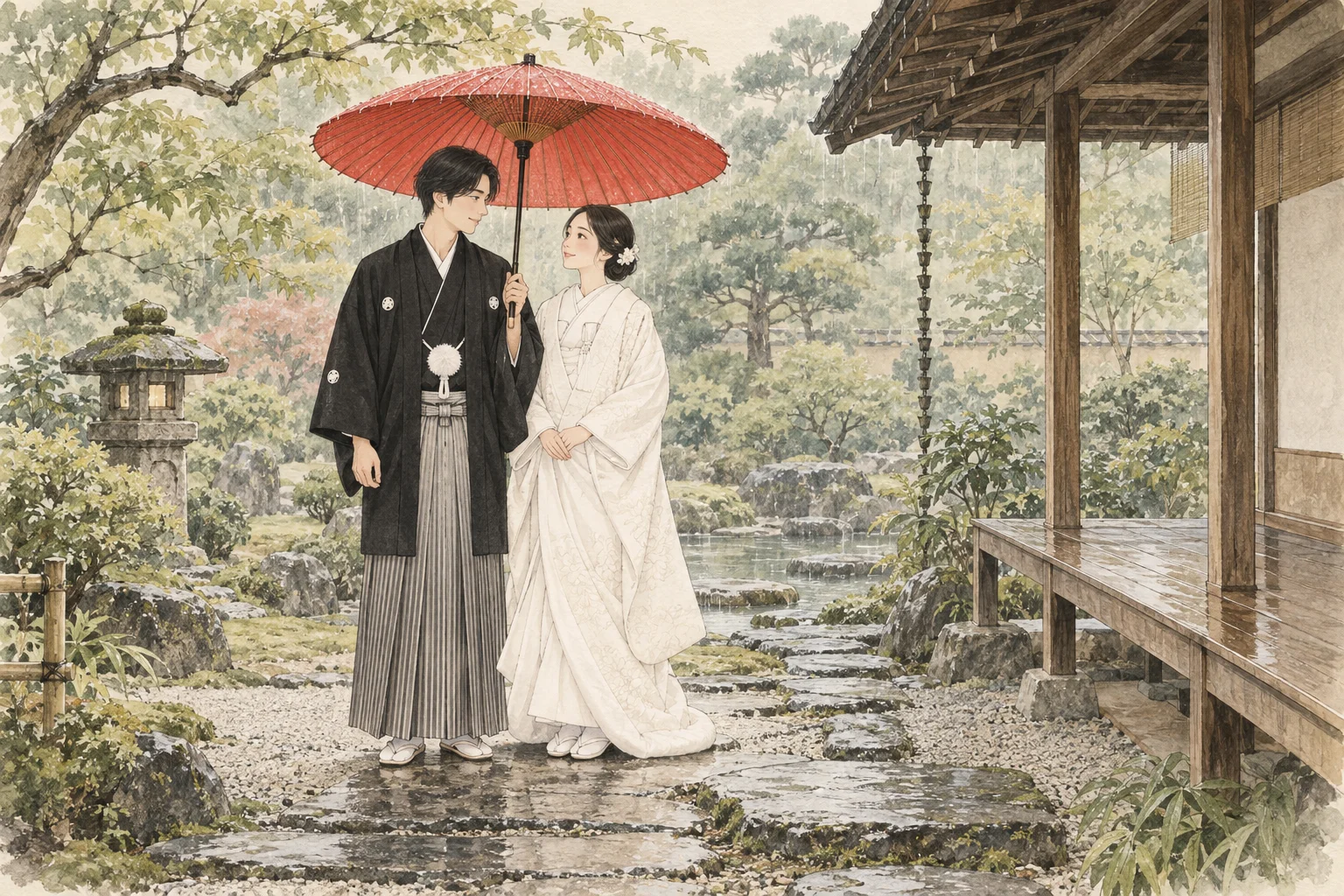
Late winter and early spring weather is the most stable photography weather Japan offers all year — but the season is not without risks. Unusually warm Januaries can push the Kyushu and Kansai bloom forward by ten days; cold late winters can delay Tohoku and northern Kanto blooms similarly. Rain is statistically less frequent in February-March than in April but still possible. The best photographers prepare for these scenarios by offering one or two free reschedules within the season, by maintaining a Plan B location that blooms one to two weeks later (for example Kairakuen as a back-up for Kitano Tenmangu), and by having indoor heritage building backups for rain days. Discuss these contingencies during booking, not on the morning of a delayed peak.
What to Wear: Kimono Choices for Plum Season
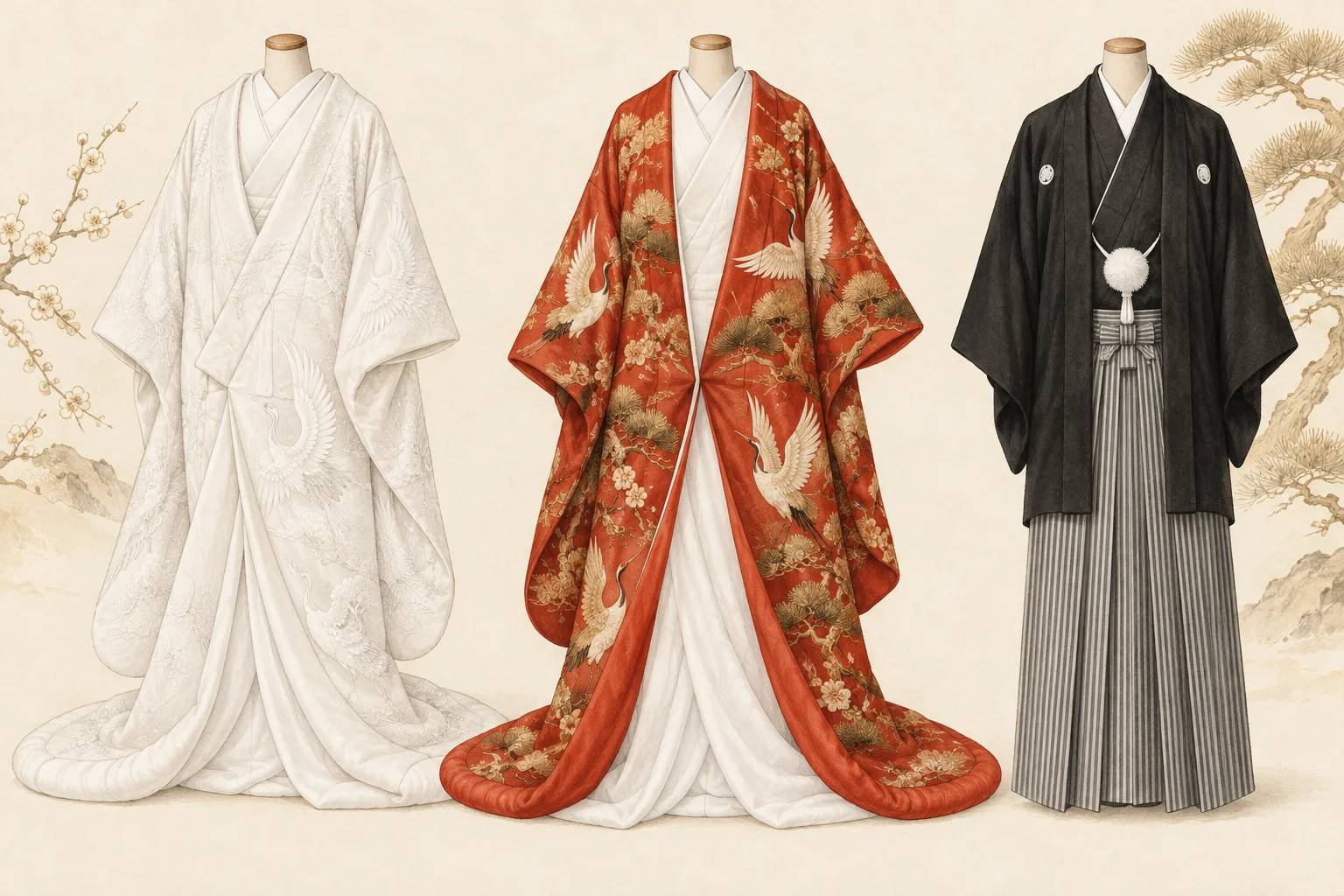
The plum bloom's soft pink-and-white palette pairs best with pale iro-uchikake — gentle blush, pale aubergine, soft cream — or with shiromuku for a pure white-on-white composition that feels classically refined. Heavily saturated colours that work brilliantly in autumn or winter can feel jarring against ume's softer tones. Many couples opt for two-piece shoots: shiromuku for the formal shrine portrait, then a pale pink iro-uchikake for the plum garden session. For a detailed comparison of the two formal styles, see our shiromuku vs iro-uchikake guide. Grooms wear the formal montsuki hakama in black or grey, with white tabi socks and zori sandals. The full ensemble is provided by the studio.
Frequently Asked Questions
Below are the questions we hear most often from couples planning a plum kimono shoot in Japan. For more answers, see our complete article library or contact a matched photographer directly.
When should I book a plum blossom photoshoot in Japan?
Book six to eight months in advance for Kyoto weekends. Three to four months is the latest realistic window for a quality shoot — far more relaxed than sakura. Within two months, you may still find availability on weekdays.
Is plum season really less crowded than cherry blossom season?
Yes, significantly. Kyoto's plum gardens see perhaps fifteen to twenty percent of the visitor numbers cherry locations receive at peak. Hotels, restaurants, and photographers are noticeably less booked. The exception is festival weekends (Baikasai at Kitano Tenmangu, the Plum Festival at Kairakuen), which can match minor cherry days for crowds.
Do I need a permit for a plum shoot at a shrine?
Kitano Tenmangu's outer grounds require no permit; the formal plum garden charges approximately ¥15,000. Jonangu offers a dedicated plan around ¥30,000. Yushima Tenmangu charges approximately ¥10,000 to ¥20,000. Kairakuen requires no permit for small couple shoots on weekday mornings. Your photographer handles permit applications on your behalf.
How accurate are Japan's plum blossom forecasts?
Forecasts from late December are accurate within four to seven days of actual peak by mid-February. Because the plum bloom window is two to three weeks long rather than one week, scheduling around it is much easier than sakura.
Should I choose plum or cherry blossom for my Japan photoshoot?
Choose plum if you want quieter shoots, lower photographer rates, easier booking, and a softer painterly aesthetic. Choose cherry blossoms if you want maximum iconic recognition and your travel dates align with late March or early April. Couples flying long-haul who want flexibility increasingly choose plum.
Can we visit both plum and cherry in one trip?
Yes if your trip falls in mid March in Kyoto. Late-blooming plums and early-blooming cherries overlap by roughly five to seven days in a typical year, allowing a creative photographer to incorporate both in a single day or sequential days. Confirm with your photographer that they can plan for this overlap.
Compare Other Seasons
- Cherry Blossom Kimono Photoshoot in Japan
- Autumn Foliage Kimono Photoshoot in Japan
- Snow Wedding Photoshoot in Japan
- Wisteria Kimono Photoshoot in Japan
Ready to Book Your Plum Shoot
A plum kimono photoshoot in Japan rewards couples who want classical Japanese imagery without the cherry blossom booking war and inflated pricing. Lock in your photographer six to eight months ahead, build at least three flexible days into your travel itinerary, and choose a region whose peak aligns with your travel dates. Then trust your photographer to handle the permits, the timing, and the choreography on the day. We have curated a directory of 176 vetted kimono photographers across Japan, all reviewed for spring experience, English communication, and transparent pricing. Find a photographer matched to your plum plans and start the conversation today. For the broader booking framework that applies across every season, see our ultimate guide to Japan pre-wedding photoshoots.
Related guides
 Budget
Kimono Rental in Japan: What It Costs and Which Kind You Need
Illustrative image · Unsplash. Not a photo of the specific people, places or services discussed.
Kimono rental in Japan means two very different things: a ¥3,000 afternoon in Kyoto, or a bridal shoot from ¥88,000. What each costs, includes and takes.
Read the guide Style guide
Traditional Japanese Wedding Costumes: Who Wears What
Illustrative image · Unsplash. Not a photo of the specific people, places or services discussed.
Traditional Japanese wedding costumes for the bride, groom, family and guests: how formality ranks, what to avoid, and which garments you can actually rent.
Read the guide Location deep dive
Kawaguchiko Kimono Photoshoot: Mt Fuji's Iconic Vista
Illustrative image · Unsplash. Not a photo of the specific people, places or services discussed.
Plan a kimono photoshoot at Lake Kawaguchi with honest clear-Fuji probability guidance, Chureito Pagoda and Oishi Park location logistics, seasonal trade-offs, and access from Tokyo via the Fujikyu Express.
Read the guide