Japan Pre-Wedding Photoshoot: Complete Guide for Couples
The complete guide to planning a Japan pre-wedding photoshoot. Regions, kimono, costs, seasons, booking, English support — everything foreign couples need to know.

Illustrative image · Unsplash. Not a photo of the specific people, places or services discussed.
Check current prices, availability and venue rules with the relevant studio or venue before booking.
A Japan pre-wedding photoshoot is the single most popular way for international couples to mark their engagement or wedding with a destination experience that is uniquely cultural, visually memorable, and surprisingly affordable compared to a Western destination wedding. Each year, tens of thousands of couples from the United States, the United Kingdom, Australia, Singapore, Hong Kong and across Europe fly to Japan specifically to dress in shiromuku or iro-uchikake kimono and shoot at iconic shrines, temples and landscapes. This complete 2026 guide walks you through every decision that shapes a successful Japan pre-wedding photoshoot: where to shoot, which kimono to wear, what it costs, how to book, when to travel, and the cultural details that turn a good shoot into the memory you will be sharing in your home thirty years from now. Whether you are still in the dreaming phase or already ready to put a deposit on a photographer, this guide is the only resource you will need to plan with confidence.
Why a Pre-Wedding Photoshoot in Japan?
Japan offers something no other destination can match: an unbroken thousand-year tradition of bridal photography, a visual culture obsessed with seasons, and an infrastructure of professional studios that has perfected the kimono pre-wedding shoot down to a science. Foreign couples consistently report that the experience is more polished, more affordable, and more emotionally meaningful than they expected.
The Cultural Depth
A shiromuku and iro-uchikake are not costumes; they are ceremonial garments still worn for actual Shinto weddings today. When a foreign couple wears them at a shrine, they participate in a continuous tradition that began in the Muromachi period. This is why the resulting photos feel different from a styled studio shoot in your home country.
The Cost-Quality Equation
A premium kimono pre-wedding shoot in Japan typically runs between ¥150,000 and ¥250,000 (roughly USD 1,000-1,700 at 2026 exchange rates), including kimono, hair, makeup, dressing, and four hours of photography. A comparable destination wedding photoshoot in Italy or Bali costs 2-3x more for less culturally distinctive results.
The Practical Convenience
Most reputable Japan kimono studios now operate fully in English, accept overseas wire transfers and credit cards, and have systems for booking from abroad. Visa requirements for short stays are minimal for citizens of most Western and Asian countries, and Japan's domestic transportation makes a 5-day trip with shoots in two cities entirely realistic.
Choosing Your Region: Kyoto, Tokyo, or Beyond
The region you choose shapes the visual feel of your photoshoot more than any other decision. Each major destination offers a distinct aesthetic, a distinct price band, and a distinct logistical reality.
Kyoto: The Traditional Heart
Kyoto is the spiritual capital of kimono photography. The Gion district, the Philosopher's Path, Arashiyama Bamboo Grove, Fushimi Inari, Kinkaku-ji, and Kiyomizu-dera offer more iconic backdrops within walking distance than any other Japanese city. Studios are concentrated around Shijo and Kawaramachi, with the largest selection of high-end kimono in the country. Expect mid-tier package pricing of ¥150,000-¥220,000.
Tokyo: Modern Meets Traditional
Tokyo offers a striking visual contrast: Meiji Jingu's forested shrine grounds in the morning, Asakusa's old downtown vibe with Senso-ji and the Sumida River cherry corridor, then modern skylines as an evening backdrop. Tokyo packages run 15-25% higher than Kyoto for equivalent service, averaging ¥200,000-¥240,000. The advantage is direct international flight access (Haneda or Narita) and a deeper English-speaking infrastructure.
Kanazawa, Nara, and Regional Japan
Kanazawa, the "Little Kyoto" of the Hokuriku coast, offers Kenrokuen Garden and the historic Higashi Chaya geisha district at prices 20-30% below Kyoto. Nara delivers the ancient sacred forests of Kasuga Taisha and Todai-ji's massive bronze Buddha. Karuizawa, Kamakura, Nikko, and Hakone serve as additional options for couples wanting something distinctive without Kyoto's crowds.
Special Destinations: Mt. Fuji, Okinawa, Hokkaido
For couples who want a once-in-a-lifetime image with Mt. Fuji or the Chureito Pagoda, base out of Tokyo and add a day trip. Okinawa offers the unique Ryukyu Kingdom aesthetic at Shuri Castle and beach-side ryusou shoots. Hokkaido shines in winter with snow-covered shrines around Sapporo. Read our dedicated guide to cherry blossom timing if your trip falls in late March or April.
Kimono Styles and What Each Says
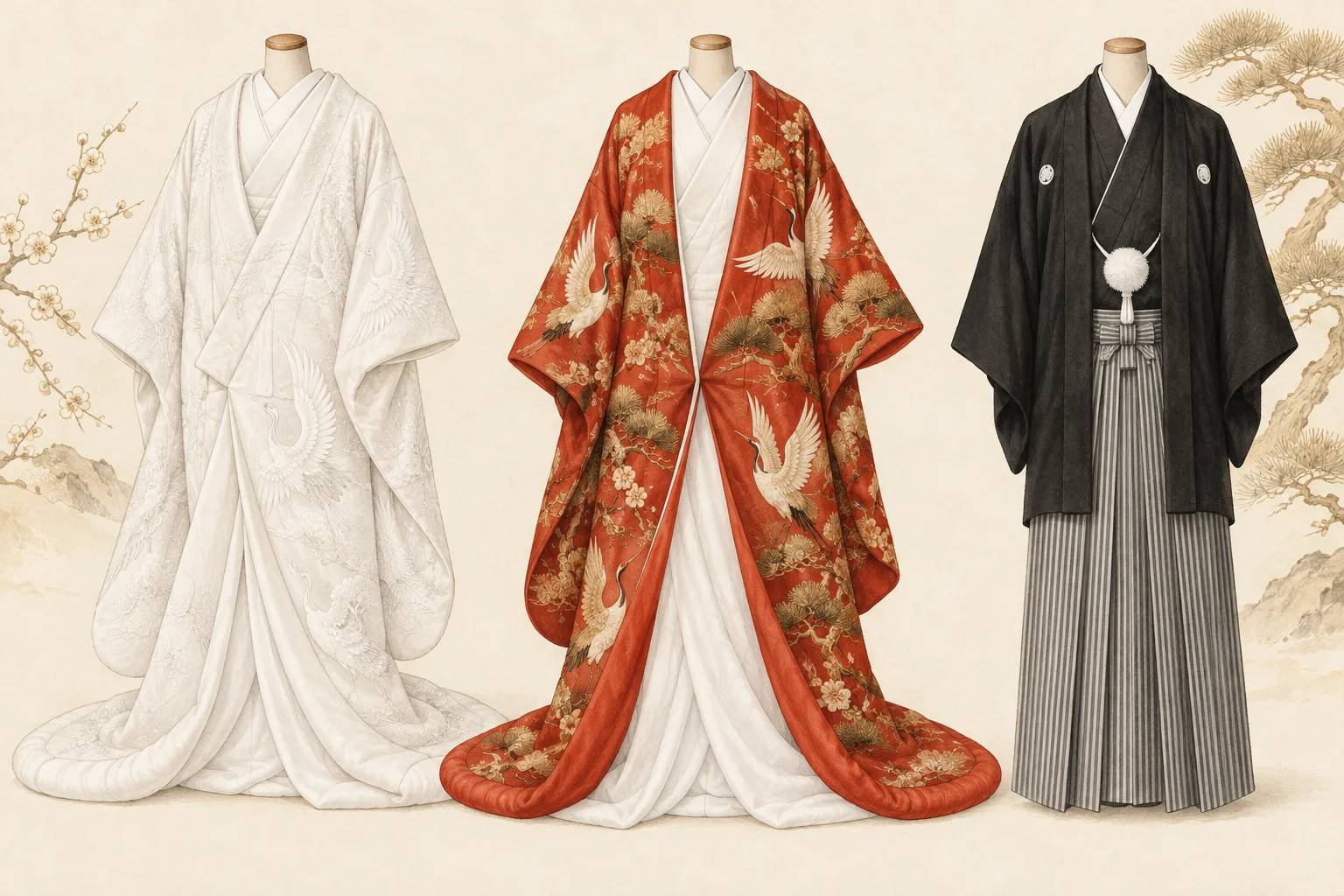
The kimono you wear defines the visual story of your photos. Western brides often expect to choose between "white" or "colored" kimono, but the reality is richer than that.
Shiromuku: The Pure White Bride
Shiromuku is the original Shinto bridal kimono, an all-white outer garment over a white kimono and hood. The symbolism is purity and the readiness to be "dyed" with the colors of the husband's family. Shiromuku photographs most strikingly against red architecture (vermilion shrines), green nature (bamboo, moss), or pink cherry blossoms. It is the most classical and most universally flattering choice.
Iro-Uchikake: The Colorful Statement
Iro-uchikake is a sumptuous outer kimono in red, gold, black, or jewel tones, heavily embroidered with phoenixes, cranes, peonies, or pine. Worn after the ceremony in traditional Japan, it photographs with maximum visual impact and is the more "Instagram-shareable" choice. Red iro-uchikake works especially well in autumn maple forests, while gold and black versions stand out in minimalist settings.
Hikifurisode and Modern Kimono
Hikifurisode is a furisode with a trailing hem, popular with modern Japanese brides who want bridal elegance without the formality of shiromuku. Modern kimono styling, with antique pieces and contemporary accessories, suits couples who want a fashion-forward aesthetic rather than strictly traditional. Many studios offer all four styles in one shoot for couples who cannot decide.
Groom's Montsuki Hakama
The groom wears a formal montsuki haori hakama in black or charcoal grey, with white tabi socks and zori sandals. The studio provides everything; the groom needs to bring nothing.
Best Season for Your Shoot
Japan's pre-wedding photography is intensely seasonal. Each season delivers a fundamentally different visual mood and pricing tier.
Season | Best Months | Visual Mood | Pricing |
|---|---|---|---|
Cherry Blossom | Late March – Early April | Soft pink, dreamy, celebratory | Peak +20-30% |
Fresh Green | Mid May – June | Vivid lush green, cool light | Standard |
Autumn Maples | Mid Nov – Early Dec | Fiery red and gold, dramatic | Peak +15-25% |
Winter Stillness | Late Dec – Feb | Quiet, minimalist, snow possible | Off-peak -10-20% |
Cherry blossom and autumn maples are the two iconic seasons but also the most expensive and competitive to book. Fresh green in May and June is the underrated sweet spot: pleasant weather, no peak surcharges, lush greenery, and full availability of top photographers. See our complete season-by-season guide for detailed monthly breakdowns.
Realistic 2026 Budget Breakdown
Understanding what you will actually pay helps you compare quotes apples-to-apples. Most foreign couples land in the mid-tier bracket.
Entry Tier (¥80,000 – ¥130,000)
Two-hour studio session, one kimono, basic hair and makeup, 30-50 retouched images. Best for couples on a tight budget who want a single-location, studio-only shoot.
Mid Tier (¥150,000 – ¥250,000)
Four-hour shoot at one or two outdoor locations, choice of premium kimono, traditional bridal hair and makeup, groom's hakama, 60-100 edited images delivered within 4-6 weeks. The most-chosen tier for foreign couples and the recommended starting point.
Premium Tier (¥300,000+)
Full day, multiple costume changes, garden or shrine access, video coverage, same-day printed album, English coordinator, hotel pickup. Best for couples who want a no-compromise experience or are combining the shoot with their actual wedding ceremony.
For a complete cost analysis including hidden fees, regional differences, and how to spot bait-and-switch pricing, read our 2026 cost breakdown.
How to Book Your Photographer
The booking process for a Japan kimono shoot has been streamlined for international clients over the past five years. Follow this sequence and you will have a confirmed shoot in under two weeks.
Step 1: Define Your Vision
Before contacting studios, decide on the region, the kimono style, the season, and the type of locations (shrine, garden, street, nature). Save 10-15 reference images from Pinterest or Instagram showing the aesthetic you want.
Step 2: Shortlist 3-5 Photographers
Use our vetted directory of 176 photographers to filter by region, language support, and price band. Send identical inquiries to your shortlist, asking for: itemized quotes, sample galleries from your target season, and confirmation of English communication.
Step 3: Compare Quotes and Confirm Details
A trustworthy quote will list kimono rental, hair and makeup, dressing assistance, hours of coverage, number of locations, edited photo count, and delivery format. Headline prices without itemization are a red flag.
Step 4: Pay Deposit and Lock the Date
Reputable studios require a 20-30% deposit at booking, with the balance due 30-60 days before the shoot. Credit card, PayPal, and international wire transfer are all standard payment methods.
Step 5: Final Coordination
Two to four weeks before your shoot, finalize: kimono selection, shoot itinerary and timing, weather contingency plan, hotel pickup location, and emergency contacts. Most studios use LINE, WhatsApp, or WeChat for fast pre-shoot coordination.
English Support and Communication
The single biggest concern foreign couples raise is language. The good news: about 30% of Japan's premium kimono studios now offer fluent English service, and another 30% work with English-speaking coordinators. The key is choosing your photographer with this in mind from the start.
What "English Support" Actually Means
At top studios, you will work directly with an English-fluent photographer or coordinator from inquiry through delivery. Mid-tier studios may use email translation tools for written communication and provide an interpreter only on shoot day. Confirm in advance which model your studio uses.
Filter for English-Speaking Photographers
Our directory lets you filter photographers by spoken language. Look for the EN tag on each photographer card to confirm direct English communication. Browse English-speaking kimono photographers across Tokyo, Kyoto, and beyond.
Common Mistakes Foreign Couples Make
Twenty thousand foreign couples shoot in Japan each year, and the same mistakes appear repeatedly. Here are the most expensive ones to avoid.
Booking Too Late
Premium photographers fill their cherry blossom and autumn maple calendars 12 months ahead. Couples who wait until 3 months before peak season often get only weekday slots or second-choice photographers.
Underestimating Travel Buffer
A shrine permit can take 3-5 days to confirm. Cherry blossom bloom can shift by a week. Schedule arrival at least 3 days before your shoot to recover from jet lag and allow for date flexibility.
Choosing the Cheapest Studio
Headline prices below ¥80,000 typically exclude kimono upgrades, hair styling, location fees, and digital delivery. By the time everything is added, the "cheap" studio ends up more expensive than the mid-tier option you should have chosen.
Skipping the Rain Plan
Spring and autumn in Japan are rainy. Reputable studios offer one free reschedule or a covered backup location, but only if you confirmed this in your contract. Don't assume; ask in writing.
Booking Through a Travel Agent
General-purpose travel agents add 20-30% commission and rarely know the kimono photography market well. Book directly through a specialist directory like ours or contact the studio yourself.
Flying in from abroad? Start with how kimono wedding photos work for foreigners — booking, fittings, costs and permits in one overview.
Frequently Asked Questions
How long does a typical Japan pre-wedding photoshoot take?
A standard mid-tier shoot is 3-4 hours total: 60-90 minutes of dressing and hair-makeup, then 2-3 hours of photography. Full-day premium shoots run 6-8 hours including a costume change and lunch break.
Do we need to know Japanese to do a kimono photoshoot in Japan?
No. Roughly 30% of top studios speak fluent English directly, and another 30% provide English-speaking coordinators. Our directory filters specifically for English language support.
What should we wear under the kimono?
The studio provides everything you need to wear under the kimono, including the white undergarment (juban) and traditional white tabi socks. Brides should bring strapless underwear; grooms should bring fitted T-shirts.
Can we shoot at multiple locations in one day?
Yes. Mid-tier packages typically include one or two outdoor locations plus the studio dressing room. Premium packages support three or more locations with vehicle transfers included.
How long until we receive our edited photos?
Standard delivery is 4-6 weeks after the shoot. Express delivery (1-2 weeks) is available at most studios for an additional fee of around ¥20,000.
Can we incorporate our actual wedding ceremony into the trip?
Yes. Many couples plan a Shinto-style legal ceremony at a shrine like Meiji Jingu or Heian Shrine and combine it with their pre-wedding photoshoot. This requires more advance planning (6+ months) but creates a unified memory.
Ready to Plan Your Japan Pre-Wedding Photoshoot?
A Japan pre-wedding photoshoot is one of those rare travel experiences that delivers more value than you expect: a deeper cultural connection, more beautiful photographs, and a lower invoice than your peers paid for a destination wedding in Europe. The key is choosing the right photographer for your vision. We have curated 176 vetted kimono photographers across Japan, reviewed for English communication, transparent pricing, and consistent visual quality. Find a photographer matched to your vision and start the conversation today.
Locations in this guide


Related guides
 General guide
Japanese Wedding Photography: A Planner-Led Visitor Guide
Illustrative image · Unsplash. Not a photo of the specific people, places or services discussed.
A senior planner's guide to booking a kimono pre-wedding shoot in Japan: shoot types, top cities, photographer selection, real costs, and shoot-day flow.
Read the guide General guide
What to Pack for a Japan Kimono Photoshoot Trip: Complete List
Illustrative image · Unsplash. Not a photo of the specific people, places or services discussed.
A complete packing list for foreign couples flying to Japan for a kimono pre-wedding shoot — what to bring, what NOT to bring, and what the studio provides.
Read the guide General guide
Kimono Photoshoot Day Timeline in Japan: Hour-by-Hour Plan
Illustrative image · Unsplash. Not a photo of the specific people, places or services discussed.
A realistic hour-by-hour timeline for a full-day kimono photoshoot in Japan — from the night-before hair prep to the 6pm wrap, with planner notes on meals, bathroom logistics, and the timing mistakes couples make.
Read the guide