German Couple Kimono Photoshoot Japan: Precision Planning
A planner's guide to a german couple kimono photoshoot japan trip — 11.5hr Frankfurt/Munich flights, 90-day visa-free entry, craft pairing, German-speaking studios.

Illustrative image · Unsplash. Not a photo of the specific people, places or services discussed.
Check current prices, availability and venue rules with the relevant studio or venue before booking.
Roughly 600 to 1,200 German couples come to Japan each year for a kimono shoot, and they arrive with the most detailed pre-shoot question lists we see from any nationality. Direct flights from Frankfurt and Munich land at Haneda or Narita in about 11.5 hours, visa-free entry covers 90 days, and the typical trip is planned in three to four weeks of itinerary detail rather than a vague window. This guide explains what shapes a German couple's shoot in Japan — the questions to expect, the craft pairings that actually work, and the studios capable of holding both languages.
Why German Couples Choose Japan
German couples we work with rarely arrive on impulse. The shoot is almost always part of a deliberately chosen trip, often described in terms of "what we wanted to see properly, not in passing." Japan answers three threads at once: a craft culture that survives in named workshops rather than abstract heritage, public infrastructure that runs on time, and a visual aesthetic — pared lines, seasonal materiality — that maps cleanly onto German design instincts.
The kimono shoot, in our planning notes, sits inside a broader pattern: couples want to see how something is made. A Nishijin weaving studio in the morning, a kimono fitting at a wasou house in the afternoon, a shoot the next day at a shrine the planner has actually walked. That sequencing matters more than location prestige.
The second draw is reliability. Couples who plan their honeymoon eighteen months out want vendors who reply with the same precision they wrote in. Japanese studios — when language matches — deliver that consistency. The mismatch arises when an English-only inbox meets a German question list demanding specific answers.
Direct Flights (Frankfurt/Munich Tokyo 11.5hr)
Lufthansa, ANA, and JAL operate daily nonstops between Frankfurt (FRA) and Tokyo. Munich (MUC) is served by Lufthansa and ANA. Block time runs 11.5 hours eastbound, returns westbound around 12.5 hours. Düsseldorf and Berlin do not currently have direct service — couples from those cities either connect through Frankfurt or take a one-stop via Helsinki, Istanbul, or Doha.
Planner's notes: Couples ask whether the shoot should be on day two or day three of the trip. Our answer: day three minimum. Day-two shoots produce fatigue lines in close-up frames regardless of how well the couple believes they slept. Hair and makeup at 7 a.m. on day two — eleven and a half hours after a long flight — is recoverable but not optimal. Day three or four gives the body a real reset and the photographer cleaner skin tones to work with.
Visa-Free 90 Days
German passport holders enter Japan visa-free for tourism stays up to 90 days. No advance application, no e-visa, no entry fee. The 90-day window is generous enough that we rarely see couples constrained by it — typical trip length is 12 to 21 days, with the kimono shoot anchored mid-trip.
What does matter: the visa-free entry is tourism only. Couples planning a legal ceremony in Japan need a different track entirely. See getting married in Japan as a foreigner for the documentation pathway. Most German couples we book are doing prewedding or post-wedding kimono shoots — legal marriage handled in Germany, the Japan trip is the photography and the honeymoon. That keeps the visa side simple.
German Pre-Shoot Question Patterns
The question lists we receive from German couples are recognisable. They typically run 25 to 40 numbered items, organised in sections, sent as a single document rather than scattered across emails. The categories we see repeatedly:
- Garment specifications: fabric composition of the uchikake, weaving region of the obi, dating of any antique pieces, whether the shiromuku is silk or synthetic blend.
- Photographer technical details: camera body and lens used, RAW delivery policy, colour grading profile, backup workflow on the shoot day.
- Schedule contingencies: what happens if it rains, if the photographer is ill, if a shrine permit is rejected, if the kimono fitting runs over.
- Cost breakdowns: itemised — not lump-sum — with separate lines for studio time, kimono rental, hair and makeup, location fees, image processing, album.
- Cultural questions: whether the san-san-kudo sake ritual is appropriate at a non-ceremony shoot, what tamagushi-hoten requires of the couple, what kashiwade timing is correct.
This list is not a problem. It is, in fact, the cleanest way to plan a shoot — the answers we provide become the contract. The friction point is studio side: English-only studios with thin documentation cannot answer questions 17 through 32 without escalation, and the silence reads as evasion. German-capable studios, or English studios with strong written processes, handle the same list in a single reply.
Planner's notes: If a studio takes more than four business days to respond to a structured question list, we move the booking. Not because the studio is bad, but because the response pattern predicts how the shoot day itself will run.
Craft-Pairing Itinerary Patterns

The most common request we receive from German couples is to pair the shoot with workshop visits. This is not a generic "cultural experience" wish — it is specific, and it usually names craft categories the couple has already researched.
Kimono Fabric Houses (Kyoto Nishijin-ori)
Nishijin is the weaving district of northwest Kyoto, where the heavily figured silk for high-end obi and uchikake has been produced for roughly 1,200 years. Several houses run small visitor programmes — loom demonstrations, archive viewing, occasionally a fitting of historical reproductions. Couples planning a Kyoto shoot often request a Nishijin morning the day before, which gives the fabric of the shoot kimono a context the photographs then carry.
For background on what these houses produce, see the bridal kimono guide and antique and vintage bridal kimono.
Sakai Knife Workshops
Sakai, south of Osaka, is the historical centre of Japanese forged knife production. Workshops run two- to three-hour sessions where visitors observe the hand-forging, edge-setting, and handle-mounting stages, often with a demonstration knife to take home. German couples — particularly those with culinary or design backgrounds — frequently add a Sakai morning either side of an Osaka or Kyoto shoot. The pairing reads strangely on paper but works in practice: the same craft sensibility shows up in both rooms.
Ceramic Districts (Imari, Bizen, Mashiko)
Three pottery towns receive most German couple interest. Imari (Saga, Kyushu) is porcelain — fine, painted, white-bodied. Bizen (Okayama) is unglazed stoneware fired in wood kilns. Mashiko (Tochigi, north of Tokyo) is the everyday-folk pottery centre, easily reached as a day trip from a Tokyo base. Couples typically pick one based on where the shoot is anchored — Mashiko if Tokyo, Bizen if Kyoto-area, Imari if extending to Kyushu. Each town has working studios open to visitors, not just shops.
German-Speaking Studios in Japan (~3-5)
The current count of studios in Japan capable of running a kimono shoot in German is small — roughly three to five operations, all clustered in Tokyo. "Capable in German" here means: a staff member who can hold a fitting conversation, explain ritual cues during the shoot, and respond to a structured email in German without machine translation. This is a stricter bar than "speaks some German."
The shortage is real but not as constraining as the equivalent gap for some other languages, because German couples we work with are generally comfortable conducting the shoot itself in English. The language demand is concentrated at two points: the pre-shoot question phase, where written precision matters, and the fitting, where vocabulary about fabric and fit gets specific. If a studio can hold those two points in German, the shoot day itself runs fine in English.
For shortlisting, our recommendation is to start with the multilingual wedding photography directory and filter to operations that confirm written German capability — not just listed on the language menu, but demonstrated in the first reply.
English-Only Studios — Where Quality Holds
Most German couples end up booking an English-capable studio rather than a German-speaking one, because the pool of strong photographers is larger. This works when the studio has a written process: a structured intake form, a written shoot-day timeline, a clear contract in English. The studios that fail with German couples are not the English-only ones — they are the ones that respond informally and verbally to written question lists.
See English-speaking kimono photographers in Japan for our current filtered list, and photographer contracts and insurance for what a working contract should cover.
Top Locations Among German Couples

Kyoto (Cultural Anchor)
Kyoto is the most-booked anchor city for German couples, typically for a three-night stay before or after the shoot. The draw is the density of intact temple and shrine architecture, walking-distance neighbourhoods (Gion, Higashiyama), and access to Nishijin weaving and Uji tea. For shoot locations, see top Kyoto kimono studios 2026. For the broader comparison, see Tokyo vs Kyoto.
Kanazawa (Craft Heritage)
Kanazawa is the second-most requested location, specifically because of its craft heritage — gold leaf, Kutani porcelain, Kaga yuzen kimono dyeing — and its preserved samurai and geisha districts. A typical German couple itinerary pairs three nights Kanazawa with three nights Kyoto, connected by shinkansen. See Kanazawa kimono photoshoot and Kyoto vs Kanazawa for the trade-offs.
Mt Fuji Area
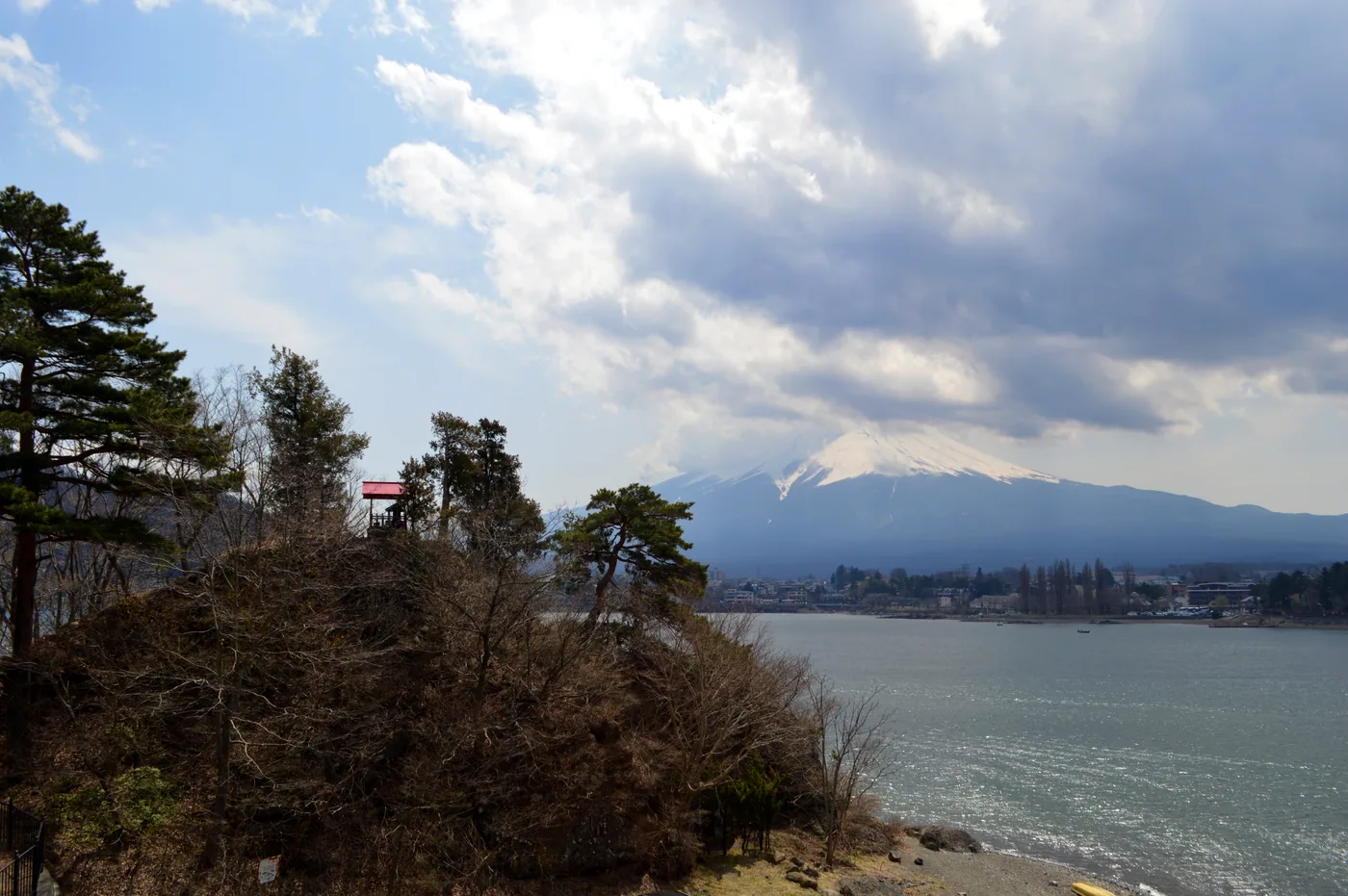
Fuji draws a particular subset of German couples — typically those for whom the mountain is a non-negotiable part of the Japan image. The honest reframing here matters: clear-view shoot days at Fuji are a coin flip outside of November to early February. We recommend two-day windows minimum, with the photographer empowered to call the shoot day at 6 a.m. based on cloud cover. See Mt Fuji area kimono shoot and Hakone as the practical base.
Multi-Week Trip Patterns
The typical German couple trip we book runs 14 to 21 days. The kimono shoot sits in the middle third, not at the start. A representative itinerary:
- Days 1-4 Tokyo: arrival, recovery, Asakusa and Meiji area walking, one day trip to Kamakura or Nikko.
- Days 5-7 Hakone or Mt Fuji area: ryokan stay, onsen, scouting shoot light if Fuji shoot is planned here.
- Days 8-11 Kyoto: Nishijin weaving morning, kimono fitting, shoot day, two days for temples and Arashiyama.
- Days 12-14 Kanazawa: Kenrokuen, samurai district, craft workshops.
- Days 15-17 Hiroshima/Miyajima or Naoshima: depending on whether the couple wants UNESCO history or contemporary art.
- Days 18-21 Tokyo return: Ginza, museums, departure.
For a tighter version of this trip, see the 7-day Japan itinerary. For the longer planning horizon, the 18-month timeline covers what to lock when.
Spend Tier (Practical, Quality-Focused)
German couples sit in a quality-driven mid-to-upper spend tier. Typical shoot-day budget runs 280,000 to 480,000 JPY, with the range driven mainly by kimono grade and album choices rather than photographer fee. The spend pattern is methodical: couples ask for the itemised breakdown, evaluate each line, and often reallocate — frequently increasing the kimono budget and trimming the album binding tier.
For current pricing benchmarks, see 2026 kimono photo cost. For album decisions, album binding and design and RAW delivery policies are the two articles most relevant to the German question list.
Planner's notes: Tipping is not part of the standard transaction in Japan, and German couples almost never ask about it. If the question comes up, the answer is: written gratitude after delivery, possibly a thoughtful Karte (card) with the album, but no cash tip. See tipping etiquette for the longer version.
Frequently Asked Questions
Do we need to translate our marriage documents into German for the Japan shoot?
No. The shoot is photography, not a legal ceremony, so no civil documents are required on either side. If you are doing a separate legal ceremony in Japan, that pathway has its own translation requirements (German civil documents, apostilled and translated into Japanese), but the kimono shoot itself is a private booking with the studio.
Can we send our question list in German to studios listed as English-only?
We do not recommend it. Even strong English-only studios will lose nuance through machine translation, and the back-and-forth doubles. Either translate the list once into clean English yourself, or filter your shortlist to confirmed German-written-capable operations from the start. The second route is shorter even though the studio pool is smaller.
How early should we book a craft workshop visit before the shoot?
Six to ten weeks minimum for Nishijin houses and Sakai forges, which run small group sizes. Mashiko pottery is more flexible — three to four weeks is typically fine. Beware of attempting to book on arrival: most working craft houses are not walk-in.
Is it appropriate to ask the photographer for the EXIF data and camera body model?
Yes, and most Japan studios will share it openly. The question is normal — the only reason it occasionally registers as unusual is that few other clients ask. A studio that refuses without explanation is a yellow flag for the broader process question.
Will the kimono fitting accommodate a tall European bride?
Most wasou houses keep extended-length uchikake and shiromuku in stock for brides 175 cm and above, but the inventory is finite and concentrated at a few operations. Send heights with the initial enquiry, not in the fitting room. See body type and kimono fitting for the longer treatment.
Can we shoot in Berlin or Frankfurt instead with a flown-in Japanese photographer?
Technically possible but rarely worth it. The cost of flying a photographer plus shipping kimono usually exceeds the cost of bringing the couple to Japan, and the location backdrops do not carry the same weight. See Japanese-themed wedding abroad for the cases where this does make sense.
What is the realistic chance of clear Mt Fuji on a given shoot day?
Outside November to early February, roughly 40 to 60 percent on any single morning, depending on month and weather pattern. November to February runs 70 to 85 percent. The implication for planning: do not lock a single shoot day on Fuji — give the photographer a two-day window and authority to call the better morning at dawn.
Find a German-Capable Studio
The cleanest way to start is to filter the directory to studios that demonstrate German-language capability in their first written reply, then send the structured question list and time the response. Browse the curated photographer directory as your starting point.
If you are still comparing nationality-specific paths, our Italian couple kimono shoot and Canadian couple kimono shoot guides cover the contrasting planning rhythms.
Related guides
 General guide
Kimono Wedding Photos for Foreigners: How It Works in Japan
Illustrative image · Unsplash. Not a photo of the specific people, places or services discussed.
Yes, foreign couples can have kimono wedding photos taken in Japan — no residency, ceremony or Japanese required. How booking, fittings, pricing and permits actually work.
Read the guide General guide
How to Book a Kimono Photographer in Japan from Abroad: Step-by-Step
Illustrative image · Unsplash. Not a photo of the specific people, places or services discussed.
A complete step-by-step guide for foreign couples booking a kimono pre-wedding photographer in Japan from overseas. Contracts, payments, communication.
Read the guide General guide
Multilingual Wedding Photography Japan: Beyond English
Illustrative image · Unsplash. Not a photo of the specific people, places or services discussed.
A planner's audit of which languages — Korean, Mandarin, Spanish, French, JSL — Japanese kimono studios actually support, plus interpreter costs and when to hire one.
Read the guide