Malaysian Couple Kimono Photoshoot Japan: KL Direct Guide
Malaysian couple kimono photoshoot Japan guide: KL-Tokyo 7hr direct, visa-free 90 days, multicultural Malay-Chinese-Indian family planning, halal compliance.

Illustrative image · Unsplash. Not a photo of the specific people, places or services discussed.
Check current prices, availability and venue rules with the relevant studio or venue before booking.
Malaysian couples — roughly 800 to 1,500 per year — bring a multicultural family profile that shapes everything from dietary requirements to language coordination. The standard Malaysian family attending a Japan kimono shoot may include Malay-Muslim parents requiring halal meals, Chinese-Malaysian relatives expecting Mandarin or Cantonese service, and Indian-Hindu in-laws who eat vegetarian. Kuala Lumpur to Tokyo runs 7 hours direct, visa-free entry covers 90 days, and English fluency across the family is generally strong. Planning a Malaysian couple shoot is less about translation and more about coordinating three sets of customs simultaneously.
Why Malaysian Couples Choose Japan
Malaysian couples sit in the middle of ASEAN inbound to Japan — smaller in volume than Singaporeans (who are heavier Japan travelers per capita) but larger and growing faster than Indonesian or Vietnamese cohorts. Most have visited Japan two or three times as tourists before booking a wedding photoshoot, so they arrive informed about logistics: which line connects Narita to central Tokyo, how a Suica card works, what "matcha" tastes like outside Instagram.
The appeal is partly seasonal. Malaysia is equatorial — there is no spring, no autumn, no snow. A kimono shoot in Kyoto during cherry blossom or Hokkaido in February delivers a sensory experience that does not exist at home. For couples whose home wedding will be held in Kuala Lumpur or Penang in tropical heat, the Japan shoot becomes the "different climate" portion of the album.
Wedding Planner's Notes: Malaysian couples are some of the most family-inclusive bookers we see. Single-couple shoots without parents are unusual. Three-generation bookings — couple, both sets of parents, plus an aunt or grandmother in formal kimono — are common. Build the shoot duration assumption around six to ten people on location, not two.
Direct Flights (Kuala Lumpur KUL → Tokyo 7hr)
Kuala Lumpur International Airport (KUL) operates direct flights to Tokyo (Narita and Haneda) and Osaka (Kansai) on four carriers: Malaysia Airlines, Japan Airlines, ANA, and AirAsia X. Flight time is approximately 7 hours; the time zone is the same (UTC+8 vs UTC+9 — one hour difference), so jet lag is minimal compared with European arrivals. Most flights depart KL in the late evening and land in Tokyo at sunrise, which is convenient for couples who want to shoot the day after arrival.
AirAsia X operates the budget option (KL-Tokyo from MYR 800 one-way during sales), while Malaysia Airlines and JAL run premium service with checked luggage included. For couples bringing their own pre-shoot outfits or wedding accessories, the full-service carriers are worth the upgrade — kimono shoots involve a lot of small items (jewellery, family photos for reference, gifts for parents) that you do not want stuck in fragile budget-airline luggage limits.
Osaka entry (KIX) is the better option for couples whose itinerary anchors in Kyoto. Direct AirAsia X and Malaysia Airlines services land at KIX with similar timing. Limousine bus or JR Haruka connect KIX to Kyoto Station in 75 minutes.
Visa-Free 90 Days
Malaysian passport holders enter Japan visa-free for stays up to 90 days. There is no advance application, no fee, no interview. Present your passport at immigration, receive the standard tourist stamp, and proceed. The 90-day allowance is generous — far longer than the 5 to 10 days most couples spend — and removes a major variable from planning. Compare this to the visa requirements that complicate Chinese mainland couples planning a Japan shoot, where visa lead time can shift entire bookings.
One practical note: Japanese immigration may ask about return flight tickets and accommodation address at entry. Have screenshots of your hotel booking and return flight ready on your phone — first-time entrants are sometimes asked, repeat visitors rarely. There is no requirement to declare the kimono shoot or prewedding photography purpose; it falls under standard tourism.
Multicultural Family Backgrounds
Malaysia's population breakdown — Malay 60%, Chinese 25%, Indian 7%, others 8% — means a single couple's wedding may involve all three major religious and dietary frameworks simultaneously. This is the most planning-complex aspect of a Malaysian couple shoot and the area where studios accustomed to homogeneous bookings often stumble. The three configurations below cover the most common patterns.
Malay-Muslim Couples (Halal Critical)
Roughly 60% of Malaysian couples booking Japan kimono shoots are Malay-Muslim. Halal compliance is non-negotiable: no pork, no alcohol, no cross-contamination during meal preparation. This affects hotel selection (halal-certified breakfast preferred), restaurant reservations (Japan has fewer than 300 halal-certified restaurants, mostly in Tokyo's Shinjuku, Shibuya, and Asakusa districts plus Kyoto's Higashiyama), and any catered shoot lunch.
Tokyo studios serving Malaysian Muslim couples typically partner with halal-friendly hotels (Hotel Mystays Premier Akasaka, Daiwa Roynet Ginza, and a handful of others maintain halal-certified breakfast lines). Some studios pre-arrange halal bento boxes for on-location shoot days. Couples should also confirm prayer room access in their hotel — major chain hotels in Tokyo and Osaka have improved on this in the past five years.
Dress modesty is rarely a kimono issue — the formal shiromuku and uchikake cover the body completely, and the standard hairstyle covers most of the head. Hijab integration with bridal hair styling is the more practical question. Some hair stylists experienced with foreign brides have adapted shimada wig styles to drape over a tonsured hijab base; ask specifically before booking.
Chinese-Malaysian Couples (Mandarin/Cantonese Service)
About 25% of Malaysian Japan-bookers are Chinese-Malaysian. Cantonese is common in older Penang and KL families; Mandarin is the standard in younger and more cosmopolitan ones; Hokkien dominates in some Penang-origin households. English fluency is universal in this group, so language is usually a preference rather than a requirement.
Chinese-Malaysian customs sometimes overlap with mainland Chinese expectations — tea ceremony for parents (an actual Chinese tradition, distinct from the Japanese chado tea ceremony), red envelopes (ang pao) for elders, lucky-number guest counts. Ask the couple early whether they want any of these woven into the shoot day, particularly the parent tea ceremony which can be staged in studio with simple props. Studios that have served Hong Kong couples generally handle Chinese-Malaysian families fluently because the customs overlap.
Indian-Malaysian Couples (Vegetarian / Hindu Customs)
Roughly 7% of Malaysian inbound is Indian-Malaysian — smaller in volume but significant in expectation. Most Indian-Malaysians are Tamil-speaking Hindus from southern India ancestry, with smaller Punjabi-Sikh and Sri Lankan-Tamil sub-groups. Dietary patterns: strict vegetarian common, some pure-veg (no onion, garlic), Jain restrictions occasionally. Hindu couples sometimes incorporate a kumkum (vermilion) blessing or coconut offering into the shoot opening — these can be staged photogenically without disrupting the kimono day.
Practical recommendation: brief the studio explicitly about no leather in props (a sensitivity for some Hindu couples), avoid beef-themed meal recommendations entirely, and confirm vegetarian Japanese cuisine options. Buddhist shojin-ryori (temple vegetarian) cuisine in Kyoto is a strong fit and overlaps culturally with Hindu vegetarian principles. The Indian couple Japan kimono guide covers the full vegetarian planning protocol in more depth.
English Fluency Across All Groups
Malaysia's working English fluency is among the highest in Asia outside Singapore and the Philippines. Education is conducted in Bahasa Malaysia and English; tertiary education and most professional contexts default to English. This means studio communication can almost always proceed in English without translator support — a substantial cost saving compared to multilingual shoots requiring on-day interpreters.
Older parents and grandparents may be less fluent, but they are usually content to follow visual direction (gesture-led posing) without verbal coordination. A studio that has worked with international couples regularly will already use posing-by-demonstration techniques that bridge any language gap. The exception is medical or dietary clarification mid-shoot — those should be flagged to the booking couple in advance, not improvised.
Dietary Compliance Across the Three Groups
If you are booking a multi-family Malaysian shoot with all three demographic groups represented, plan meals as the most logistically demanding piece. A single restaurant meeting halal, vegetarian, and Chinese-family expectations simultaneously is very rare in Japan; most groups split into sub-meals or eat at hotels with multiple lines.
Tokyo's dietary-flexible restaurant infrastructure has improved significantly: Shinjuku Gyoen-mae and Shibuya have several halal-certified Japanese restaurants (sushi, ramen, yakiniku) that also offer vegetarian set menus on request. Kyoto is more limited — most halal options are concentrated near Kyoto Station and Gion's edge. Plan ahead with reservations rather than walk-in attempts.
For shoot-day catering, premium studios will arrange tiered bento boxes — halal-certified box, vegetarian box, standard box — from specialised caterers. Expect an add-on of ¥3,000 to ¥6,000 per person for tiered bento versus the standard ¥1,500 to ¥2,500 single-option boxes.
Top Locations Among Malaysian Couples

Tokyo (Multicultural District Mix)
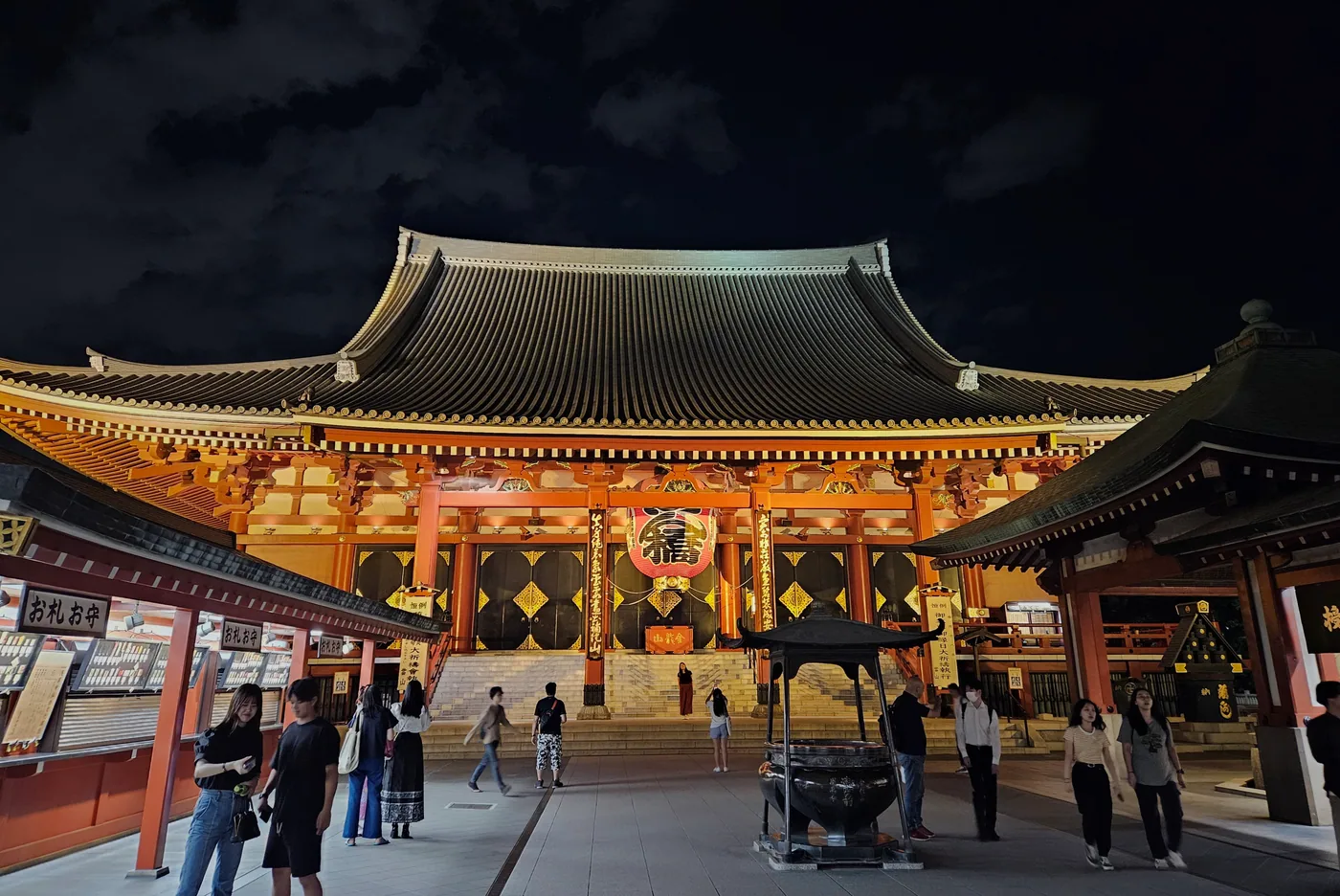
Tokyo is the most common Malaysian first choice, primarily because it has the deepest halal and vegetarian infrastructure of any Japanese city. Studios in Shibuya, Shinjuku, and Asakusa run Malaysian couple shoots regularly. The standard Tokyo itinerary pairs Meiji Jingu (Shinto shrine, contemplative) with a Roppongi or Shinjuku studio session, sometimes adding Asakusa's Senso-ji temple area. Asakusa works particularly well for Malaysian couples because the surrounding shops and street food (including a growing number of halal-friendly options) keep family members engaged during studio waiting periods.
See the Asakusa kimono shoot guide for permit and timing detail, and the Meiji Jingu permit notes for shrine-specific logistics.
Kyoto Cultural Anchor
Kyoto is the cultural anchor for Malaysian couples who want the "real Japan" backdrop. Higashiyama, Gion, and Arashiyama feature heavily in returning Malaysian portfolios. The challenge in Kyoto is dietary infrastructure — halal options exist but are fewer; pre-booking is mandatory. Couples often pair one Kyoto day with a Tokyo base, taking the Shinkansen morning-to-evening for the Kyoto session.
Cherry blossom (late March to early April) and autumn foliage (mid-November) are peak Malaysian booking windows in Kyoto. Both seasons coincide with Malaysian school holidays. Book locations 6 to 9 months ahead.
Hokkaido Snow Backdrop
For tropical-climate Malaysian couples, snow is the experience. Hokkaido kimono shoots in January and February deliver fresh-snow landscapes that simply do not exist at home. Most Malaysian Hokkaido bookings cluster around Otaru (small town with canal photography), Sapporo (urban + nearby ski resort access), and Furano (rural snow fields).
Cold-weather planning is the practical issue. Tropical couples are often underprepared for -10°C shoot conditions; brief them explicitly about thermal undergarments (worn under the juban), hand warmers, and limited outdoor exposure duration. A 90-minute outdoor block becomes 45-60 minutes in winter Hokkaido for couples not acclimatised.
Spend Tier (Mid-Range Growing)
Malaysian couple spend on Japan kimono photography sits in the mid-range — typically ¥350,000 to ¥900,000 for a full prewedding package, slightly below Singaporean and Hong Kong averages but above Indonesian and Vietnamese cohorts. The mid-tier preference (¥500,000-¥700,000 range) is consistent with Malaysian wedding spend patterns at home: substantial but not luxury-tier.
The trajectory is upward. Malaysian couples bookings have grown roughly 12-15% year-on-year for the past three years, and the per-couple spend has shifted modestly higher. The growth is driven partly by Instagram-led discovery (Malaysian brides are heavy users) and partly by the rising number of Malaysian destination weddings overall. See the 2026 kimono photo cost breakdown for tier-by-tier inclusions.
Hari Raya / Chinese New Year Travel Patterns
Malaysian travel rhythms follow two major holiday windows: Hari Raya Aidilfitri (Muslim festival, dates shift with Islamic calendar — falls in April-May for the next several years) and Chinese New Year (late January to mid-February). Both are major family travel windows and book up Japan studios early. School holidays in March and August are smaller spikes.
Hari Raya bookings are dominated by Malay-Muslim couples extending family travel after the festival back home — the pattern is "Raya at home, then Japan honeymoon shoot." Chinese New Year bookings cluster around Chinese-Malaysian couples and coincide with peak winter snow in Hokkaido — a popular combination. Plan 9 to 12 months ahead for these windows if you want premium studios and prime locations.
Multi-Country Asia Pairings
Malaysian couples often pair Japan with a regional second destination. Common combinations:
- Japan + Korea: Tokyo or Osaka shoot, then Seoul for hanbok photography. 4-5 day Japan portion, 3 day Korea portion. Direct LCC flights connect both legs.
- Japan + Taiwan: Tokyo shoot, then Taipei for a cultural and food trip. Shorter total trip, lower spend.
- Japan + Bali or Phuket: Japan formal kimono shoot, then beach destination for resort-style portraits or pure relaxation honeymoon. Most common multi-country pattern overall.
- Japan + Hokkaido extended: Treats Hokkaido as a separate destination from Honshu — 4 days each.
The multi-country pattern matters for shoot duration: couples on multi-country itineraries typically book a 4-6 hour Japan shoot rather than a full-day, leaving more time for non-photo travel.
FAQ
Can a single Tokyo studio handle a multi-religion Malaysian family?
The top-tier ones can — the practical bottleneck is meal coordination rather than studio service. Confirm in writing before booking: halal bento availability, vegetarian options, and whether the studio's hair stylist has worked with hijab-base brides. Studios that say "yes to everything" without specifics often disappoint on the day.
How do I handle hijab styling under a shimada wig?
Several Tokyo and Osaka hair stylists have developed adapted approaches — typically a smaller, lighter base hijab covered by the shimada katsura. The wig sits slightly higher than usual and the silhouette is modified. Send reference photos to the studio's hair team during booking; do not wait until the shoot day.
Is alcohol used in the san-san-kudo sake ritual?
Yes — traditional san-san-kudo uses real sake. For Muslim couples, studios substitute apple juice or non-alcoholic sake (the latter is widely available in Japan). The ritual is symbolic, not chemically dependent on alcohol — the substitution does not break the visual or spiritual integrity.
Can our Hindu parents perform a small puja before the shoot starts?
In private studio space, generally yes — most studios accommodate a 10 to 15 minute pre-shoot family ritual as long as no open flame or strong incense is involved. Shrine locations are not appropriate venues; Shinto shrines are active religious sites and require their own protocol. Brief the studio in advance.
How early should we book during Hari Raya season?
Premium studios book out 9 to 12 months ahead for the Hari Raya window. Mid-tier studios fill 6 months out. If you want a specific photographer or specific location pairing, lock the booking at 12 months and pay the deposit. Last-minute Hari Raya bookings (under 4 months) usually mean compromised studio selection.
What's the difference between booking from KL and from Singapore as a Malaysian couple?
For Malaysian couples currently living in Singapore for work, the booking experience is essentially Singaporean — flight options from SIN, different sale calendars. The studio service in Japan is identical. The main difference is which currency the deposit clears in.
Do studios accept group bookings of multiple Malaysian couples shooting together?
Some do, particularly for friend-group multi-couple bookings or family group bookings with multiple weddings. Pricing is usually negotiated per-couple with a small group discount (5-10%). Coordination complexity rises sharply, so confirm logistics — multiple wardrobes, separate hair stylist allocations, sequential or parallel shoot sessions.
Is the kimono itself problematic from any religious perspective?
Generally no for any of the three Malaysian groups. The shiromuku and uchikake are modest, full-coverage garments. The only common concern is the obi-musubi (back bow) for Muslim brides — which is essentially decorative and raises no religious issue. Some conservative Muslim families prefer non-shrine photo locations (avoiding active Shinto sites), which is easily accommodated with studio or garden venues.
Find a Multicultural Studio
Multicultural Malaysian shoots reward studios that have done the homework — halal-certified meal partners, hair teams experienced with hijab styling, alcohol substitution for the san-san-kudo, vegetarian options on the bento menu. The directory filters by language capability and dietary infrastructure, not just portfolio aesthetic. Browse our curated photographer directory and filter for English service plus dietary accommodation.
Continue with the rest of the Southeast Asia series: read the Indonesian couple Japan kimono photoshoot guide for the predominantly Muslim halal-critical context, then the Hong Kong couple Japan kimono photoshoot guide for Cantonese-dominant Chinese family planning notes that overlap with Chinese-Malaysian customs.
Related guides
 General guide
Kimono Wedding Photos for Foreigners: How It Works in Japan
Illustrative image · Unsplash. Not a photo of the specific people, places or services discussed.
Yes, foreign couples can have kimono wedding photos taken in Japan — no residency, ceremony or Japanese required. How booking, fittings, pricing and permits actually work.
Read the guide General guide
How to Book a Kimono Photographer in Japan from Abroad: Step-by-Step
Illustrative image · Unsplash. Not a photo of the specific people, places or services discussed.
A complete step-by-step guide for foreign couples booking a kimono pre-wedding photographer in Japan from overseas. Contracts, payments, communication.
Read the guide General guide
Multilingual Wedding Photography Japan: Beyond English
Illustrative image · Unsplash. Not a photo of the specific people, places or services discussed.
A planner's audit of which languages — Korean, Mandarin, Spanish, French, JSL — Japanese kimono studios actually support, plus interpreter costs and when to hire one.
Read the guide