Indonesian Couple Kimono Photoshoot Japan: Halal & Direct Flights
Planning guide for Indonesian couple kimono photoshoot Japan: Jakarta-Tokyo direct flights, 30-day visa-free entry, halal compliance, and prayer-time scheduling.

Illustrative image · Unsplash. Not a photo of the specific people, places or services discussed.
Check current prices, availability and venue rules with the relevant studio or venue before booking.
Indonesian couples — roughly 500-1,200 per year — bring planning requirements no other Asian segment matches. Predominant Muslim majority means halal dietary compliance is essential, prayer-time logistics shape shoot scheduling, and biometric e-passport holders enter visa-free for 30 days under recent policy. The Jakarta-to-Tokyo direct corridor is well established at seven hours via Garuda, JAL, and ANA. What separates a smooth Indonesian-couple booking from a stressful one is upfront coordination on halal meal logistics, prayer breaks woven into the shoot timeline, and a studio that understands hijab styling alongside the kimono silhouette.
Why Indonesian Couples Choose Japan
Indonesian outbound wedding photography demand is growing steadily, with Japan now ranking among the top three preferred destinations alongside South Korea and Bali (domestic). The appeal is specific: cherry blossom seasons in March-April and autumn foliage in November-December offer landscapes that simply do not exist in tropical Indonesia. Tokyo's compact transit network makes a 4-5 day trip cover Asakusa, Shinjuku, and a day-trip to Kamakura or Mt Fuji without the logistical strain of longer European or American itineraries.
A second driver is cultural affinity. Indonesia has a long-established interest in Japanese culture through anime, fashion, and food, and many couples have visited Japan as tourists before booking a photoshoot. By the time they reach the booking inquiry stage, they often already know which neighborhoods they want and have a shortlist of preferred shrines. This shortens the consultation phase compared to first-time-Japan couples from Europe or North America.
Wedding Planner's Notes: Indonesian couples consistently request "moody" or "cinematic" editorial color grading rather than bright commercial styling. If your studio's portfolio is heavy on bright daylight bridal work, expect to be asked whether your editor can deliver a darker, warmer palette. Confirm this at the proposal stage rather than after delivery — see our color grading styles guide.
Direct Flights (Jakarta CGK → Tokyo 7hr)
Jakarta Soekarno-Hatta (CGK) to Tokyo Haneda (HND) or Narita (NRT) runs approximately 7 hours. Carriers operating the route include Garuda Indonesia (typically daily), Japan Airlines, ANA, and seasonally AirAsia X with Kuala Lumpur transit. Direct flights make the trip viable as a 5-day weekend-extension rather than requiring a full week off work.
For couples flying with the kakeshita and hair accessories provided by the Tokyo studio (rather than transporting their own), checked baggage stays light. Most studios fully provide the bridal kimono, men's montsuki, footwear, and hair pieces — couples bring only their own undergarments and the small personal items listed in our packing guide for Japan kimono photoshoots.
Visa-Free 30 Days (Biometric E-Passport Holders)
Japan permits visa-free entry for up to 30 days for Indonesian biometric e-passport holders who have registered their passport with a Japanese embassy or consulate prior to travel. This is distinct from the older system that required a visa application for all Indonesian travelers. The registration is free and processed within several working days; once stamped, the visa-free status remains valid for the lifetime of that passport.
Non-biometric passport holders still require a tourist visa. For wedding-photography purposes, the tourist visa (single-entry, up to 90 days) is sufficient — you do not need a special photography or work visa, since prewedding photography for personal use is classified as tourism activity. See our visa requirements guide for the full breakdown.
Passport Type | Entry Requirement | Max Stay |
|---|---|---|
Biometric e-passport (registered) | Visa-free | 30 days |
Non-biometric passport | Tourist visa required | 90 days (single-entry) |
Biometric e-passport (not yet registered) | Tourist visa required | 90 days (single-entry) |
Wedding Planner's Notes: Register the biometric e-passport at least 3-4 weeks before travel. The free registration is one of the most efficient bureaucratic processes in the Japan-Indonesia corridor, but couples who arrive at the airport assuming biometric alone is enough have been turned back. The registration step is the variable, not the passport itself.
Halal Dietary Compliance
For Muslim couples, halal compliance is non-negotiable for any food provided during the shoot day. This includes the studio-provided lunch (if any), snacks during hair-and-makeup sessions, and the post-shoot celebration meal couples often book at a Tokyo restaurant. The complication is that genuinely halal-certified restaurants in Tokyo are far fewer than in Kuala Lumpur or Jakarta — perhaps 200-300 verified locations across the entire metropolitan area, compared to thousands of Muslim-friendly (but not certified) options.
Practically, this means three categories must be distinguished: (1) halal-certified — JAKIM or local Japan Halal certification verified, (2) Muslim-friendly — no pork, no alcohol in ingredients, but no certification, and (3) standard Japanese cuisine — likely contains mirin (cooking sake), dashi (potentially from non-halal sources), and other invisible non-halal ingredients. Couples should specify which level of strictness they require at booking. Our broader dietary restrictions guide for Japanese weddings covers the full picture.
For the shoot day itself, the safest approach is for couples to either eat a substantial halal breakfast at the hotel before the morning hair-and-makeup session, or to pre-arrange a halal bento delivery to the studio. Some Tokyo studios partner with halal catering services and can include this as a paid add-on. Confirm this exists rather than assuming.
Prayer-Time Scheduling Around Shoot Day
Five daily prayers — Fajr (pre-dawn), Dhuhr (midday), Asr (afternoon), Maghrib (sunset), Isha (evening) — shape shoot-day timing for observant Muslim couples. The two that fall most often within shoot hours are Dhuhr (typically 12:00-12:30 in Tokyo, varying by season) and Asr (typically 15:00-15:30).
Tokyo has approximately 60-80 mosques and prayer rooms, with the largest at Tokyo Camii in Shibuya. For shoots at distant locations (Mt Fuji, Kamakura), the practical solution is a designated prayer space within the studio's break van or a clean private space at the location. Couples often bring their own prayer mat and compass app for qibla direction. Scheduling a 20-30 minute prayer break into the shoot timeline avoids the awkward situation of trying to compress prayer between rapid wardrobe changes.
Wedding Planner's Notes: Discuss prayer breaks at the initial booking call, not the morning-of. A studio comfortable working with Muslim couples will proactively ask "do you need prayer breaks scheduled?" The studios that hesitate or seem uncertain at this question are usually the ones who lack experience with this segment, and the shoot day flow suffers as a result.
Halal-Certified Hotel Partnerships
A handful of Tokyo hotels carry halal certification or offer dedicated halal breakfast options, typically clustered in Shinjuku, Ginza, and the Ueno-Asakusa area. The mid-tier Daiwa Roynet and Sunroute chains have introduced halal-conscious breakfast at select properties; certain Marriott and Hilton properties offer in-room halal meal arrangements with advance notice.
Some kimono studios in Tokyo have informal partnerships with these hotels, where the studio can recommend specific properties and assist with the language coordination required to confirm halal arrangements. This is rarely advertised publicly — ask the studio directly during booking whether they have hotel recommendations for Muslim couples. The recommendation often saves 2-3 hours of independent hotel research.
Indonesian-Speaking Studios in Japan (Limited)
Indonesian-language (Bahasa Indonesia) capability among Tokyo kimono studios is genuinely limited — perhaps 2-4 studios have a Bahasa-speaker on staff, typically a Japanese-Indonesian bilingual photographer or coordinator. For most couples, English serves as the working language, since English fluency in urban Indonesia is generally strong among the demographic that books international photography.
For couples who would prefer Indonesian-language communication, the realistic options are: (1) book through one of the small number of Bahasa-capable studios, accepting that aesthetic and pricing options are narrower, or (2) book a strong English-capable studio and use a Bahasa-speaking interpreter on shoot day (rare but available, ¥30,000-¥60,000 per day). See our broader English-speaking photographer guide for the baseline list.
Top Locations Among Indonesian Couples
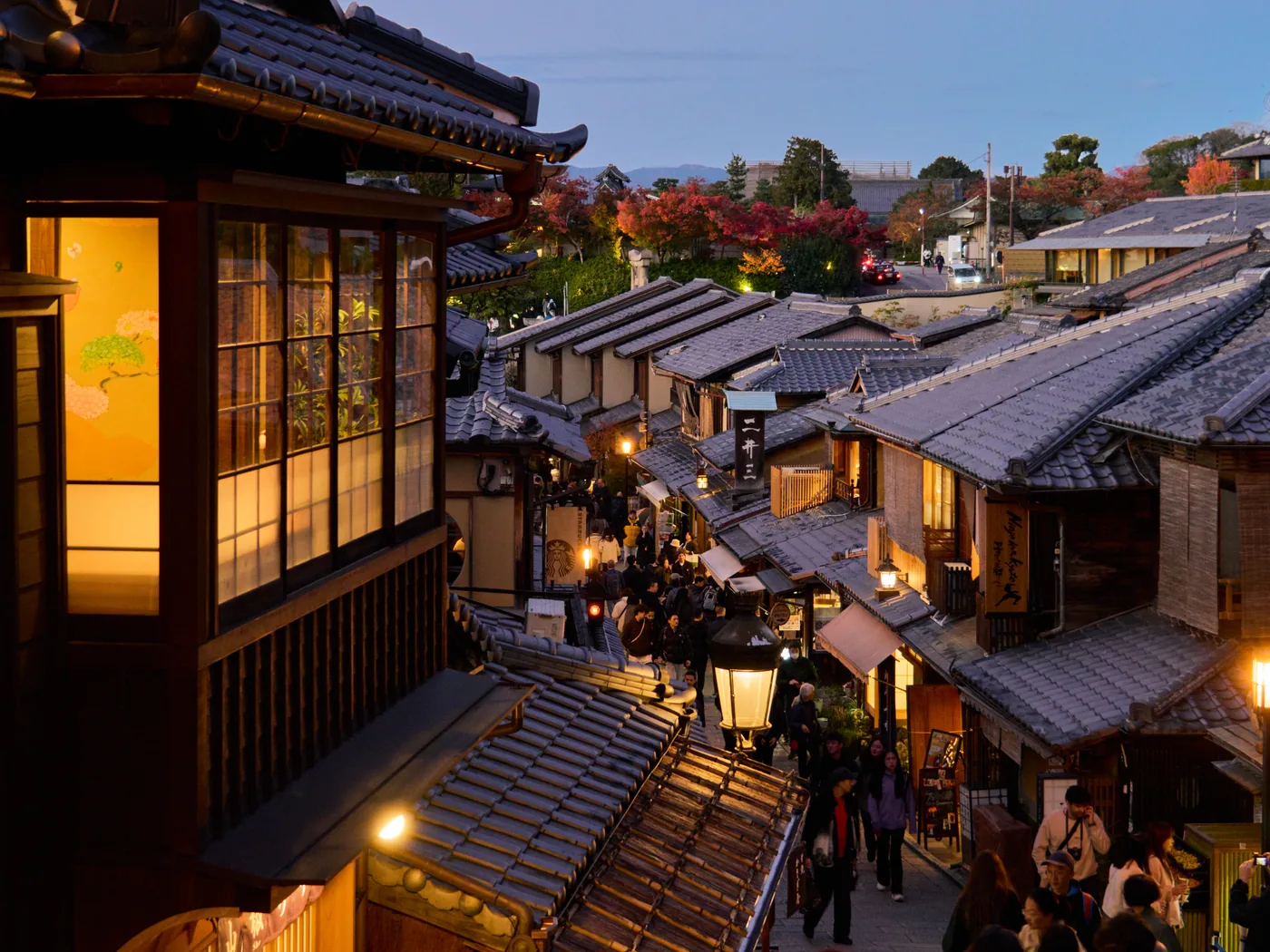

Indonesian couples' location preferences cluster around three settings that combine recognizable Japan iconography with reasonable transit from central Tokyo. The pattern is similar to other Southeast Asian segments — Asakusa anchors the trip, Mt Fuji or Kyoto serves as the photogenic distance day, and one quieter Tokyo neighborhood (often Yanaka or Nezu) rounds out the variety.
Tokyo (Asakusa Cultural Anchor)
Asakusa with Senso-ji as the backdrop remains the single most-requested location. The traditional architecture, the lantern of Kaminari-mon, and the easily-recognized red pagoda translate well into Instagram-driven decision-making among Indonesian couples. Our Asakusa kimono shoot guide covers crowd timing — for Indonesian couples, the 6:30-8:00 early-morning window is preferable not only for crowds but because it brackets the Fajr prayer naturally without compressing the schedule.
Mt Fuji Backdrop
Mt Fuji as a backdrop carries particular significance for Indonesian couples — the mountain features prominently in Indonesian cultural imagination of Japan, more than for, say, European couples who often request Kyoto-first. The Lake Kawaguchiko shoreline or the Chureito Pagoda viewpoint are the two most-requested compositions. Read our Mt Fuji shoot guide for the seasonal visibility considerations.
Kyoto Temple Settings
Couples extending the trip to 5-7 days frequently include a Kyoto day. The Sanyo Shinkansen runs Tokyo to Kyoto in 2.5 hours each way, making a single-day Kyoto extension feasible but tight. For a single Kyoto location, Yasaka Pagoda (with Ninenzaka approach) and Kiyomizu-dera area are the most-requested. Our top Kyoto studios guide and Tokyo vs Kyoto comparison help structure the choice.
Bali Pre-Trip Pattern (Bali → Tokyo)
A distinct Indonesian booking pattern is the Bali-then-Japan combined trip — couples spend 3-5 days at a Bali resort for relaxation and beach photography, then fly Denpasar (DPS) → Tokyo via Jakarta or Singapore transit for the kimono portion. This pattern has grown alongside Bali's role as the domestic prewedding standard.
From a planning standpoint, the Bali leg generally satisfies the "tropical, casual, beachwear" photography brief, leaving the Japan leg to focus purely on traditional Japanese aesthetics — kimono, shrine, urban heritage. This bifurcation tends to produce a cleaner Japan shoot brief, because couples are not trying to make Tokyo do double-duty as both traditional and beach. If your shoot brief includes "we don't need any tropical or warm-color settings — we got those in Bali," your Tokyo studio can lock the editorial palette accordingly.
Hijab + Kimono Styling Considerations
For hijab-wearing brides, kimono styling requires deliberate adaptation. The shiromuku and uchikake silhouettes were designed assuming a traditional bridal hairstyle (taka-shimada or katsura wig) with kanzashi ornaments framing the face. With hijab, this hair-and-ornament composition is replaced by the headscarf, which changes the visual frame entirely.
Workable approaches studios use include: (1) coordinating the hijab fabric color to match or complement the uchikake's accent colors, (2) using flat-styled hijab wrapping (rather than voluminous styles) so the kimono collar line remains visible, (3) replacing the traditional kanzashi placement with a small ornament pinned at the hijab's side, and (4) opting for the more modest tsunokakushi-equivalent silhouette where the head covering naturally integrates. Not every Tokyo kimono studio has experience with hijab-kimono styling. Ask for a portfolio of previous Muslim brides before booking.
Wedding Planner's Notes: The strongest hijab-kimono compositions tend to use the iro-uchikake (colored uchikake) rather than the shiromuku (pure white), because the colored palette gives the stylist more options for hijab fabric coordination. This is an aesthetic choice rather than a rule, but couples who arrive set on shiromuku sometimes pivot after seeing the iro-uchikake test shots. Useful to know in advance — see shiromuku vs iro-uchikake.
Spend Tier (Growing Middle-Class)
Indonesian couple spend on Japan kimono photography typically falls in the ¥250,000-¥500,000 range for the prewedding-style package (full kimono provision, single location, edited delivery), with growing numbers extending to ¥600,000-¥900,000 for two-location or two-outfit packages. This reflects the rapid growth of Indonesia's middle-class urban professional segment in Jakarta, Surabaya, and Bandung.
The spend pattern is generally more conservative than Hong Kong or Singapore couples (who frequently extend to ¥1.2M+), but more substantial than what is sometimes assumed of "Southeast Asian budget travelers" — a misconception studios occasionally hold. The realistic positioning is mid-tier premium, with strong receptivity to second-photographer add-ons and printed album upgrades. Our 2026 kimono photo cost guide covers the broader pricing landscape.
Family Involvement Expectations
Indonesian wedding culture places strong emphasis on family — the wedding is fundamentally a union of two families, not just two individuals. For a Japan prewedding trip, this translates to two booking patterns: (1) the couple travels alone for the Japan shoot, but the photos serve a clear family-display function back home (large prints, framed albums for parents), or (2) one or both sets of parents travel with the couple, joining the shoot for some of the family-portrait segments.
For the second pattern, plan for additional kimono rentals for parents (mother's tomesode or formal kimono, father's montsuki), which adds ¥80,000-¥150,000 per parent typically. See our bringing parents guide and family photo positioning guide for the practical structure.
Frequently Asked Questions
Can we wear hijab during the kimono shoot, and will the studio understand the styling?
Yes — hijab and kimono can be styled together, but not all studios have experience with this combination. Ask for portfolio examples of hijab-wearing brides before booking. The colored iro-uchikake tends to coordinate more easily with hijab than the pure-white shiromuku, though both are possible. Discuss the hijab styling brief in your initial consultation, not on shoot day.
How do prayer breaks fit into a typical shoot-day timeline?
For a 6-hour shoot, expect to use one or two prayer breaks — typically Dhuhr (around 12:00) and Asr (around 15:00). Each break is 15-20 minutes. The studio should be able to accommodate a quiet private space at the location. Schedule the break into the timeline at booking time so the photographer can plan around it.
Will the studio provide halal lunch on shoot day, or do we need to arrange it ourselves?
Most kimono studios do not provide certified halal meals as standard. Either eat a substantial halal breakfast at your hotel beforehand, or arrange a halal bento delivery to the studio. Some Tokyo studios have halal catering partnerships available as a paid add-on — ask explicitly when booking. Do not assume "no pork" alone means halal-compliant; mirin and dashi are common invisible ingredients.
Do we need a tourist visa, or is biometric e-passport enough?
Biometric e-passport holders who have pre-registered with a Japanese embassy or consulate can enter visa-free for 30 days. The registration is free but must be completed before travel — typically 3-4 weeks ahead. Non-biometric passport holders still need to apply for a single-entry tourist visa, which permits up to 90 days.
How early should we book if we want a March cherry blossom shoot?
March-April cherry blossom is the peak demand window. Indonesian couples should book by August-September of the prior year for the best location and studio availability. By December-January, most senior studios in Tokyo and Kyoto are fully booked for the cherry blossom weeks.
Can we combine the Japan kimono shoot with a Bali resort photography session?
Yes — this is a common Indonesian booking pattern. The two shoots are booked separately (with the Bali studio and the Japan studio), but coordinating the editorial color palette and the album design between them helps the final delivery feel cohesive. Bring photo samples from one shoot to the other studio's consultation if you want consistent treatment.
What's the language working assumption for Indonesian couples — Bahasa, English, or Japanese?
English is the default working language for most Tokyo studios. Bahasa Indonesia capability is rare — perhaps 2-4 studios have a Bahasa-speaking staff member. For couples uncomfortable in English, a Bahasa-speaking interpreter on shoot day costs ¥30,000-¥60,000. Japanese is not required.
Are there Indonesian-couple-friendly hotels in Tokyo we should prioritize?
Look for properties offering halal breakfast options, typically in the Shinjuku, Ginza, and Ueno-Asakusa areas. Mid-tier business hotel chains (Daiwa Roynet, Sunroute) have introduced halal-conscious breakfast at select properties. Some studios maintain informal recommendations — ask during booking. Tokyo Camii in Shibuya is the closest large mosque to most central locations if you prefer staying within walking distance.
Find a Halal-Compliant Studio
The Indonesian-couple booking benefits from a studio that knows how to work the halal and prayer-break questions in advance, rather than treating them as on-the-day surprises. Our photographer directory filters for studios with documented experience with Muslim couples, halal hotel referrals, and hijab-kimono styling portfolios. Once you have a shortlist, ask each candidate the questions in this guide — the studios that answer fluently are the ones to prioritize.
If you are still comparing Asian-couple booking patterns to refine your trip plan, see our Hong Kong couple guide and Malaysian couple guide — the closest comparable segments, with different visa, language, and dietary configurations worth understanding before you finalize your Indonesian-couple itinerary.
Locations in this guide
Related guides
 General guide
Kimono Wedding Photos for Foreigners: How It Works in Japan
Illustrative image · Unsplash. Not a photo of the specific people, places or services discussed.
Yes, foreign couples can have kimono wedding photos taken in Japan — no residency, ceremony or Japanese required. How booking, fittings, pricing and permits actually work.
Read the guide General guide
How to Book a Kimono Photographer in Japan from Abroad: Step-by-Step
Illustrative image · Unsplash. Not a photo of the specific people, places or services discussed.
A complete step-by-step guide for foreign couples booking a kimono pre-wedding photographer in Japan from overseas. Contracts, payments, communication.
Read the guideGeneral guideMultilingual Wedding Photography Japan: Beyond English
Illustrative image · Unsplash. Not a photo of the specific people, places or services discussed.
A planner's audit of which languages — Korean, Mandarin, Spanish, French, JSL — Japanese kimono studios actually support, plus interpreter costs and when to hire one.
Read the guide