Chinese Couple Kimono Photoshoot Japan: Mandarin Studios
A planner-led guide for mainland Chinese couples booking kimono shoots in Japan: Mandarin-capable studios, WeChat and Alipay payment rails, visa logistics, and how Tokyo and Kyoto pricing compares to Shanghai and Beijing packages.

Illustrative image · Unsplash. Not a photo of the specific people, places or services discussed.
Check current prices, availability and venue rules with the relevant studio or venue before booking.
Mainland Chinese couples have become a significant international segment booking kimono shoots in Japan, with strong volume from Tier-1 cities — trailing only the Korean market in scale. The booking flow looks different from what English-speaking studios are used to: WeChat (微信) replaces email as the primary channel, Alipay and WeChat Pay sit alongside credit cards at checkout, and Mandarin-speaking kitsuke-shi (kimono dressers) become non-negotiable rather than a bonus. This guide explains what an experienced Japan planner actually arranges for clients flying in from Beijing, Shanghai, Guangzhou, Shenzhen, and Chengdu.
Why Chinese Couples Choose Japan Kimono Shoots
The booking volume becomes easier to read when you map it against the calendar. Peak inbound from Tier-1 mainland cities concentrates around the early-April cherry blossom window, the Golden Week-adjacent shoulder (late April to early May), and the November koyo (autumn foliage) peak in Kyoto. A smaller but growing winter cohort books December–February shoots in Hokkaido for snow backdrops. Tokyo and Kyoto absorb the bulk of all Chinese-couple bookings between them.
Three structural reasons keep driving the demand. First, domestic Chinese wedding-photo studios in Shanghai or Beijing produce excellent work but in saturated visual styles — Japanese kimono shoots offer a clean differentiator on social platforms (小红书 Xiaohongshu, 微博 Weibo). Second, the 3-to-4-hour direct flight from Tier-1 hubs to Tokyo Haneda or Narita makes the trip feasible as a 5–7 day combined honeymoon. Third, the Japanese kimono-rental and kitsuke ecosystem is mature in ways the mainland Chinese hanfu (汉服) wedding-photo industry is still catching up to — purpose-built bridal studios, in-house dressers, and shrine permit access.
Wedding Planner's Notes: When you screen studios, separate the "Mandarin-capable" claim into two layers — does the front desk speak Mandarin (booking and email exchange) versus does the on-site team including the photographer and kitsuke-shi speak Mandarin (the actual shoot day). Many studios only have the first. For a 6-hour shoot day, the second matters far more.
Mandarin-Speaking Studios in Japan
The Mandarin-capable studio count has grown steadily since 2018, concentrated where Chinese inbound tourism is densest. The current landscape, based on directory mapping rather than rankings:
Tokyo (~15 Studios)
Tokyo holds the largest cluster — roughly 15 studios actively marketing to mainland China through WeChat official accounts and Xiaohongshu. Concentration is in Asakusa (proximity to Senso-ji), Harajuku/Omotesando (proximity to Meiji Jingu), and Ginza (combined kimono + Western prewedding studios). Most Tokyo studios staff at least one full-time Mandarin-speaking coordinator and several rotating Mandarin-speaking kitsuke-shi. Photographers themselves are typically Japanese with translator support, though a small handful of Tokyo studios employ Chinese-national photographers directly. See our multilingual photographer overview for comparison framework.
Kyoto (~10 Studios)
Kyoto's roughly 10 Mandarin-capable studios cluster in Gion, Higashiyama (near Kiyomizu-dera), and around Kyoto Station. The Kyoto operation pattern is different from Tokyo — many Kyoto studios partner with mainland China-based wedding agencies as upstream channels, so a couple in Shanghai may book "through a Shanghai wedding planner" but the actual shoot is run by a Kyoto studio. This intermediation layer often reduces direct English/Japanese friction but introduces a markup. Our Kyoto studio reference tracks the broader landscape.
Osaka & Other Cities
Osaka has approximately 5–6 Mandarin-capable studios, often serving couples who fly into KIX and want to combine Kyoto, Osaka, and Nara in a single trip. Beyond the Kansai-Tokyo core, Mandarin capability thins quickly. Fukuoka, Sapporo, and Okinawa each have one to three studios with at least booking-level Mandarin support — these are typically destinations Chinese couples reach as a second-trip choice after a first Japan visit. Hokkaido and Okinawa are seeing the strongest growth from this segment.
WeChat as Primary Communication Channel
If your studio shortlist does not include a WeChat business account, the conversation may not start. WeChat (微信) is the default messaging app for almost all mainland Chinese users — couples routinely refuse to switch to email or WhatsApp for booking exchanges that involve dozens of messages over several weeks. A typical Japan studio targeting this market maintains:
- WeChat Official Account (公众号) — for portfolio publishing, package menus, and FAQ broadcasting.
- Personal WeChat sales coordinator (微信号) — usually a Mandarin-speaking staff member, for one-to-one consultation, scheduling, deposit confirmation.
- Xiaohongshu (小红书) presence — for discovery and visual portfolio. Most mainland couples find studios through Xiaohongshu first, then move to WeChat for direct contact.
Studios that operate this way typically reply within 4–12 hours on WeChat — much faster than email cycles you'd see from non-Mandarin studios. The trade-off: the conversation is fragmented across hundreds of short messages, voice notes, and image forwards rather than long written briefs. Plan for a coordinator on your side (or your studio's side) to consolidate decisions into a written shoot itinerary before the trip.
Wedding Planner's Notes: Ask the studio for a written QR code linking to their WeChat Official Account before you commit. A studio that says "we have WeChat" but only offers a personal QR can mean they're set up casually rather than as a formal business — fine for some couples, but it makes refund or dispute handling harder if anything goes wrong.
Visa & Travel Logistics from Mainland China
Mainland Chinese passport holders need a Japan tourist visa to enter for a kimono shoot trip. Two main visa types apply:
Visa Type | Duration | Typical Use |
|---|---|---|
Single-entry tourist | Up to 90 days stay, one entry | One-off shoot trip |
Multi-entry tourist (3-year / 5-year) | Up to 90 days per entry | Repeat travelers |
Application is through Japan Visa Application Centers (JVAC) in major Chinese cities, handled by China International Travel Service or similar agents. Processing time is typically 5–10 business days. Required documents include passport, photo, application form, flight and hotel booking confirmations, employment certificate, and bank statements demonstrating financial capacity. Studios cannot issue visa support letters in the way a Japanese employer or university can — your visa is filed as a standard tourist visa, not a business visa.
Flight logistics: direct flights from Beijing Capital, Shanghai Pudong, Shanghai Hongqiao, and Guangzhou Baiyun to Tokyo (Haneda or Narita) run 3 to 4 hours, with multiple daily departures on China Eastern, Air China, China Southern, ANA, and JAL. For Kyoto-based shoots, fly into Kansai International (KIX) directly from the same Tier-1 cities — Shanghai-KIX is 2.5 hours. Our visa requirements overview covers the broader framework, though it's written for non-Chinese passport holders.
Payment Methods Accepted (Alipay, WeChat Pay, Credit Card)
Mainland Chinese couples typically expect to pay deposits and balances in Chinese yuan via Alipay (支付宝) or WeChat Pay (微信支付) rather than international wire transfer or USD credit card. Tokyo and Kyoto studios serving this segment have increasingly adopted both rails. The current pattern at most Mandarin-capable studios:
- Alipay / WeChat Pay — accepted for deposits (typically 20–30% of total) and sometimes for the balance. Conversion happens at the studio's merchant rate.
- UnionPay (银联) credit/debit card — widely accepted at studios that have a Japanese merchant terminal. Useful as a backup.
- Visa/Mastercard credit card — accepted at most professional studios. The international card surcharge varies by studio.
- Cash on shoot day (JPY) — still common for balance payments, though less so post-2024 as digital payments have matured.
Confirm the payment rail in writing before you commit. A studio that only accepts JPY bank transfer adds significant friction for a couple paying from a mainland Chinese bank account.
Top Locations for Chinese Couples
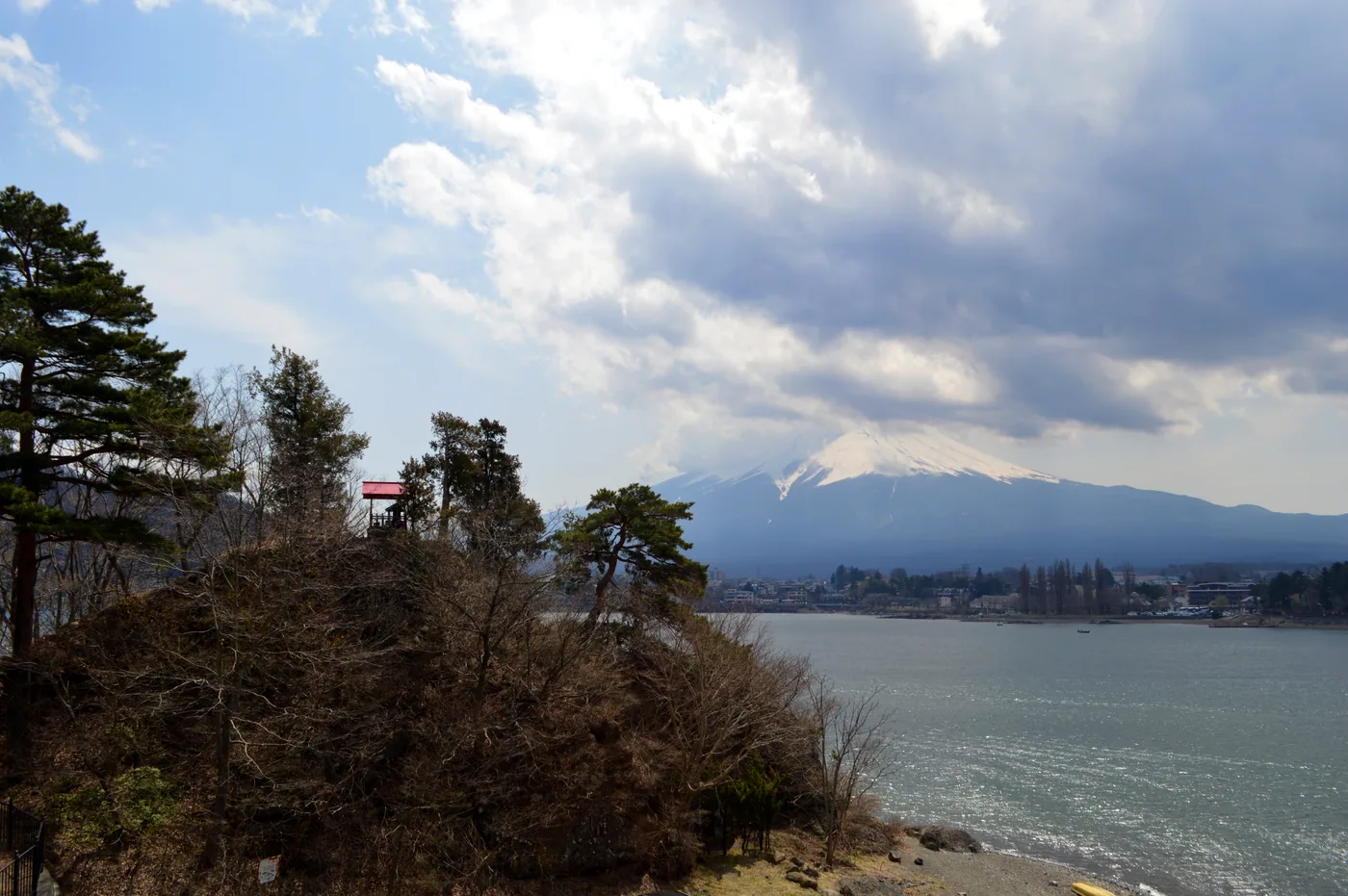
Booking patterns from mainland China concentrate on a small set of visually recognizable locations — driven heavily by what circulates on Xiaohongshu. Three dominate the booking flow:
Asakusa & Senso-ji (Tokyo)
Senso-ji (浅草寺) is the highest-volume Tokyo kimono-shoot location for Chinese couples — Asakusa's combination of red-lacquered temple architecture, traditional shopping street (Nakamise-dori), and accessible kimono-rental ecosystem makes it the default first-trip choice. Morning slots (7–9am) before the tourist crowds arrive are mandatory for usable photos. See our Asakusa shoot guide for the detailed location framework.
Kyoto Gion District
Gion (祇園) — specifically the Hanami-koji and Ponto-cho lanes plus the Yasaka Shrine grounds — is the second-volume hotspot. Early morning shoots are again essential. Note the well-publicized Gion private-alley access restrictions (introduced in 2024) — your studio must brief you on which paths now require resident permission, as some Xiaohongshu posts older than 2024 show locations no longer accessible to photo crews.
Mt Fuji Backdrop
Mt Fuji-backed compositions — typically from Lake Kawaguchiko (Chureito Pagoda viewing platform) or Lake Yamanakako — are a strong third tier, often added as a one-day extension from Tokyo. Visibility is substantially higher in winter than humid summer; winter mornings offer the best odds for a clear-view composition. Our Mt Fuji and Shizuoka location reference covers the seasonal mechanics.
Cultural Notes — Chinese vs Japanese Wedding Aesthetics
Kimono and traditional Chinese bridal wear (秀禾服 xiuhefu, 龙凤褂 longfenggua, 凤冠霞帔 fengguanxiapei) share visual vocabulary but follow different aesthetic logic. Couples sometimes arrive expecting the kimono to read as a Japanese version of Chinese bridal — it does not. Two practical contrasts to set expectations in advance:
Color hierarchy. Chinese bridal aesthetics treat saturated red as the primary auspicious color, with gold accents. Japanese bridal kimono — shiromuku (pure white) for the ceremony and iro-uchikake (color over-robe) for reception or photo — places white at the top of the formality hierarchy. Many Chinese couples opt for red iro-uchikake as a bridge, but it's worth understanding that this is a stylistic choice within the Japanese framework, not a substitute for Chinese red bridal. See our shiromuku vs iro-uchikake comparison.
Silhouette and posture. Japanese kimono creates a deliberately columnar silhouette — the obi sash flattens the waistline, kitsuke-shi pad the bust and hips to a cylinder. Chinese bridal qipao or xiuhefu emphasizes the waist instead. Couples used to qipao silhouettes sometimes find the kimono "shapeless" until they see the back-of-obi musubi (knot), which becomes the visual focal point.
Family Involvement Expectations
A meaningful share of Chinese-couple bookings include at least one parent on the trip — observably higher than typical Western prewedding bookings. Family expectations tend to run higher accordingly:
- Parents often want to be photographed in formal attire alongside the couple, either in tomesode rental or in Western formalwear.
- Multi-day shoots (e.g., kimono Day 1, Western prewedding Day 2) are common to serve both the couple's preferences and parent expectations.
- Parents may participate in studio consultations via WeChat video call before the trip.
Brief the studio early about parent involvement — many can extend dressing capacity and add parent-portrait time blocks if booked 2–3 months in advance. See our parents-on-shoot guide for the logistical breakdown and our mother's kimono reference for parent attire.
Cost Compared to Chinese Domestic Photo Studios

A common pricing reference: a Shanghai or Beijing wedding photo studio package — multiple outfit changes, half-day or full-day shoot, edited album — typically lands in the 15,000–60,000 RMB band. At a reference rate of roughly 1 RMB ≈ 21 JPY (2026 average), that translates to approximately ¥315,000–¥1,260,000 JPY. Japan kimono-shoot packages from Mandarin-capable Tokyo or Kyoto studios cluster in two tiers:
Tier | Inclusions | Typical Range (JPY) |
|---|---|---|
Standard 4–6 hour shoot | 1–2 kimono changes, kitsuke, hair-makeup, location shoot, edited digital delivery | ¥180,000 – ¥400,000 |
Premium full-day or multi-location | 3+ kimono changes, sunrise/sunset slots, multiple locations, premium album | ¥450,000 – ¥1,200,000 |
The exchange-rate-adjusted comparison: a Japan shoot in the standard tier (¥180,000–¥400,000) is meaningfully cheaper than the equivalent Shanghai package (which starts around ¥315,000 at the reference rate), while delivering an aesthetic that is genuinely not available domestically. The Japan premium tier overlaps with — and at the top end runs slightly under — the upper end of the Shanghai range. Our 2026 cost reference covers the broader market.
Combining with Honeymoon or Shopping Trip
A typical 6-to-7-day itinerary for a Tier-1 mainland Chinese couple looks like this:
- Day 1 (arrival): Land Tokyo Haneda or Narita evening. Hotel check-in (Ginza, Shinjuku, or Asakusa).
- Day 2: Tokyo prep day or Disneyland; shopping in Ginza, Shibuya.
- Day 3: Asakusa & Senso-ji kimono shoot (4–6 hours).
- Day 4: Mt Fuji day trip (optional second shoot location).
- Day 5: Shinkansen to Kyoto. Hotel check-in around Higashiyama or Kyoto Station.
- Day 6: Gion morning kimono shoot or Western prewedding at Higashiyama.
- Day 7: Departure from Kansai International (KIX).
Couples flying out of Tokyo instead of KIX can compress to 5 days by skipping Kyoto. Our 7-day itinerary reference and honeymoon combination guide detail the routing options. Couples planning the Tokyo–Kyoto split should also review our Tokyo versus Kyoto framework for choosing primary base.
FAQ
Do we need to speak Japanese on the shoot day if the studio is Mandarin-capable?
No. Mandarin-capable studios in Tokyo and Kyoto run the entire shoot day in Mandarin — kitsuke (dressing), hair-makeup brief, location instructions, posing direction. Some studios cycle through Mandarin, Japanese, and English depending on staff on the day, but the lead coordinator handles all interaction with you. Confirm in advance that the kitsuke-shi specifically (not just the front desk) speaks Mandarin.
Can we bring kimono rentals from a separate Tokyo rental shop to a different studio's shoot?
Most studios decline this. Studios run shoots with their in-house kimono inventory, kitsuke-shi, and hair-makeup workflow as an integrated package — bringing external rentals breaks their liability coverage and timing. A few Tokyo studios offer "bring your own kimono" pricing tiers, but expect to pay close to the standard package rate anyway.
Is it acceptable to wear Chinese hanfu (汉服) or qipao for a shoot at a Japanese shrine?
Practically yes — shrines do not enforce a Japanese-only dress code for visitors — but the studio framework is built around kimono. If your interest is hanfu specifically, you're better served by a Chinese-themed shoot at a temple or park location rather than mixing hanfu with a kimono studio's kitsuke service.
How far in advance should we book from mainland China?
For peak windows (early-April cherry blossom and mid-November autumn foliage), book 6–9 months ahead. Off-peak (June, late winter outside snow shots), 2–3 months is workable. Visa processing adds another 2–3 weeks on top, so factor that into your timeline. See our 18-month planning timeline.
Do Mandarin-speaking studios cost more than Japanese-only studios?
Generally not directly — Mandarin capability is treated as a service feature rather than a price tier. However, studios marketing primarily through Xiaohongshu and WeChat tend to skew toward the premium tier rather than budget tier, so the studios you're shown may price higher on average. Cross-check with non-Mandarin studio price lists if budget is tight and bring a translator.
Can we use Alipay or WeChat Pay at all the location-day expenses (taxis, lunch, coffee)?
Increasingly yes in Tokyo and Kyoto tourist zones, but not universally. Bring a Visa/Mastercard or a small JPY cash reserve as backup — particularly for taxis, small shrine donation boxes, and traditional restaurants that remain cash-only. Konbini (convenience stores) accept both rails reliably.
Are there restrictions on what content we can post on Xiaohongshu or WeChat afterward?
Most studios encourage social posting and may ask for tag credit. A small number — particularly luxury Kyoto studios — restrict commercial use of the images (e.g., resale, use in third-party advertising) but personal social media posting is almost always permitted. Read the contract.
Find a Mandarin-Speaking Photographer
The directory shortlist is the practical next step. Filter by Mandarin-capable studios in the city block you're shooting (Tokyo, Kyoto, Osaka, or destination cities like Sapporo and Naha), confirm WeChat Official Account presence, and request a portfolio sample reflecting work with mainland Chinese couples specifically — the styling cues for this segment differ enough that it's worth seeing past examples before signing.
Browse the directory to start your shortlist. From there, the next reading worth doing in sequence: our parallel guides for the broader regional context — Taiwanese couple kimono shoot in Japan (often booked alongside mainland China expansion) and Singapore couple kimono shoot in Japan for the broader English-and-Mandarin-speaking segment.
Locations in this guide


Related guides
 General guide
Kimono Wedding Photos for Foreigners: How It Works in Japan
Illustrative image · Unsplash. Not a photo of the specific people, places or services discussed.
Yes, foreign couples can have kimono wedding photos taken in Japan — no residency, ceremony or Japanese required. How booking, fittings, pricing and permits actually work.
Read the guide General guide
How to Book a Kimono Photographer in Japan from Abroad: Step-by-Step
Illustrative image · Unsplash. Not a photo of the specific people, places or services discussed.
A complete step-by-step guide for foreign couples booking a kimono pre-wedding photographer in Japan from overseas. Contracts, payments, communication.
Read the guide General guide
Multilingual Wedding Photography Japan: Beyond English
Illustrative image · Unsplash. Not a photo of the specific people, places or services discussed.
A planner's audit of which languages — Korean, Mandarin, Spanish, French, JSL — Japanese kimono studios actually support, plus interpreter costs and when to hire one.
Read the guide