Indian Couple Kimono Photoshoot in Japan: Multi-Day Guide
Indian destination wedding planning guide for Japan kimono photoshoots — multi-day mehendi/sangeet structure, e-visa logistics, Tokyo studios with Indian experience, vegetarian and Jain dietary coordination, and Mumbai/Delhi agency partnerships.

Illustrative image · Unsplash. Not a photo of the specific people, places or services discussed.
Check current prices, availability and venue rules with the relevant studio or venue before booking.
Indian couples — roughly 800 to 1,500 per year — bring the highest per-couple spend in the Asia inbound segment, and they almost never arrive for a single shoot. The standard request runs three to five days: mehendi, sangeet, a Western-style reception or vow renewal, and a kimono cultural shoot folded into one Japan trip. That structure changes everything about how studios quote, staff, and feed you. If you are reading this from Delhi, Mumbai, Bengaluru, or a Mumbai-based wedding planner's desk, the planning logic below is the version that actually works on the ground in Tokyo.
Why Indian Couples Choose Japan
Japan sits in a useful position for the Indian destination-wedding market. It is exotic enough to feel meaningfully different from a Goa or Udaipur wedding, but logistically cleaner than Bali for groups of 20 to 60 — which is the typical Indian family travel unit. The infrastructure (hotel banquet halls that can stage a sangeet, English-speaking concierge teams, vegetarian kitchens that take dietary briefs seriously) is built for high-spend international guests.
The cultural shoot is also doing a specific job in your itinerary. For Indian couples whose home ceremony is the full Hindu, Sikh, or Christian event back home, the Japan trip is the "second wedding" — a smaller, photo-led celebration with close family. Kimono works as the visual centerpiece because it is unmistakably Japan and reads strongly on Instagram and in printed albums alongside lehenga and mehendi imagery.
Wedding Planner's Notes: The Indian couples we see who get the most value out of Japan are the ones who treat the kimono shoot as the cultural anchor — not as a costume add-on. Booking it on Day 2 or 3 (after a rest day from the long flight, before the sangeet energy peaks) consistently produces better photos than slotting it on departure day.
Direct Flights (Delhi/Mumbai → Tokyo 8-9hr)
Both Indira Gandhi International (DEL) and Chhatrapati Shivaji Maharaj International (BOM) have direct service to Tokyo Haneda (HND) and Narita (NRT). Flight time is 8 to 9 hours eastbound, slightly longer westbound. Air India, Japan Airlines, and ANA all operate the route; Vistara legacy slots have largely consolidated into Air India post-merger.
For multi-day destination weddings, Haneda is the better landing point — it is 30 minutes from central Tokyo by Keikyu line versus 60 to 90 minutes from Narita. If your group is splitting into multiple arriving flights, brief your concierge in advance so welcome cars are not duplicated. Indian groups often arrive across a 48-hour window because elder relatives prefer different airlines.
Route | Flight time | Carrier options |
|---|---|---|
Delhi (DEL) → Tokyo (HND/NRT) | ~8hr direct | Air India, ANA |
Mumbai (BOM) → Tokyo (HND/NRT) | ~9hr direct | Air India, JAL |
Bengaluru/Hyderabad → Tokyo | ~10-11hr (1 stop) | via Singapore, Bangkok, or Hong Kong |
Japan e-Visa Application (~5 Days Processing)
Indian passport holders require a visa for Japan. The good news is that the e-visa (electronic visa) system for tourism applications now processes in roughly 5 business days, which is dramatically faster than the older paper consular route. Single-entry tourist visa is the standard category for a destination wedding trip.
Required documentation typically includes a confirmed return ticket, hotel bookings for the full stay, a daily itinerary, and bank statements for the past three months. For wedding groups, a covering letter from the bride and groom explaining the trip purpose helps; some planners also include the studio booking confirmation as supporting documentation. Process visas in your group at the same time — if elder relatives need paper consular visas, those can take 7 to 10 business days and become the bottleneck.
Wedding Planner's Notes: Build a 6 to 8 week buffer for the visa stage. The processing time itself is fast, but consolidating documentation from 30+ family members across multiple Indian cities is where the delay actually lives. Start visa packets the same week you confirm flights.
Destination Wedding Multi-Day Structure
The Indian destination-wedding template is well-established: three to four days of distinct events, each with its own dress code, catering brief, and photo style. Japan accommodates this comfortably if you book the right hotel and studio combination.
Mehendi (Henna) Day
Mehendi typically runs as a daytime women-led event, with henna artists working through the bride and her female family across 3 to 5 hours. In Tokyo, most luxury hotels (Mandarin Oriental, The Peninsula, Aman, Park Hyatt) can stage this in a private function room or suite. Some Indian groups bring their own henna artist from Mumbai — this is allowed but the artist will need their own tourist visa.
Photography for mehendi is documentary-style — relaxed, in-the-moment images of hands being decorated, women laughing, kids weaving through the room. This is not the day to schedule the kimono shoot.
Sangeet (Music Night)
Sangeet is the high-energy night — dancing, performances by family members, full Bollywood production with DJ and stage lighting. Tokyo's larger hotel ballrooms (capacity 200 to 600) handle this without issue. Sound permits inside private function rooms are not required, but check curfew (most hotels enforce a 23:00 music cut-off out of consideration for other guests).
Lehenga, sherwani, and Western evening wear all appear on the same night. Two photographers plus a videographer is the standard staffing.
Western Ceremony
Some Indian couples add a Western-style ceremony or vow renewal — a white dress and tuxedo moment, often in a hotel chapel or garden setting. This works particularly well if one half of the couple is from a Christian background, or if the home country wedding was the traditional ceremony and Japan is the "white dress" memory.
Kimono Cultural Shoot
The kimono shoot is the cultural centerpiece. Half-day to full-day, typically Day 2 or Day 3 of the trip, at a hotel-attached studio or an outdoor location like Meiji Jingu, Nezu Shrine, or Hama-rikyu Gardens. Shiromuku (white wedding kimono) is the common choice for the formal portrait set; iro-uchikake (colored embroidered overcoat) for the energetic dressed-up images. See our shiromuku vs iro-uchikake comparison for the visual differences. For the male partner, hakama with montsuki haori is the standard formal pairing — see men's kimono guide.
Indian-Capable Studios in Japan (~5-8)
Roughly five to eight studios in Japan currently have meaningful experience with Indian couples — all of them in Tokyo, with one or two operating second locations in Kyoto for couples doing two-city itineraries. "Indian-capable" here means: the studio has handled groups of 20 to 60, understands the multi-day staffing rhythm, has worked with vegetarian and Jain catering, and can interface with Mumbai or Delhi outbound wedding agencies during the booking stage.
This is a small pool, and the strongest studios book out 6 to 9 months ahead during October-to-March (Indian wedding peak season, which aligns conveniently with Tokyo's autumn-foliage and winter-light shoot conditions). Inquire early. If your dates are immovable — for example, tied to a Hindu astrologically-selected muhurat — start the conversation 12 months out.
Mumbai/Delhi Outbound Agency Partnerships
Most Indian couples who book Japan come through a wedding planning agency based in Mumbai, Delhi, or Bengaluru rather than directly. The agency handles the India-side logistics (visa packets, group flight ticketing, dietary coordination, family communication) while the Japan-side studio handles ground delivery (hotel staging, photographer team, transport, location permits).
If you are reading this as the couple, ask your Indian planner whether they have an existing Japan studio partner. If yes, the wedding day usually runs smoothly because the agency-studio relationship has been pre-built. If no, expect the agency to interview 2 to 3 Tokyo studios on your behalf and present recommendations. Either is fine — what matters is that one party is clearly accountable for the end-to-end timeline.
Wedding Planner's Notes: A frequent breakdown we see in agency-routed bookings is dietary communication. The Mumbai planner relays "vegetarian" to the Tokyo studio, and the Tokyo studio relays it to the hotel banquet team. Three handoffs in two languages — and the result is that bonito flakes appear in the dashi-based soup, which fails strict vegetarian standards. Confirm dietary detail directly with the venue, in writing, at least two weeks out.
Multilingual Needs (Hindi / Tamil / Malayalam / English)
English is the working language for almost all Indian-Japan studio bookings — Indian couples and their planners are typically fluent, and Tokyo-based premium studios have English-capable staff. But the on-the-ground reality is more layered. Elder relatives may speak only Hindi, Tamil, Malayalam, Punjabi, or Gujarati. Group instructions during a shoot ("please face the camera, please walk slowly") need to land in the language the wearer actually processes under pressure.
Pragmatic solution: designate one English-fluent younger family member as the on-set liaison who translates studio instructions to elder relatives in real time. Some studios will also bring a second-language interpreter (Hindi-Japanese is the most commonly available pairing) for an additional fee. This is worth doing if your shoot includes a 60+ person group photo or a senior family ceremony component.
Vegetarian and Jain Dietary Requirements
Dietary planning is where Indian destination weddings in Japan frequently falter — not because Japanese kitchens are unwilling, but because the definitions do not map cleanly. "Vegetarian" in India often defaults to lacto-vegetarian (dairy yes, egg no). Japanese kitchens default to a looser interpretation that may include fish stock (dashi) or egg in preparations the West would not flag as non-vegetarian. Jain dietary rules add restrictions on root vegetables (onion, garlic, potato, ginger) that require even more careful menu construction.
The fix is procedural, not culinary. Brief the hotel banquet team in writing four weeks ahead, list specific prohibited ingredients (not just categories), confirm the menu in writing two weeks out, and have one family member with strong dietary fluency taste-check at the rehearsal meal. See our detailed dietary restrictions at Japanese weddings guide for the full briefing template Tokyo hotels actually respond to.
Top Locations Among Indian Couples
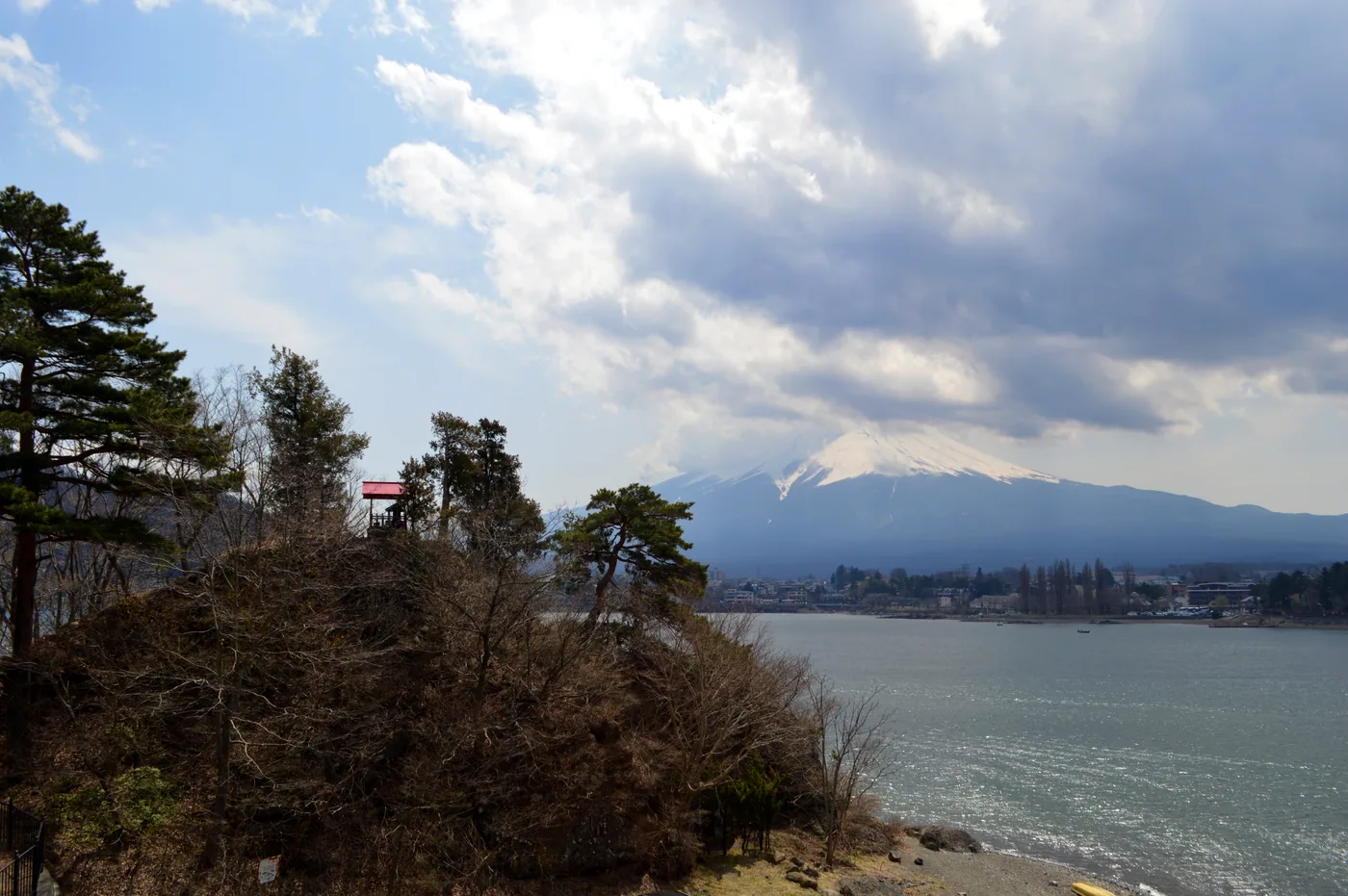

Indian couple bookings cluster in three locations more than any others, for distinct reasons.
Tokyo (Luxury Hotel Hub)
Tokyo dominates. The combination of luxury hotel banquet capacity (Mandarin Oriental, Aman, Peninsula, Park Hyatt all handle 200+ guest events), Indian-capable studio concentration, and direct flight access makes it the logical base. Most Indian destination weddings run the entire event sequence from a single Tokyo hotel, with the kimono shoot stepping out to a nearby shrine for 3 to 4 hours then returning.
Kyoto (Temple Backdrop)
Kyoto enters the itinerary as a day-trip or 1 to 2 night extension specifically for the kimono shoot. The temple and machiya-street backdrops produce visibly different images from Tokyo's shrine and garden settings. Shinkansen Tokyo-Kyoto is 2hr 15min, which is workable for a kimono shoot day if you leave at 06:30 and return by 22:00 — but most groups prefer to overnight. See Tokyo vs Kyoto comparison for the detailed split.
Mt Fuji (Bucket-List Vista)
Fuji adds the snow-capped 3,776m volcano backdrop that lands strongly in printed albums and Instagram alike. Lake Kawaguchiko viewpoints, Chureito Pagoda, and Oshino Hakkai are the standard kimono-friendly sites. Plan for weather risk — Fuji is visible roughly 100 days per year on average, clearest in winter (December-February) and spring shoulder. See Mt Fuji kimono photoshoot guide.
Premium Spend Tier and Package Range
Indian couples sit in the premium spend tier — meaningfully above US and European averages for kimono shoots, driven by the multi-day destination structure rather than the per-hour rate. A standalone Tokyo kimono shoot might cost USD 1,500 to 4,000 for two people and a half-day. An Indian destination-wedding kimono component, embedded inside a 4-day event with 30 to 60 guests, more commonly lands in the USD 8,000 to 25,000 range for the kimono-shoot portion alone.
The cost drivers are: larger photographer team (2 to 4 shooters plus videographer), longer rental wardrobe time (multiple outfit changes across the day for bride, groom, and parents), location permits at multiple sites, and dedicated transport for the wedding group between hotel and shoot location. See our broader kimono photoshoot cost guide 2026 for the underlying rate structure.
Multi-Country Asia Tour Pairing
Roughly one-third of Indian couples who do a Japan kimono shoot pair it with a multi-country Asia itinerary — most commonly Japan + Singapore (for the modern-Asia urban contrast), Japan + Bali (for the beach honeymoon close), or Japan + Korea (for the K-culture overlap with younger groups). Singapore is the strongest logistical pairing because direct flights from Tokyo to Singapore are 7 hours and Singapore-Mumbai/Delhi is another 5 to 6 hours — total return trip stays under 30 hours of flight time even with the stopover.
If you are building a multi-country trip, schedule the kimono shoot in the middle, not at the start or end. Indian groups typically arrive jetlagged on Day 1, and Day 4 onwards is fatigue-territory. The cleanest images come on Day 2 or Day 3 of the Japan portion. If you are pairing with related-region planning, see our Thai couple guide for Bangkok overlap logistics and our Vietnamese couple guide for Ho Chi Minh routing.
FAQ
Can we hire our Indian wedding photographer to fly with us and shoot the kimono day in Japan?
Yes — and many Indian couples do exactly this for continuity across mehendi, sangeet, and the cultural portrait set. The Indian photographer will need a tourist visa (same e-visa route as the couple) and will be working on a tourist visa, which is the standard arrangement for photographers traveling with their clients. For the kimono shoot specifically, however, we recommend pairing your Indian photographer with a local Tokyo studio. The local studio handles wardrobe, dressing, location permits, and hair-makeup; your Indian photographer captures the imagery in their familiar style.
How does the muhurat (astrologically auspicious time) affect kimono shoot scheduling?
Hindu couples whose wedding date is tied to a muhurat sometimes find that the auspicious window falls during difficult Japan light (mid-day harsh sun, evening past golden hour). Discuss the muhurat constraint with your Tokyo studio early. If the muhurat is tied to a specific ceremony moment (like the seven-step pheras), that moment can be held at the hotel separately from the kimono shoot — the kimono shoot does not need to fall inside the auspicious window.
Can we organize a small fire ceremony (havan) at a Japanese hotel?
Most Tokyo luxury hotels will not permit open flame inside banquet rooms due to fire code. Some have permitted small symbolic havans in garden courtyards with permit and fire safety officer present. Confirm in writing during the venue booking stage — do not assume. If a havan is non-negotiable, factor venue selection around this single requirement, not around aesthetics.
Will the kimono shoot venue accommodate our pandit or priest if we want a brief blessing?
Outdoor public shrines (Meiji Jingu, Nezu Shrine) will not host non-Shinto religious officiants. Private hotel-attached studio settings are flexible — a pandit can give a private blessing inside the dressing room or studio without any conflict. If you want a hybrid moment where your pandit blesses the couple while wearing kimono, schedule that inside the studio environment, not at a public shrine.
How do we handle group photos with 50+ family members in kimono settings?
Most Tokyo studios will not attempt large-group kimono dressing because the wardrobe logistics (50 kimono fittings in one morning) are impossible. The common solution: kimono is worn by the bride, groom, and immediate parents only. Extended family appears in lehenga, sari, sherwani, or Western formal wear. The group photo is then composed with the central kimono-wearing couple framed by the saree-wearing family — visually rich and logistically achievable.
Are there Indian restaurants in Tokyo where we can host the welcome dinner before the formal events?
Yes. Tokyo has roughly 60 to 80 dedicated Indian restaurants, with strong concentration in Nishi-Kasai (which has a substantial Indian community), Roppongi, and Akasaka. Several offer private dining rooms for groups of 30 to 80. This is a useful Day 1 arrival evening — comforting food, familiar flavors, no kitchen-briefing risk while the group is still recovering from the flight.
How do we handle the kanyadaan moment (giving away of the bride) if it is culturally important?
Kanyadaan is a Hindu ritual and is performed at home or at a Hindu temple — there are roughly four Hindu temples in greater Tokyo that will host private ceremony moments. Discuss this with your Indian planner; the kimono shoot is a separate cultural moment and is not a substitute for kanyadaan. Many couples perform kanyadaan back home before flying to Japan and treat the Japan trip as the celebratory portrait set.
What is the typical Indian destination wedding budget for a Japan trip including kimono?
Full 4-day Indian destination weddings in Tokyo with 30 to 60 guests typically run USD 80,000 to 250,000 all-in (venue, accommodation, all event catering, kimono shoot, photography across all events, transport, decor). The kimono shoot is a relatively small fraction of total spend but produces a disproportionate share of the printed album imagery — which is part of why couples in this tier prioritize it.
Find an India-Experienced Studio
The right Tokyo studio for an Indian destination wedding is the one that has actually executed three or more in the past 24 months — not the one with the prettiest portfolio. Multi-day staffing, dietary coordination, multilingual on-set logistics, and Mumbai/Delhi agency communication all live in the muscle memory of studios that have done it repeatedly. Browse our directory of kimono photographers in Japan filtered for Indian destination wedding experience.
For the planning logic behind related Asian-market itineraries, continue to our Thai couples planning guide next, and then the Vietnamese couples guide for the broader regional outbound picture.
Locations in this guide
Related guides
 General guide
Kimono Wedding Photos for Foreigners: How It Works in Japan
Illustrative image · Unsplash. Not a photo of the specific people, places or services discussed.
Yes, foreign couples can have kimono wedding photos taken in Japan — no residency, ceremony or Japanese required. How booking, fittings, pricing and permits actually work.
Read the guide General guide
How to Book a Kimono Photographer in Japan from Abroad: Step-by-Step
Illustrative image · Unsplash. Not a photo of the specific people, places or services discussed.
A complete step-by-step guide for foreign couples booking a kimono pre-wedding photographer in Japan from overseas. Contracts, payments, communication.
Read the guide General guide
Multilingual Wedding Photography Japan: Beyond English
Illustrative image · Unsplash. Not a photo of the specific people, places or services discussed.
A planner's audit of which languages — Korean, Mandarin, Spanish, French, JSL — Japanese kimono studios actually support, plus interpreter costs and when to hire one.
Read the guide