Filipino Couple Kimono Photoshoot Japan: Manila Direct Guide
Filipino couples book roughly 600-1,200 kimono shoots in Japan annually, our largest Catholic-tradition Asian segment. Manila-Tokyo is 4.5hr direct, English is universal at international studios, and bookings typically pair with Catholic ceremonies either in Japan or the Philippines. Covers flights, visas, locations, family logistics, and Catholic sacrament coordination.

Illustrative image · Unsplash. Not a photo of the specific people, places or services discussed.
Check current prices, availability and venue rules with the relevant studio or venue before booking.
Filipino couples book roughly 600 to 1,200 kimono shoots in Japan each year, making them the largest Catholic-tradition Asian segment we serve. Manila to Tokyo is 4.5 hours direct on Philippine Airlines, ANA, or JAL — shorter than a domestic flight to Davao. English is the default working language at every studio that takes international bookings, so the language layer that complicates German or Spanish bookings simply does not exist here. The kimono shoot usually pairs with a Catholic ceremony, either earlier in Japan or later back in the Philippines, and our planning advice has to account for both halves.
Why Filipino Couples Choose Japan
Three things drive the decision. First is proximity — Tokyo is closer than Singapore from Manila, and the time-zone difference is one hour, so jet lag for the shoot day is non-existent. Second is the cultural appeal of kimono as an aesthetic that is genuinely foreign without being culturally distant; Filipino couples often tell us they wanted something dramatically different from a barong-and-Filipiniana ceremony, and the shiromuku silhouette delivers that contrast cleanly.
The third factor is practical: visa-free entry to Japan was reinstated for short-stay tourism subject to standard application, the Philippine peso has stabilized against the yen over the past three years, and Japan has invested heavily in Tagalog and English signage in tourist districts. The friction of a Japan trip in 2026 is materially lower than it was even five years ago, and Filipino couples — many of whom have parents or relatives already working in Japan — have a built-in support network on the ground.
Wedding Planner's Notes: A common motivation we hear from Filipino brides is the wedding-photo standard set by Filipino celebrity weddings published in Metro.Style and similar outlets. Japan kimono shoots have appeared in mainstream Filipino bridal media since around 2018, which means the format is now familiar to extended families, not an unexplained novelty.
Direct Flights (Manila to Tokyo 4.5hr)
The Manila–Tokyo corridor is one of the most served in Asia. Philippine Airlines (PR), All Nippon Airways (NH), and Japan Airlines (JL) all operate daily direct flights between Ninoy Aquino International Airport (MNL) and either Narita (NRT) or Haneda (HND). Block time runs 4 hours 15 minutes to 4 hours 45 minutes depending on winds, with Haneda flights typically arriving in central Tokyo within 90 minutes via the Keikyu line.
Cebu Pacific (5J) operates lower-cost direct service to Narita, and Jetstar Japan offers connections from Manila via Manila–Osaka. For couples traveling from Cebu or Davao, Philippine Airlines operates Cebu–Tokyo Narita direct, removing the Manila transfer entirely. We recommend booking arrivals at Haneda when possible; the Narita Express to central Tokyo adds an hour and an additional ¥3,070 per person, which matters when you are also paying for an airport-to-studio transfer on shoot day.
Route | Carriers | Block Time | Frequency |
|---|---|---|---|
MNL → HND | PR, NH, JL | 4h 15m | 3-4 daily |
MNL → NRT | PR, NH, JL, 5J | 4h 30m | 5-6 daily |
CEB → NRT | PR | 4h 45m | Daily |
MNL → KIX (Osaka) | PR, NH, JL | 4h 00m | 2-3 daily |
Visa Application Process (~2 Weeks)
Philippine passport holders require a tourist visa for Japan. Applications go through accredited travel agencies (the Embassy of Japan in Manila does not accept direct applications from most individuals) and processing takes roughly two weeks once documents are complete. Required documents include passport with at least six months validity, completed visa application form, recent ID photograph, daily schedule of stay, flight reservation, hotel reservation, bank certificate showing financial capacity, and Income Tax Return or certificate of employment.
Couples should plan to file at least eight weeks before the shoot date — two weeks for processing, plus buffer for document corrections and the time required to obtain bank certificates and ITRs from the Bureau of Internal Revenue. Studios cannot help with visa preparation, but most will provide a confirmation letter on company letterhead documenting your booking, which helps establish a credible purpose of stay. See our broader Japan prewedding photoshoot visa requirements guide for application strategy details.
English as Default Working Language
This is the area where Filipino couples have the smoothest experience of any nationality we serve. The Philippines is functionally an English-language country — English is the medium of instruction in higher education, the working language of professional services, and the lingua franca of Filipino business. There is no language gap to bridge with English-capable Japanese studios, and the English-speaking photographers directory contains all the names you need to consider.
What this means practically: contract review, pre-shoot questionnaires, day-of direction, and post-shoot album review can all happen in fluent English without translation. Couples from countries like Germany or Italy often need 24–48 hour translation cycles for non-routine questions; Filipino couples typically resolve the same questions within the same workday over WhatsApp or Viber. This shortens the planning timeline by 2–3 weeks for a typical booking.
Wedding Planner's Notes: A side benefit Filipino brides often raise: when the studio coiffeur and bride communicate directly in English about hair styling preferences, the result tends to fit Filipino hair texture (typically thicker and coarser than Japanese hair) more accurately than when the same instructions pass through a translator. Direct conversation produces better hair.
Catholic Wedding Tradition Pairing
The Philippines is approximately 79% Roman Catholic, and Catholic sacramental marriage carries weight that the kimono shoot, however meaningful, does not replace. Filipino couples almost always pair their Japan kimono shoot with a separate Catholic wedding — and the sequencing matters for how we plan the shoot.
Kimono Shoot + Western Ceremony in Japan
A minority of Filipino couples — perhaps 15-20% of our bookings — hold a Catholic ceremony in Japan. The principal Catholic parishes serving English Mass include St. Ignatius Church (Yotsuya, Tokyo), Franciscan Chapel Center (Roppongi), and Misa Salesiana (Chofu) in the Tokyo area; in Osaka, Tamatsukuri Catholic Church; in Nagoya, Nunoike Cathedral. Coordination requires a parish appointment 3-6 months ahead, baptismal certificates obtained from Manila within six months of the wedding, and a Pre-Cana seminar completed either in the Philippines or with the local parish.
When the Catholic ceremony happens in Japan, we typically schedule the kimono shoot on a separate day from the ceremony — usually the day before or two days after. The kimono shoot becomes the "destination wedding photo experience" while the Mass remains the sacramental event. Our prewedding vs ceremony shoot comparison covers the sequencing logic.
Kimono Shoot + Catholic Reception in Philippines
The far more common pattern — roughly 75-80% of our Filipino bookings — places the Catholic ceremony and reception back in the Philippines, with the Japan kimono shoot serving as either prewedding photography (4-12 months before the wedding) or a post-wedding "honeymoon photo session" (1-3 months after). In this format, the kimono album is shown at the Philippine reception as part of the photo display, or used for save-the-date cards and social media reveal.
Couples in this pattern have the most planning flexibility because they are not coordinating with a Filipino parish calendar. They can pick any week of the year, and we usually recommend October-November (autumn foliage), late March-early April (cherry blossom), or January-February (lower tourism, lower rates). Avoid June-August in Japan — the heat and humidity match what Filipino brides are escaping at home, and rainy season impacts outdoor permits.
Filipino-Speaking Studio Staff (~5-8 Studios)
Japan hosts the third-largest Filipino diaspora in the world after the United States and Saudi Arabia — roughly 325,000 Filipinos hold residency cards as of 2025, concentrated in Tokyo, Aichi, and Osaka. This presence has produced a small but useful number of studios with Tagalog-speaking staff: typically a Filipino-Japanese hair stylist, dresser, or assistant who can manage day-of communication in both languages.
We estimate 5-8 studios in our directory have at least one Tagalog speaker on staff, concentrated in Tokyo and Osaka. The functional impact is small — English coverage is already complete — but for couples bringing older parents who speak Tagalog but limited English, a Filipino-speaking dresser dramatically improves the mother-of-the-bride experience during dressing and the post-shoot tea break. If this matters to your booking, specify "Tagalog-speaking dresser preferred" in your initial inquiry.
Top Locations Among Filipino Couples

Tokyo + Asakusa Standard
Roughly 60% of our Filipino couples shoot in Tokyo with Asakusa as the primary location. The reasons are practical: it is 4.5 hours of flight time plus 90 minutes of ground transit from MNL to a Tokyo hotel; Asakusa's Senso-ji temple and Kaminarimon gate are immediately recognizable in photos shared on Filipino social media (a key consideration for the engagement reveal); and the area's Asakusa kimono shoot infrastructure is mature with English-speaking dressers, hair stylists, and photographers all walking distance from Senso-ji.
For Tokyo-based bookings, we typically pair Asakusa morning shoots (07:00-10:00, before tourist crowds) with an afternoon move to Meiji Jingu or a private studio for editorial portraits. Total shoot day runs 6-8 hours and produces 80-150 finished images.
Kyoto Cultural Anchor
About 25-30% of Filipino couples extend to Kyoto, either as a day-trip from Tokyo via Shinkansen (2h 15m each way) or as a 2-3 night Kyoto stay. The cultural depth of Kyoto — Gion's preserved tea houses, the bamboo groves of Arashiyama, and machiya townhouse studios — produces photographs that read differently from Tokyo's urban scenes. We usually direct couples to Tokyo vs Kyoto for the choice framework and recommend Kyoto for couples doing prewedding photography (more time-flexible) over post-wedding honeymoon shoots (typically tighter on time).
Mt Fuji and Hakone Pairings
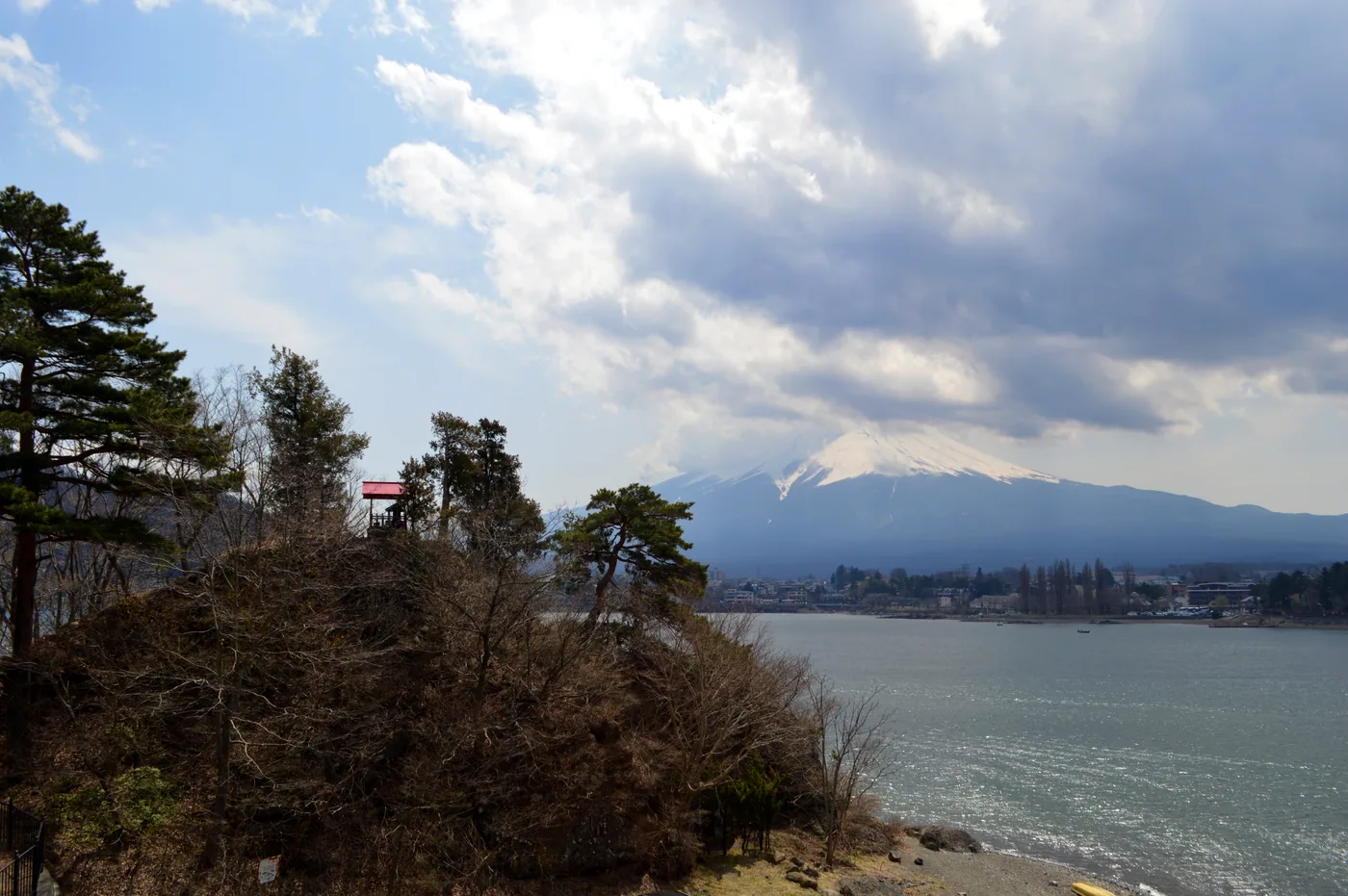
A growing minority — perhaps 10-15% — extends to Mt Fuji or Hakone, typically tacking on 1-2 nights after the Tokyo shoot. The Mount Fuji backdrop has strong recognition value in Filipino social media (Filipino travel influencers have made Fuji a checklist item), and Hakone's onsen ryokan inventory pairs naturally with kimono aesthetics. Best visibility for Fuji is November through February when winter skies are clear; summer Fuji shoots frequently produce no-Fuji photographs due to cloud cover.
Spend Tier and Per-Couple Range
Filipino couple budgets cluster in the mid-tier of our international segments. Median total spend on the kimono shoot package is approximately ¥350,000-¥600,000 (USD $2,300-$4,000) for a Tokyo single-location half-day shoot with 50-80 finished images, two kimono changes (one shiromuku, one iro-uchikake or color iro-muji), professional hair and makeup, and a delivered album of 30-50 prints.
Package Tier | Typical Spend (¥) | Format |
|---|---|---|
Entry | ¥250,000-¥350,000 | 2hr studio, 1 kimono, basic album |
Standard | ¥350,000-¥600,000 | Half-day, 2 kimono, edited album |
Premium | ¥600,000-¥1,000,000 | Full-day, 2-3 kimono, video included |
Luxury | ¥1,000,000+ | Multi-day, multi-location, full team |
Add-ons typical for Filipino couples: prewedding video (¥150,000-¥400,000), drone aerial coverage for outdoor locations (¥80,000-¥150,000), and physical album printing for the Philippine reception display (¥40,000-¥120,000). The 2026 kimono photo cost breakdown has fuller pricing context.
Family Involvement Expectations
Filipino weddings traditionally involve extended family, and the question of whether parents and siblings join the Japan trip is a recurring planning question. Roughly 40% of our Filipino bookings include parents traveling to Japan; about 25% include siblings or godparents; and about 10% involve five or more family members traveling together.
Family logistics affect three things: hotel booking (a 4-5 person family typically books a 2-bedroom serviced apartment in Asakusa or Shibuya rather than separate hotel rooms), shoot day choreography (we recommend family members observe from a respectful distance rather than participate, except for a final group photo at the end), and meal planning (a post-shoot family dinner is a common request — Filipino food is widely available in Tokyo's Roppongi and Shin-Okubo districts). Our bringing parents guide covers logistics in detail.
Wedding Planner's Notes: For Filipino bookings with parents present, we routinely add a 30-minute "family kazoku-shashin block" at the end of the shoot — a posed family group photograph with parents in semi-formal Western attire and the couple in kimono. The Philippine reception display almost always features this image prominently, and it tends to be the most-shared photo with extended family who could not travel.
Catholic Sacraments — Where They Fit
The Catholic sacrament of marriage requires specific elements regardless of geography: a baptized Catholic minimum of one party, parish records, Pre-Cana preparation, and a priest or deacon as celebrant. The kimono shoot is photography only — it is not a religious ceremony, and it does not satisfy any sacramental requirement. Filipino couples almost universally understand this distinction, but we mention it explicitly because the kimono shoot's emotional weight occasionally creates confusion among extended family who see it framed as a "wedding."
The cleanest framing we recommend to couples is: the kimono shoot is the engagement portrait or honeymoon photo session, and the Catholic Mass is the wedding. Two events, two photographers, two photo deliverables. This framing also helps with budget conversations — couples who think of the kimono shoot as "the wedding photographer" sometimes under-budget the Philippine ceremony photographer; couples who think of it as "engagement photography" budget both correctly.
Multi-Country Asia Extensions Patterns
Filipino couples often extend Japan kimono trips into multi-country Asian itineraries. The most common patterns we see: Manila → Tokyo (5 nights kimono shoot + sightseeing) → Seoul (3 nights) → Manila; or Manila → Tokyo (4 nights) → Osaka/Kyoto (4 nights) → Manila. Some couples extend further to Bangkok or Singapore, treating Japan as one segment of a two-to-three-week Asia honeymoon.
For Korea extensions, both Tokyo and Osaka have multiple daily Korean Air, Asiana, and ANA/JAL flights to Incheon (2.5 hours block time). For Bangkok extensions, Tokyo Narita has daily Thai Airways, ANA, JAL, and Philippine Airlines connecting flights. Our planning recommendation: if the trip extends beyond seven days total, treat the Japan portion as the prewedding/wedding photo "deliverable destination" and the other segments as honeymoon, rather than splitting photo shoots across multiple countries. Two-country photo shoots produce mismatched aesthetic deliverables and double the editing turnaround.
FAQ
Do Filipino couples need to declare the kimono shoot purpose on the Japan visa application?
Tourism is the appropriate visa category. The kimono shoot is tourism-adjacent photography (similar to professional travel photography) and does not require a business or commercial visa. List "sightseeing and prewedding photography" or "tourism and honeymoon photography" in your itinerary; include the studio confirmation letter as supporting documentation if requested, but it is not mandatory.
Can we have a Catholic priest bless the kimono outfits before the shoot?
Yes, but you will need to arrange this independently with a Catholic parish in advance. The blessing has no impact on the studio workflow, but build 20-30 minutes into the morning schedule if you want a parish stop. Filipino chaplaincies at St. Ignatius (Yotsuya) and Misa Salesiana (Chofu) have accommodated this request before; contact them at least 2-3 weeks ahead.
Are there kimono rental restrictions for Catholic religious symbols (rosaries, scapulars)?
No. Discreet religious jewelry — a rosary in the bridal bouquet, a scapular worn under the naga-juban, a wedding band engraved with a religious phrase — is entirely acceptable and most studios will accommodate without comment. Avoid wearing rosaries draped externally over the kimono, as this conflicts visually with the kimono's design lines.
Can our Philippine wedding photographer fly to Japan and shoot the kimono session instead?
Technically yes, but Japan requires foreign photographers shooting commercially to hold appropriate work visas — a standard tourist visa is not sufficient for paid work. Most Philippine photographers who attempt this end up working "informally," which carries professional risk for them and quality risk for you (unfamiliarity with Tokyo permit logistics, location access rules, and kimono studio coordination). We recommend hiring a Japan-based multilingual photographer for the kimono shoot and your Philippine photographer for the Catholic ceremony.
How early should we book the studio if we are also coordinating a Philippine wedding?
Twelve months ahead for peak seasons (cherry blossom, autumn foliage), six months for off-peak. The Japan kimono studio booking is typically easier than the Philippine parish booking — Catholic parishes in metro Manila now require 6-12 month lead times — so the constraint is usually the parish, not the studio. Lock the Philippine wedding date first, then plan the Japan shoot 4-12 months before or 1-3 months after.
Do we tip the studio team in the Philippine custom?
Japanese culture has no tipping tradition, and most studios will politely refuse cash gratuities. If you want to express appreciation, a written thank-you note (in English is fine), a small gift from the Philippines (dried mangoes, polvoron, or similar food items are appropriate), or a positive Google review carries more weight than cash. See our tipping etiquette guide for cultural context.
Are there Filipino food options near typical shoot locations?
Yes. Tokyo has multiple Filipino restaurants in Roppongi, Shin-Okubo, and Yotsuya; Osaka has a concentration in Namba. For a post-shoot family dinner, we can recommend Filipino-Japanese fusion establishments that comfortably accommodate parents who may not adapt easily to Japanese cuisine. Ask your studio coordinator for specific recommendations — most have a list maintained for Filipino bookings.
Can we incorporate the Filipino "Tinikling" or other cultural elements into the shoot?
The kimono aesthetic is generally treated as a closed cultural visual — combining it with Filipino dance or traditional Filipiniana attire in the same frame tends to produce conflicting aesthetic results. We recommend treating the kimono shoot as the Japanese segment and reserving Filipino cultural photography for a separate session in the Philippines. If you want to honor both heritages in a single album, ask your photographer to design separate sections rather than blended frames.
Find an English/Filipino-Capable Studio
For Filipino couples, the studio selection process is simpler than for most other nationalities — English coverage is universal, and the small subset of Tokyo and Osaka studios with Tagalog-speaking staff is well known to our directory. Start by reviewing our photographer directory filtered for English language capability, then specify "Tagalog-speaking dresser preferred" in your inquiry if mother-of-the-bride accommodation matters to your booking. Compare with our guides on Spanish couples in Japan and Dutch couples in Japan for context on how Filipino bookings differ structurally — primarily, the absence of language friction and the presence of Catholic ceremony coordination that does not affect European bookings the same way.
Related guides
 General guide
Kimono Wedding Photos for Foreigners: How It Works in Japan
Illustrative image · Unsplash. Not a photo of the specific people, places or services discussed.
Yes, foreign couples can have kimono wedding photos taken in Japan — no residency, ceremony or Japanese required. How booking, fittings, pricing and permits actually work.
Read the guide General guide
How to Book a Kimono Photographer in Japan from Abroad: Step-by-Step
Illustrative image · Unsplash. Not a photo of the specific people, places or services discussed.
A complete step-by-step guide for foreign couples booking a kimono pre-wedding photographer in Japan from overseas. Contracts, payments, communication.
Read the guide General guide
Multilingual Wedding Photography Japan: Beyond English
Illustrative image · Unsplash. Not a photo of the specific people, places or services discussed.
A planner's audit of which languages — Korean, Mandarin, Spanish, French, JSL — Japanese kimono studios actually support, plus interpreter costs and when to hire one.
Read the guide