Dutch Couple Kimono Photoshoot Japan: KLM Direct & Dejima
Between 400 and 800 Dutch couples book a kimono photoshoot in Japan each year. With the 200-year Dejima historical connection, KLM direct flights from Amsterdam, and near-universal English fluency, the planning is more straightforward than couples expect. This guide covers itinerary structure, the Nagasaki heritage extension, budget tiers in euros, and what Dutch communication style means for studio selection.

Illustrative image · Unsplash. Not a photo of the specific people, places or services discussed.
Check current prices, availability and venue rules with the relevant studio or venue before booking.
Between 400 and 800 Dutch couples book a kimono photoshoot in Japan each year, and they arrive with two unusual advantages: a 200-year historical relationship through the Dejima trading post in Nagasaki, and near-universal English fluency that erases the language barrier other European couples worry about. KLM operates a daily direct flight from Amsterdam Schiphol to Tokyo Haneda — eleven hours, no transfers. Dutch couples plan practically: clear budget brackets, measured itineraries, fewer impulse add-ons. This guide covers the planning decisions that actually matter when you're booking from the Netherlands.
Why Dutch Couples Choose Japan
Dutch interest in Japan is older and deeper than most European countries. From 1641 to 1854, Dutch traders held the only authorized European foothold in Japan — the artificial island of Dejima in Nagasaki harbor. That two-century relationship left mutual cultural awareness on both sides: rangaku (Dutch studies) was Japan's window into European science and medicine during the Edo period, and Dutch museums still hold significant Japanese collections. Modern Dutch couples often arrive with more historical context than they realize.
The practical attractions follow standard patterns: a wedding kimono shoot represents serious cultural craftsmanship at a fraction of comparable European luxury photography prices, the autumn and cherry-blossom seasons offer reliable backdrops, and English-capable studios make execution straightforward. Many Dutch couples treat the kimono shoot as the cultural centerpiece of a broader Asia trip — sometimes paired with Indonesia, reflecting another colonial-era connection.
Wedding Planner's Notes: Dutch couples we work with tend to ask substantive questions early — about lens choices, edit turnaround, raw-file policies, and contract clauses — rather than aesthetic ones. Studios with detailed FAQ pages and clear pricing tables convert this audience faster than studios leading with mood imagery alone.
Direct Flight: Amsterdam Schiphol to Tokyo Haneda, 11 Hours
KLM operates a daily direct flight from Amsterdam Schiphol (AMS) to Tokyo Haneda (HND), eleven hours westbound and roughly twelve hours eastbound depending on jet stream. Schiphol is one of the more efficient transfer hubs in Europe, so Dutch couples flying from Eindhoven, Rotterdam, or Maastricht reach Tokyo with one stop and minimal connection time. JAL also operates a codeshare on the route.
For Kyoto-first itineraries, the Haneda arrival pairs well with the Tokaido Shinkansen — you can be on a Kyoto-bound bullet train within ninety minutes of clearing customs. Couples flying to Kansai International (KIX) typically connect through Amsterdam-Helsinki-Osaka with Finnair, or Amsterdam-Doha-Osaka with Qatar Airways. The KLM direct remains a frequently chosen option because it eliminates connection-day jet lag stacking.
Time zone offset: Japan is seven hours ahead of the Netherlands in winter, eight hours ahead during European summer time. Most couples experience moderate jet lag for two to three days westbound — we recommend a recovery buffer before any morning shoot.
Visa-Free 90 Days
Netherlands passport holders enter Japan visa-free for tourism stays up to ninety days. Entry is granted on arrival with no advance application, no visa fee, and no embassy appointment. The standard requirement: passport valid through your stay, return ticket, and proof of accommodation if requested at immigration (rarely asked).
Couples planning longer trips — combining the kimono shoot with broader Asia travel — sometimes extend by leaving Japan briefly and re-entering, though this isn't guaranteed and shouldn't be relied on as a strategy. For trips genuinely exceeding ninety days, you'll need to apply for a longer-stay visa through the Japanese embassy in The Hague before departure.
If you're getting legally married in Japan rather than only photographing, the documentation requirements differ — see our getting married in Japan as a foreigner guide for the affidavit and certificate process.
The Dejima Historical Connection
Dejima (出島) was a fan-shaped artificial island in Nagasaki harbor, constructed in 1636 to confine Portuguese traders, then handed to the Dutch East India Company (VOC) in 1641 after Portuguese expulsion. For 218 years it was Japan's only window onto European trade, science, and material culture. Dutch ships arrived once or twice yearly; a small Dutch staff lived under strict movement restrictions.
The historical weight matters because Nagasaki today preserves and presents this relationship explicitly. The Dejima site has been partially reconstructed — the VOC trading post buildings, the warehouse, the chief factor's residence — and operates as an open-air museum. Dutch couples who visit Nagasaki for a kimono shoot can build a half-day around Dejima that connects directly to their own national history.
This is something we recommend mentioning to your Japanese studio if you book a Nagasaki shoot. The cultural context lands differently — many Nagasaki-based photographers will adjust suggested locations to lean into the heritage angle (Glover Garden, Oura Cathedral, Hollander Slope) rather than defaulting to generic Nagasaki tourist landmarks.
Combining Tokyo or Kyoto with Nagasaki Dejima
The standard Dutch itinerary we see is three cities over twelve to fourteen days: Tokyo (4-5 days), Kyoto (4-5 days), and Nagasaki (2-3 days). Geographically Nagasaki sits at the southwestern end of Kyushu, requiring a connecting flight or a Shinkansen-plus-limited-express transfer from Kyoto — about six hours by train, ninety minutes by domestic flight.
Many couples photograph one location each in Tokyo and Kyoto (shrine and garden, or studio and outdoor), then a third heritage-focused session in Nagasaki at the Dutch-connected sites. For full Nagasaki location detail — Glover Garden's nineteenth-century Dutch-style buildings, Megane-bashi (Spectacles Bridge), Mount Inasa night views, and shoot logistics — see our Nagasaki kimono photoshoot guide.
Cost note: the Nagasaki extension typically adds €1,500-€2,500 to the trip (flights, hotels, second-day shoot fee), and adds two to three full travel days. Couples on tighter budgets sometimes skip Nagasaki and concentrate spend on a longer Kyoto session.
English as Default — No Dutch-Speaking Studios Required
Dutch English fluency is among the highest in the world — EF EPI rankings consistently place the Netherlands first or second globally. We've worked with Dutch couples for several years; we have never had a couple request a Dutch-speaking studio. English is universally treated as the operational language, and Japanese studios with English-capable staff handle Dutch bookings indistinguishably from American or British bookings.
This matters for studio selection: you're choosing from the full pool of English-capable kimono photography studios in Japan rather than a narrow specialist subset. Our English-speaking kimono photographers directory covers the operational threshold (contracts, communication response time, on-day translator support) that actually determines fit.
What does matter: written communication clarity. Dutch couples send detailed, structured emails — bullet points, numbered questions, specific clauses to confirm. Studios that respond in matching structure tend to land bookings; studios that reply with single-paragraph "everything will be fine" emails often lose them.
Top Locations Among Dutch Couples
Tokyo and Kyoto Standard
The majority of Dutch couples — perhaps 60-70% by our estimate — book the standard Tokyo-Kyoto pairing. Tokyo for the urban-traditional contrast (Asakusa, Meiji Jingu, Hamarikyu Gardens), Kyoto for the dense classical concentration (Higashiyama, Arashiyama bamboo grove, Gion district). Twelve to fourteen days total, two shoot days, three to four kimono changes across both cities.
For Tokyo specifically, Dutch couples often gravitate to Asakusa for its visual density and the Senso-ji approach, then add Meiji Jingu's torii path for a quieter Shinto setting. In Kyoto, established Kyoto studios handle the standard rotation — Yasaka Shrine, Kennin-ji, Maruyama Park — with photographers who know foreign couples' pacing.
Nagasaki Heritage Extension
Roughly 15-20% of Dutch couples build in the Nagasaki extension specifically for the Dejima connection. This sub-group tends to skew older (mid-30s to mid-40s), often has prior Japan travel experience, and treats the Nagasaki day as the emotional anchor of the trip rather than the kimono shoot itself. Studio fit matters more here — you want a photographer who can compose against the Dutch-Japanese hybrid architecture of Glover Garden without falling into pure-tourist visual clichés.
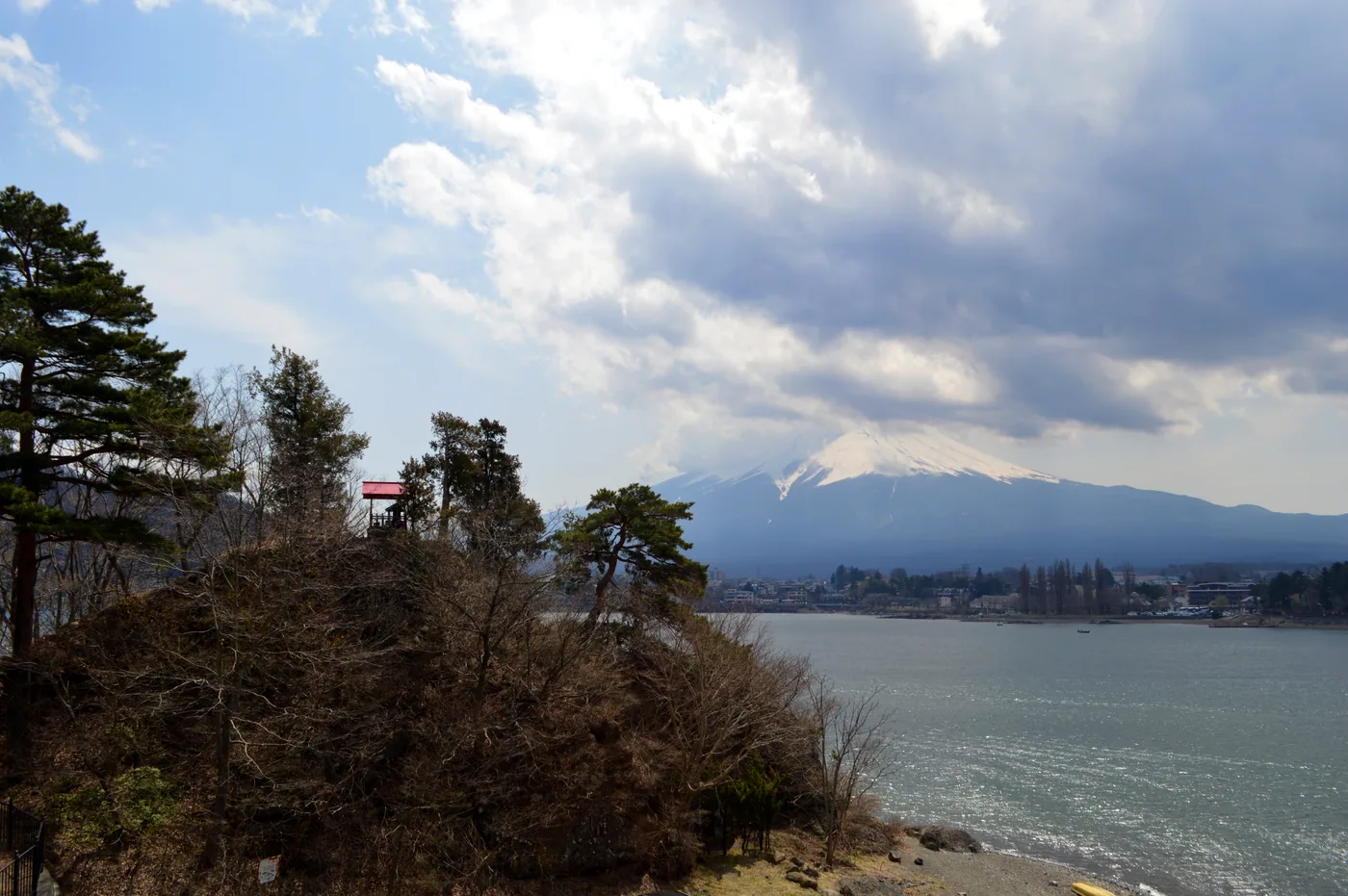
Mt Fuji Backdrop
A smaller subset (10-15%) prioritize Mt Fuji over Nagasaki, treating the snow-capped volcanic peak as the trip's centerpiece. The Mt Fuji shoot guide covers the practical seasonality — early morning visibility windows, the Lake Kawaguchiko vs. Hakone choice, and weather contingency planning. Dutch couples handle the Fuji weather lottery well: they tend to accept the 50-60% clear-mountain probability and don't push for guaranteed visibility (which doesn't exist).
Spend Tier: Practical, Quality-Focused
Dutch couples typically allocate €2,500-€5,000 for the kimono photography component of their Japan trip — split between studio fees, kimono rental, hair and makeup, and album delivery. This sits below American averages (€3,000-€7,000) and above some Southeast Asian budget tiers, reflecting a Dutch cultural pattern: spend solidly on quality, avoid overspending on signaling.
Tier | Budget (EUR) | Typical Inclusions |
|---|---|---|
Entry | €1,800-€2,500 | One location, 1 kimono, 2-hour shoot, 60-80 edited images |
Standard | €2,500-€4,500 | One location, 2 kimono changes, 3-4 hour shoot, 120-150 edited images, album |
Premium | €4,500-€8,000 | Two locations (different cities), 3 kimono changes, full-day shoot, video add-on, 200+ edited images, premium album |
For full 2026 cost context across countries and packages, see our kimono photo cost 2026 breakdown.
Wedding Planner's Notes: Dutch couples convert at very high rates once shown a clear itemized quote with line-item pricing. Studios that quote in a single bundled figure ("Premium package: ¥600,000") often lose Dutch bookings to studios that quote in components ("Shoot fee ¥250,000, kimono rental ¥120,000, hair and makeup ¥80,000…"). Transparency wins this audience.
Practical Planning Style — What Translates
The Dutch planning style — direct communication, structured questions, fact-based decision making — translates well to Japanese business culture, which also values precision and clear documentation, though through different cultural channels. Two specific patterns help:
Lead with the contract. Dutch couples often want to see the full contract terms early — cancellation policy, weather contingency, raw-file policy, deposit structure — before committing emotionally to a studio. Studios that share contracts pre-booking land Dutch couples faster. See our photographer contracts guide for the standard clauses to confirm.
Specify the deliverables in writing. Number of edited images, file format, resolution, delivery timeline, album page count, cover material. Dutch couples will refer back to these specifications, and ambiguity creates friction at delivery time. Our album delivery guide covers the standard specifications to lock down.
What doesn't translate as smoothly: silent agreement. Japanese business communication uses implicit acknowledgment more than Dutch communication does — a polite "we'll handle it" is sometimes a real confirmation, sometimes a soft deferral. When in doubt, ask for explicit written confirmation. Studios accustomed to foreign couples expect this.
Indonesia and Southeast Asia Pairing Patterns
A meaningful minority of Dutch couples — perhaps 20-25% — pair their Japan trip with Indonesia, reflecting the historical Dutch East Indies connection (Indonesia was Dutch-administered from the seventeenth century until 1949). The typical pattern: ten to fourteen days in Japan first, then a flight via Singapore or direct to Jakarta, then beach time in Bali or cultural time in Yogyakarta.
The kimono shoot fits naturally at the start of this longer Asia trip — when energy is high, jet lag has been processed, and the formality of the shoot doesn't compete with later beach-relaxation modes. Some couples extend the planning further with Singapore or Thailand stops between Japan and Indonesia. For those considering Southeast Asia pairing logic, our Singapore couple guide covers the regional transit planning that overlaps.
Couples comparing this with other European routes may want to read our Spanish couple guide for the alternative Mediterranean-aesthetic planning style, or our Filipino couple guide for English-default planning patterns from the Philippines.
Frequently Asked Questions
Are there Dutch-speaking kimono studios in Japan?
Effectively none. We're aware of zero studios advertising Dutch language service, and Dutch couples consistently book through English channels without difficulty. Given Dutch English fluency, this isn't a practical limitation — but if Dutch-language service is non-negotiable for elderly family members joining the trip, contact the Royal Netherlands Embassy in Tokyo for translator referrals.
Do KLM flights from Amsterdam to Tokyo allow extra baggage for wedding kimono purchase?
KLM economy allows one checked bag (23kg); business class allows two. Wedding kimono are usually rented in Japan, not purchased, so excess baggage rarely matters. If you buy a furisode or formal kimono to bring home, factor in approximately 4-6kg per kimono including kiri-bako (paulownia storage box) and ask the shop to compress-pack for transit.
Is the Dejima site worth the Nagasaki travel time?
For Dutch couples interested in history, yes — the partial reconstruction is detailed, the museum displays are well-curated, and the broader Nagasaki heritage walk (Hollander Slope, Glover Garden, Oura Cathedral) takes a full day. For couples without history interest, skip Nagasaki and concentrate budget on Kyoto.
What's the weather like in Tokyo when KLM Amsterdam-Tokyo flights are cheapest?
KLM fares dip in January-February and June-September. January-February is cold and dry in Tokyo (3-10°C), which limits outdoor kimono shoots but works well for studio sessions. June-September covers the rainy season and humid summer — the most challenging shoot conditions; we generally don't recommend kimono photography during these months.
Can we book a kimono shoot before flying to Indonesia for our honeymoon?
Yes, this is a common Dutch couple pattern. Schedule the Japan portion first (10-14 days), the kimono shoot mid-trip, then fly Tokyo or Osaka direct to Jakarta or via Singapore. Build a one-day buffer between your shoot day and your onward flight in case of weather rescheduling.
Do Dutch passport holders need any vaccinations for Japan?
No mandatory vaccinations for entry from the Netherlands. Routine vaccinations (tetanus, MMR) should be current. No yellow fever requirement unless arriving from a yellow fever risk country. Check current Dutch government travel advisories before departure.
What about same-sex Dutch couples — does the kimono shoot work?
Yes. Same-sex kimono photography is well-established in Japan among studios catering to international couples. See our same-sex kimono wedding photography guide for studio selection and kimono pairing options (two shiromuku, one shiromuku and one montsuki, etc.).
Find an English-Capable Studio for Your Dutch Kimono Photoshoot
Dutch couples consistently tell us the deciding factor isn't price or location — it's whether a studio communicates in the precise, structured way Dutch couples prefer. We've curated studios that handle international bookings with clear contracts, transparent itemized pricing, and detailed deliverable specifications. Start with our directory of vetted kimono photography studios, then drill into the operational layer with our English-speaking kimono photographers guide.
For sequencing your decisions: if you're still in the city-selection phase, read our Tokyo vs Kyoto comparison. If you've chosen Nagasaki for the Dejima connection, the Nagasaki kimono photoshoot guide covers locations, permits, and the full heritage circuit.
Locations in this guide


Related guides
 General guide
Kimono Wedding Photos for Foreigners: How It Works in Japan
Illustrative image · Unsplash. Not a photo of the specific people, places or services discussed.
Yes, foreign couples can have kimono wedding photos taken in Japan — no residency, ceremony or Japanese required. How booking, fittings, pricing and permits actually work.
Read the guide General guide
How to Book a Kimono Photographer in Japan from Abroad: Step-by-Step
Illustrative image · Unsplash. Not a photo of the specific people, places or services discussed.
A complete step-by-step guide for foreign couples booking a kimono pre-wedding photographer in Japan from overseas. Contracts, payments, communication.
Read the guide General guide
Multilingual Wedding Photography Japan: Beyond English
Illustrative image · Unsplash. Not a photo of the specific people, places or services discussed.
A planner's audit of which languages — Korean, Mandarin, Spanish, French, JSL — Japanese kimono studios actually support, plus interpreter costs and when to hire one.
Read the guide