Drone Kimono Photoshoot Japan: Where It's Allowed
Japan's 2022 Civil Aviation Law makes Meiji Jingu, Fushimi Inari, Itsukushima, central Kyoto, and central Tokyo off-limits to drones. A practical drone kimono photoshoot in Japan means Hokkaido, Okinawa, Mt Fuji-area lakes, Takayama valleys, or private property — with DJI Mini-class sub-100g craft as the practical default and a ¥50,000-150,000 add-on cost.

Illustrative image · Unsplash. Not a photo of the specific people, places or services discussed.
Check current prices, availability and venue rules with the relevant studio or venue before booking.
Drone shots of a couple in kimono on a rural mountain ridge, or against a flat beach horizon with the surf line as the only graphic element, have become a recurring social-media trope. The problem is that Japan's revised Civil Aviation Law (改正航空法, effective 2022) makes most of the locations that international couples actually want to shoot at — Meiji Jingu, Fushimi Inari, Itsukushima, central Kyoto, central Tokyo — explicitly off-limits to drones. A practical drone kimono photoshoot in Japan means picking from a much narrower list: Hokkaido, Okinawa, and rural mountain valleys.
Japan Drone Regulations at a Glance (改正航空法 2022)
The 2022 revisions to Japan's Civil Aviation Law shifted drone use from a loosely enforced grey area into a registered, permit-driven system. The headline change for couples planning a wedding shoot: any drone over 100 grams must be registered with the Ministry of Land, Infrastructure, Transport and Tourism (MLIT/国土交通省), the operator must carry the registration ID, and flight in restricted airspace requires a separate permit application that typically takes 10 business days to process.
The categories of restricted airspace are wide. They include densely inhabited districts (DID, 人口集中地区) — which covers most of central Tokyo, Osaka, Kyoto, Yokohama, Nagoya, Sapporo, and Fukuoka — plus areas within 9 kilometres of airports, areas above 150 metres altitude, and any flight within 30 metres of a person, vehicle, or building. Night flight, flight over crowds, and flight beyond visual line of sight each require their own additional permits.
For a kimono photoshoot, the binding constraints are usually the DID zones and the 30-metre-from-people rule. A drone hovering 5 metres above a couple is, strictly speaking, not legal without the operator holding a Category II operating qualification or a specific waiver.
Sub-100g vs 100g+ Drone Rules
The 100-gram threshold is the practical fork in the road. Drones under 100g — the DJI Mini class (DJI Mini 3, DJI Mini 4 Pro and similar) — are exempt from the registration requirement and from several of the airspace restrictions. They are treated more like a model aircraft (模型航空機) than a regulated drone (無人航空機).
This sounds permissive, but sub-100g operation is not a free pass. The DID restriction still applies in most local-government interpretations. Shrine and temple grounds still prohibit them under property-owner rules regardless of weight. And the 30-metre rule, while not legally binding on sub-100g craft, is a contractual condition imposed by most public parks and municipalities that you have to agree to when registering for filming.
The genuine advantage of the DJI Mini class for couples is at the edges: a private rural mountain ridge in Hokkaido, an empty Okinawan beach at sunrise, a private property in Hakone or Karuizawa. In those locations the operator can launch and fly without filing the formal permit packet that a Mavic-class drone would need.
Wedding Planner's Notes: When a couple emails asking for "drone shots in Kyoto," I rephrase the question. The answer is almost never yes for Kyoto itself. It is occasionally yes for the rural Tamba or Miyama countryside an hour outside Kyoto, on private property the photographer has a working relationship with. The shot they have in their mood-board is almost always going to require relocating the shoot location, not finding a workaround for the original one.
Where Drones Are Prohibited
All UNESCO Sites (Including Itsukushima)
Every Japanese site on the UNESCO World Heritage list explicitly prohibits drones, with on-site signage in Japanese and English, and active enforcement by site staff. This includes Itsukushima Shrine (Miyajima), Kiyomizu-dera, Kinkaku-ji, Ginkaku-ji, Nikko Toshogu, Horyu-ji, the Itsukushima floating torii, Shirakawa-go's gassho-zukuri village, and the Hiraizumi temple complex.
The prohibition is property-owner-driven, not just regulatory — even with a MLIT permit, you cannot fly within the site grounds. Drone footage of Itsukushima's torii from offshore exists, but it is overwhelmingly from registered commercial film crews coordinating with the Hiroshima prefectural government, not from wedding photographers.
Major Shrines (Meiji Jingu, Fushimi Inari)
Outside the UNESCO list, the major destination shrines apply the same prohibition. Meiji Jingu, Fushimi Inari Taisha, Yasaka Jinja, Heian Jingu, Tsurugaoka Hachimangu in Kamakura, Itsukushima, and Hokkaido Jingu all forbid drones on shrine grounds. The Meiji Jingu permit process (which we cover in the dedicated guide) does not have a "with drone" tier — there is no path to fly there as a commercial photographer.
Central Tokyo DID Zones
The Tokyo metropolitan DID zone covers all of the 23 special wards plus most of inner Mitaka, Musashino, and Chofu. That eliminates Shibuya, Asakusa, Ueno, Yanaka, Daikanyama, Marunouchi, and the imperial palace perimeter for unpermitted flight. Even with a MLIT permit, individual wards (区) require a separate filming permit on top, often with police notification.
Kyoto Old-Town Zones
Central Kyoto's Higashiyama, Gion, Pontocho, and Arashiyama districts are designated DID, and the bamboo grove, Sagano, and Tetsugaku-no-michi all have explicit local-government drone restrictions. The Kyoto Prefecture Tourism Bureau treats kimono drone shoots in the old town as effectively impossible without a film-production-level permit.
Where Drones Are Practical
Hokkaido Rural Locations
Hokkaido outside Sapporo's city limits is a strongly drone-friendly region for kimono shoots. The Niseko, Furano, and Biei farm-belt landscapes — patchwork fields, lone trees, distant mountain lines — are exactly the visual register that works at altitude. Sub-100g operation is straightforward here, and many landowners will grant filming permission for a small fee (¥10,000-30,000 typical) if approached through a local photographer with established relationships.
See the Hokkaido kimono photoshoot guide for the broader regional context. Late September foliage and June lupine bloom are the peak windows for aerial work.
Okinawa Beaches
The Okinawa main island and outer Yaeshima beaches are the other strong option, particularly for bingata (Ryukyu kingdom-era resist-dyed textile) shoots that the bingata ryusou guide covers. Public beaches outside US base perimeters and outside Naha's DID zone allow sub-100g flight without permit. The visual logic of an overhead drone shot — couple against turquoise water, single line of surf as graphic element — is unusually well-suited to Okinawa.
Mt Fuji Area (Outside Restricted Zones)
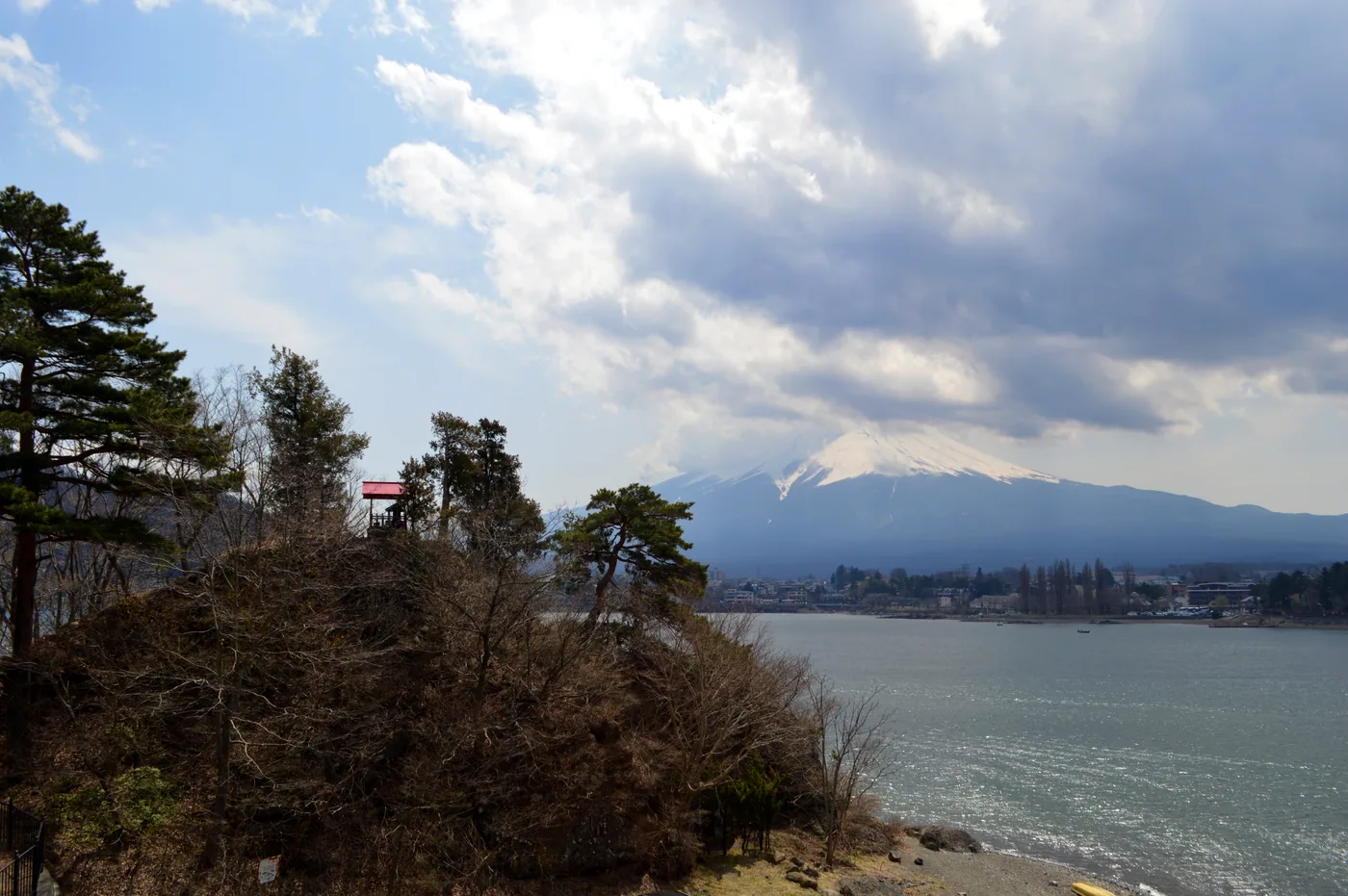
The Mt Fuji area is partly restricted (the Mt Fuji 5th Station and the Fujikyu Highland zone are off-limits) but the Yamanakako, Saiko, and Motosuko lakeshores, the Fuji Five Lakes farmland, and the Asagiri kogen plateau are workable. Permits for the Yamanashi-side lakes are administered by the prefectural government and processed within 2 weeks. Pair drone work with the Mt Fuji Shizuoka kimono guide for ground-shot location planning.
Takayama Valleys
The Hida-Takayama mountain valleys — particularly the upper Miya-gawa, Hida-Furukawa rice-paddy areas, and the Shokawa river basin near Shirakawa-go (outside the UNESCO village itself) — allow sub-100g operation with landowner consent. Autumn and early-summer green-paddy seasons are the strongest visually. Several Takayama-based photographers maintain ongoing relationships with rice-paddy owners who allow brief filming windows during off-harvest periods.
Private Property with Owner Permission
The most reliable path, regardless of region, is private property with documented owner permission. Some ryokan, private gardens, and farmhouse-stay properties (kominka rental) include drone-flight clauses in their rental agreements. This is the standard route for Karuizawa, Hakone, and Izu peninsula shoots. The owner consent overrides several of the public-airspace rules as long as the flight stays within the property boundary and below 150 metres.
DJI Mini-Class as Practical Default
For couples planning a wedding shoot, the DJI Mini class (Mini 3 at 249g — note: 249g is the Mini 3/4 standard battery weight, NOT sub-100g; the genuinely sub-100g craft is the DJI Mini SE or Mini 2 SE configurations) is the practical default. Even where the 100g exemption does not apply, the smaller Mini craft are quieter, less visually intrusive at shrine-adjacent locations, and far easier for the photographer to land quickly if a site staffer approaches.
The visual ceiling on Mini-class footage is genuine. The 1/1.3-inch sensor and limited dynamic range mean that high-contrast scenes — bright sky against shaded forest, golden-hour backlight — produce results that look amateur next to Mavic 3 Pro or Inspire 3 footage. For album-worthy aerial work, the trade-off is real: legality and access on the Mini side, image quality on the larger drone side.
A practical compromise that several drone-capable Japan photographers use is Mini-class for the venue shots and B-roll, then a Mavic-class with full permits for one or two key hero shots at a pre-arranged rural location.
Permit Application Process (When Required)
The MLIT permit process for 100g+ drone flight in restricted airspace is centralized in the DIPS (Drone Information Platform System / DIPS 2.0) online portal. The application requires operator registration, drone registration number, proof of flight insurance (typically ¥10 million liability minimum), proof of flight experience (10+ hours logged for first-time applicants), and a flight plan with date, time, location coordinates, and intended altitude.
Processing is officially 10 business days but in practice runs 2-3 weeks during peak filming seasons (March-May, October-November). Permits are issued for a single flight window or, more commonly, for a 12-month operating window for a specific operator-and-craft pairing.
On top of the MLIT permit, local-government and property-owner permits are independently required. For a Mt Fuji shoot, that means: MLIT national permit + Yamanashi prefectural filming permit + specific lake-shore municipal permit + landowner consent if filming from private property. The full stack runs 3-6 weeks of lead time.
Drone-Capable Photographers in Japan (Niche Market)
Drone-capable wedding photographers are a small subset of the Japan market. The active operators offering drone work as part of a kimono package are concentrated in Hokkaido, Okinawa, and the Mt Fuji / Karuizawa corridor. Tokyo and Kyoto have very few, for the regulatory reasons covered above.
Typical qualifications to look for: MLIT operator registration, Category II operating qualification (二等無人航空機操縦士) introduced in late 2022, 100+ hours of flight experience logged, and demonstrable portfolio of drone-included wedding work (not just landscape work). Membership in the Japan UAS Industrial Development Association (JUIDA) or the Drone Operators Federation is a useful but not strictly necessary credential.
For broader photographer-vetting context, see the English-speaking photographer guide and the portfolio reading guide. Drone work should always be evaluated separately from ground-shot work — a strong portrait photographer is not automatically a strong drone operator.
Cost Premium for Drone Add-On

The cost premium for a drone add-on to a standard kimono shoot typically runs ¥50,000-150,000, broken down roughly as follows:
Component | Typical Cost (JPY) |
|---|---|
Drone operator time (½ day add-on) | ¥30,000-60,000 |
Permit application processing fee (if 100g+) | ¥10,000-30,000 |
Drone insurance per-flight surcharge | ¥5,000-10,000 |
Location/landowner consent fee | ¥10,000-50,000 |
Additional post-production (aerial colour-grading) | ¥10,000-30,000 |
Sub-100g operation at a fully accessible location (Okinawa beach, Hokkaido rural) can drop the total to ¥30,000-50,000. The high end (¥150,000+) typically applies when a Mavic-class permit stack is required and the operator is travelling from a different region to reach the shoot location.
Drone work is almost always priced as an add-on rather than rolled into the base package. The pricing logic mirrors how golden hour photography add-ons are structured — premium-window or premium-equipment access carries its own surcharge.
Wedding Planner's Notes: If the budget is fixed and a drone shot is the priority, I usually advise dropping the second outfit change rather than dropping the drone. The drone shot delivers a categorically different image than ground-level work — an album page that nothing else in the shoot can substitute for. A second uchikake is a beautiful luxury but visually redundant with the first.
Frequently Asked Questions
Can I bring my own DJI Mini from home for the shoot?
Technically yes, but the practical answer is no. You must register the drone (if 100g+) with MLIT before flight, the registration takes 10 business days, and a foreign-resident application requires a Japan-issued address. Insurance coverage from your home country usually does not extend to commercial use in Japan. Renting through the photographer or a Japanese drone rental service is the standard route, and the photographer will already hold the necessary registration and insurance.
Are there any drone-friendly shrines or temples at all?
Effectively no. The major and minor shrines and temples that international couples want to shoot at all prohibit drones, either explicitly (UNESCO sites, head shrines) or implicitly through filming permit terms. The handful of small rural shrines that have allowed drone work historically tend to revoke permission once they appear on social media. Drone work should be planned around landscape and private-property locations, not religious sites.
What about FPV (first-person view) drone footage for cinematic shots?
FPV drones require an additional MLIT permit on top of standard registration because they are flown beyond visual line of sight from the operator's perspective. Operating an FPV drone for a wedding shoot in Japan requires either a Category I or Category II operating qualification plus the BVLOS waiver. FPV-capable wedding photographers in Japan are vanishingly rare.
Does drone footage actually look good with traditional kimono?
It looks good when the scene works at altitude. Uchikake's heavy embroidered hems and the trailing skirt of a shiromuku catch light particularly well from above when the couple is moving — walking along a path, turning toward each other. Static overhead shots tend to look stiff. The strongest aerial kimono compositions integrate landscape — a rice paddy, a beach, a snowfield — as half the image, with the couple occupying the lower third.
Can drones be used for cherry blossom kimono shoots?
Almost never at famous spots. Yoshino, Maruyama Park, the Philosopher's Path, Meguro River, Chidorigafuchi, and Mt Yoshino are all either DID-restricted or actively crowd-managed during sakura season. Sub-100g drone work is sometimes feasible in early-morning windows at less-visited rural sakura locations — secondary tributaries of the Sumida, lesser-known prefectural parks — but planning around a specific famous spot will not work.
What happens if a site staffer asks the operator to land?
The operator lands immediately. Continued flight after a verbal request to stop is treated as obstruction and can result in police involvement, drone confiscation, and a fine. A professional drone operator will always have a pre-briefed exit plan and an alternative backup location for the shoot if a primary site denies access on the day. Couples should never argue with site staff about permit interpretation — the photographer handles it.
Is night flight ever possible for kimono shoots?
Night flight requires a separate MLIT permit on top of the registration and the daytime operating permit, plus the drone must carry navigation lights. It is technically possible but rarely commissioned for weddings because the available light at altitude is insufficient for clean exposure. Twilight and blue-hour shoots are the practical compromise and fall under the standard daytime permit if launched and landed before official sunset.
Can the drone footage be used together with the photo album?
Yes. Aerial still frames extracted from drone video (typically 4K resolution) print well at standard album sizes and integrate cleanly with ground-shot images in spreads. The photo album binding guide covers layflat spread design that suits panoramic aerial frames particularly well. Many photographers will deliver both the original 4K video file and 2-4 selected still frames sized for album printing.
Find a Drone-Capable Studio
Drone work on a kimono shoot is the kind of add-on that has to be specified at the inquiry stage, not negotiated mid-package. Filter your shortlist by region (Hokkaido, Okinawa, Mt Fuji area, Takayama) and confirm MLIT operator registration and Category II qualification before signing. Browse photographers and studios with portfolio-vetted drone capability on our photographer directory, and read the golden hour photography guide next for the other premium-window add-on that pairs naturally with aerial work, or the photo album binding guide for how to integrate drone stills into the final deliverable.
Locations in this guide


Related guides
 General guide
Proposal Photoshoot Japan: Hidden Photographer & Staging
Illustrative image · Unsplash. Not a photo of the specific people, places or services discussed.
Proposal photoshoot Japan planning explained: three formats from candid hidden photographer (¥80K-¥200K) to multi-location proposal day journeys (¥500K).
Read the guide General guide
Eloping to Japan: The Kimono Elopement Guide (2026)
Illustrative image · Unsplash. Not a photo of the specific people, places or services discussed.
A Japan elopement takes three forms: a kimono photo session, a two-person shrine ceremony, or legal marriage. Costs, locations, paperwork and a 3-day itinerary.
Read the guide General guide
Same-Sex Kimono Wedding Photography Japan: 2026 Guide
Illustrative image · Unsplash. Not a photo of the specific people, places or services discussed.
Plan a same-sex kimono wedding photography Japan shoot — welcoming studios, shrine policies, two-outfit options, and how to confirm comfort at booking.
Read the guide