What to Pack for a Japan Kimono Photoshoot Trip: Complete List
A complete packing list for foreign couples flying to Japan for a kimono pre-wedding shoot — what to bring, what NOT to bring, and what the studio provides.

Illustrative image · Unsplash. Not a photo of the specific people, places or services discussed.
Check current prices, availability and venue rules with the relevant studio or venue before booking.
Packing for a kimono pre-wedding photoshoot trip to Japan is simpler than couples often expect because the studio provides almost everything for the shoot itself — kimono, obi sash, undergarments, hair ornaments, makeup, footwear. The packing decisions are mostly about your supporting travel needs: comfortable clothes for jet lag recovery, weather-appropriate layers for sightseeing, breakfast-in-room arrangements for sunrise shoots, and the few personal items that genuinely improve the shoot day. This guide walks through what to bring, what to leave at home, and what the studio supplies, structured for the typical 10-14 day Japan trip with one major shoot day.
What the Studio Provides (Bring Nothing For)
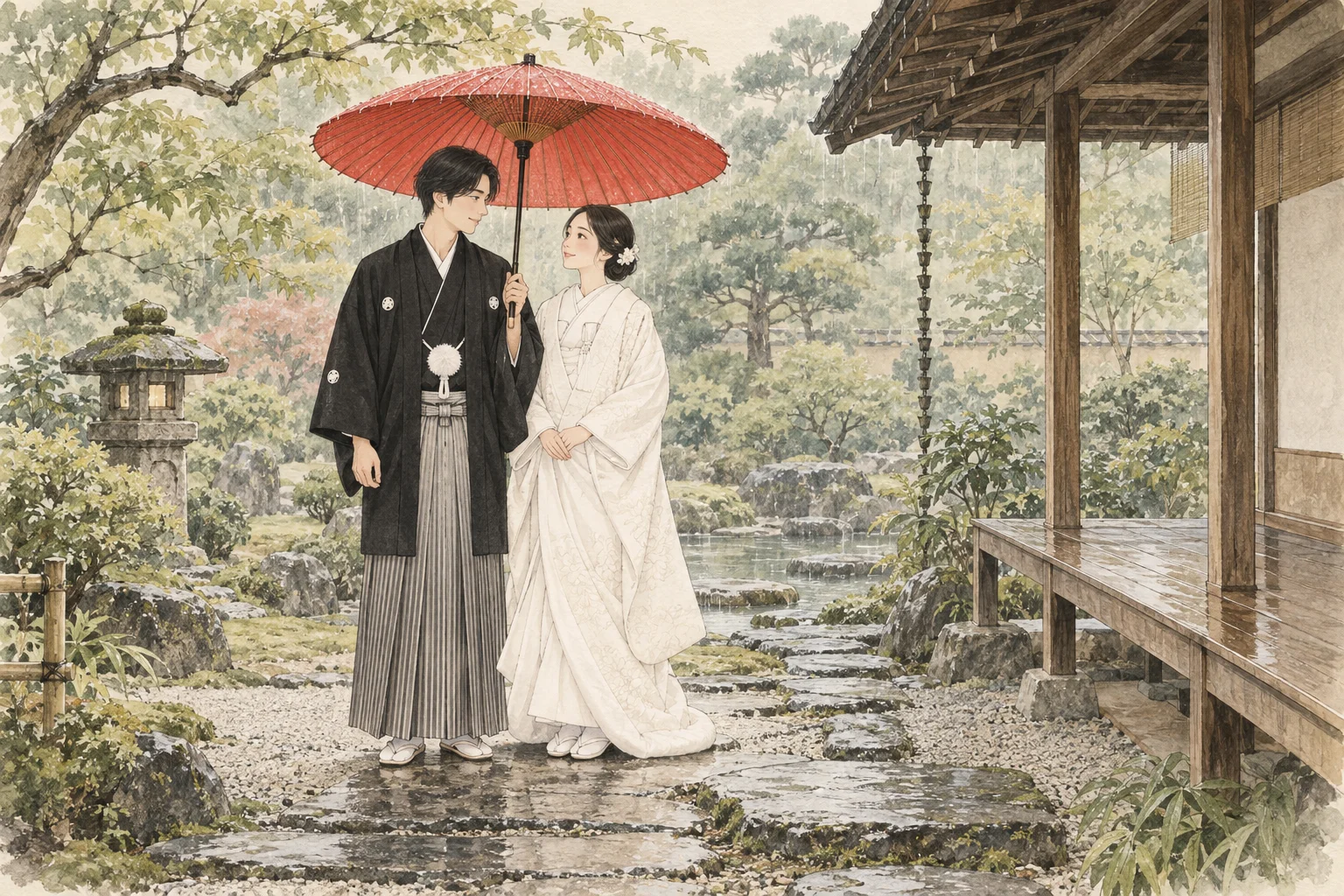
Reputable Japanese bridal photography studios include the following as standard in every kimono package: the kimono itself (shiromuku, iro-uchikake, or both), the obi sash and underlying himo cords, all undergarments (hadagi, nagajuban), the bunkin-takashimada wig, kanzashi hair ornaments, sensu fan, white tabi socks, zori or setta sandals, full bridal makeup application, hair styling by a kimono specialist, professional dressing service (kitsuke), and the groom's complete montsuki haori hakama set. You should arrive in casual travel clothes and clean cotton underwear. Nothing else is required for the shoot itself.
What to Bring (Genuinely Useful)
Personal Items for Shoot Day
Clean cotton underwear — wear something comfortable beneath the kimono undergarments. A pre-shoot snack and water bottle — most studios provide light refreshments but a substantial energy bar between segments helps. Lip balm — Japanese winter dryness can affect lip makeup application. Personal eye drops if you wear contacts — long shoot days dry the eyes. Hand warmers in winter (¥100 at any convenience store on arrival; bringing your own is unnecessary). Phone with full battery — for between-shoot communication; the photographer captures the actual portraits.
Optional Personal Touches
A small wedding band or family jewellery piece — the photographer can incorporate this in detail shots, especially the formal ring exchange portrait. Many couples bring rings even though no actual ceremony takes place; the visual is identical. A pre-written love letter or vow card — for the rare studio that includes a posed "reading the letter" portrait. Small heirloom items — grandmother's locket, parent's wedding photo, family handkerchief; the photographer can incorporate these as personal symbolism. None of these are essential; they are personal-touch additions that some couples value.
For Western Dress Portion (If Booked)
Your actual home country wedding dress if you want to wear it during the Western portion of a hybrid shoot. Bringing your dress avoids rental costs and produces personally meaningful imagery, but requires steam-press logistics on arrival and storage space. Confirm with the studio that they accept brought-from-home dresses. Western dress shoes — Japanese rental selections may not include your size. Western veil or hair accessories — these often coordinate better with your dress than studio rentals.
For the Travel Days Around the Shoot
Comfortable walking shoes — Japan is a walking country, especially for couples doing temple and shrine tourism around the shoot. Layered clothing — Tokyo and Kyoto have meaningful day-to-night temperature swings in spring and autumn. Compact umbrella — Japanese weather can change quickly; 7-Eleven and Family Mart sell good umbrellas for ¥500 if you forget. Modest dress for shrine visits — covered shoulders and knees are appreciated at major shrines even outside the shoot. A portable charger — Japan power outlets are 100V with two flat pins (same as US); standard chargers work. Cash and a Suica/Pasmo IC card — Japan is increasingly cashless but small shops, taxis, and shrine fees often still require cash.
What NOT to Bring
A separate kimono or yukata you bought online — studio inventory is curated for the shoot lighting and styling; bringing your own kimono almost always produces a mismatch with the photographer's setup. Save personal kimono purchases for casual wear at home. Your own makeup kit — bridal kimono makeup is highly specialised (white base for shiromuku, specific color theory for iro-uchikake) and the studio's makeup artist will use professional products designed for this application. Hair products — the bunkin-takashimada wig handles all styling; your own products are not used. Excessive jewellery — formal kimono wears one or no jewellery pieces; bring a single wedding band or simple necklace only. Bulky toiletries — Japan has excellent convenience stores and drugstores; buy on arrival rather than packing volume.
Breakfast-in-Room for Sunrise Shoots
If your shoot has a 5:30 AM call time (standard for outdoor sunrise sessions), most hotels' breakfast service starts too late — typically 6:30 or 7:00 AM. Plan ahead by either: requesting a packed cold breakfast from the hotel the night before (most international hotels accommodate this for free), buying packaged onigiri, sandwiches, and yogurt from a 24-hour convenience store the previous evening, or carrying granola bars from home. Eat at 4:30 AM, light only — full breakfast immediately before dressing is uncomfortable in formal silk. For full shoot-day timeline planning see our photoshoot duration guide.
Weather-Appropriate Layers by Season
Spring (March-May): light jacket plus single warm layer; mornings cold (5-10°C), days mild (15-20°C). Summer (June-August): lightweight breathable clothing, sun hat, sunscreen; days hot (30-35°C) and humid. Autumn (September-November): similar to spring; warm jacket for evenings as foliage week approaches. Winter (December-February): serious cold-weather layers if shooting in Hokkaido or Tohoku (down jacket, thermals, gloves); milder layers for Tokyo or Kyoto. For season-specific shoot context see our autumn, snow, and summer guides.
Luggage Strategy
For a typical 10-14 day trip with one kimono shoot, two pieces of luggage work well: one large checked bag for clothing and shoes, one carry-on for valuables, electronics, and shoot-day essentials. Yamato luggage forwarding (takkyubin) is excellent in Japan — you can ship luggage from Tokyo to Kyoto for ¥2,000-¥3,000 per piece overnight, letting you travel light by Shinkansen between cities. Many studios accept luggage delivery a day or two before your shoot if you are arriving from a different city.
Frequently Asked Questions
Can I bring my own wedding shoes for the kimono portion?
No. The traditional zori or setta sandals are an integral part of the kimono silhouette. Modern shoes break the formal register that the entire outfit is designed to project. For the Western dress portion of a hybrid shoot, bringing your own shoes is encouraged.
Do I need any specific products for the bridal hair?
No. The bunkin-takashimada is created with a professional wig placed over your natural hair. Your own shampoos, products, and styling are not used and do not affect the result.
Should I bring my own jewellery for the shoot?
A single wedding band or simple necklace is appropriate. Large pieces, multiple rings, or visible Western-style earrings can clash with the formal kimono register. Discuss with the photographer at booking if you have specific pieces.
What about my contact lenses or glasses?
Contacts are fine and recommended over glasses for portraits. Bring extra solution and a backup pair, since long shoot days dry the eyes. Glasses are visible in photos and produce a noticeably modern look against traditional kimono — most photographers will suggest removing them for at least some portraits.
Should I bring a hairbrush or styling tools to the studio?
No. The studio handles all hair styling. Your hair will be tucked under the wig regardless of its starting state, so styling at the hotel is unnecessary.
What if I forget something important from my home country?
Japanese convenience stores (7-Eleven, Family Mart, Lawson) stock nearly everything: toothbrushes, deodorant, basic makeup, phone chargers, umbrellas, snacks. The pharmacies (Matsumoto Kiyoshi, Don Quijote) cover anything more specialised. Forgetting something from home is rarely a meaningful problem in Japan.
More Practical Planning Guides
Plan the Rest of Your Trip
Packing handled. Browse English-speaking kimono photographers across Japan to lock in your shoot day, then build your travel itinerary around it. For the broader booking framework, see our ultimate guide to Japan pre-wedding photoshoots.
Related guides
 General guide
Kimono Photoshoot Day Timeline in Japan: Hour-by-Hour Plan
Illustrative image · Unsplash. Not a photo of the specific people, places or services discussed.
A realistic hour-by-hour timeline for a full-day kimono photoshoot in Japan — from the night-before hair prep to the 6pm wrap, with planner notes on meals, bathroom logistics, and the timing mistakes couples make.
Read the guide General guide
How Long Does a Kimono Photoshoot Take in Japan: Full Day Timeline
Illustrative image · Unsplash. Not a photo of the specific people, places or services discussed.
How long a kimono shoot in Japan really takes: full timeline by format, dressing duration, breakfast planning, and energy management tips.
Read the guide General guide
Bringing Parents to Your Japan Kimono Photoshoot: What to Plan
Illustrative image · Unsplash. Not a photo of the specific people, places or services discussed.
Should you bring your parents to your Japan kimono pre-wedding shoot? Logistics, cultural fit, language support, family portrait options, and what foreign couples typically choose.
Read the guide