Studio vs Outdoor Kimono Photoshoot in Japan: Which to Choose
Studio vs outdoor kimono shoot in Japan: cost, weather risk, lighting control, kimono protection, and why most foreign couples choose hybrid.

Illustrative image · Unsplash. Not a photo of the specific people, places or services discussed.
Check current prices, availability and venue rules with the relevant studio or venue before booking.
One of the first decisions foreign couples face when booking a kimono pre-wedding photoshoot in Japan is whether to shoot indoors at a studio or outdoors at a shrine, temple, garden, or street location. Both produce excellent imagery and both are widely used by serious Japanese studios, but the trade-offs are real and not always obvious to couples who have not seen the two formats side by side. This guide walks through the decision factors — cost, weather risk, lighting control, kimono protection, image style, time on shoot day — and recommends a default approach for typical foreign-couple scenarios.
Quick Recommendation
For most foreign couples, the right answer is a hybrid shoot: a short studio session for the formal portraits, followed by an outdoor session at one or two iconic locations. Reputable Tokyo and Kyoto studios offer this as a standard package and pricing is roughly fifteen to thirty percent above outdoor-only or studio-only, but the imagery range is dramatically wider. If you have to pick one format only, choose outdoor for the once-in-a-lifetime scene; choose studio for guaranteed quality regardless of weather.
Cost Comparison
Outdoor shoots tend to run ten to twenty percent more expensive than equivalent studio sessions because of permit fees at major shrines and temples, transit time, and the assistant or coordinator needed to manage location logistics. A mid-tier Tokyo studio session runs ¥120,000 to ¥160,000; an equivalent outdoor session at Meiji Jingu or Asakusa runs ¥150,000 to ¥200,000. A hybrid combining both typically runs ¥180,000 to ¥240,000. For broader pricing context, see our kimono photoshoot cost guide.
Weather Risk
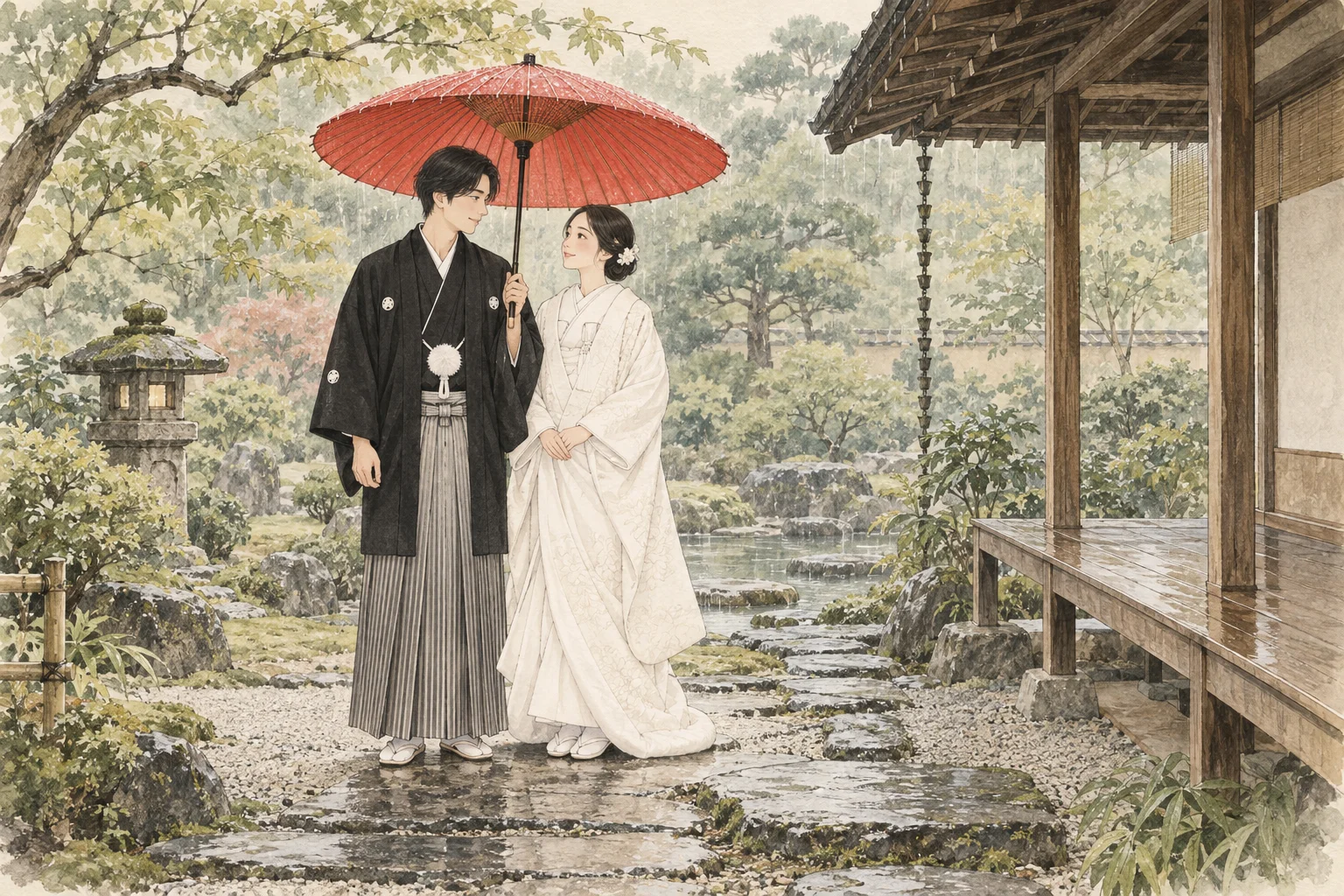
This is the single most important practical difference. Studios are weather-proof and your shoot date is fixed; outdoor shoots are subject to rain, typhoons, heatwaves, and unexpected wind. Reputable outdoor specialists offer one free reschedule within the season for weather, but couples on a tight travel itinerary may not be able to use it. If your trip allows only one shoot day, the safer choice is studio or a hybrid that puts the studio portion first and the outdoor portion second (so the outdoor portion can be skipped if conditions deteriorate without losing the day entirely).
Lighting Control
Studios give the photographer complete control over light direction, colour temperature, and intensity, which produces consistent professional results regardless of time of day. Outdoor shoots depend on natural light and are dramatically better in the golden hour windows immediately after sunrise and before sunset. Mid-day outdoor shoots in summer can produce harsh, unflattering shadows that even excellent photographers struggle to overcome.
Kimono Protection
Formal silk uchikake are heirloom or premium-rental pieces that can cost ¥500,000 or more to repair if damaged. Studio shoots eliminate exposure to rain, dust, and the wear of walking on stone or sand. Outdoor shoots at temples and gardens carry small but real risk of staining at the hem from gravel, water from morning dew, or scratches from low-hanging branches. Reputable outdoor photographers carry protective covers and dressers who continuously adjust the hem, but the risk is non-zero.
Image Style Comparison
Studio imagery is timeless, controlled, and editorial — the bride and groom against a coordinated backdrop, with formal poses lit to magazine quality. Outdoor imagery is contextual, atmospheric, and place-specific — your kimono framed against the actual shrine where you visited, the cherry blossom tree you stood under, or the bamboo grove that surrounded you. Couples who want the image to read as "a wedding portrait" lean toward studio; couples who want "we were really there in Japan" lean toward outdoor.
Time on Shoot Day
Studio shoots typically take three to four hours including dressing, makeup, two outfit changes, and a hundred or so frames per look. Outdoor shoots run four to six hours because of transit between locations and the time needed to wait for clean compositions when other visitors are present. A hybrid shoot is a long day — typically six to eight hours from morning call to final frame — and requires breakfast planning and energy management for the couple.
Which Is Right for Your Trip
Choose studio if: your trip has only one possible shoot day with no weather flexibility, you are travelling in the rainy season (June) or peak typhoon weeks (late August to early September), or you specifically want editorial-style portraits as your primary output. Choose outdoor if: your trip has at least two flexible shoot dates, you are travelling in the most stable weather windows (late October through early December, late February through early April), or you specifically want imagery tied to a recognisable Japanese location. Choose hybrid if: your budget allows the fifteen to thirty percent premium and you want both image styles in the final album. For most foreign couples, hybrid is the recommendation.
Frequently Asked Questions
Are studio kimono shoots in Japan worth the trip from abroad?
Yes if the studio uses authentic Japanese silk pieces, professional hair and makeup specialists, and an experienced photographer. A studio session in Tokyo with these elements produces imagery that would be impossible to recreate in your home country at any price. If the studio uses imported polyester rentals and generic styling, the answer is no.
Can we do an outdoor kimono shoot in winter?
Yes throughout most of Japan, with appropriate thermal underlayers and shorter outdoor sessions. Hokkaido and other northern locations offer cinematic snow imagery; Tokyo and Kyoto in January and February are crisp and clear with low crowds. See our snow wedding photoshoot guide for cold-weather specifics.
What happens to my outdoor shoot if it rains?
Reputable outdoor photographers offer one free reschedule within the trip or season. Many also maintain covered backup locations (temple verandas, historic machiya houses, kimono-friendly umbrellas as a styling element). Confirm the rain policy in writing before paying the deposit.
Is studio kimono cheaper than outdoor?
Yes, by roughly ten to twenty percent for equivalent quality tiers. Studio sessions avoid permit fees and the assistant overhead that outdoor locations require.
Can a hybrid shoot fit into a half day?
No, realistically. A hybrid producing both studio and outdoor imagery at a quality level worth flying for needs six to eight hours minimum. Couples who only have a half day available should pick one format rather than rushing a hybrid.
Find a Photographer for Your Format
Browse our directory of English-speaking kimono photographers across Japan filtered by studio or outdoor specialty, location, and budget. For the broader booking framework, see our ultimate guide to Japan pre-wedding photoshoots.
Related Decisions to Make
Related guides
General guideShrine Permit Application Process: Japan Wedding Photo Guide
Illustrative image · Unsplash. Not a photo of the specific people, places or services discussed.
Shrine permit application process for Japan wedding photography: studio-handled timelines, Meiji Jingu and Kyoto fees, equipment restrictions, and lead times.
Read the guide General guide
Editing Turnaround Time: Japan Wedding Photographer Delivery
Illustrative image · Unsplash. Not a photo of the specific people, places or services discussed.
Editing turnaround time for Japan wedding photographers runs 4-6 weeks standard, with peak season delays, express options, and album binding adding more.
Read the guide General guide
Naorai Post-Ceremony Meal Japan: Sacred Sequel Guide
Illustrative image · Unsplash. Not a photo of the specific people, places or services discussed.
Naorai post ceremony meal japan wedding guide: the 30-60 minute shared kaiseki and sake ritual that closes a Shinto wedding before any reception begins.
Read the guide