Sansankudo Sake Selection: Shrine Brewery Contracts Explained
Sansankudo sake selection at Japanese shrines: brewery contracts, junmai-daiginjo upgrades, alcohol-free substitutes, and what foreign couples can actually request.

Illustrative image · Unsplash. Not a photo of the specific people, places or services discussed.
Check current prices, availability and venue rules with the relevant studio or venue before booking.
The sake poured during your san-san-kudo ritual is rarely a choice you make at the menu level. Most shrines have a designated brewery contract — sometimes a multi-generational arrangement with a local kura — and the bottle on the offering stand was decided before you booked. What foreign couples usually have is room to ask informed questions: what category of sake will be served, whether premium upgrades are available for the reception toast, and what substitutes exist for guests who don't drink. This guide explains what you're likely to encounter at Shinto weddings and how to navigate brewery decisions without overstepping shrine protocol.
Why Sake Selection Matters at a Shinto Wedding
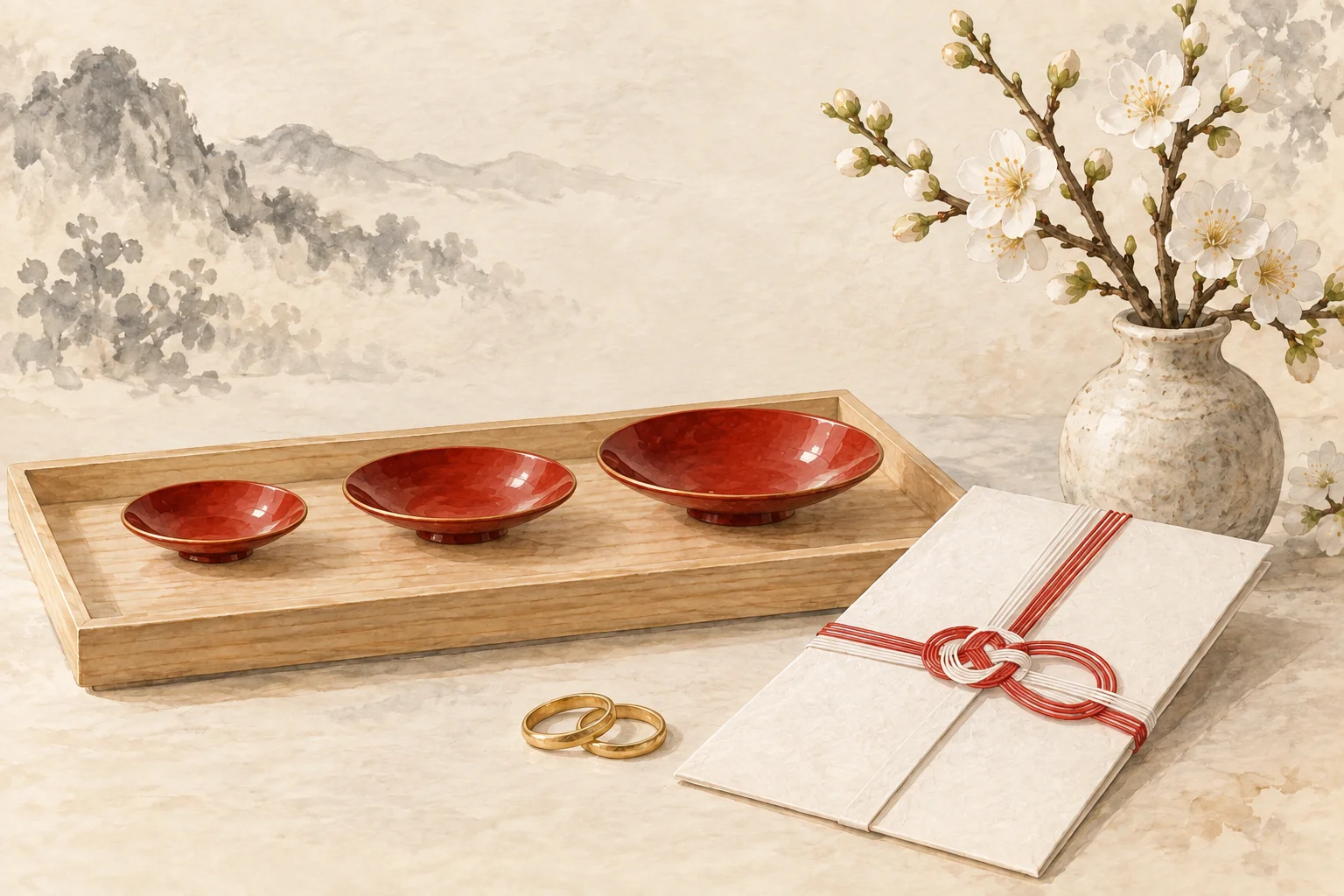
Sake in a Shinto ceremony is not a beverage — it is a ritual offering shared with the kami. The three cups of san-san-kudo represent heaven, earth, and humanity; the nine sips bind the couple, their families, and the shrine deity into a single contract. Because the sake itself is consecrated during the rite (poured from a vessel that has been blessed), the brewery that supplies it matters in a way it wouldn't at a restaurant. Many shrines treat the sake supply line as part of their religious infrastructure — same brewery for decades, sometimes since the Meiji era.
For foreign couples this has two practical implications. First, the sake question is almost never negotiable at major shrines like Meiji Jingu, Heian Jingu, or Tsurugaoka Hachimangu — you'll drink what they pour. Second, the question still matters because the brewery affects taste profile (some are dry and assertive, others mellow and sweet), which affects whether you actually enjoy the ritual or grimace through it. A 30-second conversation with the shrine office at booking can tell you what to expect.
Wedding Planner's Note: Couples sometimes arrive expecting wine-list-style choice and leave disappointed. The right framing is closer to a Catholic communion than a tasting menu — the substance is sacramental, not selected.
Three Things You'll Likely Encounter at the Cup
Across mainland Japan, the sake on the offering stand at a Shinto wedding tends to fall into one of three patterns. These aren't formal parallel categories — one is a colloquial style, one is a quality grade, and one is a sourcing arrangement — but together they cover most of what foreign couples will meet. Knowing the pattern your shrine uses lets you set expectations and decide whether to request a premium upgrade for the post-ceremony reception toast (separate from the ritual sake itself).
Onikoroshi-Style (Strong, Dry, Inexpensive)
Onikoroshi (鬼ころし) is a colloquial label family rather than a formal sake grade. It typically refers to dry, robust sake — often futsu-shu or honjozo class, 15-19% ABV, assertive on the palate, served at room temperature in shrine settings. Multiple breweries across Japan produce sake under the Onikoroshi name or in this style, with no single official standard. Many regional shrines use Onikoroshi-style sake from local breweries because the dryness and strength signal seriousness, and the price point (¥1,000-¥2,000 per 720ml bottle) suits shrine economics.
Expect a sharp, dry finish with mineral notes. Foreign couples who don't drink sake regularly often find this style the hardest to sip without reacting — the alcohol burn is immediate. If your shrine confirms an Onikoroshi-style sake, practice taking the smallest possible wetting-the-lips sip beforehand. The ritual only requires touching the cup to your lips on the first two of the three pours; only the third is meant to be drunk meaningfully.
Junmai-Daiginjo — The Premium Grade
Premium urban shrines and many hotel-affiliated wedding chapels have shifted to junmai-daiginjo: the top sake grade, made with rice milled to 50% or less, fermented with care, often fruity and floral on the palate. Names from established premium breweries appear at Tokyo and Osaka venues catering to foreign couples and luxury domestic clients. Expect smoother texture, lower alcohol burn (15-16% ABV), and notes of pear, melon, or jasmine.
If your shrine offers a tier upgrade, junmai-daiginjo is the most common premium option. The cost difference is usually ¥10,000-¥30,000 added to the ritual fee. Whether this is worth it depends on whether you'd enjoy drinking the leftover sake at your reception — the ritual itself is sacramental regardless of grade.
Locally-Sourced Shrine Sake
The most traditional sourcing pattern is shrine-specific sake: a bottling produced by a within-prefecture brewery for the shrine, sometimes with the shrine name on the label. Shrines in major sake-producing regions — Hiroshima, Shimane, Kyoto's Fushimi district, Nada, Niigata — typically source from within their region, drawing on local breweries that have supplied festival sake for generations. Specific brewery-shrine pairings vary and are best confirmed directly with the shrine office.
This is the most "authentic" pattern in the sense that the sake is geographically embedded in the shrine's identity. Quality varies — some are excellent, some are unremarkable — but the cultural resonance is strongest. If your shrine has a designated local sake, ask whether bottles are available for purchase as a wedding souvenir. Many shrines sell them at the goshuin (stamp) counter for ¥2,000-¥5,000.
How Shrines Choose Their Sake Brewery
Shrine-brewery relationships are not commercial in the way Western religious-supply contracts are. Most are inherited — the current head priest's grandfather chose the brewery, or the brewery has supplied this shrine since before the Meiji Restoration. Changing brewery requires the priest council's approval and sometimes formal notification to the brewery's owners, who may consider the contract a multi-generational honor.
Practical factors that do influence selection: proximity (sake doesn't ship well, so within-prefecture is preferred), price point (shrines run thin margins on weddings), religious calendar alignment (the brewery must supply festival sake throughout the year, not just weddings), and family ties (head priest's family sometimes has historical brewery connections). Newer shrines, urban shrines built post-1970, and hotel-chapel hybrid venues are more flexible — these often rotate brewery contracts every 5-10 years based on quality and price.
For foreign couples this means the right question to ask is not "can you change brewery?" but "what brewery do you currently work with?" — the answer tells you what to expect at the ritual and whether to request a premium upgrade.
Bringing Your Own Sake (Rarely Permitted)
Most major shrines do not permit outside sake for the san-san-kudo ritual. The reasoning is religious: the sake on the offering stand has been blessed during a pre-ceremony rite that requires the shrine's own supply chain. Bringing a bottle from outside breaks the consecration sequence. Some couples ask to bring sake "from home" (especially Korean couples wanting a hanbok-influenced touch or American couples wanting Oregon-brewed nama-zake); the answer at major shrines is almost universally no.
Exceptions exist at smaller shrines and at private venues like ryokan or restaurant wedding spaces that perform abbreviated Shinto ceremonies. If you have a meaningful family bottle — sake brewed in your father's hometown, a vintage given as an engagement gift — ask the shrine whether it can be used for the reception toast (kanpai) rather than the ritual. This is almost always permitted and lets you incorporate the personal item without violating ritual protocol.
Wedding Planner's Note: A common workaround: have the shrine perform the official san-san-kudo with its designated sake, then repeat a symbolic three-cup exchange with your own bottle at the reception. The first is the religious rite; the second is the family moment. Couples report this approach gets warm responses from shrine staff because it preserves the protocol while honoring the personal intention.
Alcohol-Free Substitutes for Non-Drinkers
Pregnant brides, recovering alcoholics, Muslim couples doing Shinto-style ceremonies for cultural rather than religious reasons, and couples with low alcohol tolerance can request amazake (甘酒) — sweet non-alcoholic rice drink — or simply water for the ritual sips. Most shrines accommodate this without question, though the substitute is usually noted in the ritual paperwork.
Amazake is the traditional substitute because it's made from the same koji-fermented rice base as sake but stopped before alcohol production. It's used in Shinto purification rites and at New Year offerings, so it carries appropriate religious weight. Water is acceptable but less ritually "complete" — some shrines prefer amazake even when the substitute is the bride's first choice.
If you're requesting a substitute for medical reasons (pregnancy being most common), the shrine handles this matter-of-factly. Mention the substitution at booking, not on the day of the ceremony — the shrine needs to prepare separate vessels and brief the officiant.
Photographing the Sake Ritual
The sake ritual is the visual centerpiece of a Shinto wedding ceremony — three nested lacquered cups (kawarake or sansankudo-zushi), the shrine maiden (miko) in red hakama pouring with both hands, the couple lifting cups in a precise sequence. Photographers prioritize this sequence in any Shinto coverage because it produces the most graphically distinctive images of the day.
Logistical points: most shrines restrict the photographer to a fixed position 3-5 meters from the altar during the ceremony. Flash is prohibited. The miko's movements are choreographed and fast — experienced shrine photographers know to pre-focus on the cup position and capture the pour at peak height. Couples should ask their photographer how many sansankudo frames they typically deliver; the answer should be at least 8-15 images covering pour, lift, sip, exchange.
For close-up details of the sake bottle and brewery label, request a staged shot during the pre-ceremony staging window. The bottle is usually placed on the offering stand 30-60 minutes before the ceremony starts; a quick photograph of the label gives you a record of the brewery for future reference and souvenir storytelling.
Brewery Visits as a Wedding Add-On
Some foreign couples combine the wedding with a half-day sake-region visit — Fushimi, Nada, Niigata, or Saijo. This works particularly well when the ceremony sake comes from one of these regions: visiting the brewery that supplied your wedding sake adds a layer of meaning.
Practical structure: ask your shrine for the brewery name at booking, then contact the brewery directly. Most offer 60-90 minute tours with tastings (¥1,000-¥3,000 per person), and many require advance booking during sake-making season (November-March). Mention you're a wedding party — the response is often warm, and some breweries prepare a small commemorative bottle when notified in advance.
Cost Considerations

The sake itself is included in the shrine's standard san-san-kudo fee — no separate line item for foreign couples to budget. The standard ritual fee at major shrines runs ¥80,000-¥150,000 and covers sake, vessels, miko service, officiant time, and the consecration paperwork. Premium sake upgrades are the only routine add-on cost, typically ¥10,000-¥30,000.
Item | Typical Range | Notes |
|---|---|---|
Standard ritual fee (sake included) | ¥80,000-¥150,000 | Major shrines; varies by location |
Junmai-daiginjo upgrade | +¥10,000-¥30,000 | Where offered; ask at booking |
Local shrine sake purchase (souvenir) | ¥2,000-¥5,000/bottle | From shrine shop |
Brewery tour add-on | ¥1,000-¥3,000/person | Day-trip activity |
Reception kanpai sake (own bottle) | ¥3,000-¥20,000/bottle | For toast at hiroen |
Amazake substitute | No extra charge | Standard accommodation |
Most foreign couples spend ¥150,000-¥180,000 total on the ritual including a small souvenir bottle. Couples who upgrade to junmai-daiginjo and add a brewery tour day reach ¥200,000-¥250,000. The sake-related portion is typically the smallest line item in the wedding-day budget compared to photography or kimono rental.
Frequently Asked Questions
Can I taste the sake before the wedding day?
At major shrines, no — the ritual sake is prepared on the day. However, you can ask the brewery name and purchase a bottle of the same product in advance to taste at home. Bottle shops in central Tokyo (Hasegawa Saketen, Imadeya) carry most major brewery labels and ship internationally.
Is sake served warm or cold for sansankudo?
Almost always room temperature (jouon). Warming (atsukan) is considered too casual for a sacramental setting; chilling (reishu) is a modern restaurant convention not used at traditional shrines. Some northern shrines in Tohoku and Hokkaido warm the sake slightly for winter ceremonies.
What happens to the leftover sake after the ceremony?
The cups are emptied by the couple during the rite — there's usually no leftover from the ritual vessels themselves. The bottle on the offering stand is often given to the couple to take home, or used at the reception toast. Ask your shrine; the answer varies.
Can my parents join the sake exchange?
The san-san-kudo proper is for the couple only, but some shrines include a follow-up shinzoku-katame-no-sakazuki (親族固めの盃) — the "kinship-binding cup" — where parents and the couple exchange cups. This is more common at full Shinto ceremonies than at abbreviated tourist-friendly versions. Discuss with the shrine in advance if family inclusion matters to you.
Does the sake brand affect ceremony validity?
No. Once the sake is consecrated by the officiant, the brand becomes religiously irrelevant. The ritual works the same whether the bottle costs ¥800 or ¥80,000. The premium-vs-standard question is purely about taste and meaning to you, not religious efficacy.
Can I request a specific brand if my shrine works with multiple breweries?
Rare but possible. A minority of shrines rotate among two or three brewery contracts; in those cases you can ask whether a specific bottle is available for your date. Lead time of 2-3 months is typical. At single-brewery shrines (the majority), the answer will be no.
What if my partner has a medical issue with alcohol?
Any documented alcohol intolerance, allergy, recovery situation, or medication conflict should be discussed with your doctor first — this publication does not give medical advice. The practical answer at the shrine is simple: request an amazake substitute at booking. The shrine will prepare separate vessels and brief the officiant. No documentation is required, and the accommodation is treated as routine.
Should I tip the brewery if I do a tour?
No. Japanese breweries do not accept tips. A polite thank-you and purchase of a bottle from the shop is the appropriate gesture. If you want to acknowledge the brewery's role in your wedding, send a thank-you letter post-event with a wedding photo; many breweries display these in their tasting rooms.
Find a Shinto-Ready Photographer
Sake-ritual coverage separates photographers who have shot Shinto weddings from photographers who shoot weddings in general — the pour-lift-sip sequence is fast, the lighting at most shrine altars is low, and flash is forbidden. Browse the Wasou Wedding Japan directory for photographers with verified Shinto ceremony experience and shrine-permit familiarity.
To round out your Shinto wedding planning, read Wagashi at Japanese Weddings for the sweets served alongside sake at the reception, and Kakejiku Hanging Scrolls for the auspicious wall art that frames the ritual space.
Locations in this guide

Related guides
 General guide
Shinto Wedding Ceremony: Ritual Order & What to Expect
Illustrative image · Unsplash. Not a photo of the specific people, places or services discussed.
Shinto wedding ceremony explained: the eight rituals in order, dress, officiants, and what foreign couples should know about holding one in Japan.
Read the guide General guide
San-San-Kudo: The Sacred Sake Ritual at Shinto Weddings
Illustrative image · Unsplash. Not a photo of the specific people, places or services discussed.
San san kudo is the nine-sip sake ritual at the heart of a Shinto wedding. Cup meanings, step-by-step order, and what foreign brides should expect.
Read the guide General guide
Harae Shinto Purification Ritual Wedding: Shubatsu Guide
Illustrative image · Unsplash. Not a photo of the specific people, places or services discussed.
Harae shinto purification ritual wedding guide: shubatsu sequence, haraegushi wand, ōharai and misogi forms, photography rules, and where it sits in your ceremony.
Read the guide