Naorai Post-Ceremony Meal Japan: Sacred Sequel Guide
Naorai post ceremony meal japan wedding guide: the 30-60 minute shared kaiseki and sake ritual that closes a Shinto wedding before any reception begins.

Illustrative image · Unsplash. Not a photo of the specific people, places or services discussed.
Check current prices, availability and venue rules with the relevant studio or venue before booking.
Most international couples planning a Shinto wedding focus on san-san-kudo and walk straight from the shrine to a reception venue. They miss the step in between. Naorai (直会) is the formal post-ceremony shared meal that completes the sacred ritual sequence — 30 to 60 minutes, 5 to 10 of your closest family, sake poured from the same bottle used during your vows, and a light kaiseki course. It is distinct from your hiroen reception, smaller, quieter, and treated by shrine staff as the actual conclusion of your ceremony rather than the start of your party.
What Naorai Is
Naorai is the closing rite of a Shinto ceremony. In Shinto practice, ritual offerings made to the kami (deities) — sake, rice, fish, seasonal vegetables — are not simply presented and then put away. Once the ceremony ends, the offerings are shared among the participants. Eating and drinking what was placed before the kami is understood as receiving a portion of the blessing back. The word itself, written 直会, carries the sense of "settling back" — moving from the heightened state of formal ritual into everyday life through a shared meal.
At a wedding, naorai applies this same principle to the couple, immediate family, and any wedding attendants present. The sake used for your san-san-kudo, the rice and tai (sea bream) placed at the altar, become the basis of the meal that follows. In practice, modern shrines do not literally serve you the altar offerings — kitchens prepare a parallel kaiseki course — but the symbolic continuity remains, and the same sake bottle from the ritual is often used to pour the opening cups.
Why Naorai Is Distinct from Hiroen Reception
International couples almost always think in two categories: ceremony and reception. Japanese shrine weddings have three. The reception (披露宴, hiroen) is a public-facing celebration with extended family, friends, colleagues, speeches, cake-cutting, and a kaiseki or French course meal lasting 2-3 hours. Naorai sits between the ceremony and the hiroen, or replaces parts of the hiroen entirely for smaller weddings.
The differences are practical and tonal. Naorai is closed to anyone outside the ceremony itself — only people who entered the honden (main hall) with you are invited. It is short. It is held in a tatami room with low seating, not at a banquet hall with rounds. There are no speeches, no MC, no entertainment. The sake-sharing continues. The tone is the same as the ceremony just completed: formal, quiet, deliberate.
Wedding Planner's Notes: When clients ask whether they need naorai if they are already booking a hiroen, my answer depends on the guest count. Below 15 ceremony attendees, naorai often becomes the full meal and the hiroen is skipped. Above 30 guests, hiroen handles everything and naorai is rarely arranged separately. The 15-30 range is where couples genuinely choose, and where I push hardest for naorai — it gives parents and grandparents a half-hour of quiet time with you before the louder reception begins.
Standard Naorai Format
The format is consistent across major shrines, with minor regional variation in menu and seating arrangement.
Shrine-Adjacent Room or Restaurant
Most shrines that perform weddings maintain a dedicated naorai room within the shrine compound or in an adjacent building. These rooms are tatami-floored, sliding-door, lower lit than a banquet hall. At Meiji Jingu and Hie Jinja in Tokyo, naorai happens in shrine-managed wedding facility rooms. At Kyoto shrines such as Heian Jingu or Kamigamo, you sometimes walk a short covered path to a ryotei (traditional restaurant) the shrine partners with. Either way, you do not leave the shrine grounds in your full ceremonial kimono — the meal is treated as a continuation of the ritual environment.
5-10 Close Family Members
The standard naorai includes the couple, both sets of parents, and grandparents or siblings only if the total stays under 10. Anyone who participated in the ceremony itself — the nakōdo (formal go-between, if you have one) and the miko (shrine maiden attendants, who do not eat with you) — is acknowledged but the miko leave once seating is complete. Extended family who travel for the wedding but were not part of the small honden ceremony join only the later hiroen.
30-60 Minute Duration
Naorai is short by design. The meal is sequenced to be eaten, not lingered over. A typical timing: 5 minutes for seating and opening sake pour, 20-30 minutes for the served kaiseki courses, 5-10 minutes for closing toast and final sake. Couples in full hikifurisode or shiromuku are physically uncomfortable seated on tatami for more than an hour, and the format respects that. If you are continuing into a hiroen the same day, the brevity is also practical — you need time to change kimono, refresh hair, and travel to the reception venue.
Sake from Same San-San-Kudo Bottle
The most distinctive ritual element of naorai is the sake. The bottle used to pour the three cups during san-san-kudo is brought from the honden to the naorai room and used for the opening pour. This is not symbolic theatre — it is the literal bottle, treated as having been consecrated through the ceremony. The shrine staff pour for the couple first, then for parents in order of seniority. After the opening cup, regular table sake (the same brand, but a fresh bottle) is served for the rest of the meal.
Light Kaiseki Course
The meal itself is a shortened kaiseki — typically 5-7 small courses rather than the 9-11 of a full kaiseki dinner. Standard sequence: sakizuke (small appetizer, often something seasonal), wanmono (clear soup), mukōzuke (sashimi, frequently sea bream as it appeared in the altar offering), yakimono (grilled fish or wagyu), takiawase (simmered vegetables), gohan with kō no mono (rice and pickles), and a small dessert. Allergies and dietary needs should be communicated to the shrine 2-3 weeks ahead through your studio or planner — the kitchens are small and substitutions take time.
Symbolic Meaning — Shared Meal as Ritual Conclusion
To understand why naorai matters in the structure of a Shinto wedding, look at what comes before it. The ceremony moves through purification (harae), petition (norito reading by the priest), offering (tamagushi-hōten — your tamagushi sakaki branch placement), and union (san-san-kudo). At each stage, the couple and family are increasingly in the presence of the kami. The ceremony ends, but ritually you are still in that elevated state.
Naorai is the structured way out. By eating and drinking what was offered, by doing so with family rather than alone, the participants return to ordinary social space. In older usage, you cannot consider a ceremony fully complete until naorai concludes — it is the bookend that marks the rite as finished. Modern weddings have loosened this requirement, but the framing still shapes how shrine priests refer to naorai when they explain it: "the ceremony is not over until you have shared this meal." It is one reason shrines schedule naorai immediately after the ceremony, in the same kimono, on the same grounds. Breaking that continuity by changing into reception attire first is considered slightly out of sequence.
When Foreign Couples Include vs Skip Naorai
Often Combined with Hiroen Reception
The most common pattern for foreign couples is to compress naorai into the opening of the hiroen reception. The first 15-20 minutes of the reception become a private family table with the same sake-sharing ritual, before extended guests are formally welcomed and the larger meal begins. This works practically — you stay in ceremonial kimono for one continuous arc instead of two — and it preserves the symbolic continuity without requiring two separate meals. Discuss this with your venue: not all hiroen venues accommodate a private "family-only" opening segment, but the major hotels (Imperial, Palace, Hoshinoya) and shrine-affiliated banquet halls do.
Or Replaced by Western-Style Lunch
The other common pattern is to skip formal naorai entirely and arrange a Western-style family lunch at the hotel later in the day. This is fully acceptable; no Japanese family member or shrine priest will treat it as disrespectful. The trade-off is that you lose the sake-sharing continuity, and the ceremony does not have a quiet, structured close before you go into reception planning mode. For elopement-style ceremonies with only 4-6 attendees, skipping naorai and going straight to a private kaiseki dinner that evening is the most common pattern I see.
Sake-Sharing Tradition (Continuity from San-San-Kudo)
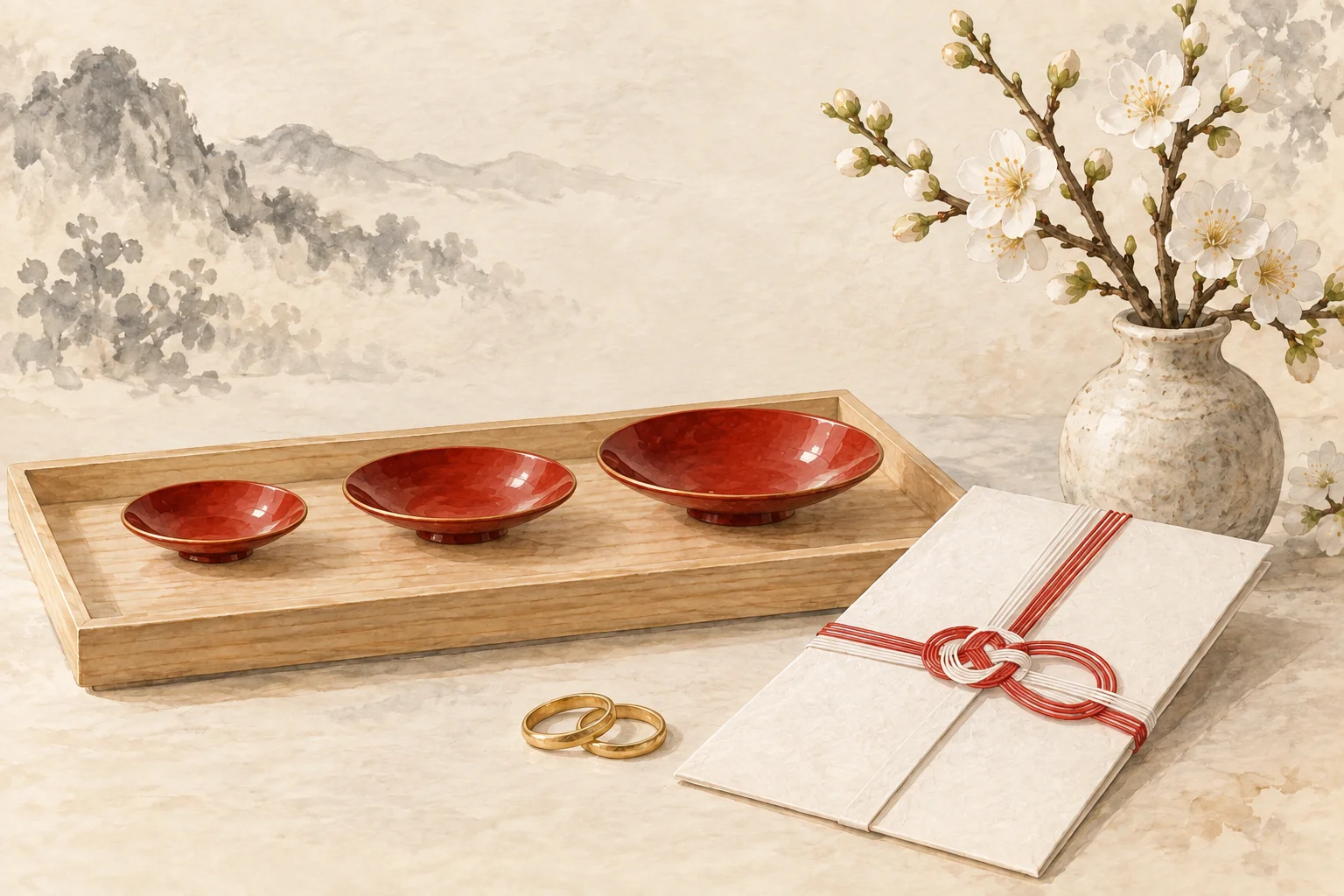
The san-san-kudo ritual during the ceremony uses three cups of increasing size, with three sips each, to bind the couple. Naorai's opening pour extends that binding to the family. The same bottle, the same brand, often the same lacquer cups (smaller cups for naorai if shrine policy permits reuse). When you read older Shinto wedding documentation, this is described as "extending the union from couple to family" — your families have now drunk from the bottle that bound you, so the union ritually includes them.
In practical terms, the pour goes in this order: shrine priest pours for groom first, groom for bride, bride passes to mother of groom, around the table by seniority, returning to the couple. Each guest takes one sip rather than three. The whole sequence takes 3-5 minutes. After it concludes, normal table service resumes and you can pour for each other freely.
Seating Etiquette at the Naorai
Seating follows traditional kamiza-shimoza arrangement (上座・下座, upper/lower seat). The couple sits at the kamiza end, which is the position farthest from the door and typically with the tokonoma (decorative alcove) behind. Parents flank the couple — groom's parents to the groom's side, bride's parents to the bride's side. Grandparents, if present, sit next to the parents. The shrine priest, if joining the meal (often briefly for the opening toast then departing), sits opposite the couple.
Foreign couples do not need to memorize this; shrine staff guide everyone to assigned seats with name placards. What matters to know: do not seat yourself before being directed, do not rearrange seating to put friends together (this is not that kind of meal), and stand briefly when the priest enters and exits the room.
Cost Considerations

Naorai is priced separately from your ceremony fee at most shrines. Typical ranges as of recent shrine fee schedules: ¥8,000-¥15,000 per person at Tokyo shrine-affiliated naorai rooms, ¥10,000-¥20,000 per person at Kyoto shrine-partnered ryotei, ¥15,000-¥25,000 per person for premium options at hotels operating on shrine grounds. For a typical 8-person naorai, budget ¥80,000-¥160,000 separate from your ceremony and hiroen costs. Sake is usually included; supplemental high-grade sake or specific brand requests are extra. Tips are not given.
Combining Naorai with Hiroen
If your guest count makes a separate naorai impractical, the cleanest solution is a "family table" opening to your hiroen reception. Arrange with your venue that the first table is set with traditional sake cups, the bottle from your ceremony is delivered to that table, and the first 15-20 minutes of the reception are quiet — no speeches, no music. Extended guests enter the room and are seated but conversation stays low until the family sake-sharing concludes. The MC then formally opens the reception. This compression keeps the ritual structure intact while solving the logistical issue of two distinct meals on a packed wedding day.
For Foreign Couples — Recommended Approach
For couples with 6-12 ceremony attendees and no large hiroen planned: book the full naorai through your shrine. Treat it as the meal of the day, allocate 60 minutes, accept that you eat in full kimono. The intimacy fits the ceremony scale.
For couples with 15-40 total guests: skip standalone naorai and arrange a family-table opening at your hiroen, with the ceremony sake bottle transported and used for the opening pour. Confirm with the venue 4-6 weeks ahead.
For couples with 40+ guests: standalone naorai is rarely worth the scheduling complexity. The hiroen handles meal duties. If you want some equivalent ritual, a quiet 5-minute family sake-sharing in a side room before the reception begins is sufficient and well within Japanese tradition. The harae purification at the start of your ceremony and naorai (or its equivalent) at the end bookend the sacred portion of your day — even an abbreviated version preserves that frame. Discuss family crest etiquette for the kimono worn during this meal in our guide to mongon-musho kamon traditions.
Frequently Asked Questions
Can the shrine priest stay for the entire naorai meal?
Priests typically join for the opening toast (3-5 minutes), offer a brief closing blessing, and leave the family to eat privately. A few smaller shrines have priests stay through the full meal, but this is the exception. If you want extended priest presence, ask 4-6 weeks before the ceremony — it is sometimes accommodated for an additional offering (¥30,000-¥50,000).
Is alcohol mandatory at naorai?
The opening sake pour is part of the ritual; non-drinking guests touch the cup to their lips without sipping. After the ceremonial pour, switching to tea, non-alcoholic ama-zake (sweet rice drink), or water is fully acceptable for the rest of the meal. Pregnant brides, observant Muslim couples, and those with health restrictions are accommodated without comment.
Do we need to give speeches at naorai?
No. Naorai has no speech tradition. A brief thank-you from the couple to parents (1-2 sentences) at the end of the meal is sometimes done but not required. Save formal speeches for the hiroen if you have one.
Can we photograph the naorai?
Most shrines allow naorai photography with restrictions: no flash, no standing photographers moving around the room, no tripods. Your wedding photographer can capture seated, candid moments. Discuss with your shrine office during booking — Meiji Jingu and Hie Jinja allow professional photographers; some Kyoto shrines restrict to family snapshots only.
What if our parents do not eat Japanese food?
Shrine kitchens are small and inflexible on menu but accommodate major dietary restrictions (vegetarian, allergies, religious) with 2-3 weeks notice. Full Western menu substitution is generally not possible — the meal structure is the ritual. If parents cannot eat the kaiseki, attending for the sake-sharing opening then leaving before the meal is served is acceptable.
Are children allowed at naorai?
Yes, family children are welcome. Small children are typically seated next to parents and given a simplified meal. Behavior expectations are normal Japanese formal-meal expectations: quiet during the sake ritual, conversational at low volume during the meal.
How far in advance do we book naorai?
Naorai is booked at the same time as the ceremony, typically 4-8 months ahead for popular shrines. Final headcount and dietary restrictions are confirmed 2-3 weeks before the date. Last-minute additions of 1-2 family members are usually accommodated; reductions are easier than additions.
Plan Your Naorai with Shrine Expertise
Naorai is the part of a Shinto wedding most easily lost when couples plan from outside Japan — it is rarely in English-language vendor packages, and the choice between standalone naorai, hiroen-integrated family opening, or skipping it entirely depends on details that only become clear once your shrine and guest count are confirmed. Browse our directory of kimono wedding photographers with experience capturing shrine ceremonies and their naorai conclusions. Continue with our guides to harae Shinto purification ritual that opens the ceremony, and mongon-musho family crest traditions for the kimono worn through both rituals.
Related guides
 General guide
Sansankudo Sake Selection: Shrine Brewery Contracts Explained
Illustrative image · Unsplash. Not a photo of the specific people, places or services discussed.
Sansankudo sake selection at Japanese shrines: brewery contracts, junmai-daiginjo upgrades, alcohol-free substitutes, and what foreign couples can actually request.
Read the guide General guide
Shinto Wedding Ceremony: Ritual Order & What to Expect
Illustrative image · Unsplash. Not a photo of the specific people, places or services discussed.
Shinto wedding ceremony explained: the eight rituals in order, dress, officiants, and what foreign couples should know about holding one in Japan.
Read the guide General guide
San-San-Kudo: The Sacred Sake Ritual at Shinto Weddings
Illustrative image · Unsplash. Not a photo of the specific people, places or services discussed.
San san kudo is the nine-sip sake ritual at the heart of a Shinto wedding. Cup meanings, step-by-step order, and what foreign brides should expect.
Read the guide