What Is a Shiromuku? Japan's White Wedding Kimono Explained
Shiromuku is the all-white bridal kimono worn in Japan since the Muromachi period. What the word means, what the full ensemble includes, the traditional red-lined exception, and what our directory of 176 studios shows about renting one.

Illustrative image · Unsplash. Not a photo of the specific people, places or services discussed.
Check current prices, availability and venue rules with the relevant studio or venue before booking.
A shiromuku (白無垢) is the all-white bridal ensemble worn by Japanese brides: a white brocade overrobe called an uchikake, worn over a white kimono, with a white obi and white accessories. It is the most formal of Japan's bridal kimono. Brides of samurai families wore white for wedding rites from the Muromachi period onward, and today the shiromuku appears in two settings — Shinto shrine ceremonies, and photo sessions where couples rent the full ensemble for a day without any ceremony at all.
This guide covers what the word means, what the outfit is actually made of, the one traditional exception to the all-white rule, what our directory of 176 studios shows about who stocks it, and what renting one for photographs involves.
What "shiromuku" means
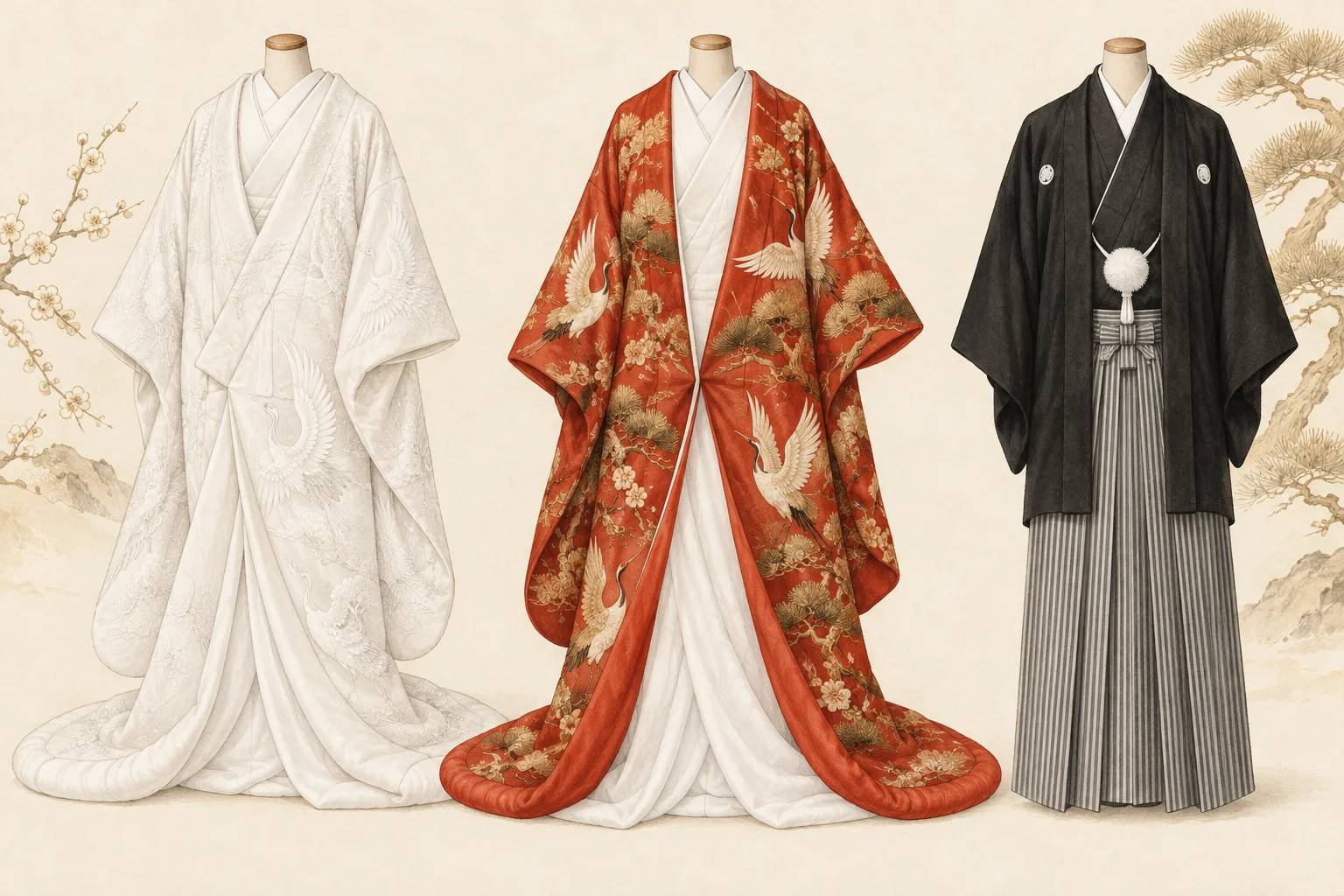
The word is written 白無垢: shiro (白) is "white," and muku (無垢) means "pure" or "unblemished." The name describes the defining rule of the outfit — everything visible, from the outer robe to the sash, the inner kimono and the accessories, is white.
Two explanations of the symbolism are commonly given, and both are part of the tradition. White is the color of sacred rites in Shinto, worn for ceremonies before the kami (deities). And in the household language of the samurai era, the bride wore white as a sign that she arrived "undyed," ready to take on the colors of her new family. Wedding planners still explain the color both ways.
The all-white rule has one traditional exception
Most English-language descriptions stop at "everything is white." There is a recognized variant that is not a modern liberty, and it is worth knowing about before you look at rental catalogs.
Kimono are lined, and at the hem and sleeve openings the lining is folded back so a narrow band of it shows on the outside. That padded fold is called the fuki (ふき), and it exists to protect the outer fabric from wear. When the lining is red, the result is an aka-fuki (赤ふき) shiromuku: white throughout, with a thin red line tracing the hem and cuffs.
The red carries meaning. Red is treated as a color that wards off misfortune — the same reasoning behind the vermilion of shrine gates — and in a wedding context it is also read as the bride being dyed into the blood of her new family, a kind of rebirth. Rental houses date the aka-fuki to around the Edo period, later than the plain white shiromuku itself, which is described as bridal wear from the Muromachi period.
For photographs the difference is not subtle. A plain shiromuku photographs as a single tone and depends entirely on texture and shadow for definition. An aka-fuki draws a line along the hem that separates the garment from the ground and follows the sweep of the train. One practical consequence: a wataboshi hood covers the upper body and much of the silhouette, so if you choose the hood, the red at the hem does less work. Without it, the red reads clearly.
Not every studio stocks an aka-fuki, and catalogs do not always distinguish the two. If you want it, ask by name.
Where the tradition comes from
White bridal dress in Japan long predates the white Western wedding dress. Brides of samurai families wore white for wedding rites from the Muromachi period (1336–1573) onward, and the style spread beyond the warrior class over the centuries that followed. The modern form — a white uchikake overrobe worn over a white kakeshita kimono, paired with a white hood or headdress — settled into its current shape as shrine weddings became the standard ceremony format in the twentieth century.
What makes shiromuku distinctive against other bridal traditions is how far the white extends. A Western white dress is worn with colored flowers, jewelry and makeup; a shiromuku keeps the accessories white too, and the visual interest comes from brocade woven white-on-white rather than from color.
What a full shiromuku consists of
A rental "shiromuku" is not one garment but a set. These are the standard pieces, with the terms your studio will use.
Piece | Term | What it is |
|---|---|---|
Overrobe | Uchikake (打掛) | The heavy brocade outer robe with a trailing, padded hem. In shiromuku the brocade is white-on-white — the pattern shows in texture, not color. |
Kimono | Kakeshita (掛下) | The white kimono worn under the uchikake, tied with a white obi. |
Hood | Wataboshi (綿帽子) | The rounded white silk hood, worn only with shiromuku. |
Headdress | Tsunokakushi (角隠し) | The alternative flat white band worn over traditional Japanese bridal hair. Unlike the wataboshi it is also worn with colored kimono. |
Accessories | Hakoseko (筥迫), kaiken (懐剣), suehiro (末広) | A small ornamental purse, a symbolic short sword in white brocade, and a folding fan tucked into the obi — carried, not used. |
Studios handle every piece as part of the fitting; you are not expected to know how any of it goes on. Dressing takes roughly an hour to ninety minutes with a professional dresser. Our tsunokakushi vs wataboshi guide compares the two headpieces, and the individual components have their own guides — the obi knot, the tabi socks and the under-kimono.
Who actually stocks it, and the choice that is not a choice
Of the 176 studios listed on this site, 172 stock shiromuku — 98 percent. It is close to universal, and the four exceptions say something about who they are rather than about the garment: two are beach studios in the Okinawa islands and one is a resort studio in Atami, all built around modern kimono and Western dresses, and the fourth is an Asakusa studio specializing in hikifurisode and modern styling.
More useful is what those 172 stock alongside it.
Also stocked by shiromuku studios | Studios | Share |
|---|---|---|
Iro-uchikake (colored overrobe) | 172 | 100% |
Hakama (groom's formal trousers) | 118 | 69% |
Western dress | 118 | 69% |
Modern kimono | 22 | 13% |
Hikifurisode | 19 | 11% |
Every single studio that stocks shiromuku also stocks iro-uchikake, and not one stocks shiromuku alone. That has a practical consequence couples rarely anticipate: the shiromuku-or-iro-uchikake decision is never a studio-selection decision. You will be offered both wherever you book, so you can leave that choice until the fitting and choose your studio on location, language and price instead.
The hikifurisode is the opposite case. At 11 percent it is genuinely scarce, so if the trailing furisode is what you want, filter for it before you shortlist. The same applies in reverse to the groom: 69 percent stock hakama, which means roughly a third of studios are set up for the bride only.
Shiromuku, iro-uchikake or hikifurisode?
The iro-uchikake (色打掛) has the same silhouette as shiromuku but in colored, richly embroidered brocade. The hikifurisode (引振袖) is a trailing furisode — lighter, easier to move in, and without the overrobe. Many photo plans include one white and one colored outfit, which is why the question comes up so often. Our side-by-side comparison covers weight, styling and price differences, and the full bridal attire guide puts all of them, plus the groom's outfit and the accessories, in one place.
Hair and makeup with shiromuku
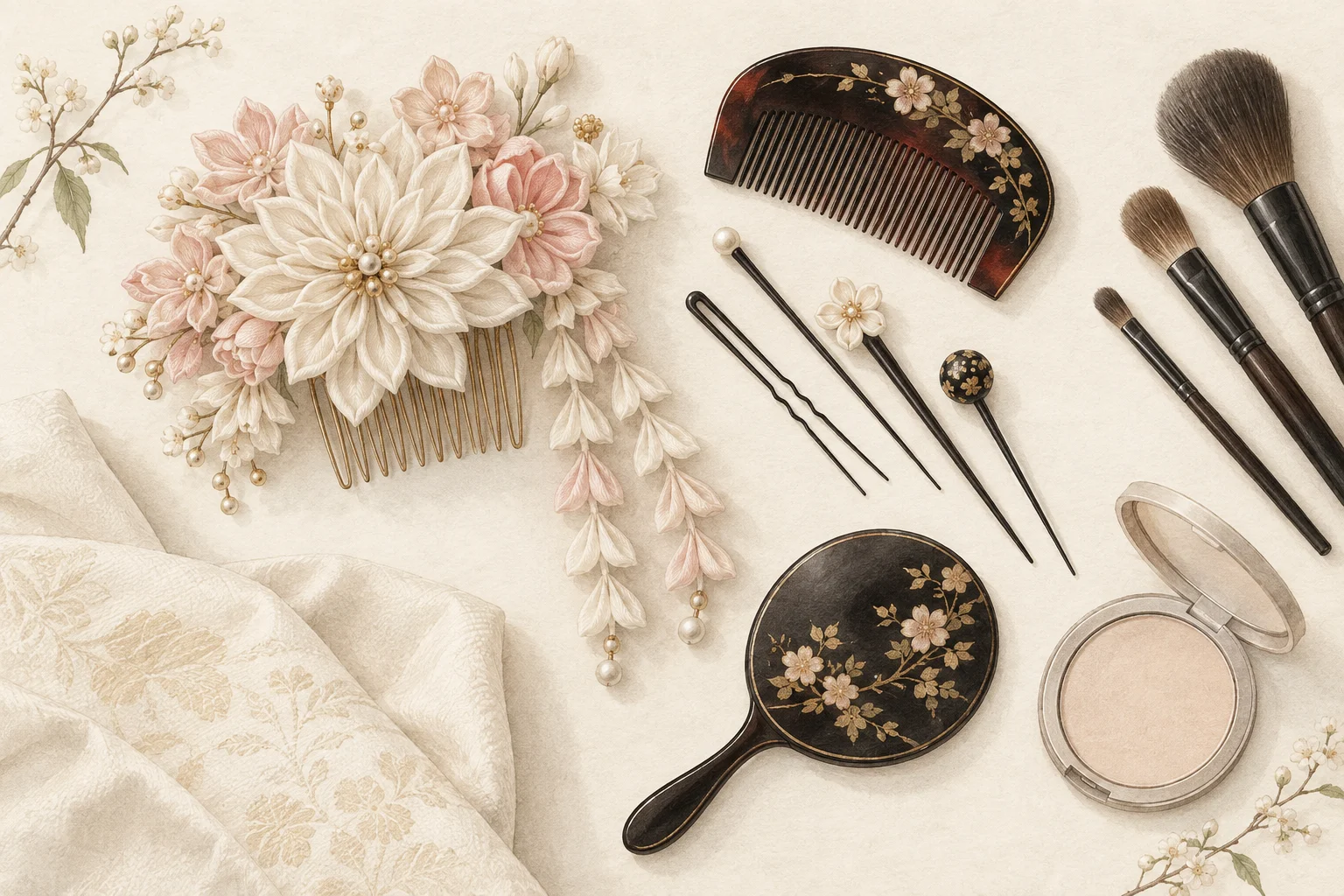
The classical pairing is the bunkin-takashimada (文金高島田) hairstyle — today almost always a fitted wig — with traditional white oshiroi (白粉) makeup. The modern alternative most studios now offer is Western-style styling with softer makeup, which photographs closer to how you normally look.
One constraint decides more than couples expect: the tsunokakushi is worn over traditional Japanese hair and is not paired with a Western updo, while the wataboshi can sit over Western styling using a fitting called a keeper. So the headpiece choice narrows the hairstyle choice, not the other way round. Our makeup and bridal hair guide works through the three makeup approaches and what to ask for.
Photographing white on white
Shiromuku is a demanding subject, and understanding why helps you read a portfolio and brief a photographer.
The pattern is woven rather than printed, so it has no color contrast at all — it exists only as texture. Texture needs raking light to appear. In flat overhead light at midday the brocade collapses into a blank white shape and the embroidery you chose the garment for simply does not register. Early morning and late afternoon sun arrives at a low angle and picks the weave out. This is the single strongest argument for accepting an unglamorous start time.
The second issue is exposure. A large white subject filling the frame pulls an averaging meter toward underexposure, which turns white silk gray and blocks up the shadows in the folds. Photographers who shoot shiromuku regularly expose for the garment and let the background sit brighter than a camera would choose on its own. It is a routine adjustment, but it is one of the things you are paying experience for.
The third is the background. White brocade reads best against something dark or saturated — vermilion shrine gates, dark timber, deep green moss, stone. Against a pale wall or a white-sky overcast day, the outline of the garment softens and the silhouette that makes shiromuku photographs recognizable is lost. When you look at a studio's portfolio, look at what they put behind the white.
Renting shiromuku for a photo session
For most couples reading this in English, the practical route to wearing shiromuku is a photo session: rental, dressing, styling and photography come as one package, with no ceremony required.
Among the 172 studios here that stock shiromuku, starting prices have a median of ¥89,000 and published ceiling prices a median of ¥216,150. Looking instead at the 47 individual plans published by 17 of those studios, the median plan is ¥146,500 and runs three hours. Plans that advertise two outfits — typically shiromuku plus a colored uchikake — have a median duration of four hours. These are advertised prices from studio listings, not a record of what anyone paid; the rental cost guide breaks the directory's price data down further.
Season is a real constraint with this garment specifically. The uchikake is several kilograms of padded brocade worn over a full kimono, and it is not a summer outfit — an outdoor session in a Japanese July or August means heat that affects both you and the styling. Winter is the easier extreme: the layers work in your favor, and the risk moves to your hands and feet, which are in white tabi and thin zori. Studios in colder cities plan around this, but it is worth asking how much of the session is actually outdoors before you book a February morning.
Two practical notes. The uchikake is heavy — several kilograms of brocade — and the trailing hem means an attendant adjusts it between shots, so shiromuku suits a paced, posed shoot better than a walking-heavy one. And if you want the wataboshi hood, say so when booking: not every plan includes it, and it changes which hairstyles are possible underneath. International couples can find the full booking process in our guide to kimono wedding photos for foreigners.
Where shiromuku photographs best
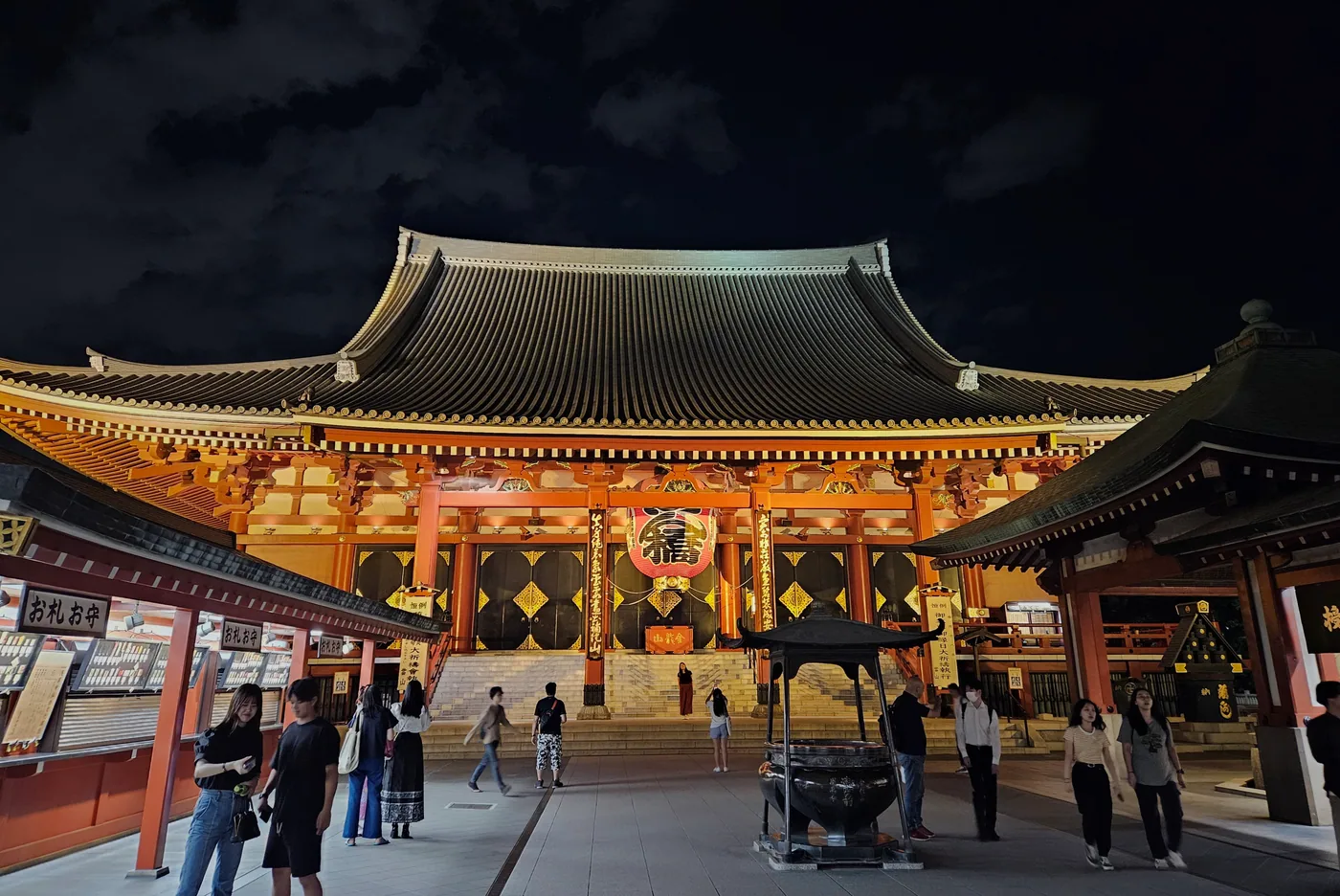

Shiromuku belongs to shrine architecture and gardens, which is why Kyoto and Tokyo's Asakusa district dominate shiromuku portfolios — 25 and 17 studios respectively in our directory, ahead of Nara at 11 and a long tail of cities with around 10 each. Shrine photography runs on permits your photographer arranges; policies differ by site, and each of our location guides publishes the current permit position honestly. Season changes the picture more than the outfit does; the best-season guide covers the trade-offs.
One thing worth checking early: of the 172 studios stocking shiromuku, 68 work in English and 3 in Korean. The garment is available almost everywhere. The language is not.
Wedding Planner's Notes
Four things worth deciding before the fitting. First, settle wataboshi or tsunokakushi before the hair consultation rather than at the fitting — the wig-versus-natural-hair decision hangs on it. Second, white-on-white embroidery disappears in flat midday light, so trust a photographer who pushes for early or late slots. Third, if you are shooting two outfits in one day, wear the shiromuku first: dressers layer the colored uchikake over the same kakeshita base, and the changeover runs faster in that order. Fourth, if a red hem line appeals to you, ask about aka-fuki specifically — it will not be offered by default.
Frequently asked questions
What does shiromuku literally mean?
白無垢 combines shiro ("white") and muku ("pure, unblemished"). The name refers to the rule that every visible element of the bridal ensemble — robe, kimono, obi, accessories — is white.
Is a shiromuku always completely white?
Almost, but there is a recognized exception. The aka-fuki shiromuku has a red lining folded back at the hem and sleeve openings, showing as a thin red line. It is a traditional variant dated by rental houses to around the Edo period, not a modern deviation, and it is worn at Shinto ceremonies as well as photo sessions.
Is shiromuku only worn at Shinto ceremonies?
No. It is the standard dress for shrine ceremonies, but photo-only sessions account for a large share of shiromuku wear today, and no ceremony or religious affiliation is required to rent one.
Do I need to choose a studio based on whether it has shiromuku?
Rarely. Of the 176 studios listed here, 172 stock it, and all 172 also stock iro-uchikake — no studio stocks one without the other. Choose on location, language and price, and leave the white-or-colored decision to the fitting. The exception is hikifurisode, stocked by only 19 studios.
What does the groom wear with shiromuku?
The formal counterpart is montsuki haori hakama (紋付羽織袴) — a black crested kimono jacket and striped hakama trousers, covered in our groom's attire guide. Note that 118 of the 172 shiromuku studios stock hakama, so roughly a third are set up for the bride only.
Can you buy a shiromuku instead of renting?
Purchase is possible through specialist kimono houses but rare for photo purposes: a full new ensemble costs many times a rental, and the pieces have little use afterwards. Nearly all couples — Japanese included — rent.
Is the white wig mandatory with shiromuku?
No. The bunkin-takashimada wig is the classical styling, but most studios offer Western updos or natural hair. The constraint to know is that the tsunokakushi headpiece requires traditional Japanese hair, while the wataboshi hood can be worn over Western styling with a keeper fitting.
Can pregnant brides wear shiromuku?
Generally yes — kimono dressing adjusts around a bump more flexibly than a fitted dress, and dressers pad and tie accordingly. Tell the studio at booking so they plan the fitting time and a rest-friendly schedule.
Choosing your shiromuku photographer
The garment rewards photographers who shoot it often: white-on-white exposure, hem handling and shrine permits are all craft knowledge, and a portfolio shows you quickly whether a studio has it. Start with the shiromuku studio listings — every profile shows published prices and a direct contact — and read the hair and makeup guide next if you are still picturing the styling.
Related guides
 Budget
Kimono Rental in Japan: What It Costs and Which Kind You Need
Illustrative image · Unsplash. Not a photo of the specific people, places or services discussed.
Kimono rental in Japan means two very different things: a ¥3,000 afternoon in Kyoto, or a bridal shoot from ¥88,000. What each costs, includes and takes.
Read the guide Style guide
Traditional Japanese Wedding Costumes: Who Wears What
Illustrative image · Unsplash. Not a photo of the specific people, places or services discussed.
Traditional Japanese wedding costumes for the bride, groom, family and guests: how formality ranks, what to avoid, and which garments you can actually rent.
Read the guide Location deep dive
Kawaguchiko Kimono Photoshoot: Mt Fuji's Iconic Vista
Illustrative image · Unsplash. Not a photo of the specific people, places or services discussed.
Plan a kimono photoshoot at Lake Kawaguchi with honest clear-Fuji probability guidance, Chureito Pagoda and Oishi Park location logistics, seasonal trade-offs, and access from Tokyo via the Fujikyu Express.
Read the guide