Japanese Lanterns for Weddings: Chochin Decor & Photo Ideas
A planner's guide to japanese lanterns for wedding decor and photoshoots — chochin types, traditional uses, modern reception ideas, and best photo locations.

Illustrative image · Unsplash. Not a photo of the specific people, places or services discussed.
Check current prices, availability and venue rules with the relevant studio or venue before booking.
Few objects say "Japanese wedding" at a glance like a row of glowing paper lanterns. Whether you are walking under a chochin-lit shrine approach in Tokyo, planning a reception in Kyoto, or staging a Japanese-themed wedding in California or London, japanese lanterns for wedding decor carry centuries of meaning while still photographing beautifully on a modern phone. This guide explains the main lantern types, how they are actually used at weddings in Japan, and how foreign couples can incorporate them — either by shooting at lantern-lit locations here or by sourcing authentic pieces for a venue abroad.
Chochin Lanterns — A Brief Cultural Background
The word chochin (提灯) refers broadly to a collapsible paper lantern with a bamboo spiral frame and a candle or, today, an LED light inside. Records of chochin in Japan date back to the late Muromachi period (15th–16th century), and by the Edo period (1603–1868) they were used for everything from samurai night travel to shop signage to festival illumination. The collapsible structure — light, portable, repairable — is what allowed them to spread so widely.
Two cultural threads matter for weddings. First, lanterns historically marked sacred or special space: shrine and temple approaches were lit with chochin during festivals and rituals, signaling that you were entering somewhere set apart. Second, family and house identity were displayed through lanterns — a household crest (kamon) or the name of a shop painted in black calligraphy on a white or red ground was a quiet but very public statement of identity. Both of those layers — sacred space and family identity — translate naturally to weddings, which are themselves a transition between households and, in the Shinto case, a ritual conducted in a marked-off sacred space.
Wedding Planner's Notes: When clients ask whether using japanese wedding lanterns at a Western venue is "cultural appropriation," I usually point out that chochin were a commercial and civic technology more than a sacred object — they lit streets, shops, and festivals for everyone. Using them as ambient decor at a respectful Japanese-themed celebration is generally well-received. Painting your surname on a pair of kamon-chochin in Japanese calligraphy is a lovely touch and well within taste.
Types of Lanterns Used at Weddings
"Lantern" in English collapses several distinct Japanese objects. For wedding planning purposes, you will encounter three main categories.
Chochin (提灯)
The collapsible paper lantern with a spiral bamboo or wire frame. This is what most people picture when they think of japanese wedding lanterns. Sub-types include:
- Bura-chochin (ぶら提灯): the round, hanging type seen in long rows at festivals and izakaya streets. The most common choice for reception ceilings.
- Odawara-chochin (小田原提灯): cylindrical, fully collapsible to a flat disc. Practical for travel and shipping abroad.
- Takahari-chochin (高張提灯): tall, narrow chochin mounted on a pole, used at shrine gates and traditional entrances. Striking for ceremony aisles.
- Kamon-chochin (家紋提灯): any chochin painted with a family crest. The traditional choice if you want a personalized, ancestral feel.
Andon (行灯)
A boxed lantern with a wooden or bamboo frame and paper or silk panels, designed to sit on the floor or a stand rather than hang. Andon throw a softer, more contained light than chochin and are the preferred choice for indoor reception tables, ceremony stages, and tatami rooms where a hanging fixture would feel wrong. If you have seen an old Japanese ryokan corridor with low-set glowing boxes along the wall, those are andon.
Bonbori (雪洞)
A small, often hexagonal lantern on a short stand or pole, traditionally associated with the Hina Matsuri (Girls' Day) doll display and with summer evening events. Bonbori are warmer in feel — almost decorative rather than functional — and are widely used at outdoor shrine weddings, garden receptions, and the lantern paths of summer matsuri festivals.
For most couples, chochin do the heavy lifting (ceiling rows, photo backdrops, gate lines), andon do the table-level intimacy work, and bonbori add seasonal warmth at the edges of a garden or path.
Where Chochin Are Used at Traditional Japanese Weddings
At a traditional Shinto ceremony (shinzen-shiki), you will not necessarily see chochin inside the shrine hall itself — the interior is usually lit by natural light and ceremonial fixtures. But chochin appear in several places around the wedding day:
- Shrine approach (sandō): at older shrines like Yasaka-jinja in Kyoto or Asakusa's Sensō-ji, the approach is lined with hanging chochin year-round. These form the natural backdrop for arrival shots and group photos.
- Lantern halls and ceremony gates: some shrines maintain a dedicated lantern offering hall (e.g., Kasuga Taisha in Nara) where the corridors of donated lanterns become a striking environment for the bridal procession.
- Reception entrance: at ryokan, traditional restaurants (ryotei), and historic venues, a pair of kamon-chochin flanking the entrance is a customary touch — sometimes carrying both families' crests as a quiet symbol of the union.
- Family altars and Buddhist ceremonies: for the less common Butsuzen-shiki (Buddhist wedding ceremony, held at a temple or family Buddhist altar at home), lanterns may appear as part of the temple's standing ritual furniture rather than wedding-specific decor.
For couples shooting at heritage venues, see our companion guides on Shinto wedding ceremonies and shrine etiquette for how to coordinate respectfully with the venue.
Modern Reception Lantern Decor
Outside of religious ritual, the reception is where japanese lantern decor wedding ideas have the most freedom. Three formats dominate today.
Hanging chochin canopies
Rows or grids of round paper lanterns suspended from a ceiling, beam, or outdoor frame. White lanterns with a single calligraphic character (kotobuki 寿 for "celebration" is the classic) read as elegant rather than touristy. Red lanterns photograph dramatically but veer festival-like; mix sparingly. Restaurants and event spaces in Tokyo, Kyoto, and Kanazawa frequently rent these as part of in-house decor packages.
Table-level andon and small bonbori
For seated receptions, low andon lanterns at each table create the warm, candle-glow lighting that flatters skin and food. This works especially well in tatami rooms and Japanese garden venues where overhead lighting would feel out of place. Pair with simple ikebana arrangements rather than tall floral centerpieces.
Paper lantern walks and welcome paths
A line of standing lanterns (chochin on poles, or bonbori on stakes) leading guests from the gate to the venue is one of the most photogenic decor choices and surprisingly low-budget when planned in advance. It also gives the photographer a built-in "arrival" sequence — guests walking the path, the couple stepping out at the end of it. Pairs beautifully with Kanazawa, Kamakura, and traditional Kyoto townhouse (machiya) venues.
If you are extending this aesthetic to a reception or after-party, our guide to Japanese wedding cake traditions covers how the dessert table can stay in the same visual register.
Lanterns as a Photo Element — Best Locations and Times of Day
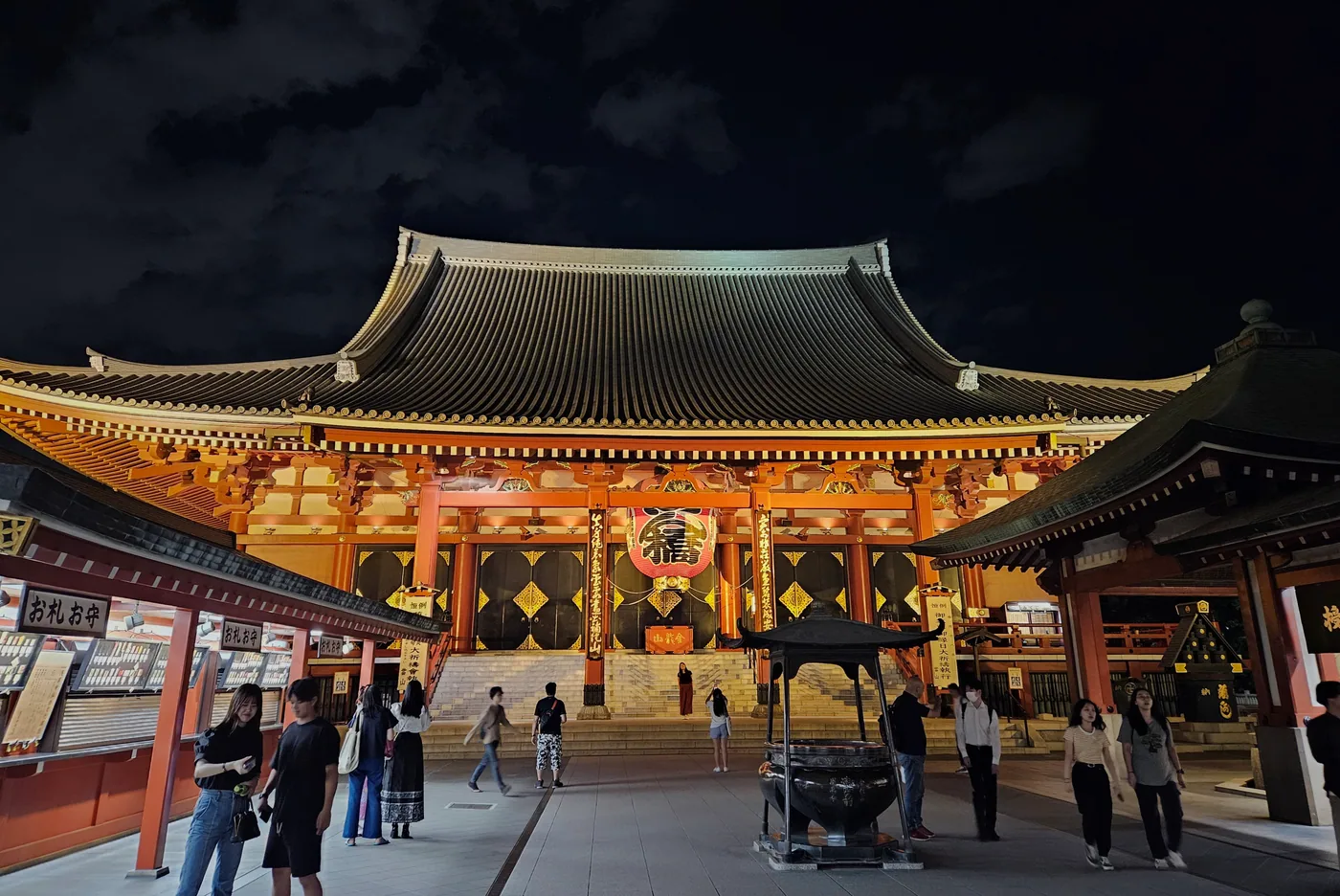

For couples planning a kimono pre-wedding shoot specifically around paper lanterns japanese wedding aesthetics, location and timing matter more than the lanterns themselves.
Location | Lantern type | Best time |
|---|---|---|
Yasaka-jinja, Kyoto | Hanging chochin rows along approach | Just after sunset (blue hour) |
Hanamikoji & Pontocho alleys, Kyoto | Restaurant chochin lining alleys | Dusk to early evening |
Sensō-ji & Asakusa, Tokyo | Large gate chochin (Kaminarimon) | Daytime for color; night for illumination |
Kasuga Taisha, Nara | Stone & bronze lantern corridors | Setsubun & Obon evenings (lit) or midday (texture) |
Higashi Chaya, Kanazawa | Chaya district chochin & street lamps | Late afternoon into dusk |
For lantern photography specifically, the magic window is the 20–30 minutes around sunset — late enough that the lanterns glow visibly, early enough that there is still ambient light in the sky to expose your kimono. Full-night shots can look striking but require a photographer comfortable with low-light kimono work, and many shrines limit access after dark.
If you are choosing a base city for this look, see our city guides on Kyoto studios, Kanazawa, and Asakusa. For broader timing strategy, best season for a kimono photoshoot covers when lantern festivals overlap with comfortable shoot weather.
For Foreign Couples — Renting vs Buying Japanese Lanterns
If you are bringing chochin lanterns wedding decor to a venue outside Japan, the rent-or-buy decision usually comes down to three factors: budget, sentimental value, and shipping.
Renting in your home country
Wedding decor rental companies in major cities (Los Angeles, New York, London, Sydney, Singapore) increasingly stock paper lantern inventory — usually plain white or red round chochin. This is the cheapest path and removes shipping logistics, but customization (your family crest, calligraphy) is rarely available.
Buying authentic from Japan
Workshops in Gifu (Gifu-chochin) and Kyoto produce handmade chochin and will ship internationally. A plain handmade bura-chochin typically runs ¥3,000–¥10,000; kamon or calligraphy customization adds ¥5,000–¥15,000 depending on complexity. Allow 3–8 weeks for production on custom orders.
Mid-range: mass-produced imports
For couples who want the look without the heirloom price, mass-produced printed chochin (typically made in China or Vietnam for the Japanese restaurant market) are widely available online for ¥800–¥2,000 each. Quality is uneven; check whether the paper is real washi or synthetic, and whether the frame is bamboo or wire.
If you are building a fully Japanese-themed wedding abroad, our guide on Japanese-themed weddings abroad covers how to integrate lanterns with the other decor and ceremonial elements without overdoing any single motif.
Lantern Festivals Worth Timing Your Visit Around
If your travel dates have any flexibility, several lantern festivals in Japan are worth building a pre-wedding trip around. They are not wedding-specific but produce some of the country's most photographable lantern environments.
- Mantoro at Kasuga Taisha, Nara — early February (Setsubun) and mid-August (Obon): roughly 3,000 stone and bronze lanterns lit simultaneously along the shrine corridors.
- Nagasaki Lantern Festival — Lunar New Year (late January or February): Chinatown-rooted festival with around 15,000 lanterns; spectacular but extremely crowded.
- Mitarashi-sai at Shimogamo Jinja, Kyoto — late July: bonbori-lit evening at one of Kyoto's oldest shrines.
- Toro Nagashi (floating lanterns) — various dates in August: lanterns floated on rivers for Obon. Hiroshima's is the most famous; the imagery is somber-beautiful and not strictly celebratory.
- Gion Matsuri evening events, Kyoto — July: the float (yamaboko) districts are lit with chochin in the evenings leading up to the main parade.
Bear in mind that festival weeks bring crowds, high accommodation rates, and limited photographer availability. The visual payoff is real, but for an actual private shoot you may prefer the day before or after the peak.
Frequently Asked Questions
Are japanese lanterns for wedding decor considered religious?
Generally no. Chochin and andon were everyday civic objects — used for streets, shops, festivals, and travel. They acquire ritual weight only in specific shrine and temple contexts. Using them as ambient decor at a reception or shoot is not religiously sensitive.
Can I have my family name or initials painted on a chochin?
Yes, and this is one of the most personal touches available. Kamon-chochin (crest lanterns) traditionally carry a family crest; modern workshops will paint surnames in Japanese calligraphy or Roman letters on request. Budget 3–8 weeks of lead time for custom work shipped abroad.
Are LED chochin acceptable, or do they need to use real flame?
LED is standard at modern weddings and at most venues in Japan today. Many shrines explicitly require LED (or no light at all) inside historic structures for fire safety. Battery-operated LED candles inside a paper chochin give the closest look to flame.
What is the difference between chochin and andon?
Chochin are collapsible, hang or stand on poles, and are designed to be carried or displayed at height. Andon are boxed, sit on the floor or a table, and throw a softer, contained light. Receptions often use both — chochin overhead, andon at table level.
Will paper lanterns look out of place at a Western venue?
Not if you commit to the look. A few isolated chochin among Western florals can read as random; a deliberate path of lanterns, a hung canopy, or matched andon at each table reads as intentional design. The trick is repetition.
Can foreign couples include lanterns in a Japanese shrine wedding?
Lanterns are usually part of the shrine's existing fixtures — you do not bring your own into the ceremony hall. Discuss with the venue whether a kamon-chochin can be displayed at the entrance or used in the family photo, which some shrines permit.
Where can I shoot a kimono photo with chochin lanterns at night?
Yasaka-jinja in Kyoto, Sensō-ji in Asakusa, and Higashi Chaya in Kanazawa all maintain illuminated lantern environments after dark. Coordinate with your photographer on permitted areas and gear; tripods are often restricted.
Do paper lanterns photograph well in daylight?
Yes — but as graphic, textural elements rather than as light sources. Daytime chochin shots emphasize the calligraphy, color, and repetition of the lanterns. For glow, shoot in the blue-hour window after sunset.
Related Reading
If you are building a kimono shoot or Japanese-themed wedding around lantern aesthetics, these companion guides will help round out the planning.
- Japanese Wedding Cake Traditions — how dessert and the sweets table fit a lantern-lit reception.
- Japanese-Themed Wedding Abroad — integrating lanterns with other decor and ritual elements at a venue outside Japan.
- Japanese Wedding Traditions and Customs — the broader ritual context lanterns sit inside.
- Shinto Wedding Ceremonies — how lanterns appear at shrine weddings specifically.
- Asakusa Kimono Shoot Guide — chochin-heavy Tokyo location with year-round lantern access.
- Top Kyoto Studios 2026 — for couples building a Kyoto lantern-evening shoot.
Planning a Lantern-Lit Kimono Shoot?
If chochin lanterns are central to the look you want, the photographer choice matters more than the lanterns themselves — low-light kimono work, blue-hour timing, and shrine permit knowledge are specialist skills. Browse the curated Wasou Wedding Japan photographer directory filtered by city, or start with our English-speaking kimono photographers shortlist if you want a planning conversation in English. For couples weighing where to base the shoot, Tokyo vs Kyoto compares the two strongest lantern-density cities.
Locations in this guide
Related guides
 General guide
Shrine Permit Application Process: Japan Wedding Photo Guide
Illustrative image · Unsplash. Not a photo of the specific people, places or services discussed.
Shrine permit application process for Japan wedding photography: studio-handled timelines, Meiji Jingu and Kyoto fees, equipment restrictions, and lead times.
Read the guide General guide
Editing Turnaround Time: Japan Wedding Photographer Delivery
Illustrative image · Unsplash. Not a photo of the specific people, places or services discussed.
Editing turnaround time for Japan wedding photographers runs 4-6 weeks standard, with peak season delays, express options, and album binding adding more.
Read the guide General guide
Naorai Post-Ceremony Meal Japan: Sacred Sequel Guide
Illustrative image · Unsplash. Not a photo of the specific people, places or services discussed.
Naorai post ceremony meal japan wedding guide: the 30-60 minute shared kaiseki and sake ritual that closes a Shinto wedding before any reception begins.
Read the guide