Chirimen Crepe Silk in the Bridal Kimono: Tango, Hama & Rinzu
Chirimen crepe silk bridal kimono guide: Tango and Hama production regions, rinzu lustrous weave, texture, drape, and cost (¥800K-¥3M+ bridal-grade).

Illustrative image · Unsplash. Not a photo of the specific people, places or services discussed.
Check current prices, availability and venue rules with the relevant studio or venue before booking.
When a bridal stylist hands you a kakeshita kimono and you run your palm across the surface, the fabric you feel — soft, slightly pebbled, with a drape that follows the body rather than standing stiffly away from it — is almost certainly chirimen (縮緬). Produced in Kyoto's Tango Peninsula and Shiga's Nagahama since the 17th century, chirimen is the crepe silk that gives Japanese bridal kimono its characteristic hand. Most international brides photograph chirimen without knowing the name. This guide explains what chirimen is, how it differs from the more famous Nishijin-ori, and what to ask when comparing studio inventory.
What Chirimen Is
Chirimen is a woven silk fabric distinguished by a textured, slightly pebbled surface — what English textile vocabulary calls "crepe." Unlike smooth satin or the brocade weight of Nishijin-ori, chirimen has a quiet visual irregularity created entirely by the structure of the weave, not by surface dyeing or embroidery. The technical signature: tightly-twisted weft (horizontal) threads woven against an untwisted warp, then finished with hot water that causes the twisted threads to contract. The contraction pulls the surface into thousands of tiny irregularities — the "shibo" texture that bridal stylists describe as iki (粋) refined.
For bridal use, chirimen functions as a base fabric. It is dyed, painted (yuzen technique), embroidered, or woven into patterned variants (rinzu, shibori). What the bride and the photographer respond to is the underlying drape and the way light catches the slightly uneven surface — soft, with no harsh highlights.
The Tightly-Twisted Weft Technique
The defining process is the twist. Standard kimono silk uses weft threads twisted at roughly 800-1,200 turns per meter. Chirimen weft threads are twisted to 2,500-4,000 turns per meter — three to five times tighter. The warp threads remain untwisted.
During weaving, the high-twist weft is held in tension. After the cloth comes off the loom, it is soaked in hot soapy water (yu-nori). The water releases the tension, the over-twisted threads contract, and the entire surface puckers into the characteristic shibo. The cloth shrinks by 20-30% during this finishing step — which is why chirimen fabric is woven significantly wider than the final kimono dimension.
Wedding Planner's Notes: When you see a bridal stylist gently tug a kakeshita sleeve and the fabric springs back into shape rather than holding the stretched line, that elasticity is the chirimen weft doing its work. It is the same property that lets the kimono drape over a curved hip without pulling or pleating awkwardly. Photographers who have worked extensively with chirimen kakeshita will angle the body slightly off-axis to let the fabric fall naturally.
Two Main Production Regions
Chirimen production is concentrated in two historic regions, each with a distinct technical lineage and house style. Bridal-grade chirimen kimono almost always comes from one of these two areas.
Tango Chirimen (Kyoto)
Produced on the Tango Peninsula along the northern Kyoto Prefecture coastline, Tango chirimen has the longer documented history — production records date to the early 1700s. The region's humid coastal climate suits silk processing, and the local water (low mineral content) is considered ideal for the hot-water finishing step. Tango chirimen tends toward heavier weights and is favored for formal bridal kakeshita, court attire, and high-end formal wear. Several Tango weavers hold "Traditional Craft" designation from METI.
Hama Chirimen (Shiga)
Produced around Nagahama on the eastern shore of Lake Biwa in Shiga Prefecture, Hama chirimen developed slightly later — late 17th century — and is known for a finer, lighter texture and particularly bright white base color. Hama production specializes in plain-weave chirimen used as the base for yuzen-zome dye work. Many of the most elaborate yuzen kakeshita combine Kyoto yuzen dyeing on Hama chirimen base.
For an international bride choosing a kakeshita, the practical distinction is usually invisible — the stylist will not announce "this is Tango" or "this is Hama." But if you ask, premium studios will know the provenance of every formal-grade piece in their inventory.
Subtypes
Within the chirimen family, three subtypes appear most often in bridal kimono. The differences affect both appearance and price.
Rinzu (Lustrous Patterned)
Rinzu (綸子) is the most sophisticated chirimen subtype for bridal use. It combines the crepe-twist weft with a damask-style patterned weave, producing a fabric where geometric or floral motifs (cranes, pine, plum, cloud patterns) appear in subtle relief against a lustrous ground. The pattern is woven into the fabric, not printed or dyed on. Rinzu has a quiet shine — the eye registers a pattern but the lighting feels soft rather than reflective. Most of the highest-grade kakeshita use rinzu base.
Shibori (Resist-Dyed)
Shibori chirimen is the resist-dyed variant. Hundreds or thousands of tiny knots are tied by hand into the chirimen surface before dyeing, creating dappled patterns where the dye cannot penetrate. Full shibori kakeshita — entirely covered in hand-tied resist patterns — are among the most labor-intensive bridal kimono produced. Production time: 12-18 months for a single garment.
Plain Chirimen
The unpatterned base fabric, used either alone for lower-formality kimono or — much more commonly for bridal — as the canvas for yuzen-zome hand-painted dyework. Most yuzen kakeshita you will see in studio inventory uses plain Hama or Tango chirimen as its base. See our separate explainer on yuzen-zome Kyoto dye art.
Tactile Properties — Why Chirimen Drapes Well
Two technical properties drive chirimen's reputation among bridal stylists.
First, elastic drape. The high-twist weft gives the fabric a stretch-and-return quality that flat woven silk does not have. Over the multi-layer wedding kimono structure (juban, kakeshita, uchikake), this means the outer layer settles around the body's curves rather than standing rigidly. For brides with smaller frames, this drape is what makes the layered silhouette wearable without overwhelming the body.
Second, light absorption. The pebbled shibo surface scatters light rather than reflecting it sharply. The result: in photography, chirimen kakeshita reads as a soft, even tone in both natural light and on-camera flash. There are no harsh highlights or hard edges. Photographers describe chirimen as "forgiving" — the fabric does not reveal small wrinkles or fold lines that would show up on satin or stiff brocade.
Use in Bridal Kimono
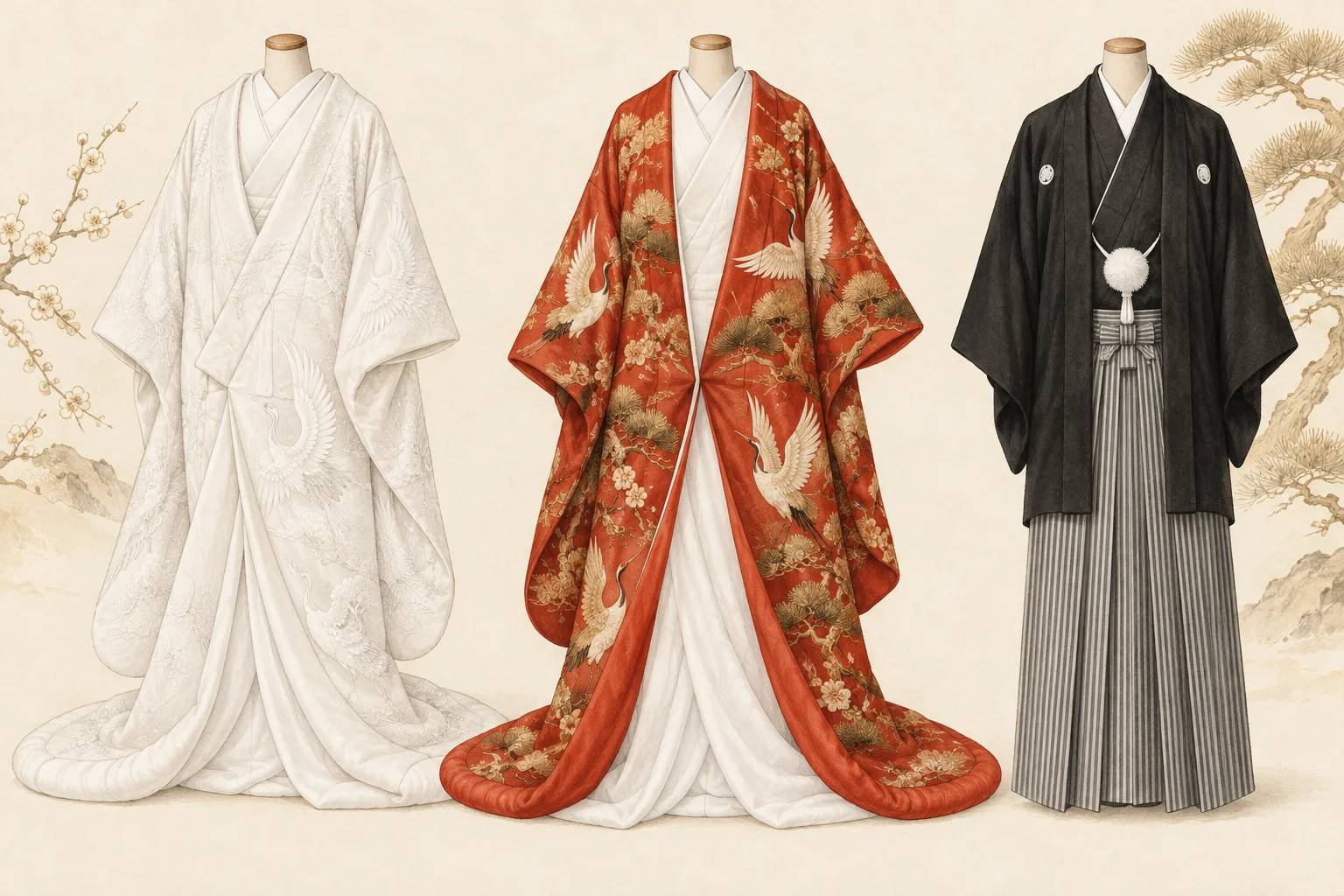
Within the bridal ensemble, chirimen appears in three places.
Kakeshita (Outer Bridal Kimono)
The kakeshita — the colored kimono worn either as the primary garment or under an uchikake — is the bridal piece most often made of chirimen. Premium kakeshita combines rinzu chirimen base with yuzen-painted motifs and hand embroidery. Mid-range kakeshita uses plain chirimen with yuzen patterns. See shiromuku vs iro-uchikake for the role of kakeshita in the layered ensemble.
Obi Linings
While the visible face of a bridal obi is usually Nishijin-ori brocade, the inside lining and the supporting structure often use plain chirimen. The chirimen lining adds drape and prevents the stiff brocade from chafing — practical comfort during a full shoot day.
Hair Ornament Base Material
Tsumami-zaiku hair ornaments (kanzashi made from folded silk petals) use small squares of chirimen as the petal material. The crepe texture catches light differently than smooth silk, giving the ornament a soft visual depth. See our tsumami-zaiku bridal hair ornament guide for the full craft context.
Comparing Chirimen to Nishijin-Ori
Couples sometimes ask whether chirimen and Nishijin-ori are alternatives. They are not — they serve different functions in the same ensemble. Nishijin-ori is the brocade tradition of Kyoto's Nishijin district, used primarily for obi and uchikake. Its character is structured, geometric, gold-thread brocade — heavy, formal, and dimensional.
Property | Chirimen | Nishijin-Ori |
|---|---|---|
Weave structure | Crepe (high-twist weft) | Brocade (supplementary weft, often metallic) |
Surface | Pebbled, soft | Smooth or raised pattern |
Weight | Medium, drapes well | Heavy, holds shape |
Bridal use | Kakeshita, lining | Obi, uchikake |
Visual effect | Soft, light-absorbing | Reflective, dimensional |
In a full bridal ensemble, chirimen and Nishijin-ori usually appear together: the kakeshita layer in chirimen, the obi layer in Nishijin brocade.
Comparing Chirimen to Yuzen Dyeing Base
A common source of confusion: yuzen and chirimen are not the same thing. Yuzen is a dyeing technique — hand-painted resist-dye motifs applied to silk. Chirimen is the underlying woven fabric. Most premium yuzen kakeshita is yuzen dyework on a chirimen base. The two names refer to different layers of the same garment. When a studio describes a kimono as "Kyoto yuzen," ask what base fabric was used; almost invariably the answer is chirimen — usually Hama chirimen for the brightest white ground. See yuzen-zome Kyoto dye art.
Cost (¥800K–¥3M+ Bridal-Grade Chirimen Kimono)

Bridal-grade chirimen kimono pricing reflects both the fabric production cost and the dyework or weaving complexity applied on top.
Category | Typical price range | Description |
|---|---|---|
Plain chirimen kakeshita (basic dye) | ¥250,000-¥600,000 | Single-color or simple pattern; mid-range rental inventory |
Yuzen on chirimen base, partial pattern | ¥800,000-¥1,500,000 | Hand-painted yuzen motifs on shoulders and hem |
Yuzen on chirimen, full pattern + embroidery | ¥1,500,000-¥2,500,000 | All-over hand-painted yuzen with sumi-coloring and gold-thread embroidery |
Rinzu chirimen with full yuzen + shibori detail | ¥2,500,000-¥3,000,000+ | Top-tier formal kakeshita; one-of-a-kind production |
For rental, expect 10-15% of the purchase price per day, depending on the studio's depreciation policy. International brides almost always rent for a single shoot day; purchase is rare unless the kimono will be passed down through generations.
Workshop Tours in Tango and Nagahama
Couples interested in seeing chirimen production firsthand can visit working ateliers in both regions. Tango is a two-hour drive from Kyoto City or three hours by train via the Kyoto Tango Railway. Nagahama is 40 minutes by JR from Kyoto Station. Both regions have small workshop centers offering 60-90 minute introductory tours and short hands-on dye experiences. Reservations required, English support varies — premium studios coordinating a Kyoto wedding can sometimes arrange a private bilingual tour as a pre-shoot cultural day.
Photographing the Chirimen Surface Texture
Two photographic considerations matter for chirimen kakeshita.
Lighting angle. Side-lighting at a 30-45 degree angle from the bride's body reveals the shibo texture; flat front-lighting flattens it. Studio photographers will angle a single softbox or use natural window light from one side. Outdoor shoots in midday overhead sun can lose the texture entirely — early morning or late afternoon side-light is preferable.
Detail shots. A close-up frame of the chirimen surface (sleeve corner, obi-musubi knot edge, lining where it peeks from the collar) belongs in any premium kimono album. See our detail shot checklist for the standard frame list. Texture-emphasis detail shots typically use a 90mm or 100mm macro lens at f/4-f/5.6, focused at the front edge of the fabric weave.
Frequently Asked Questions
Is all bridal kimono made of chirimen?
No. The uchikake (outer overcoat) layer is usually Nishijin-ori brocade, and shiromuku in pure white silk often uses smooth woven silk or a lighter chirimen than the kakeshita. The kakeshita layer is where chirimen appears most consistently.
Can chirimen be machine-washed if it gets stained during the shoot?
No. Chirimen requires professional dry-cleaning by a specialist kimono cleaner. The crepe structure can collapse if exposed to standard washing. Studios carry insurance for rented bridal-grade kimono, but you should still avoid food, makeup transfer, and outdoor mud puddles during a shoot.
How do I tell chirimen from polyester in a rental inventory?
Touch test: real silk chirimen has a slight warmth and elasticity that polyester crepe does not match. Visual test: the shibo texture on silk is irregular at the millimeter level; polyester crepe has a regular, mechanical pattern. Studios at the premium tier will state material on the rental tag.
Is the texture of chirimen affected by humidity during a summer shoot?
Mildly. High humidity can slightly soften the shibo. Most shoots in July-August benefit from indoor air-conditioned dressing rooms before the bride steps outside. Texture recovers fully once the kimono is rested overnight in low-humidity storage.
Are there modern chirimen variants that mix silk with synthetic fibers?
Yes, mid-range rental inventory sometimes uses silk-rayon or silk-polyester blends that mimic the chirimen surface at lower cost. The drape is close but not identical. For an international bride shooting in a top-tier studio, the inventory is almost entirely pure silk.
Does the chirimen surface change visibly after one shoot day?
Not in normal use. Bridal kimono is worn for 4-8 hours per shoot, then professionally rested. With proper care, a chirimen kakeshita maintains its texture across hundreds of rental days.
Can I request a specific chirimen region when booking a Kyoto studio?
You can ask whether the studio's high-end inventory includes Tango or Hama chirimen, and most will know. Specifying a particular region is unusual for international rentals, but premium Kyoto studios stocking ¥1.5M+ kakeshita will typically be transparent about provenance if asked.
Find a Studio with Chirimen Inventory
Chirimen is rarely highlighted in studio marketing materials — the fabric works quietly under the dyework and embroidery that get the visual attention. But the fabric quality is what separates a kimono that drapes beautifully across an eight-hour shoot from one that does not. When you tour our curated photographer directory, the studios at the premium tier will know exactly what is in their inventory and where it was woven. Ask. They will appreciate the question.
To extend the materials and finishing thread: read our companion piece on the kaku-obi men's bridal obi for the matching groom's accessory, and our explainer on tsumami-zaiku bridal hair ornaments for the folded-silk craft that uses chirimen as petal material.
Related guides
 Style guide
Yuzen-Zome Kyoto Dye Kimono: Kyo vs Kaga Yuzen Schools
Illustrative image · Unsplash. Not a photo of the specific people, places or services discussed.
Yuzen zome kyoto dye kimono guide: rice-paste resist technique, Kyo-yuzen vs Kaga-yuzen schools, cost ranges, rental options, certification marks.
Read the guideStyle guideNishijin-Ori Kimono Fabric Kyoto: 1,200 Years of Weaving
Illustrative image · Unsplash. Not a photo of the specific people, places or services discussed.
Nishijin-ori kimono fabric Kyoto guide: how 1,200-year-old jacquard weaving produces bridal obi and kakeshita priced from ¥300K to ¥3M+ per piece.
Read the guide Style guide
Shibori Dye Bridal Kimono: Kanoko, Arashi & Kyo-Kanoko
Illustrative image · Unsplash. Not a photo of the specific people, places or services discussed.
Shibori — bound, folded, or clamped before dyeing — produces some of Japan's highest-priced bridal kimono. A practical guide to kanoko, arashi, itajime, Kyo-Kanoko, what's rentable for foreign couples, and how to photograph the three-dimensional surface.
Read the guide