Karuizawa Kimono Photoshoot: Highland Resort & Stone Church
Karuizawa kimono photoshoot planning guide — St Paul's Church, Shiraito Falls, Lake Kumoba, cool summers, and shinkansen access from Tokyo in 60 minutes.

Illustrative image · Unsplash. Not a photo of the specific people, places or services discussed.
Check current prices, availability and venue rules with the relevant studio or venue before booking.
Karuizawa is the location we suggest when a couple wants a kimono shoot environment that does not look like any other Japanese destination. The highland resort sits sixty minutes from Tokyo by shinkansen, holds altitude near 1,000 meters, and was built around imported Western architecture by missionaries and Tokyo families escaping summer heat from the 1880s onward. The visual result — stone churches, larch forests, mountain lakes — reads as Japan only if you know where to look. Couples shooting here in shiromuku or iro-uchikake get a frame that pairs Japanese textile with European resort architecture, which is the specific reason Karuizawa exists in our recommendation set.
Why Karuizawa for a Kimono Photoshoot
Most couples come to Japan with Kyoto and Tokyo on the itinerary. We recommend Karuizawa as a third location when one of three conditions applies. First, the trip falls in July or August, when Kyoto routinely passes 35°C and outdoor kimono shoots stop being comfortable; Karuizawa sits 8-10°C cooler. Second, the couple wants a shoot environment that does not appear on every "kimono in Japan" Pinterest board — the stone-and-larch aesthetic here is unusual. Third, the couple is combining the kimono shoot with a relaxed two-night stay, which Karuizawa supports better than the typical day-trip locations.
The town's relationship to Western architecture matters for the visual frame. Antonin Raymond — Czech-American architect who worked under Frank Lloyd Wright on the Imperial Hotel before establishing his own practice in Tokyo — designed several Karuizawa structures, including the 1935 St Paul's Catholic Church that anchors most editorial Karuizawa wedding photos. The juxtaposition (uchikake with stone wall, cedar shingles overhead) is what photographers come here for.
Wedding Planner's Notes: Karuizawa is not a substitute for Kyoto. It is a complement when the season or the couple's pace makes Kyoto difficult. If the trip is in late October during peak autumn foliage and you have only one shoot location to choose, Kyoto still wins. If the trip is in late July and you want to be outdoors in a kimono without overheating, Karuizawa wins clearly.
Top Locations
Karuizawa's shoot locations cluster in three zones: Kyu-Karuizawa (the old town with the Ginza shopping street and most churches), Naka-Karuizawa (mid-town, the Hoshino Resort area), and the lakes/falls outside town. A half-day shoot typically covers two zones; a full-day shoot covers all three.
St Paul's Catholic Church (1935 Antonin Raymond Design)
St Paul's Catholic Church is the architectural anchor of Karuizawa wedding photos. Antonin Raymond designed it in 1935 in a triangular wooden form with stone walls and a high-pitched cedar shingle roof. The interior is dim, intimate, and frequently photographed; the exterior reads as a small mountain church set among larches. The church remains an active Catholic parish and conducts actual weddings, so access for photoshoots is restricted — you cannot enter the interior with a kimono shoot crew without specific arrangement, and exterior photography is generally permitted but should not interfere with services or weddings in progress.
For couples specifically searching "karuizawa st pauls church wedding," the practical position is this: the church does conduct Catholic weddings for parishioners and pre-arranged couples, but a kimono photoshoot at the exterior is a different transaction. Photographers who work this location regularly know the schedule and will time the shoot to avoid Sunday morning mass and active wedding bookings. Tuesday through Thursday mid-morning is the standard slot.
Shiraito Falls
Shiraito-no-taki sits 25 minutes by car from central Karuizawa. The falls are 70 meters wide and 3 meters tall — a low, curved wall of water emerging from volcanic rock rather than a single dramatic plunge. The visual works for kimono shoots because the curved water line provides a textured backdrop without dominating the frame. The walk from the parking lot is short (5 minutes on a paved path), making it kimono-feasible for brides in geta. Light is best mid-morning before the sun crosses overhead and creates harsh contrast on the water.
Lake Kumoba (Reflection Shots)
Lake Kumoba — known locally as Suwa-no-ike — is a small still-water lake ten minutes by car from the station, surrounded by deciduous forest. The water is glass-flat on calm mornings, which is the reason photographers schedule reflection shots here. The classic frame is the couple seated on the wooden boardwalk with the inverted forest mirrored in the water; it works in any season but is strongest during fresh green (May-June) and autumn foliage (mid-October). Wind picks up after 10am in most seasons, so reflection windows are early.
Old Karuizawa Ginza Street
Kyu-Karuizawa Ginza is the historic shopping street running through the old town. Cedar-shingle storefronts, wooden signage, and the original Mikado Coffee building give the street a frame that suggests prewar Karuizawa. For kimono shoots, the street works for walking shots and storefront framing; it is busy with tourists during summer high season (July-August weekends) and the May Golden Week period, so early-morning slots before 9am are the planner's preference. Off-season weekday mornings, the street is quiet enough for unobstructed shooting.
Hoshino Resort Property
The Hoshino Resort area in Naka-Karuizawa includes Harunire Terrace (a wooden boardwalk built on an existing harunire tree stand), the small Karuizawa Kogen Church (stone-construction wedding chapel), and the Tombo-no-yu hot spring complex. Harunire Terrace is publicly accessible and photogenic for kimono walking shots; the chapels are inside the resort property and require permission for photo use. If you are staying at one of the Hoshino properties (Hoshinoya Karuizawa, Bleston Court, or Hotel Bleston Court), the resort can arrange chapel access for guests; non-guest photographers cannot generally use the chapels.
Wedding Planner's Notes: Couples sometimes ask about combining a Karuizawa Kogen Church ceremony with the kimono shoot in town. The chapels at the Hoshino properties are designed for Christian-style ceremonies — they do not host Shinto rites. If you want both a Shinto ceremony and a Karuizawa kimono shoot, the practical path is a separate Shinto ceremony in Tokyo (Meiji Jingu, for example) and the photo session in Karuizawa as a distinct day.
Best Season (Cool Summer Is the Draw)
Karuizawa's climate is the structural reason it exists as a shoot location. The town sits at 940 meters elevation; summer highs average 26°C (against 33°C in Tokyo and 35°C in Kyoto), and August nights drop to 16-18°C. For a kimono shoot in July or August, this is the difference between a comfortable outdoor session and a physically punishing one. Heat exhaustion is a real concern for brides in shiromuku or full uchikake — the layered silk holds heat, and Tokyo afternoon temperatures regularly create medical risk during outdoor shoots in August.
Season | Months | Temperature | Frame | Notes |
|---|---|---|---|---|
Late spring | May-June | 15-22°C | Fresh green, azaleas, rhododendrons | Lake Kumoba reflections strongest |
Summer | July-August | 20-26°C | Deep green larch, lakeside | The primary reason to choose Karuizawa |
Autumn | Mid-Oct-early Nov | 8-18°C | Foliage peak, koyo on larch and maple | Booking competition with Nikko/Kyoto |
Winter | Dec-March | -5 to 5°C | Snow possible, bare branches | Many shops closed, road access limited |
The booking pattern matters: Karuizawa is a domestic Japanese resort with high July-August demand from Tokyo families. Hotels in central Karuizawa book six months ahead for August weekends. If you are planning a summer Karuizawa kimono shoot, the hotel booking constrains the trip more than the photographer booking does.
Cost vs Tokyo/Kyoto

Karuizawa is more expensive than Tokyo or Kyoto for a kimono photoshoot, primarily because the photographer pool is smaller and most photographers travel from Tokyo. Expect a 20-40% premium over Tokyo rates for a comparable shoot package.
Component | Tokyo/Kyoto | Karuizawa | Note |
|---|---|---|---|
Half-day kimono package | ¥120,000-¥180,000 | ¥150,000-¥220,000 | Includes 1 kimono, hair/makeup, dressing, 2 hours shoot |
Full-day package | ¥200,000-¥350,000 | ¥250,000-¥420,000 | 2 kimono, multiple locations |
Photographer travel from Tokyo | Included | ¥20,000-¥40,000 | Often a separate line item |
Hotel (per night, August) | ¥25,000-¥60,000 (Tokyo) | ¥35,000-¥120,000 | Hoshinoya is the upper anchor |
For benchmarking against Kyoto specifically, see top Kyoto studios 2026 and kimono photo cost 2026. Karuizawa pricing sits closer to premium Kyoto studios than to mid-tier Tokyo studios — the location premium is real and reflects logistics, not styling quality.
Travel from Tokyo (Shinkansen 1 Hour)
Karuizawa is one of the fastest shinkansen destinations from Tokyo. The Hokuriku Shinkansen connects Tokyo Station to Karuizawa Station in 60-75 minutes depending on service (Kagayaki services are the fastest but do not stop at Karuizawa; Hakutaka and Asama services stop). The standard fare is ¥6,070 reserved seat one-way, ¥5,490 unreserved. JR Pass covers the route.
Practically, this means a Karuizawa kimono shoot can be done as a same-day trip from Tokyo if you accept a tight schedule. The realistic morning is: 7am shinkansen out of Tokyo, 8:15am arrival, 9am hair/makeup start at studio, 11am-2pm shoot, 4pm shinkansen back. We do not recommend this pace — the kimono dressing process and the travel between locations leaves no buffer for delays — but it is technically possible.
The strong recommendation is one or two overnights. Karuizawa station has direct hotel pickup services for major resorts, and renting a car at the station opens the falls and lake locations that are 15-25 minutes outside town. Without a car, you depend on the limited Seibu bus network or per-shoot taxi arrangement with the photographer team.
Combining with Mt Fuji Trip
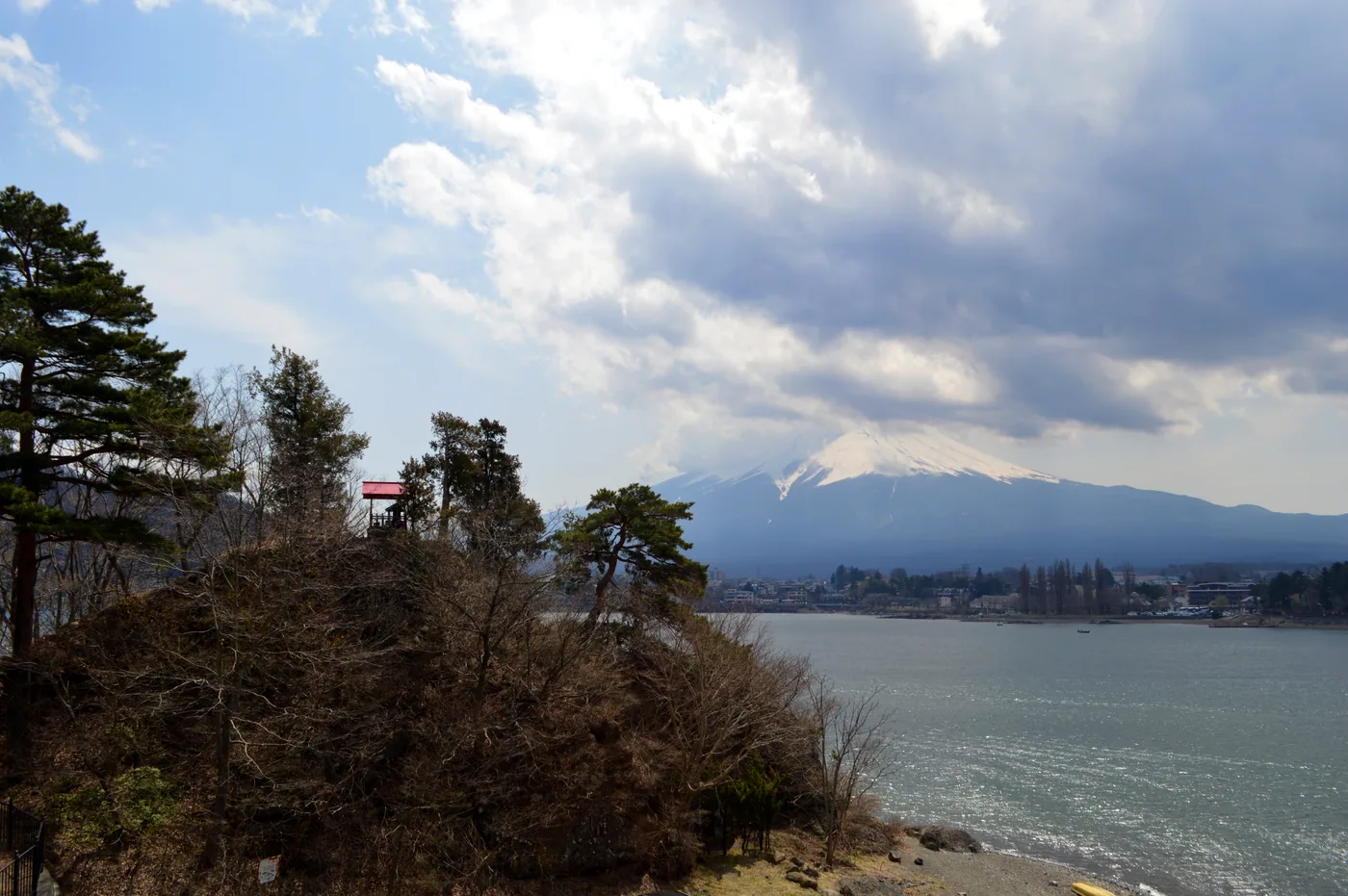
Karuizawa and Mt Fuji sit on opposite sides of Tokyo, so a combined trip needs Tokyo as the pivot point. The practical itinerary is: arrive Tokyo, two nights in Karuizawa, return to Tokyo (1 hour), then onward to Kawaguchiko or Fujinomiya for the Fuji shoot (2-3 hours from Tokyo by train/bus). Total trip length needs to be 7-8 nights minimum to make this work without rushing. For the Fuji portion of the planning, our reference is Mt Fuji & Shizuoka kimono photoshoot.
An alternative pairing many couples consider is Karuizawa + Nikko Toshogu kimono photoshoot. Both are 1-2 hours from Tokyo on different shinkansen lines, both offer mountain-resort aesthetics, and both are coolest in summer. The contrast (Karuizawa's Western-architecture frame vs Nikko's ornate Edo-era shrine architecture) gives a kimono trip two visually distinct shoot days. Nikko's autumn foliage peak is mid-October, slightly earlier than Karuizawa's, so a four-day combined autumn trip is logistically workable.
For couples interested in including a serene historic-temple location instead of Nikko's Tokugawa shrine complex, Nara kimono photoshoot offers a different texture entirely — deer-park, Daibutsu, Kasuga Taisha — and pairs better with Kyoto than with Tokyo-based itineraries.
Studios Karuizawa Photographers Use
The Karuizawa studio infrastructure is smaller than Tokyo or Kyoto. There are two practical patterns for sourcing kimono and styling:
Pattern 1: Tokyo-based photographer with mobile dressing. The photographer team travels from Tokyo with the kimono, hair stylist, and dresser (kitsuke specialist). Dressing happens at your hotel room or the photographer's rented base. This is the most common arrangement and gives the widest selection of kimono — Tokyo rental houses carry hundreds of uchikake options that no Karuizawa-local studio matches.
Pattern 2: Karuizawa-local photo studio. A small number of local photo studios offer kimono rental and shoots, primarily for the domestic resort wedding market. Selection is narrower (usually 20-50 kimono total), but the local team knows the locations intimately and avoids the Tokyo travel charge. This pattern is more common for last-minute or budget-sensitive bookings.
For most international couples, Pattern 1 is the right answer: the kimono selection, the English-speaking team likelihood, and the visual quality consistency are higher. The travel charge is a fair price for that consistency. To compare English-speaking teams across Japan, see best English-speaking kimono photographers.
Wedding Planner's Notes: Karuizawa shoots in July-August book out by April or May, both because of photographer availability and because hotel rooms are scarce. For a summer Karuizawa shoot, start with the hotel — book the room first, then secure the photographer to match. For autumn shoots, the photographer is the constraint and the hotel can wait.
Frequently Asked Questions
Can we have an actual Catholic wedding ceremony at St Paul's Karuizawa?
The church does conduct Catholic weddings, but the requirements are not light. Generally, at least one partner must be Catholic with parish standing, or the couple must complete pre-marital preparation through the parish. The Karuizawa parish is not set up for tourist destination weddings the way the Hoshino-property chapels are. If you want a wedding-style ceremony at an Antonin Raymond stone church, the more direct route is a non-denominational ceremony at one of the resort chapels (Karuizawa Kogen Church, Stone Church Uchimura Kanzo Memorial) where the booking is handled through the resort wedding desk.
Is there a tea ceremony venue we can incorporate into a Karuizawa shoot?
Karuizawa has fewer dedicated tea-ceremony venues than Kyoto, but several traditional Japanese inns and a small number of cultural facilities offer guided sessions for guests. A formal Urasenke or Omotesenke chano-yu session runs 60-90 minutes and would be arranged separately from the kimono shoot, not on the same day. If a tea-ceremony moment is important to you, Kyoto remains the stronger choice; Karuizawa's strength is the Western-architecture frame.
Will a hair and makeup trial be available before the shoot day?
For Karuizawa shoots arranged through Tokyo-based teams, a pre-trial generally requires you to be in Tokyo at least one day before the shoot. Some premium teams offer paid pre-trials at ¥10,000-¥30,000; many do not offer trials at all and rely on referenced styling photos at booking. Bring 3-5 reference images of the hair and makeup look you want, and confirm with the team at booking whether they can match it on the shoot day without a trial.
What happens if our Karuizawa photographer cancels or no-shows?
For reputable Tokyo-based teams working Karuizawa, no-show is extremely rare. Standard backup is a partner photographer assignment from the same studio (with notice 24-48 hours in advance for non-emergency reasons), or rescheduling. For weather-related issues — common in Karuizawa given mountain rain patterns — the standard contract clause is one free reschedule within a defined window. Confirm the backup terms in writing at booking, not at the shoot.
Is winter a viable season for a Karuizawa kimono shoot?
December through March is technically possible but operationally hard. Daytime temperatures sit below 5°C, snow accumulates on roads, and many of the off-town locations (Shiraito Falls access road, parts of Lake Kumoba's boardwalk) close or become difficult. Many seasonal shops close from January through March. If snow is the visual you want, see our snow wedding photoshoot in Japan article for locations with better winter shoot infrastructure than Karuizawa.
Can we shoot in yukata in Karuizawa during summer?
Yukata is appropriate for summer Karuizawa, though uchikake and shiromuku remain the editorial standard for wedding-style photography. The Hoshino Resort area provides yukata to guests, which works for casual couples shots but is not the same garment a wedding photographer would use. For a formal yukata shoot, a Tokyo-based team can bring wedding-grade summer kimono with proper accessories. See summer yukata kimono photoshoot for guidance on the distinction.
How does Karuizawa compare to a Kyoto shoot in late October?
Late October is Kyoto's strongest month — autumn foliage peaks mid-November in Kyoto, but the shoulder week of October 25-November 5 sees fewer tourists than the peak weekends. Karuizawa peaks earlier (mid-October) and the larch foliage is golden rather than maple-red, a different palette. If you are choosing one location for late October, Kyoto wins for most couples. If you can do both, Karuizawa first then Kyoto extends your foliage window by a week.
Book a Karuizawa Photographer
Karuizawa rewards couples who treat it as its own destination rather than a Tokyo day-trip annex. The summer-cool advantage, the Antonin Raymond architecture, and the lakeside reflections are the three reasons it works, and they need a two-night minimum to use properly. Match the hotel booking to the season, then match the photographer to the hotel — that is the order that succeeds in Karuizawa.
Browse our directory of photographers covering Karuizawa and the broader Tokyo-region resort destinations at photographers. For adjacent locations on the same shinkansen network, see Nikko Toshogu kimono photoshoot and Nara kimono photoshoot.
Locations in this guide


Related guides
 Location deep dive
Sapporo Kimono Photoshoot: Hokkaido Jingu, Otaru & Snow
Illustrative image · Unsplash. Not a photo of the specific people, places or services discussed.
Sapporo kimono photoshoot guide: Hokkaido Jingu, Otaru Canal, Moerenuma Park, lilac in May, snow in February, and cold-weather kimono layering tactics.
Read the guide Location deep dive
Kawaguchiko Kimono Photoshoot: Mt Fuji's Iconic Vista
Illustrative image · Unsplash. Not a photo of the specific people, places or services discussed.
Plan a kimono photoshoot at Lake Kawaguchi with honest clear-Fuji probability guidance, Chureito Pagoda and Oishi Park location logistics, seasonal trade-offs, and access from Tokyo via the Fujikyu Express.
Read the guide Location deep dive
Kagoshima Sakurajima Kimono Photoshoot: Volcano & Garden
Illustrative image · Unsplash. Not a photo of the specific people, places or services discussed.
Kagoshima Sakurajima kimono photoshoot guide: active volcano backdrop, Sengan-en Shimazu garden, ash-day strategy, seasons, photographer access from Tokyo.
Read the guide