Australian Couple Kimono Photoshoot Japan: Sydney-Tokyo Planning
Australian couples planning Japan kimono shoots: direct flights, AUD-JPY rates, Niseko ski pairings, reverse-season advantages, and outdoor-first studio selection guidance.

Illustrative image · Unsplash. Not a photo of the specific people, places or services discussed.
Check current prices, availability and venue rules with the relevant studio or venue before booking.
Australian couples — a sizeable annual cohort by studio booking estimates — arrive in Japan with a recognisable planning profile. Direct flights from Sydney, Melbourne, and Brisbane land in Tokyo in just under ten hours. A 90-day visa-free stay covers everything. And unlike European or American visitors, Australians tend to pair the kimono shoot with something physical: Niseko powder skiing in January, a Mt Fuji Five Lakes hike in October, the Tasman-coast-to-Hokkaido-coast contrast they have grown up imagining. The brief in this article is built for that planning shape.
Why Australian Couples Choose Japan
The Sydney-to-Tokyo route is among the leading outbound long-haul leisure flights from Australia in any given year, behind the US West Coast. For couples planning a wedding-adjacent experience — a prewedding shoot before a backyard reception, an anniversary kimono session, an elopement pivot — Japan sits at a convenient sweet spot. The time-zone shift is mild (one to two hours depending on Sydney vs Perth and daylight saving), the flight is overnight in one direction, and the cultural distance feels genuinely foreign rather than a North-American replay.
Among Australian inbound traffic to Japan, the couple-and-prewedding segment has grown noticeably since 2023, with studios in Tokyo, Kyoto, and Hokkaido reporting that AU-passport bookings now make up a meaningful share of foreign volume. The category is small relative to Greater China or Korea, but it punches above its weight on outdoor and adventure-paired shoots.
Wedding Planner's Notes. Australians ask pointed questions about UV index, sun protection, and outdoor heat — more so than many other nationalities we work with. This is not a cultural quirk — it is a practical inheritance. Plan summer shoots before 9am or after 4pm; Tokyo June-August heat humidity routinely exceeds anything Australian skin tolerates well in formal kimono layers.
Direct Flight Options (Sydney/Melbourne/Brisbane → Tokyo 10hr)
Three major carriers run direct routes from Australia to Tokyo year-round. Qantas operates daily flights from Sydney and Melbourne into Haneda, with the Sydney service typically the earlier overnight departure. Japan Airlines runs reciprocal Tokyo-Sydney and Tokyo-Melbourne routes, also into Haneda, with Brisbane added as a seasonal service. ANA's Sydney-Haneda route fills the third major slot. Flight time averages 9 hours 45 minutes northbound and 10 hours 15 minutes southbound, depending on jet stream.
Haneda is the preferred arrival airport for couples shooting in central Tokyo. The Keikyu Line from Haneda to Shinagawa runs in 15 minutes, compared with the 60-90 minute haul from Narita. For Kyoto-first itineraries, several couples route Sydney-Tokyo-shinkansen-Kyoto on the arrival day; this is brutal on jetlag and we generally recommend a one-night Tokyo decompression first.
Origin | Carrier | Arrival | Time |
|---|---|---|---|
Sydney (SYD) | Qantas / JAL / ANA | Haneda (HND) | 9h 45m |
Melbourne (MEL) | Qantas / JAL | Haneda (HND) | 10h 30m |
Brisbane (BNE) | JAL (seasonal) | Narita (NRT) | 9h 30m |
Perth (PER) | via SIN or HKG | Haneda (HND) | 14-18h transit |
Perth couples almost always route through Singapore on Singapore Airlines or Hong Kong on Cathay Pacific, which adds layover time but often nets a lower fare. Adelaide and Hobart couples follow Melbourne. The visa-free 90-day window comfortably covers any multi-stop itinerary built around the shoot.
AUD–JPY Exchange Rate Considerations
The AUD-JPY rate is a notably volatile pairing affecting Australian travellers. Over the past five years it has swung between roughly 85 and 110 yen per Australian dollar, a 25 percent range. For a kimono shoot package quoted at ¥300,000, that difference is AUD 2,725 versus AUD 3,530 — a real planning variable.
Several studios in Kyoto and Tokyo will lock a quote in JPY at booking time, with a 50 percent deposit due upfront. The advantage is certainty; the disadvantage is that if the AUD strengthens between booking and shoot date, you have already locked in the worse rate. A growing number of premium studios now offer alternative invoicing in AUD at the prevailing rate plus a 1.5-2 percent conversion fee, which we generally recommend if your shoot is more than four months out.
For day-of expenses, the practical reality is that Japan still operates a substantial cash economy outside major hotels and chains. Carry ¥30,000-50,000 in cash for taxi, shrine donation, and small-vendor purchases on shoot day. ATM withdrawals at 7-Eleven and Japan Post locations accept Australian-issued cards reliably; suburban bank ATMs do not.
Reverse-Season Advantage (Aussie Summer = Japan Winter)
This is a planning variable Australian couples should weigh carefully. Australian summer (December through February) coincides with Japanese winter — and Japanese winter, especially January and February, is the country at its most visually distinctive for kimono photography.
The advantages: snow backdrops are reliable in Hokkaido and northern Honshu; plum blossoms open in late February in Kyoto and Tokyo, offering a 2-3 week early-spring window before peak sakura crowds; flight prices, while not cheap, avoid the European summer-holiday peak that dominates European outbound demand; and your home-country reception, if planned for autumn, sits 8-10 months later — comfortable runway for prewedding photo delivery.
The trade-offs: temperatures in Hokkaido routinely drop below -10°C; Tokyo morning lows hover near 0°C in January. Kimono layers — uchikake brocade, padded juban, momihaba — provide more insulation than they look, but exposed hands and ears are real. Studios in Hokkaido typically supply faux-fur outer haori for between-take warmth, but the bride's neck and inner-collar area will be visible. Plan for shorter outdoor sessions (20-30 minutes per location) and longer indoor warming intervals.
Wedding Planner's Notes. The Australian instinct to "push through" outdoor cold often underestimates how kimono fabric breathes. Silk uchikake is gorgeous in snow but does nothing for windchill. A two-hour Hokkaido session in -8°C with 15 km/h wind is harder than the equivalent temperature in still air. We brief Australian couples to allocate 50 percent buffer time and not to expect to capture every planned location on the first try.
Combining Niseko Skiing + Snow Kimono Shoot
Niseko's January-February peak ski season is a frequently requested pairing among Australian couples. The setup typically runs 7-10 days total: 4-5 days skiing in Niseko or Furano, transfer to Sapporo or further south for a 1-2 day kimono shoot block, then optional Tokyo extension.
Sapporo-based studios with experience in snow shoots are the practical anchor. The drive from Niseko to Sapporo runs 2.5-3 hours via Route 230; couples staying in Niseko-Hirafu often arrange a one-night Sapporo hotel stay on either side of the shoot to compress travel. Otaru, a coastal port town 40 minutes northwest of Sapporo, offers heritage canal-and-warehouse backdrops that contrast nicely with the powder-paddock look of Niseko itself.
For ski-and-shoot pairings, the logistical challenge is hair and skin. Ski helmets press hair flat, ski goggles leave temporary tan-line marks even in overcast conditions, and dry winter air cracks Australian skin used to humid coastal climates. Studios recommend booking the kimono shoot before the ski block, not after — schedule it for day 2 or 3 of arrival, when jet lag has settled but ski-rink wear has not yet shown. For more on cold-weather planning, see our Hokkaido kimono photoshoot guide and the broader snow wedding photoshoot overview.
Top Locations Among Australian Couples
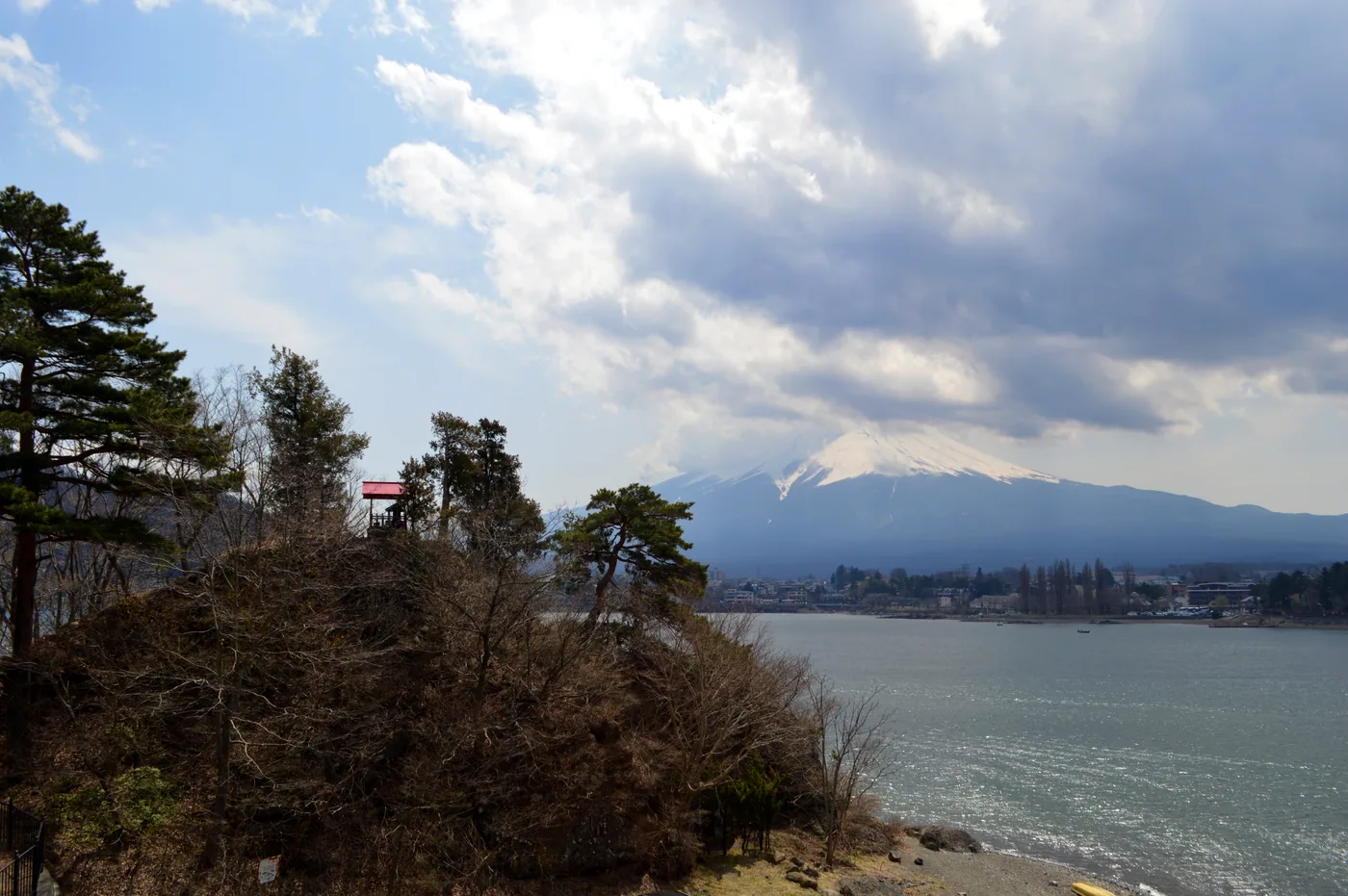

Hokkaido (Snow Backdrop)
Hokkaido draws a meaningful share of Australian bookings compared with the overall foreign average. The combination of ski culture familiarity, snow-shoot novelty (Australia gets snow only at altitude in Victoria and Tasmania), and direct Sapporo flights from Sydney during winter season all contribute. Sapporo, Otaru, and Lake Toya are among the frequently requested locations. Furano lavender fields are an alternative summer pairing rarely chosen by Australians.
Mt Fuji Area (Hakone, Kawaguchiko)
The Mt Fuji backdrop carries enormous symbolic weight in pre-trip imagination, and Australian couples often build a day-trip or overnight around Kawaguchiko or the Chureito pagoda. The practical caveat: Fuji is hidden by cloud roughly 60 percent of any given day, and the clearest viewing windows are October-February mornings before 9am. For autumn foliage paired with Fuji, late October to early November is the narrow target window. See our Mt Fuji kimono photoshoot location guide for detailed planning.
Kyoto (Cultural Anchor)
Kyoto remains a cultural reference point Australian couples cite when describing why Japan rather than Korea or Thailand. The shrine-and-temple density, the Higashiyama walking district, and the bamboo grove imagery do real work in pre-trip storytelling. Australian couples lean toward the Kiyomizu approach (with realistic expectations about permit limits — see our shrine etiquette guide), Maruyama Park during cherry season, and the Philosopher's Path during autumn. November weather in Kyoto suits the Australian sense of mild-but-crisp.
Outdoor-Focused Studios — Where to Look
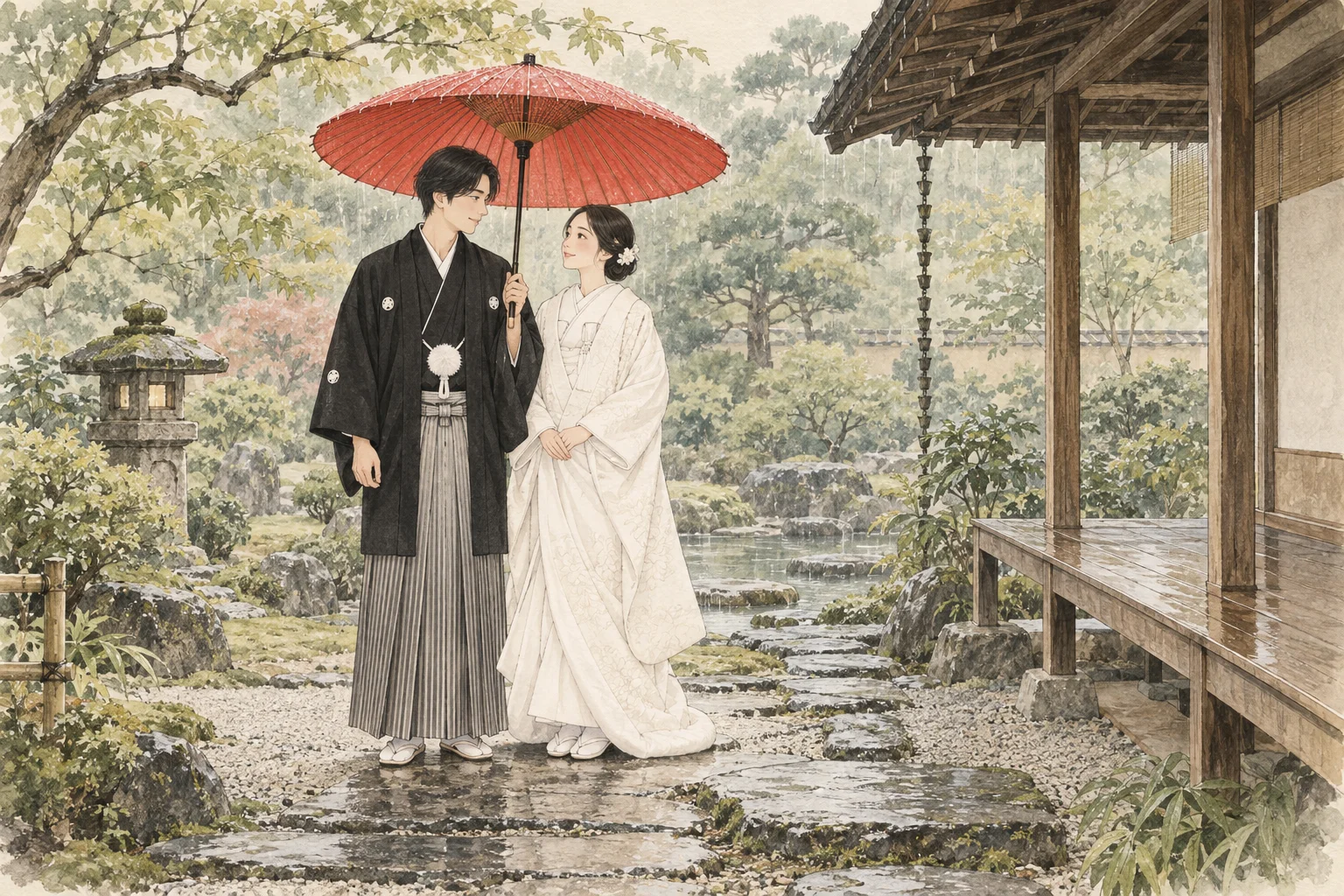
Australian couples consistently rate outdoor-capable studios higher than studio-bound photographers. The selection criteria worth screening for: experience with snow or cold-weather shoots (ask for portfolio samples from January-February); mobile-styling capacity (hair and obi-tying on location, not just in a fitting room); transport handling for tatami sandals across uneven ground; and English-language coordination at the photographer-assistant level, not just the booking-manager level.
Tokyo studios with strong outdoor portfolios tend to cluster around Asakusa and Meiji Jingu specialisations. Kyoto outdoor capacity is broader — most Kyoto studios are outdoor-first by tradition. Hokkaido outdoor-snow specialists are a smaller pool, perhaps 8-12 named studios across Sapporo and surrounds. Our best English-speaking kimono photographers guide filters across these categories.
English-Default Communication
Australian couples expect English-default communication and are often surprised when the actual photographer (as distinct from the booking manager) does not speak English. This gap is a frequent source of shoot-day friction.
The practical workaround: confirm at booking time who will be physically present on the shoot day, and whether that person will conduct direction in English or through a translator. Studios advertised as "English-speaking" sometimes mean a coordinator handles email; the photographer themselves works through gestures and a translator app. This works for the actual photography (visual direction is universal) but creates problems for tone, mood-shift, and family-photo coordination.
For mixed-family shoots where Australian relatives are travelling alongside, a dedicated translator add-on (¥30,000-¥60,000 per day) is worth the cost. See our multilingual wedding photography guide for the broader picture.
Cost Comparison vs Australian Wedding Studios
Australian wedding photography has trended significantly more expensive over the past five years. A full-day Sydney or Melbourne wedding package in 2026 sits at AUD 6,500-12,000, with prewedding-only sessions running AUD 2,500-4,500. Japanese kimono shoot packages, even at premium tiers, often deliver a comparable or lower out-the-door cost despite including styling, location permits, and English coordination.
Tier | Australian Studio (AUD) | Japanese Kimono (AUD equiv at 100¥/AUD) |
|---|---|---|
Entry / shorter session | AUD 2,500-3,500 | AUD 1,800-2,800 |
Mid premium | AUD 4,000-6,500 | AUD 3,000-4,500 |
Full premium | AUD 7,000-12,000 | AUD 5,500-8,500 |
The numbers above bundle the kimono rental, hair and makeup, photographer fee, and standard edited delivery for the Japan side. Travel — flights and accommodation — sits outside the comparison; once those are added, the total trip cost rises substantially but couples typically rationalise it as part of a holiday rather than a single-line photography expense. For full cost breakdown, see our kimono photo cost guide for 2026.
Multi-Stop Honeymoon Patterns
Single-country Japan honeymoons are dominant among Australian couples in this segment — the majority of bookings — but multi-stop patterns are recognisable. The three main pairings: Japan plus Korea (Seoul 2-3 days), Japan plus Taiwan (Taipei 2-3 days, often weather-driven from winter Japan to milder Taipei), and Japan plus Bali or Vietnam (warm-weather decompression after cold Japan).
Honeymoon-purpose couples tend to book the kimono shoot late in the trip rather than early. This is the opposite of what we generally recommend. By day 10 of a 12-day trip, jet lag, eating fatigue, and accumulated tiredness show in face and posture. Schedule the shoot in the first half of the trip when energy and excitement are highest.
For comparison with other English-speaking markets, see our companion articles on American couples planning Japan kimono shoots and British couples planning Japan kimono shoots.
FAQ
Is there a specific season Australian couples should avoid?
Late June through early September is the period most Australians struggle with. The combination of monsoon humidity (tsuyu through mid-July) and post-tsuyu heat (mid-July to early September) is genuinely difficult in formal kimono layers. We see real shoot-day discomfort issues, including faints and heat exhaustion, in this window. December-March or October-November are the comfortable bookends.
Will an Australian wedding be legally recognised if we marry in Japan?
A symbolic kimono photoshoot has no legal weight in either country. For an actual legal ceremony in Japan, Australians need a Certificate of No Impediment from the Australian Embassy in Tokyo, then must file at a Japanese municipal office. The marriage is legally recognised in Australia upon return. Most Australian couples opt for separate legal-and-symbolic ceremonies — see our getting married in Japan as a foreigner guide.
How does jet lag affect shoot quality?
Sydney-to-Tokyo crosses one or two time zones, but the overnight direction means most couples arrive tired. We strongly recommend booking the shoot for day 3 of arrival at the earliest, never day 1 or day 2. Skin condition, eye puffiness, and energy level all visibly recover by day 3-4.
Can we bring our own wedding rings or jewellery for the shoot?
Yes, and many studios encourage this for personalisation. Australian couples sometimes bring native materials — opal pendants, indigenous-art-inspired pieces — that pair interestingly with kimono accessories. Discuss in advance so the stylist can coordinate kanzashi and obi-jime against your pieces rather than fighting them.
What about adventure pairings beyond Niseko skiing?
Mt Fuji climbing (July-August official season only), Kumano Kodo pilgrimage hiking, and Shikoku 88-temple cycling are the three adventure pairings we see most often from Australians. Each adds 4-7 days to the itinerary and pairs awkwardly with same-trip kimono shoots due to the physical wear. Treat them as separate trips or book the shoot before the adventure leg.
Are there Australian-owned wedding planners in Japan?
A small number — roughly 3-5 named operations across Tokyo, Kyoto, and Niseko — work specifically with Anglo-market couples and have Australian or New Zealand staff. Their pricing premium runs 15-25 percent above local-only operators but the communication friction reduction is real, particularly for couples planning a full hiroen reception rather than just a photoshoot.
How early should we book from Sydney or Melbourne?
For peak season shoots (cherry blossom in early April, autumn foliage in late November, Niseko snow in January-February), book 9-12 months out. For shoulder seasons (May, June, September, early October), 4-6 months is comfortable. Walk-in capacity at quality studios is essentially zero — even mid-week midwinter shoots are usually booked 2-3 months ahead.
Find an Outdoor-Capable Studio for Your Sydney-to-Tokyo Shoot
Australian couples plan around variables most other nationalities do not weight as heavily: reverse-season opportunities, AUD-JPY volatility, ski-and-shoot logistics, and outdoor-first preferences. The studio shortlist that matches this profile is narrower than the general English-speaking pool — but it exists, and the right match makes a measurable difference on the day.
Browse our curated directory of English-speaking kimono photographers, filtering for outdoor portfolio depth and cold-weather experience. For the matching American-market and British-market planning briefs, see our American couple Japan kimono photoshoot guide and our British couple Japan kimono photoshoot guide.
Related guides
 General guide
Kimono Wedding Photos for Foreigners: How It Works in Japan
Illustrative image · Unsplash. Not a photo of the specific people, places or services discussed.
Yes, foreign couples can have kimono wedding photos taken in Japan — no residency, ceremony or Japanese required. How booking, fittings, pricing and permits actually work.
Read the guide General guide
How to Book a Kimono Photographer in Japan from Abroad: Step-by-Step
Illustrative image · Unsplash. Not a photo of the specific people, places or services discussed.
A complete step-by-step guide for foreign couples booking a kimono pre-wedding photographer in Japan from overseas. Contracts, payments, communication.
Read the guide General guide
Multilingual Wedding Photography Japan: Beyond English
Illustrative image · Unsplash. Not a photo of the specific people, places or services discussed.
A planner's audit of which languages — Korean, Mandarin, Spanish, French, JSL — Japanese kimono studios actually support, plus interpreter costs and when to hire one.
Read the guide