Tsurugaoka Hachimangu
Tsurugaoka Hachimangu anchors a straight approach through central Kamakura. The shrine asks for advance permission for photography beyond personal viewing, including professional work and photography for publication. Its notice explicitly includes Dankazura, the raised path through the middle of Wakamiya Oji. Share your intended image use with the shrine before hiring a photographer. Shrine photography notice
Follow the approach from the station to the hillside
The shrine gives a ten-minute walk from the east exit of JR Kamakura Station. From the second torii, or shrine gate, the raised Dankazura runs toward the shrine. Inside the grounds, look for the Maiden, a pavilion used for ritual dance, below the broad stone staircase. The main sanctuary, called Hongu or Jogu, stands above it. If someone in your party needs to avoid steps, confirm which lower areas and routes suit them before setting a meeting point. Official access guide · Shrine grounds map
Point on the route | What to look for |
|---|---|
Dankazura | The raised central path leads the eye toward the shrine. Include it when specifying the proposed photography location. |
Maiden and lower grounds | Look up from the dance pavilion toward the stairs and upper shrine. Ceremonies can change how visitors are directed through this area. |
Hongu | At the top, look for the elaborately decorated front and the axial view back toward the city. |
Read the upper shrine as Edo-period architecture
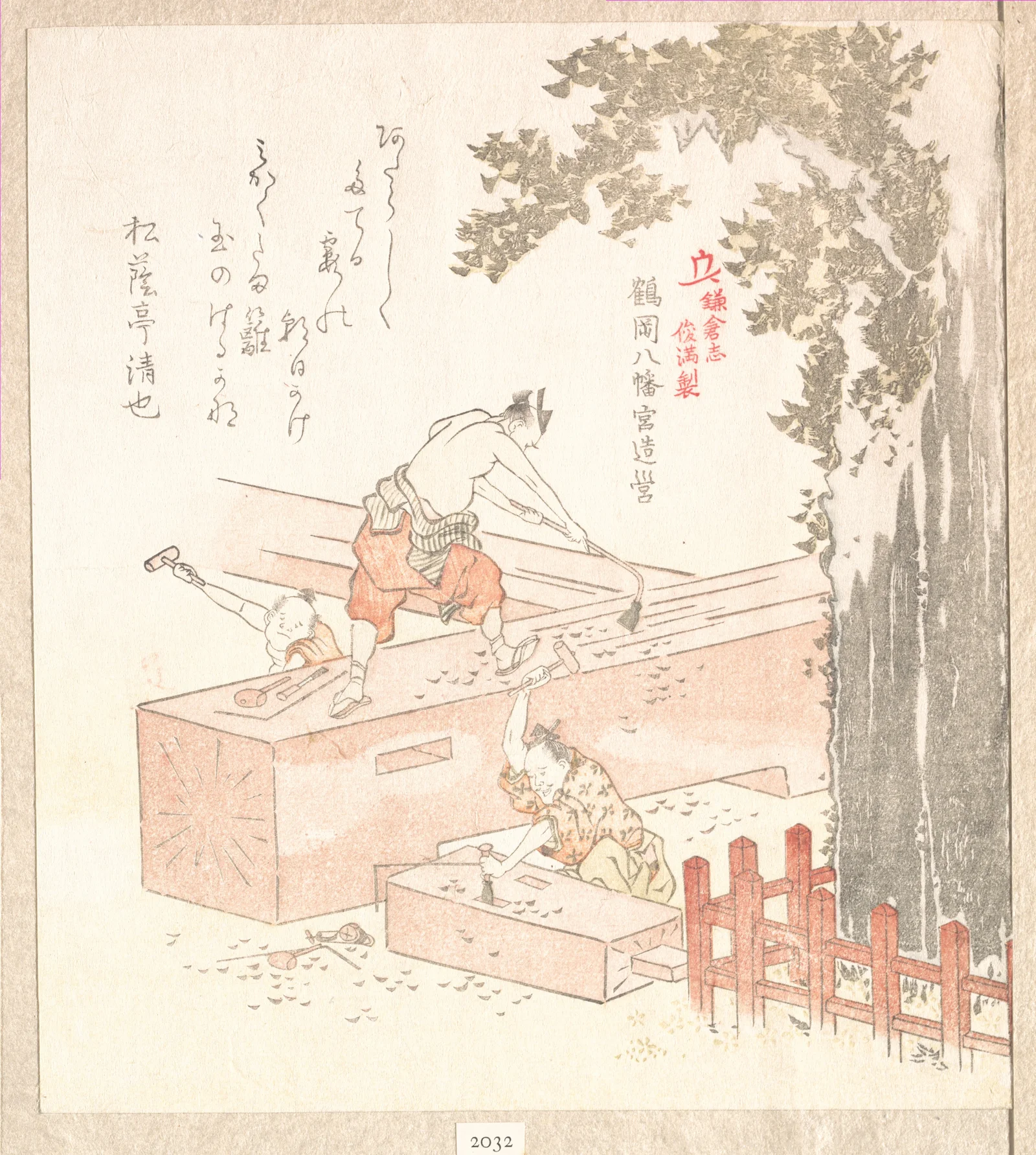
The Agency for Cultural Affairs dates the upper shrine's founding to 1191 and the surviving complex to the rebuilding of 1828. Its architectural assessment notes that the builders retained the grand medieval layout and used the decorative techniques of their own period. The stairs and approach help explain how a later building can preserve an older relationship between the sanctuary and the city below. National cultural property record
The Met's print attributed to Kubo Shunman depicts the building of the shrine as a historical subject. Look for the figures at work and the timber in the foreground. The work is an Edo-period interpretation of the founding story. The Met collection record
Compare the shrine with a historic view of Kamakura
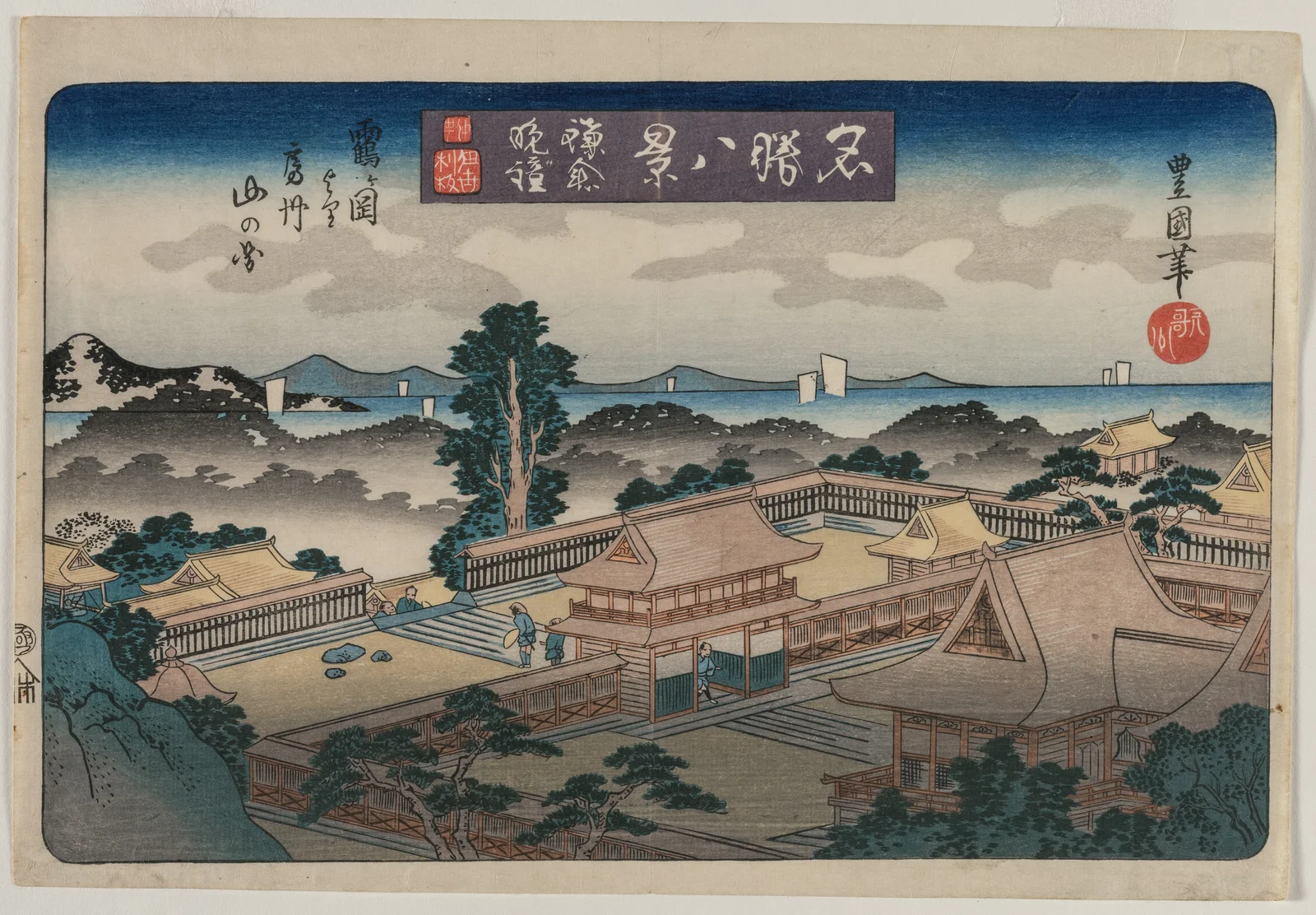
In Utagawa Toyokuni II's print from the early 1830s, the shrine roofs sit within a much wider view. Follow the skyline from the buildings to the distant hills. This is a useful way to read the site on foot, with the shrine, surrounding terrain and streets in view together. Cleveland Museum of Art collection record
Choose the inquiry that matches your plans
- For a personal visit, check the shrine's access and worship hours and keep the approach clear during ceremonies.
- For a paid or published portrait session, consult the shrine's teaching affairs office in advance. Specify Dankazura or the exact part of the grounds, the purpose, crew and intended publication. The guidelines limit shoots to approved locations and require a visible permit.
- For a shrine wedding, use the official ceremony desk and confirm where and when photography is possible as part of that booking.
The October 2026 visiting-photographer notice describes photography connected to specific rites such as Shichi-Go-San, a blessing for children. Ask the shrine separately about the arrangements for your pre-wedding session or ceremony. Photography guidance checked November 9, 2026. Photography application guidelines · Notice for photography connected to rites · Official wedding desk
Maps & official planning tools
Check the entrance, route and conditions with the place’s manager before your visit. Some official resources are in Japanese.
Planning guides
 General guide
Honeymoon in Tokyo, Japan: Couple Spots and Itineraries by Trip Length
Illustrative image · Unsplash. Not a photo of the specific people, places or services discussed.
Day and evening spots for couples in Tokyo, from Meiji Jingu and Asakusa to gardens and observation deck night views. See a day-by-day 3-night itinerary, typical costs, kimono photo shoot prices, garden photo rules, when to go, and how to prepare before arrival.
Read the guide Location deep dive
The 15 Best Kimono Wedding Photo Locations in Japan, Ranked (2026)
Illustrative image · Unsplash. Not a photo of the specific people, places or services discussed.
A ranked guide to the 15 best shrines, temples and gardens for a kimono pre-wedding photoshoot in Japan — from Fushimi Inari's torii tunnels to Miyajima's floating gate, with honest notes on where shoots are permitted.
Read the guide General guide
Korean Couple Kimono Photoshoot Japan: Cultural Guide
Illustrative image · Unsplash. Not a photo of the specific people, places or services discussed.
A planner's guide to korean couple kimono photoshoot japan trips: hanbok-kimono comparison, Korean-speaking studios, family logistics, costs vs Seoul.
Read the guideFind your kimono wedding photographer
Compare listings by area, style and price, then ask the studio to confirm language support, package details and availability.
Browse photographers →