The 15 Best Kimono Wedding Photo Locations in Japan, Ranked (2026)
A ranked guide to the 15 best shrines, temples and gardens for a kimono pre-wedding photoshoot in Japan — from Fushimi Inari's torii tunnels to Miyajima's floating gate, with honest notes on where shoots are permitted.

Illustrative image · Unsplash. Not a photo of the specific people, places or services discussed.
Check current prices, availability and venue rules with the relevant studio or venue before booking.
Where you stand matters as much as what you wear. Japan’s shrines, temples and gardens are the real co-stars of a kimono pre-wedding shoot, and the difference between an ordinary set and an unforgettable one is often just the location — and the hour you arrive.
We ranked the fifteen locations our editors and listed photographers return to again and again, weighing how each frames a kimono, how a foreign couple actually experiences it, and — crucially — whether it permits a wedding shoot at all. A few of Japan’s most famous sights quietly ban commercial photography; where that is the case, we say so and point you to the permitted alternative nearby.
The 15 best kimono photo locations in Japan, ranked

1. Fushimi Inari Taisha — Kyoto
The endless vermilion torii tunnels of Senbon Torii are the single most recognisable frame in Japanese wedding photography. Arrive before 7 a.m. — by mid-morning the paths fill with visitors and the magic is gone.
2. Arashiyama Bamboo Grove — Kyoto
Walking through the towering bamboo of Arashiyama feels like stepping inside a green cathedral. It is small and wildly popular, so a sunrise permit slot is the only way to have it to yourselves.
3. Meiji Jingu Shrine — Tokyo
Tokyo's grand forest shrine is the classic setting for a formal shiromuku, with a real chance of witnessing a traditional Shinto wedding procession. Permits are coordinated through the shrine's kaikan.
4. Kasuga Taisha — Nara
Three thousand moss-covered stone and bronze lanterns line the approach through Nara’s ancient deer forest — a backdrop with a thousand years of patina. Deep vermilion buildings frame a red iro-uchikake beautifully.
5. Itsukushima Shrine — Miyajima, Hiroshima
The great torii of Miyajima appears to float on the sea at high tide — one of Japan’s three classic scenic views and a genuinely unique bridal frame. Check the tide tables: the water is only high for part of the day.
6. Tsurugaoka Hachimangu — Kamakura
Kamakura's central shrine sits at the head of a long, stately approach lined with cherry trees — coastal, historic, and an easy day trip from Tokyo. Avoid the mid-September Reitaisai festival dates.
7. Kenrokuen Garden — Kanazawa
One of Japan’s three great gardens, Kenroku-en offers manicured ponds, arched bridges and — in winter — the famous yukitsuri snow ropes. Off the main tourist trail, it rewards couples who want something quieter.
8. Heian Shrine — Kyoto
A giant vermilion torii and wide gravel courts give Heian Jingu a sense of scale few shrines match, and its garden is a hidden gem for portraits. Coordinators at the Heian Jingu Kaikan handle multilingual bookings.
9. Chureito Pagoda — Mt. Fuji, Fujiyoshida
The view of a five-storey pagoda, cherry blossom and Mount Fuji stacked in one frame is the definitive image of Japan. It means climbing nearly 400 steps and sharing the platform, so plan an early slot.
10. Senso-ji Temple — Asakusa, Tokyo
Old-downtown Tokyo around Senso-ji — the giant Kaminarimon lantern, Nakamise’s stalls and low tiled roofs — makes a lively, colourful contrast to a vermilion kimono. Very busy by 9 a.m.
11. Yasaka Shrine — Gion, Kyoto
In the heart of Gion, Yasaka Shrine's lantern-lit halls and the machiya lanes nearby are made for a twilight kimono stroll. Its official gate is the Nishi-romon, not the 'Sakura-mon' some guides claim.
12. Hokoku-ji Bamboo Garden — Kamakura
Hokoku-ji's compact bamboo garden is the calm, contemplative alternative to Arashiyama — with a tea house where you can pause between outfits. Rarely crowded, even in season.
13. Shuri Castle — Okinawa
Okinawa’s Ryukyu-red Shuri Castle offers something no mainland site can: tropical light and the option of ryusou, the vivid Ryukyu wedding costume. The Seiden exterior has been restored, with interior works ongoing into 2026.
14. Kiyomizu-dera (approach lanes) — Kyoto
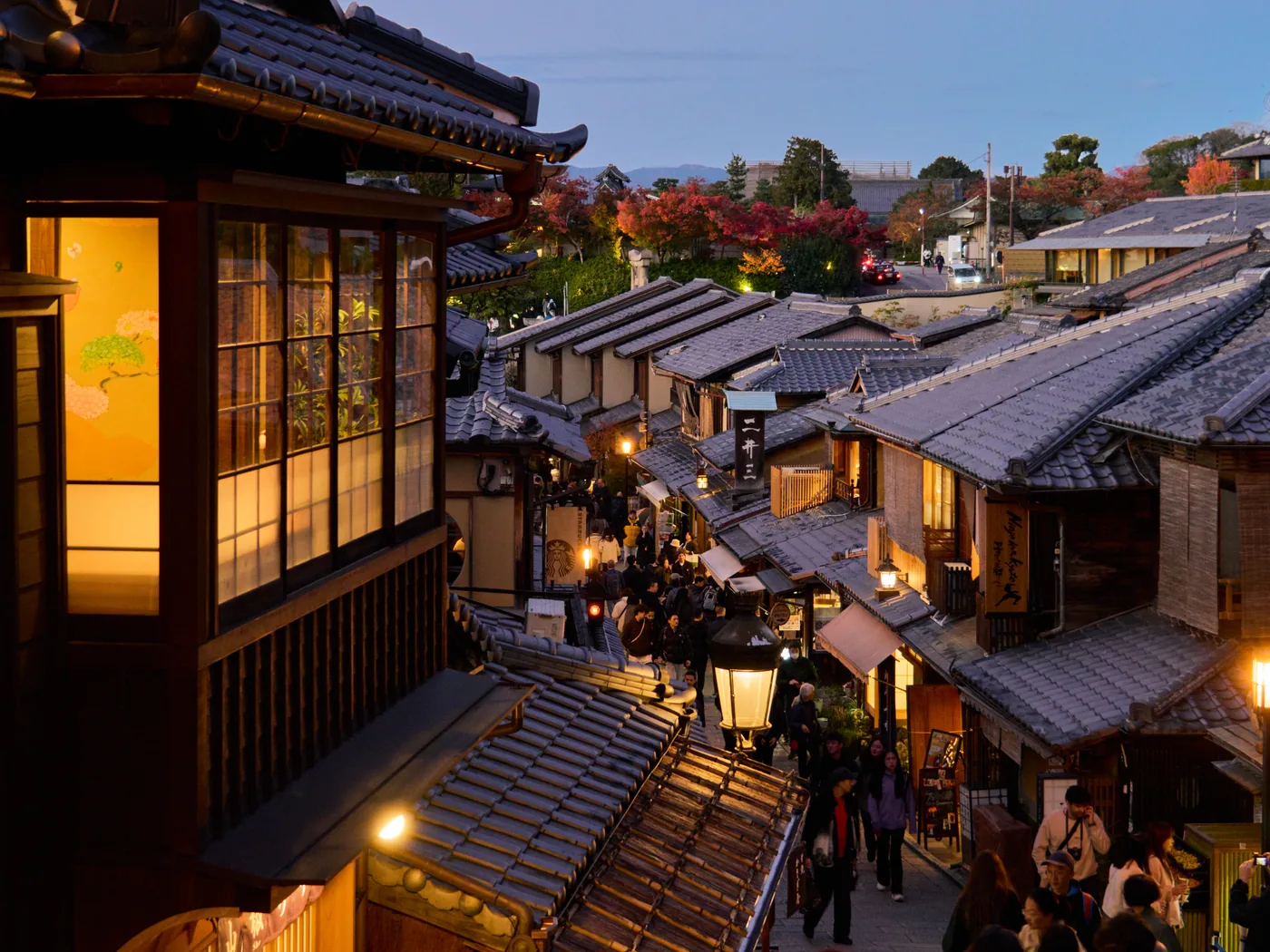
Kiyomizu-dera's approach lanes — Sannenzaka and Ninenzaka — are the postcard of old Kyoto in a kimono. Note the temple itself prohibits commercial shoots on its grounds, so the shot happens on the sloping stone streets below.
15. Kinkaku-ji (Golden Pavilion) — Kyoto
The Golden Pavilion is breathtaking — but Shokoku-ji explicitly bans commercial photography and third-party publication on its grounds. Visit it as a couple for a personal snapshot, and hold your formal shoot at nearby Kitano Tenmangu or Hirano Shrine instead.
Wedding Planner's Notes — From a Professional
Rank by light, not by fame. The most photogenic hour at Fushimi Inari beats the 'better' location at noon every time. Ask your photographer which of these sites they shoot at sunrise.
Check the permit before you fall for a location. Kinkaku-ji and Kiyomizu-dera are on this list for their surroundings, not their grounds — confirm exactly where the shutter is allowed to fire.
Match the kimono to the backdrop. A white shiromuku lifts against Arashiyama’s green and Kasuga’s lanterns; a red iro-uchikake sings against vermilion gates and autumn maples.
One iconic location, done well, beats three rushed ones. Travel and re-styling eat your morning — build the day around a single hero site and one backup.
Book the location and the photographer together. At the most popular sites, permit slots are as scarce as the photographers themselves, especially in cherry-blossom and maple weeks.
Frequently asked questions
What is the best location for a kimono photoshoot in Japan?
For first-timers, Kyoto's Fushimi Inari and Arashiyama, and Tokyo's Meiji Jingu, are the safest icons — instantly recognisable and set up for shoots. The 'best' for you depends on the season, the crowds you can tolerate, and whether you want shrine grandeur, bamboo, garden or sea.
Which famous spots do not allow wedding photography?
Kinkaku-ji (the Golden Pavilion) and the grounds of Kiyomizu-dera prohibit commercial shoots. Couples still capture the area by shooting the nearby streets and shrines; your photographer will know the permitted line.
Do I need a permit to shoot at these locations?
Many shrines, temples and gardens require a paid photography permit, usually arranged by your photographer. Fees and rules vary by site and by season — confirm before booking.
When is the best time of day to shoot at these locations?
Sunrise, almost without exception. The most iconic sites — Fushimi Inari, Arashiyama, Chureito — are empty and beautifully lit in the first hour after dawn, and packed by mid-morning.
Ready to shoot at one of these? Browse vetted photographers by area and price, or start with our complete pre-wedding guide.
Related guides
 Location deep dive
Kyoto vs Kanazawa Kimono Photoshoot: Which to Choose
Illustrative image · Unsplash. Not a photo of the specific people, places or services discussed.
Kyoto vs Kanazawa for a kimono prewedding shoot: a planner-led comparison of crowds, costs, visual register, and shrine cooperation — plus when to do both.
Read the guide Location deep dive
Top 10 Shrines for Kimono Wedding Photography in Japan
Illustrative image · Unsplash. Not a photo of the specific people, places or services discussed.
An expert ranking of Japan's most photogenic shrines for kimono wedding photography, with permit information, best seasons, and access tips for each.
Read the guide Location deep dive
Hakone Kimono Photoshoot: Lake Ashi, Mt Fuji & Onsen
Illustrative image · Unsplash. Not a photo of the specific people, places or services discussed.
Hakone kimono photoshoot guide: Lake Ashi pirate boats, Mt Fuji vantage points, Owakudani sulfur valley, ryokan gardens. Access, seasons, and planner notes.
Read the guide