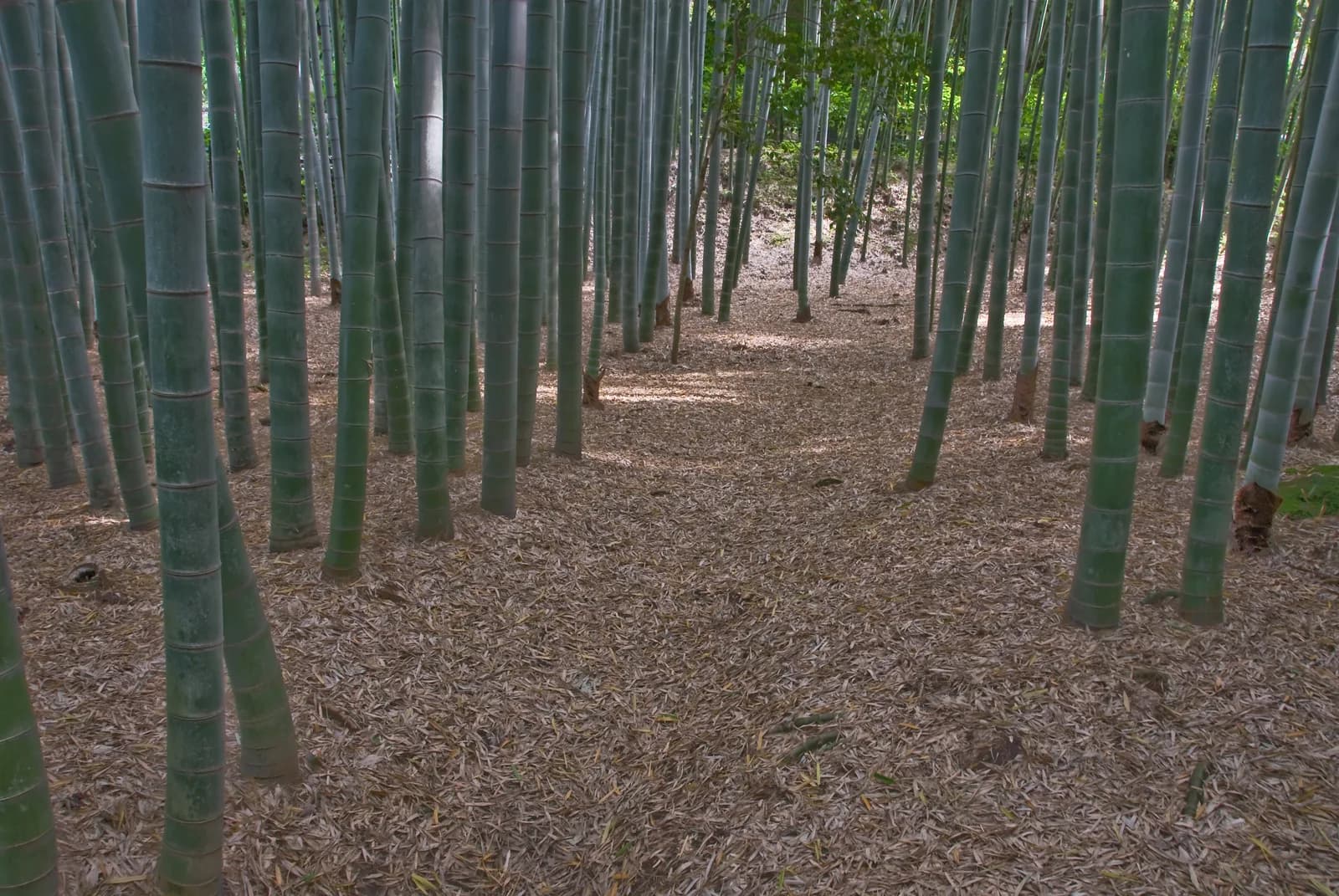
Hokoku-ji Bamboo Garden
Hokokuji’s bamboo garden in 2008. This dated photograph shows garden texture, not current access conditions.Urashimataro / Wikimedia Commons · Public domain

Hokokuji in eastern Kamakura combines a bamboo garden with moss, a dry landscape garden and the buildings of a working Zen temple. Around 2,000 bamboo stems are described in its official visitor guide. Wedding photography is offered through the temple’s partner arrangements; ordinary garden admission is not a booking for a private portrait session.
Use the temple’s wedding route
The official wedding-photography page directs couples to the temple’s partner organizations. Its published partnership conditions specify photographers trained by the temple and plans approved in advance. They list reserved sessions at 7:30–9:00 and 16:30–18:00. These are published program windows, not evidence that a particular date is available or that any outside photographer may enter.
Our booking checklist: ask whether the proposed plan is currently temple-approved, which spaces are included, who confirms the reservation, and how rain or a late arrival is handled. Request an itemized quotation covering clothing, dressing, photography and temple-related charges. We have not verified a single standard wedding fee.
For general questions, the temple lists 0467-22-0762. Its publicity email is explicitly for corporate enquiries; individuals are asked to telephone. Use the official wedding page for the current partner route rather than treating a general media contact as a personal booking desk.
See three garden textures, not just a bamboo backdrop
The temple’s garden interpretation explains how bamboo changes with weather, light and wind; how stones in the dry garden suggest mountains and rivers; and how moss appears along the approach and in the bamboo garden. Look for those changes as part of the visit.
Our viewing guide based on the temple’s explanations
Landscape | What to notice | A useful question for a portrait plan |
|---|---|---|
Bamboo | Vertical stems, filtered light and sound in the wind | Is the bamboo garden included in the approved session? |
Dry landscape garden | Stone arrangements and the natural cliff and greenery | Which viewing positions remain within the permitted route? |
Moss and approach | Small textures around stones and the path | How will the team manage footwear and clothing if the ground is wet? |
The photos here are dated 2008 and show landscape features, not present-day access conditions. For mobility needs, ask about the exact route before booking: the temple describes a gentle uphill approach and steps to the main hall. A photograph of a path cannot establish wheelchair access.
Budget separately for a garden visit and matcha
The current visitor guide lists garden admission at ¥400 for high-school students and older, or ¥200 for elementary and junior-high students. Matcha with a dry sweet costs another ¥600. For two adults taking both, our simple calculation is 2 × (¥400 + ¥600) = ¥2,000. This covers that visitor combination only; it is not a wedding-session price.
Ordinary visiting hours are 9:00–16:00. Matcha tickets are sold until 15:30 and sales may pause when crowded. The temple closes to ordinary visits from 29 December to 3 January and may close for weather. A late-afternoon arrival therefore leaves a different set of options from arriving well before the tea-ticket cutoff.
A temple with a documentary history
Kamakura City’s cultural-property account dates Hokokuji’s foundation to 1334 and explains the importance of 340 temple documents deposited at the Kamakura Museum of National Treasures. They record the temple’s relationship with the city and governing powers over centuries. These are archival holdings, not a promise of an exhibition inside the bamboo garden.
Our reason for including this context is practical: allow time to encounter a temple rather than treating the whole visit as a photo queue. At the hall, follow the temple’s worship guidance; do not photograph the person writing a goshuin stamp, which the visitor guide explicitly asks visitors to avoid.
Get to the correct bus stop
The official access information gives Keikyu bus stop 4 at Kamakura Station’s east exit. Take a service towards Kamakura Reien Seimon-mae Tachiarai, Kanazawa-hakkei or Highland, alight at Jomyoji, then walk about three minutes. The temple estimates roughly 12 minutes on the bus; traffic and waiting time are additional considerations. The shrine/temple name on your plan is Hokokuji, while the stop is Jomyoji.
Sources checked 1 November 2026. Questions, comparisons and the two-person calculation are our editorial work. Published temple and municipal explanations are not our own interview or a claim of professional on-site experience.
A closer look at the location
These photographs show the setting and architecture. They are not examples of wedding shoots or evidence that portrait sessions are permitted.
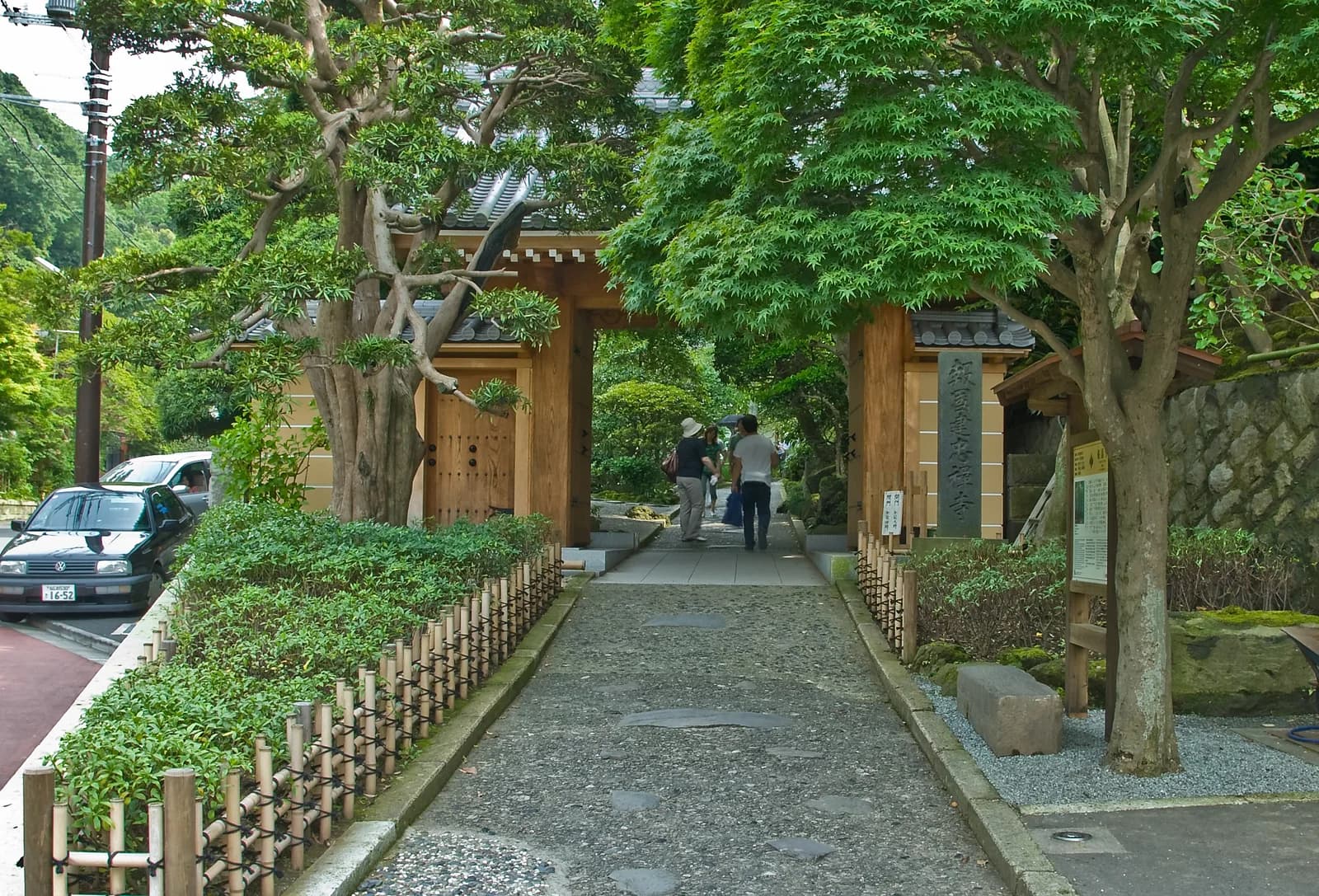
Hokokuji’s gate and sloping approach, photographed in June 2008.Urashimataro / Wikimedia Commons · Public domain

Maps & official planning tools
Check the entrance, route and conditions with the place’s manager before your visit. Some official resources are in Japanese.
- Temple’s official wedding-photography route
- Admission, matcha & closures
- Temple’s garden & building interpretation
- Official bus & station access
Loading the map connects to Google Maps. Use the official site map for entrances and accessible routes.
Planning guides
 General guide
Honeymoon in Tokyo, Japan: Couple Spots and Itineraries by Trip Length
Illustrative image · Unsplash. Not a photo of the specific people, places or services discussed.
Day and evening spots for couples in Tokyo, from Meiji Jingu and Asakusa to gardens and observation deck night views. See a day-by-day 3-night itinerary, typical costs, kimono photo shoot prices, garden photo rules, when to go, and how to prepare before arrival.
Read the guide Location deep dive
The 15 Best Kimono Wedding Photo Locations in Japan, Ranked (2026)
Illustrative image · Unsplash. Not a photo of the specific people, places or services discussed.
A ranked guide to the 15 best shrines, temples and gardens for a kimono pre-wedding photoshoot in Japan — from Fushimi Inari's torii tunnels to Miyajima's floating gate, with honest notes on where shoots are permitted.
Read the guide General guide
Korean Couple Kimono Photoshoot Japan: Cultural Guide
Illustrative image · Unsplash. Not a photo of the specific people, places or services discussed.
A planner's guide to korean couple kimono photoshoot japan trips: hanbok-kimono comparison, Korean-speaking studios, family logistics, costs vs Seoul.
Read the guideFind your kimono wedding photographer
Compare listings by area, style and price, then ask the studio to confirm language support, package details and availability.
Browse photographers →