Norwegian Couple Kimono Photoshoot Japan: Oslo Routing Guide
Norwegian couple kimono photoshoot japan planning: Oslo-Tokyo direct flights, visa-free 90 days, Nordic minimalism aligned with Japanese aesthetic restraint, NOK-JPY notes.

Illustrative image · Unsplash. Not a photo of the specific people, places or services discussed.
Check current prices, availability and venue rules with the relevant studio or venue before booking.
Norwegian couples book roughly 150 to 350 kimono shoots in Japan each year — a smaller cohort than German or French traffic, but with one of the most aligned planning profiles we work with. The Nordic preference for restraint, uncluttered composition, and material honesty translates almost directly into the language Kyoto and Kanazawa studios already use. Add a 10-hour SAS direct from Oslo, 90-day visa-free entry, and a krone that holds reasonably against the yen, and the operational case is straightforward. The aesthetic case is even cleaner.
Why Norwegian Couples Choose Japan
The brief Norwegian couples send us reads differently from most European inquiries. Where French couples ask about gardens and German couples about contracts, Norwegian couples ask about quiet. They want fewer people in frame, fewer props on the kimono, and fewer staged poses. They name specific photographers whose Instagram feeds are heavy on negative space and morning light. They ask whether a shoot can happen before the temple opens to visitors. The brief is consistently legible.
This planning profile reflects a Nordic design sensibility that already shares vocabulary with Japanese aesthetic principles. Hygge and ma (間, the deliberate use of empty space) are not the same concept, but couples who grew up around minimalist Scandinavian interiors instinctively read a tatami room the way it was designed to be read. They understand why the senior planner wants the obi tied lower and the background bare. They do not push back when told the shrine forecourt will be the cleanest composition.
Wedding Planner's Notes: Norwegian couples often arrive with a single Pinterest board of 12 to 20 images, not 200. The edit has already happened in their heads. This makes the location and styling conversation 40 percent faster than the European average and reduces revision rounds at the album stage.
Direct Flight (Oslo OSL to Tokyo Narita 10hr)
SAS Scandinavian Airlines operates a direct Oslo (OSL) to Tokyo Narita (NRT) route, scheduled around 10 hours westbound. The route runs daily in peak season (April through October) and four to five days weekly through winter. Aircraft is typically the A350-900, which materially affects long-haul comfort for a couple flying out on the morning of a shoot week.
The alternative routing is Finnair via Helsinki (HEL), which has historically been the shortest Europe-Japan connection by virtue of the northern great-circle path. Helsinki-Tokyo is roughly 9 hours, Oslo-Helsinki adds 90 minutes plus a 90-minute transit. Total door-to-door is comparable to the SAS direct when the connection runs cleanly. Norwegian couples who want a single sector for jet-lag management default to SAS. Couples optimizing on price or schedule flexibility take Finnair.
A third routing — Lufthansa via Frankfurt or KLM via Amsterdam — adds 4 to 6 hours of total transit and is generally not worth the savings. We recommend arriving Tokyo three full days before the shoot date. The 8-hour time difference (Norway is UTC+1, Japan UTC+9) creates a westbound jet lag that affects morning shoots specifically; couples shooting at 5:30am sunrise in Arashiyama have called us at 2am Norwegian-body-time asking if they can reschedule.
Visa-Free 90 Days
Norwegian passport holders enter Japan visa-free for stays up to 90 days. No advance application, no embassy visit, no fee. The stamp is issued on arrival at Narita, Haneda, or Kansai International. This is standard for all EU and EEA nationals, but it matters operationally because it means a Norwegian couple can extend a trip from a 7-day photoshoot itinerary into a 3-week honeymoon without paperwork friction.
The 90-day window also covers the realistic worst case: a typhoon-cancelled June shoot that needs rescheduling 2 weeks later, or a Hokkaido winter shoot delayed by snowstorm. Couples on the standard 10-to-14-day trip have margin for one reschedule built in by default.
The only paperwork that matters in advance is the Visit Japan Web (VJW) registration — a digital customs and immigration declaration filed 2 weeks before arrival. It saves 10 to 20 minutes at the airport. Norwegian couples consistently complete this without prompting.
Nordic Minimalism + Japanese Aesthetic Overlap
The aesthetic overlap is more practical than philosophical, but it does change what gets briefed and what gets cut. Norwegian couples who arrived expecting to like the iro-uchikake (the heavily embroidered outer robe in red and gold) often end up choosing shiro-muku (pure white) or a muted color uchikake after seeing the options in person. The reasoning is consistent: the bold crested kimono reads as decorative excess against their image references.
This has real implications for studio matching. Studios whose portfolios lean editorial — clean backgrounds, single subject, available light, restrained retouching — convert Norwegian inquiries at 3 to 4 times the rate of studios that lean classical-traditional. The classical studios are not worse; they are solving a different brief. A Norwegian couple looking at a heavily-styled traditional portfolio will simply not inquire.
For internal reference, the styling brief we use for Nordic couples typically specifies: white or single-color uchikake, minimal hair ornamentation (one ornament rather than full kanzashi set), no parasol prop unless the photographer specifically requests it, and a strong preference for outdoor-natural-light compositions over interior-flash setups. See our guide to kimono types and formality levels for the full vocabulary.
Translating the Brief Across Languages
Norwegian couples brief in English, and the English they write is precise. The studio receives sentences like "we want the composition to breathe" or "please keep the post-processing close to neutral." Japanese studio leads who have worked with Nordic couples before read these as clear directives. Studios newer to international work sometimes interpret "neutral" as "no retouching," which is not what the couple meant. A 15-minute pre-shoot call resolves this.
NOK-JPY Exchange Considerations
The Norwegian krone (NOK) against the Japanese yen (JPY) has run between 13.5 and 16.5 yen per krone over the past 24 months — a range of roughly 22 percent. This is a meaningful spread for a shoot package booked 6 to 9 months out and paid in installments. A 600,000 yen package costs 36,400 NOK at 16.5 and 44,400 NOK at 13.5. The 8,000 NOK delta covers a domestic flight, two nights of hotel, and an extra location half-day.
Practical mitigation: most studios accept a 30 percent deposit in advance and the balance on shoot day or after delivery. Norwegian couples who lock in the deposit when NOK is strong are effectively pricing in 30 percent of the package. Couples who pay the full balance via international wire 2 weeks before the shoot are exposed to the full rate at that moment. We recommend Wise (formerly TransferWise) or Revolut for international transfers; both typically beat traditional Norwegian bank rates by 1.5 to 2.5 percent.
Package Tier | JPY | NOK at 13.5 | NOK at 16.5 |
|---|---|---|---|
Entry (half-day, 1 location) | 250,000 | 18,500 | 15,150 |
Standard (full-day, 2 locations) | 450,000 | 33,300 | 27,300 |
Premium (2-day, 3 locations) | 800,000 | 59,300 | 48,500 |
The right-hand columns are the same package; the spread reflects only currency movement. For broader pricing context, see budget planning for European couples.
Top Locations Among Norwegian Couples
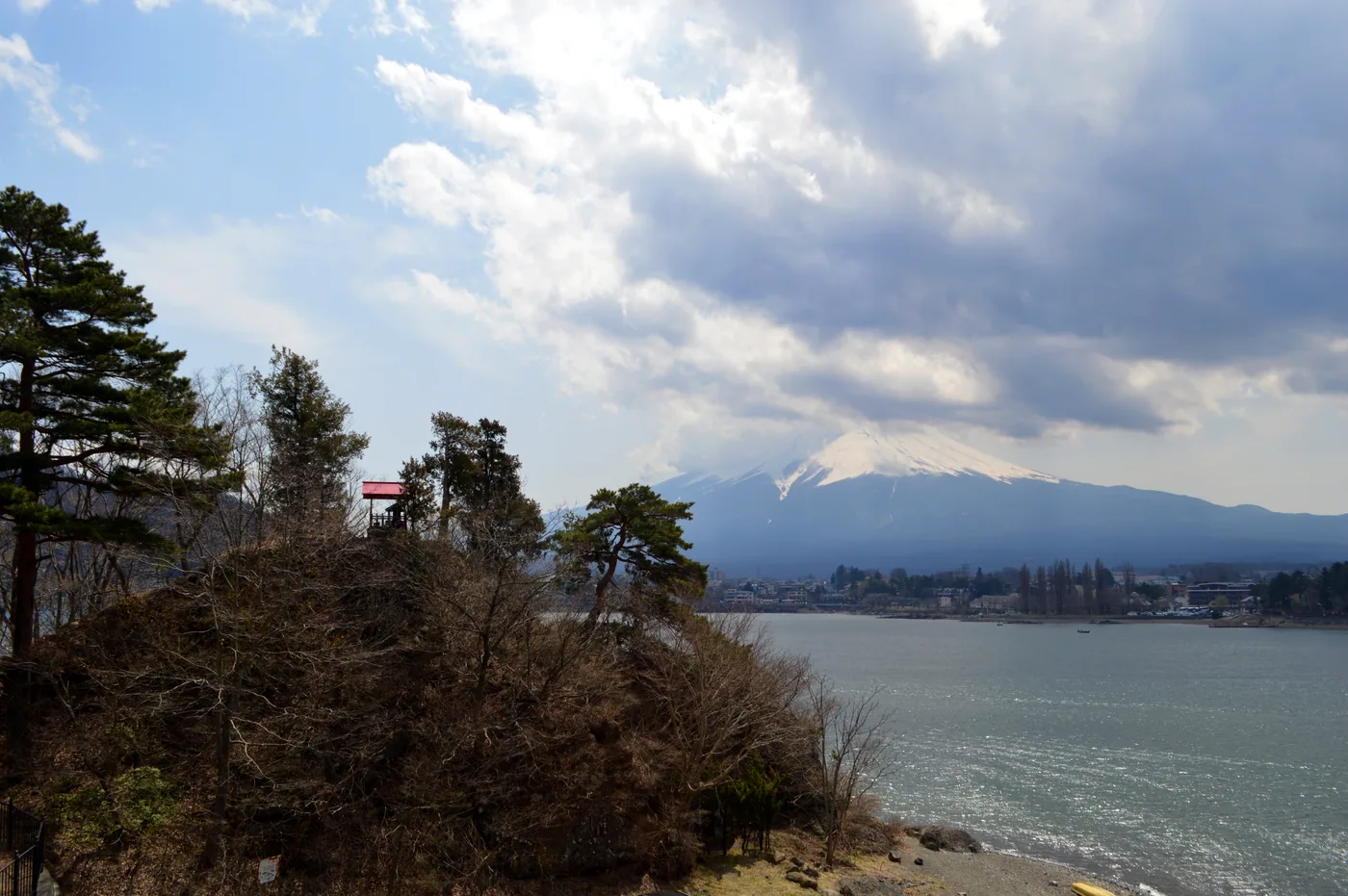

Norwegian couples select locations with clearer logic than most European cohorts. The pattern: one urban-cultural location, one natural-landscape location, occasionally a third for variety. The cultural location is almost always Kyoto. The natural location is almost always Hokkaido or Mt Fuji.
Kyoto Temple Restraint
Kyoto delivers the visual restraint Norwegian couples are looking for, but not every Kyoto location does. The most-requested venues among this cohort are Kennin-ji, Ginkaku-ji, and the moss-and-bamboo edge of Arashiyama. These read as "essential Kyoto without the postcard saturation."
The locations Norwegian couples consistently decline are Kinkaku-ji (overcrowded, photography rules restrictive — see our honest brief on Kinkaku-ji) and Kiyomizu-dera (commercial photography banned). Studios that propose these to Nordic clients without context are misreading the brief.
Hokkaido Nature Backdrop
Hokkaido in February for snow shoots and Hokkaido in early October for harvest-color fields are the two windows Norwegian couples consistently book. The visual logic is direct: open landscape, single subject, restrained color palette. The aesthetic reads as familiar — Norway's own winter coast and inland valleys train the eye to read this kind of frame.
Furano and Biei are the most-requested rural areas. Sapporo functions mostly as the arrival hub. See our Hokkaido winter shoot guide for season-specific logistics.
Mt Fuji Vista
Kawaguchiko — one of the Fuji Five Lakes 100km from Tokyo — is the standard Mt Fuji vantage point. The Chureito Pagoda (Arakurayama Sengen Park, an hour from Kawaguchiko Station) is the iconic composition: 5-storied pagoda, cherry blossoms, snowcapped Fuji in a single frame. Norwegian couples specifically ask for this composition by name.
Winter Fuji visibility runs 30 to 40 percent on any given morning, so a 2-day Kawaguchiko buffer is the planning standard. Access is Fujikyu Express 2 hours from Shinjuku. See our Mt Fuji vantage point comparison for venue selection.
English-Default Communication

There are zero Norwegian-speaking studios in Japan that we have located. This is not a problem. Norwegian English at the C1-C2 level is the default among the demographic that books international kimono shoots, and studios that work with Nordic clients have calibrated their English to match.
The communication pattern we see: email exchange in English for booking and styling brief, a single 30-minute video call 2 to 4 weeks pre-shoot, and a Japanese senior planner on-site on shoot day with English-speaking studio coordinator handling all client-facing communication. The Japanese photographer rarely speaks at the C1 level, but does not need to — the brief has been settled by the time the shutter opens. For background on how multilingual studios are structured, see language coverage at Japanese studios.
Wedding Planner's Notes: Norwegian couples are the most likely European cohort to send a structured shot list as a PDF before the shoot — usually 8 to 15 frames with reference images. Studios appreciate this, and it speeds the on-site day significantly. Couples worried about being "too prescriptive" should not worry; this is welcome.
Spend Tier (Quality-Focused, Practical)
Norwegian couples sit in the upper-mid spend tier — typically 450,000 to 750,000 yen for the photography package, plus 200,000 to 400,000 yen for kimono rental, hair and makeup, and location fees. Total in-Japan spend for a 2-location shoot day commonly lands between 700,000 and 1,100,000 yen.
The spend pattern is quality-focused but not luxury-maximizing. Norwegian couples will pay a 100,000 yen premium for a photographer whose portfolio matches their brief, but will decline a 200,000 yen premium for a kimono with more ornate embroidery they do not want. The decisions are coherent. This contrasts with Swiss couples (consistently top-tier, see our Swiss couple guide) and US couples (variable, often image-driven).
Iceland or Sweden Pairing Patterns
The honeymoon-pairing pattern is consistent enough to plan around. Norwegian couples doing a 14-to-21-day trip pair Japan with one of three destinations: Iceland (often the prior or following stop, accessed via Reykjavik or via Tokyo-Helsinki-Reykjavik), Sweden (specifically Stockholm or the Swedish archipelago, a short SAS sector back to Scandinavia), or Singapore-Hong Kong as a tropical interrupt.
Iceland pairing is the most thematically coherent — both legs deliver landscape-restraint photography, and the couple's image references for both halves of the trip share a visual language. Polish couples pair differently (see our Polish couple guide); Swiss couples lean toward Southeast Asia stops.
Operationally, the pairing affects only the SAS frequent-flyer routing and the kimono delivery timeline. Couples flying onward to Iceland the day after the shoot need digital previews within 48 hours; full album delivery (standard 4 to 6 weeks) catches up after they are back in Oslo. Studios accommodate this without complication.
FAQ
Can we shoot in matching wedding bands purchased in Norway before the Japan ceremony?
Yes. Japanese kimono shoots have no objection to existing rings; many couples wear engagement bands during the shoot. If the rings are platinum or white gold, the photographer will likely catch them in close-up frames. Norwegian goldsmith pieces (a common pattern) often photograph well against the white shiro-muku.
How do we handle the time difference for Norwegian family viewing the photos on delivery day?
Studios deliver via WeTransfer, Pixieset, or a private gallery link. There is no delivery "event" — your family in Oslo can view the gallery whenever the link arrives. The 8-hour offset matters only for scheduling video calls during the planning phase; 9am Oslo equals 5pm Tokyo, which is the most-used window.
Is there a Norwegian wedding registry equivalent we can connect to a Japan shoot?
Most studios do not integrate with Norwegian registry platforms. Couples typically book and pay the shoot directly, then handle gifting separately. A few high-end studios accept honeymoon-fund-style contributions; ask during booking if this matters.
Will our photographer expect us to drink the san-san-kudo sake?
Only if you have booked an actual shrine ceremony, not a photoshoot. Pure photo packages do not include the sake ritual. If you are booking a hybrid ceremony-plus-shoot package, the priest will pour three small servings; couples touch the cup to the lip even if they do not drink. Non-drinking Norwegian couples have done this routinely.
How does Norway's Schengen status affect our Japan visa rules?
It does not. Japan's visa-free arrangement with Norway is bilateral, not Schengen-linked. Norway is in Schengen but not the EU, and Japan treats Norwegian passport holders the same as EU holders for the 90-day visa-free window. No additional paperwork is required.
Can we ship our own minimalist kimono accessories from Oslo, or must everything be rented locally?
Studios strongly prefer their own rental inventory because it has been fitted and cleaned to their standard. Personal accessories — a small ornament, a particular obi-jime cord — can sometimes be incorporated if shown in advance. Anything that touches the kimono itself (sash, undergarments) should be sourced from the studio.
What is the rain backup if our Kawaguchiko Fuji shoot day is overcast and Fuji is hidden?
Studios build a Fuji-visibility buffer of 1 to 2 extra days at Kawaguchiko in winter and early spring. If all buffer days are clouded, the standard alternates are a Chureito Pagoda close-shot composition (the pagoda alone, no Fuji), a Kawaguchiko lakefront composition with the lake as primary subject, or a reschedule to a later trip date if your 90-day window allows. See our rain backup planning guide.
Find a Minimalist-Aesthetic Studio
The Norwegian planning profile narrows the studio shortlist faster than most. We maintain a curated photographer directory filtered for the editorial-restraint style — clean compositions, single-subject framing, neutral retouching, available-light preference — that matches what Nordic couples consistently brief. Filter by Kyoto, Hokkaido, or Kawaguchiko region, and by "editorial" or "minimal" style tags.
If you are still scoping the shoot and want to compare Nordic patterns against other European cohorts, our Polish couple guide covers a mid-tier spend pattern with strong cultural-discipline overlap, and our Swiss couple guide covers the premium-spend, detailed-research profile next door to your own.
Locations in this guide
Related guides
 General guide
Kimono Wedding Photos for Foreigners: How It Works in Japan
Illustrative image · Unsplash. Not a photo of the specific people, places or services discussed.
Yes, foreign couples can have kimono wedding photos taken in Japan — no residency, ceremony or Japanese required. How booking, fittings, pricing and permits actually work.
Read the guide General guide
How to Book a Kimono Photographer in Japan from Abroad: Step-by-Step
Illustrative image · Unsplash. Not a photo of the specific people, places or services discussed.
A complete step-by-step guide for foreign couples booking a kimono pre-wedding photographer in Japan from overseas. Contracts, payments, communication.
Read the guide General guide
Multilingual Wedding Photography Japan: Beyond English
Illustrative image · Unsplash. Not a photo of the specific people, places or services discussed.
A planner's audit of which languages — Korean, Mandarin, Spanish, French, JSL — Japanese kimono studios actually support, plus interpreter costs and when to hire one.
Read the guide