Itsukushima Shrine
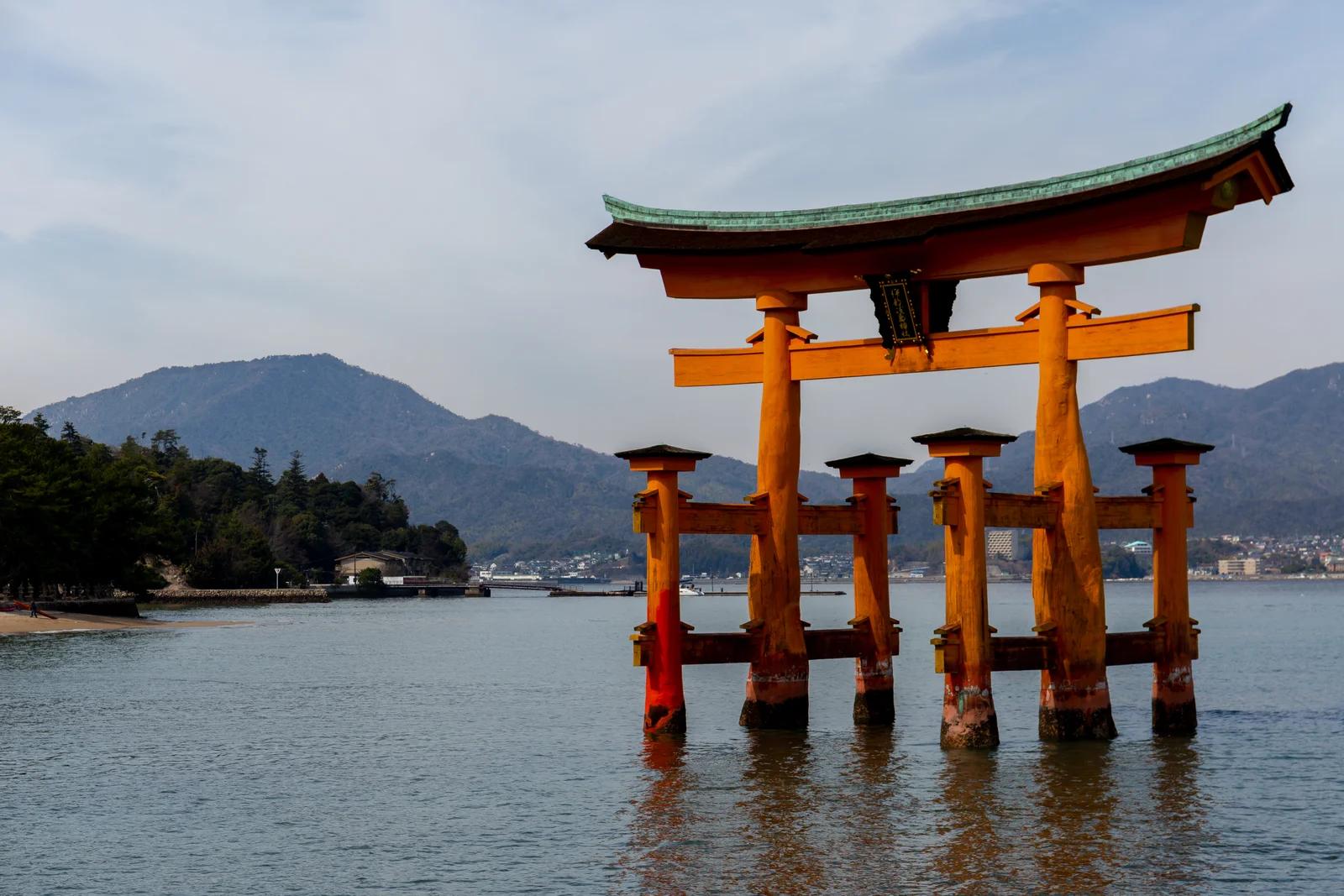
The Great Torii of Itsukushima Shrine with seawater around its pillars in March 2019.Balon Greyjoy / Wikimedia Commons · CC0 1.0

Itsukushima Shrine on Miyajima is built over the tidal shore. Water rises beneath its corridors and around the Great Torii, the gate standing offshore. For a paid pre-wedding shoot, ask the shrine about your exact location, attire and intended use before booking. The shrine publishes a separate procedure for its wedding ceremonies. Check photography arrangements for that ceremony directly with its office. Official wedding procedure and contact
Use the tide height to choose a visit time
The Miyajima Tourism Association gives two useful thresholds. Look up the height beside the time on your actual visit date. A day's lowest tide may still be too high for a walk toward the gate. Build your visit around the overlap between the tide, the shrine's opening hours and your ferry. How to read the official local tide table
Forecast height | Plan for this view |
|---|---|
Around 250 cm or higher | Water under the buildings can give the shrine its floating appearance. View from the shore or during a visit inside the shrine. |
Around 100 cm or lower | More of the tidal flat may be exposed. Approach only where access is open and the footing is suitable, and leave time to return before the water rises. |
Between the two thresholds | Plan a shoreline view of the gate and focus on the corridors and building details inside the shrine. |
The figures describe likely views. Wind, weather and local conditions can change the water level and access. Follow signs and staff instructions at the shore.
Look closely at the gate and the corridor floors

The present Great Torii dates to 1875. The Japan Tourism Agency's interpretation describes a six-pillar structure of about 60 metric tons. Stones inside the upper crosspiece add weight, and the gate stands on the seabed under its own weight. From shore, look for the four smaller supporting pillars around the two main ones. Japan Tourism Agency's explanation of the Great Torii
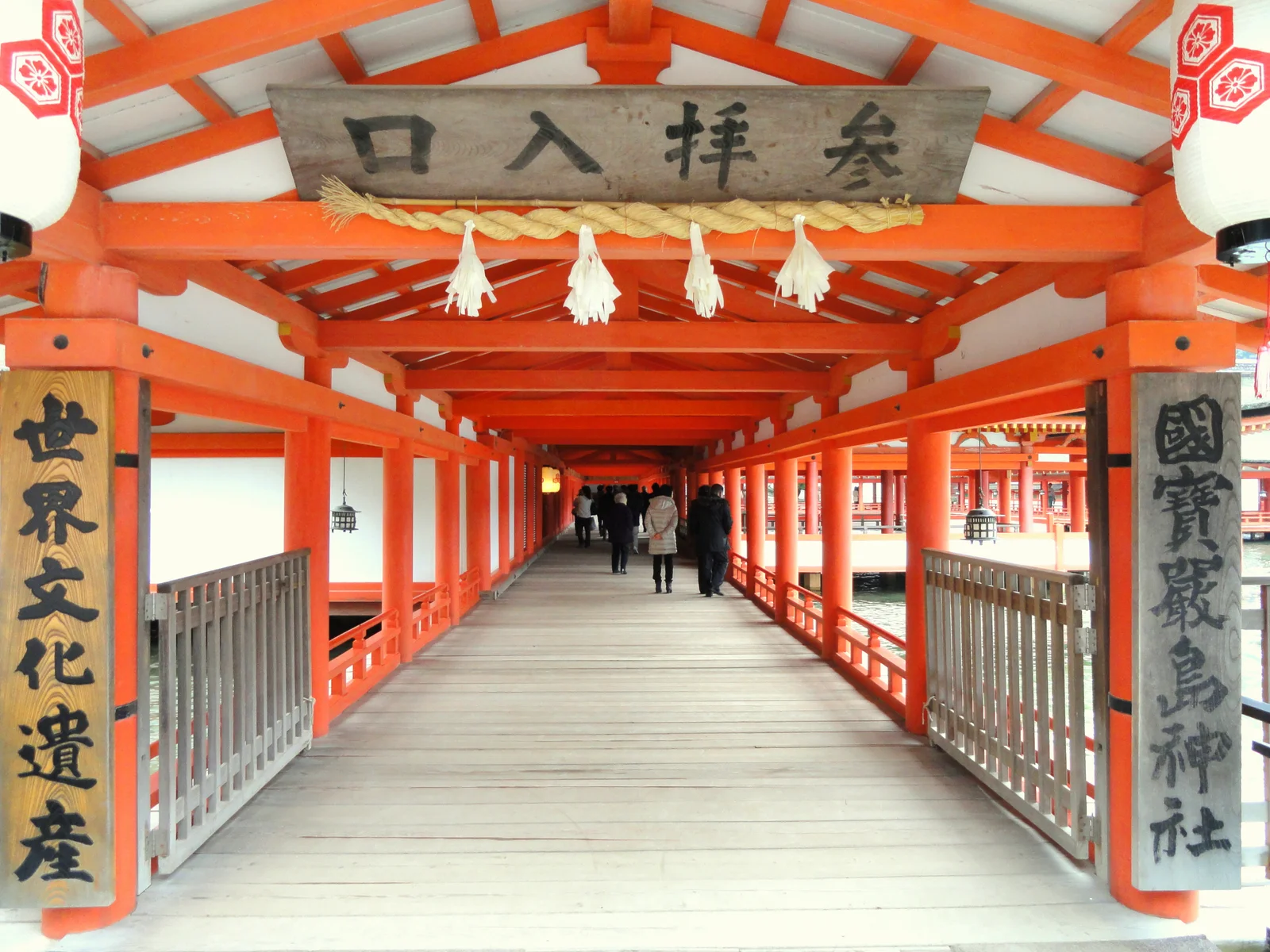
The Agency for Cultural Affairs describes how the shrine buildings line up with the offshore gate and form a single landscape with the sea and mountain behind them. In the corridors, notice the narrow gaps between floorboards. The shrine explains them as a measure for high water and warns that thin heels can catch. For a kimono visit, choose stable footwear before crossing the island. National heritage record · Shrine hours, fees and footwear guidance
Separate the ferry, shrine admission and ceremony
For two adults taking the regular return ferry from Miyajimaguchi and entering the shrine, the published costs add up to ¥1,600. That is ¥800 for the return ferry tickets, ¥200 in Miyajima visitor tax on arrival and ¥600 for shrine admission. Ferry travel is about ten minutes each way. Check sailings and the shrine's seasonal closing time before choosing a tide window. City ferry and visitor-tax guide · Shrine admission and hours
For a ceremony, the shrine's sequence starts with a provisional reservation by phone, followed by paperwork, a visit and briefing, and then the final booking. It advises that ferry cancellations or storm damage may affect the ceremony or visit. When asking about photography, specify whether it is a separate session or connected to a ceremony and show where the photographer would stand. The city's drone guidance separately restricts photography from the air in and around the shrine area. Visitor information checked November 9, 2026. Shrine ceremony guidance · City drone guidance
Maps & official planning tools
Check the entrance, route and conditions with the place’s manager before your visit. Some official resources are in Japanese.
Find your kimono wedding photographer
Compare listings by area, style and price, then ask the studio to confirm language support, package details and availability.
Browse photographers →