Top 10 Shrines for Kimono Wedding Photography in Japan
An expert ranking of Japan's most photogenic shrines for kimono wedding photography, with permit information, best seasons, and access tips for each.

Illustrative image · Unsplash. Not a photo of the specific people, places or services discussed.
Check current prices, availability and venue rules with the relevant studio or venue before booking.
Shrines are the spiritual and visual heart of Japanese wedding photography. Their vermilion torii gates, sweeping cypress roofs, gravel courtyards, and ancient forest groves provide backdrops that no studio can replicate. But not every shrine welcomes photoshoots, and policies vary widely from open access to strict prohibition. The ten shrines in this guide are the most photographed in Japan for a reason: they combine architectural beauty, manageable permit processes, and the kind of atmosphere that elevates a kimono portrait into something timeless. We have ranked them based on visual impact, accessibility for international couples, and the realistic likelihood that a photographer can secure permission to shoot. For each, we note typical permit costs, best times to visit, and the kimono style that photographs most strongly on site.
1. Meiji Jingu, Tokyo
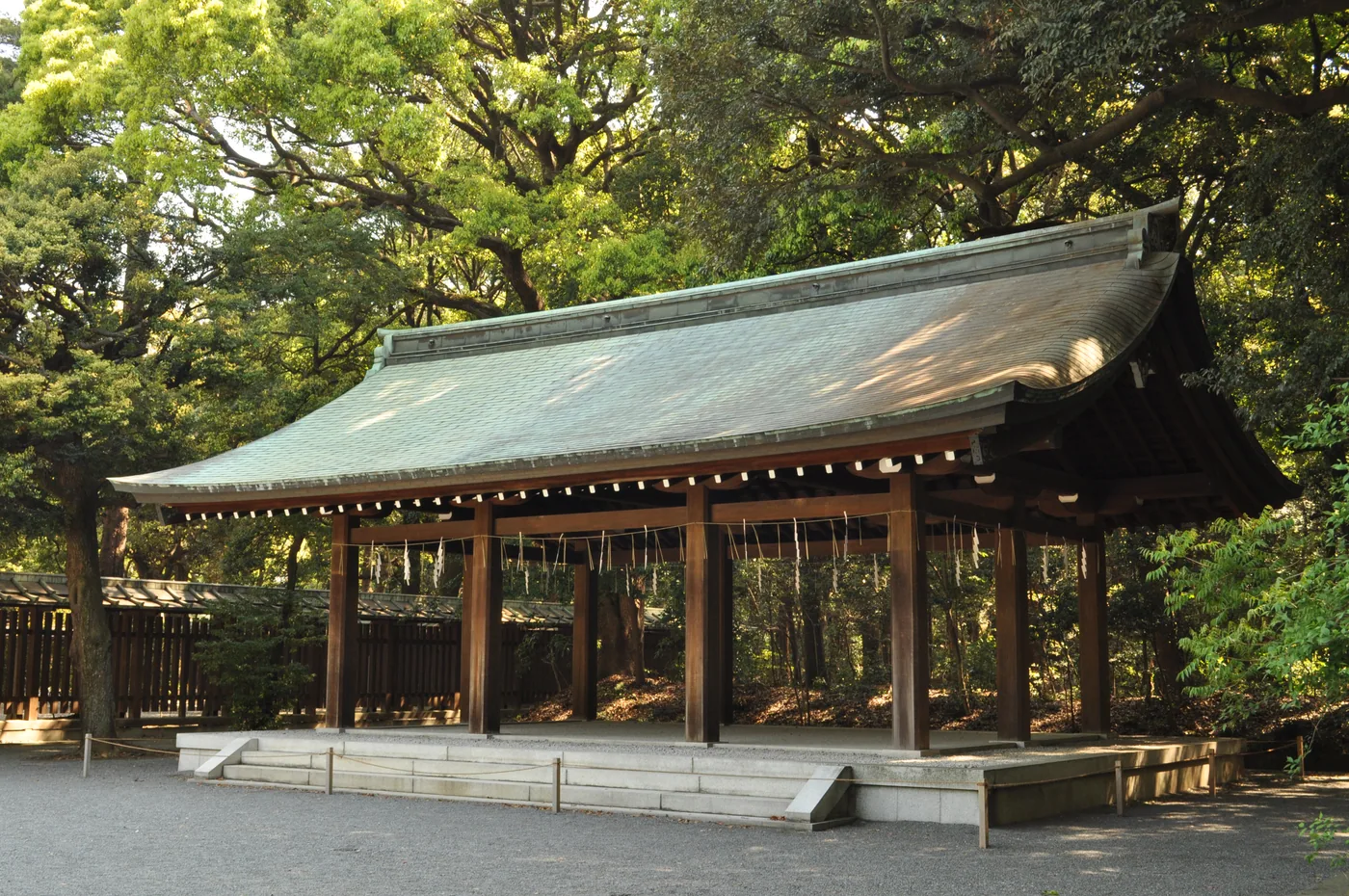
Set within a 70-hectare forest in the heart of Tokyo, Meiji Jingu is arguably the most internationally recognized shrine in Japan. Its massive cypress torii gates and gravel approach paths offer cinematic backdrops, and the inner courtyards stage hundreds of real Shinto weddings each year. Casual photography is allowed in outer areas without a permit, but formal kimono shoots within the main precinct require an authorized partner studio and advance arrangement. Best paired with shiromuku for ceremonial impact.
2. Fushimi Inari Taisha, Kyoto
The famous tunnel of ten thousand red torii gates at Fushimi Inari is one of the most photographed locations in all of Asia. The shrine officially permits private photography in early morning hours, and most professional studios coordinate sunrise shoots between 5:30 and 7:00 a.m. before tourist crowds arrive. The visual drama is unmatched: vermilion gates framing a bride in a contrasting iro-uchikake produce images that read powerfully even at thumbnail size on social media.
Permit and Etiquette Notes
No paid permit is required for ordinary photography, but tripods, lighting equipment, and obstructing the path are restricted. Respectful, mobile photography is the norm.
3. Itsukushima Shrine, Hiroshima
The floating torii gate of Itsukushima, set in the sea off Miyajima Island, is a UNESCO World Heritage Site and one of Japan's three official scenic views. Tide timing is critical: high tide creates the iconic floating illusion, while low tide allows photography beside the gate's base. Photoshoots require coordination with the shrine office and a permit fee starting around ¥30,000. The journey from mainland Hiroshima adds half a day to your itinerary but rewards with images that almost no domestic competitor will have.
4. Izumo Taisha, Shimane
Often called the most important shrine for marriage in Japan, Izumo Taisha is dedicated to Okuninushi, the deity of relationships and matchmaking. Its enormous shimenawa rope, weighing over five tons, hangs above the main hall and provides a uniquely powerful symbol for wedding portraits. Photography is permitted in outer areas, and the remote Shimane location guarantees crowds remain modest. Plan an overnight stay, as Izumo is not a quick day trip from major cities.
5. Heian Jingu, Kyoto
Heian Jingu's massive orange torii gate, the largest in Japan at 24 meters tall, and its wide expanse of white gravel courtyard offer one of the most dramatic frames in Kyoto. The shrine actively partners with photography studios and offers paid wedding photo permits ranging from ¥30,000 to ¥80,000 depending on access level. The adjacent Shin-en garden, with its weeping cherry trees and stone bridges, is particularly striking in early April.
6. Yasaka Shrine, Kyoto
Located at the eastern end of Kyoto's Gion district, Yasaka Shrine combines orange-painted halls, suspended lanterns, and stone staircases that lead up to Maruyama Park. The shrine is open and photoshoots are widely accepted, though large equipment setups are discouraged. Yasaka is best photographed in the soft morning light when lanterns remain illuminated and the surrounding Gion streets are quiet.
7. Kamigamo Jinja, Kyoto
One of Kyoto's oldest shrines and a UNESCO World Heritage Site, Kamigamo features sand cones called tatesuna at its entrance, weathered wooden architecture, and a small stream that runs through the precinct. Less crowded than central Kyoto shrines, it offers a more intimate atmosphere ideal for shiromuku photography. Photo permits run approximately ¥20,000 and are usually arranged through partner studios.
8. Tsurugaoka Hachimangu, Kamakura
Kamakura's most iconic shrine, Tsurugaoka Hachimangu, sits at the top of a long, straight approach lined with cherry trees and lanterns. The vermilion main hall and the wide stone steps provide commanding portraits, and the surrounding Kamakura area offers complementary locations such as the bamboo grove of Hokoku-ji and the coastal cliffs of Inamuragasaki. Photography is permitted in outer areas without fee, though formal weddings have priority on weekends.
9. Toshogu Shrine, Nikko
Nikko Toshogu, where the founder of the Tokugawa shogunate is enshrined, offers some of the most intricate carved architecture in Japan. The gold and lacquer detailing of Yomeimon Gate provides a strikingly different aesthetic from the simpler cypress shrines of Kyoto. The mountain setting adds dramatic autumn foliage opportunities, and Nikko's altitude means koyo arrives nearly two weeks earlier than in Tokyo. Permits and partner studios are required for formal shoots.
10. Dazaifu Tenmangu, Fukuoka
The most prestigious shrine in Kyushu, Dazaifu Tenmangu is dedicated to the deity of learning and is surrounded by plum trees that bloom in February and March, weeks before mainland cherry blossoms. Its arched stone bridges over a koi pond, vermilion main hall, and ancient camphor trees offer a backdrop that few couples consider but that delivers consistently photogenic results. For couples already visiting Kyushu, Dazaifu is essential.
Conclusion
The shrine you choose shapes the spiritual tone of your photographs as much as the kimono itself. Tokyo's Meiji Jingu and Kyoto's Fushimi Inari offer instant recognition, while Itsukushima, Izumo, and Nikko reward couples willing to travel further with truly distinctive imagery. Always work with a studio experienced in shrine permits, respect each location's sacred function, and schedule early morning shoots wherever possible. The shrine grounds of Japan have hosted weddings for over a thousand years, and even a brief photo session is a small contribution to that ongoing tradition.
Before you book a shrine shoot, read our shrine etiquette guide for kimono photoshoots and the Meiji Jingu permit explainer. For deeper location notes, see our profiles of Heian Jingu and Itsukushima Shrine, or plan an Asakusa kimono photoshoot around Senso-ji.
Frequently Asked Questions
Do I need a permit to photograph at most shrines in Japan?
Casual smartphone or small-camera photography is generally permitted at most shrines, but formal kimono shoots with professional equipment usually require advance permission, partner-studio coordination, or paid permits ranging from ¥10,000 to ¥80,000.
Which shrine is best for first-time visitors to Japan?
Meiji Jingu in Tokyo and Fushimi Inari in Kyoto are the most accessible and visually iconic options. Both are easy to reach by public transit and offer multiple backdrop styles within walking distance.
Can we hold an actual Shinto ceremony, not just photos, at these shrines?
Yes, many of the shrines listed, including Meiji Jingu, Heian Jingu, Izumo Taisha, and Tsurugaoka Hachimangu, regularly host full Shinto wedding ceremonies for international couples through their official wedding offices.
What is the etiquette for photography inside shrine grounds?
Avoid pointing cameras directly at the main altar or interrupting worshippers, keep noise levels low, do not climb on architecture, and always follow staff instructions. Shrines are active places of worship, not film sets.
Are early-morning shoots really worth waking up for?
Yes. Sunrise sessions deliver soft, directional light, minimal crowds, and the best chance of capturing iconic empty-shrine images. Most professional photographers strongly recommend a 5:30 a.m. start at popular sites like Fushimi Inari and Yasaka.
Locations in this guide


Related guides
 Location deep dive
Izumo & Matsue Kimono Photoshoot: Shrine & Castle Guide
Illustrative image · Unsplash. Not a photo of the specific people, places or services discussed.
Plan an Izumo & Matsue kimono shoot in San'in: Izumo Taisha (Japan's most important Shinto shrine), Matsue Castle, Lake Shinji sunsets, and Japan's mythological homeland.
Read the guide Location deep dive
Meiji Jingu Wedding Photography: Permit Rules Guide
Illustrative image · Unsplash. Not a photo of the specific people, places or services discussed.
Meiji Jingu wedding photography permit guide. Permit fees, available plans, what foreign couples can shoot, and how to book the inner sanctuary.
Read the guide Location deep dive
Tokyo vs Kyoto for a Kimono Wedding: Which to Choose
Illustrative image · Unsplash. Not a photo of the specific people, places or services discussed.
Tokyo or Kyoto for your kimono pre-wedding photoshoot? A side-by-side comparison of visual mood, pricing, photographer access, and logistics.
Read the guide